All About Raptor Feet
Raptors have some talented talons!
By Katherine Welch | November 7, 2025
What is a Raptor?
How do you define a raptor? Ultimately, the term isn’t very scientific. The kinds of birds we call “raptors” aren’t all closely related, but most would agree that hawks, falcons, vultures, and owls are raptors.
The word “raptor” itself is derived from the latin word “rapere” meaning “to seize,” and refers to the way that the majority of these birds grab up and snatch away their prey. Indeed, a lot of raptor definitions focus on the birds’ feet!1,2
Raptorial Feet
Raptor feet tend to be a little different from the average bird’s. They have more gripping strength, with strong toes and pointy talons (or claws). Their outer toes have a wider range of movement, and they can put those talons to good use, by piercing and hanging on to prey.
You might see those large, curved claws and think of them as capable of dealing a lot of damage, but most raptors use them for gripping rather than tearing. They’re sharp and built for puncturing. Raptors typically use their beaks to cut or tear into their food instead.
Birds usually have four toes, though there are plenty of exceptions to the rule. These toes can be arranged in different ways, but the most common arrangement includes three toes in front and one in back.3 Raptors generally share this typical toe count and arrangement.
A Parade of Raptor Feet
Raptors are diverse, but their feet come in mostly pointy shapes and larger sizes. Here are a few examples of toes and talons from the wide and varied world of raptors:

Most raptors, like this Harris’s Hawk, have pointy, curved talons and four toes, with three in front and one behind.

Bald Eagles put their impressive talons to piratical use, often stealing dinner right from the clutches of other birds!
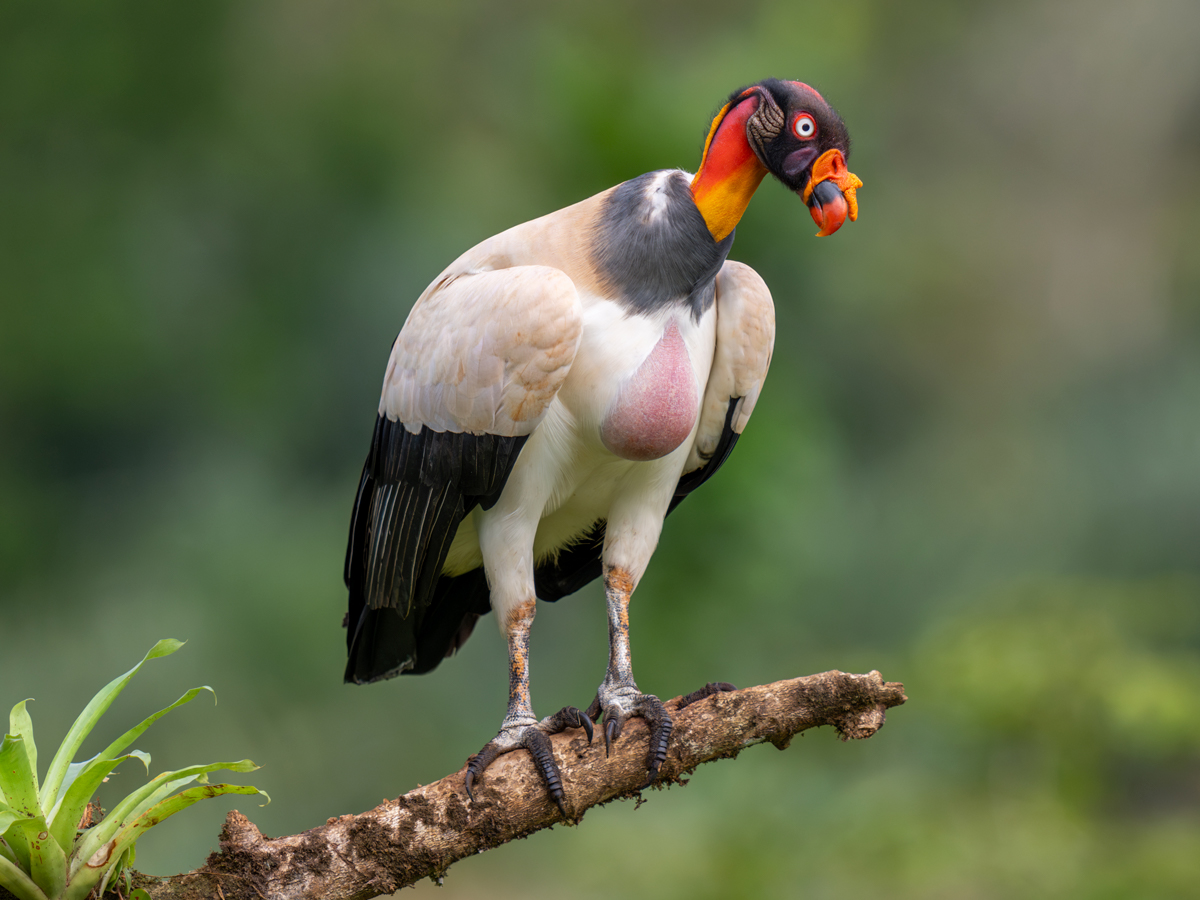
Unlike other raptors, vultures, like this King Vulture, don’t have powerful gripping strength. But their feet are still impressive!
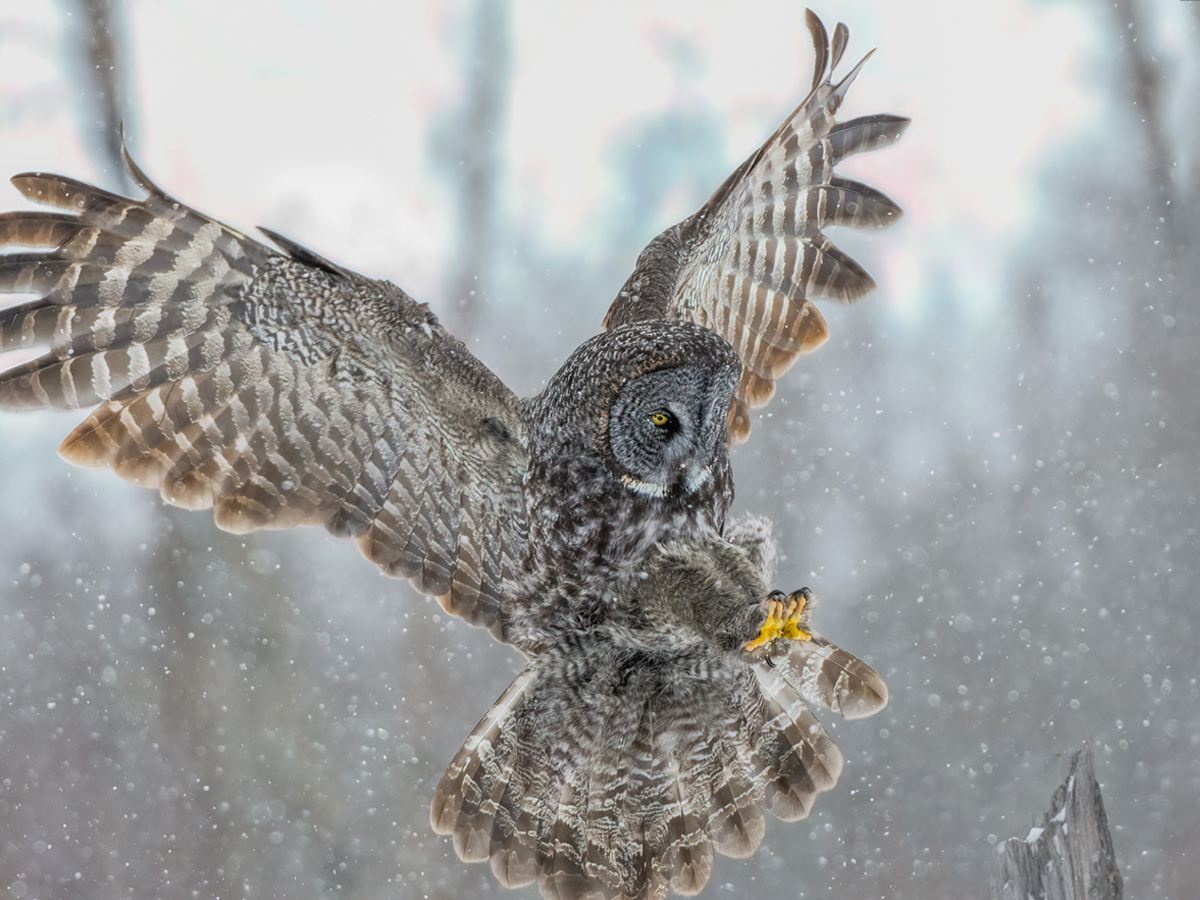
Owls have semi-zygodactyl feet—they can hold their toes two forward and two back, or move one toe to the side for a wider gripping “net”!

Falcons like this Eurasian Hobby put those feet to work, holding on to prey items so well, they can eat while flying.
Talon Talents and Feet Feats
There are so many incredible raptors in the world! We couldn’t possibly list them all, but here are just a few examples of outstanding talon talents in the raptor world.
Squeeze and Hold – Cooper’s Hawk

With their extra-strong toes and tendons, Cooper’s Hawks are excellent at holding on and refusing to let go. They hunt by swooping down from above, their feet swinging forward mid-dive to grab prey. While diving, they can reach speeds of around 25 miles an hour.5 Even at these high speeds, they can still maneuver well enough to grab their prey with both feet, brake before they hit the ground, and still hold on to their catch!
Once they pick up their prey, Cooper’s Hawks keep a steady grip. When the prey moves, they grip tighter! They hold on until their prey stills, then relax their grip, then clamp down again. Eventually, this continuous grip leads to the prey’s death. They have even been observed occasionally holding prey underwater to drown it before digging in. Talk about an awesome grip!
Heavy Lifter – Harpy Eagle
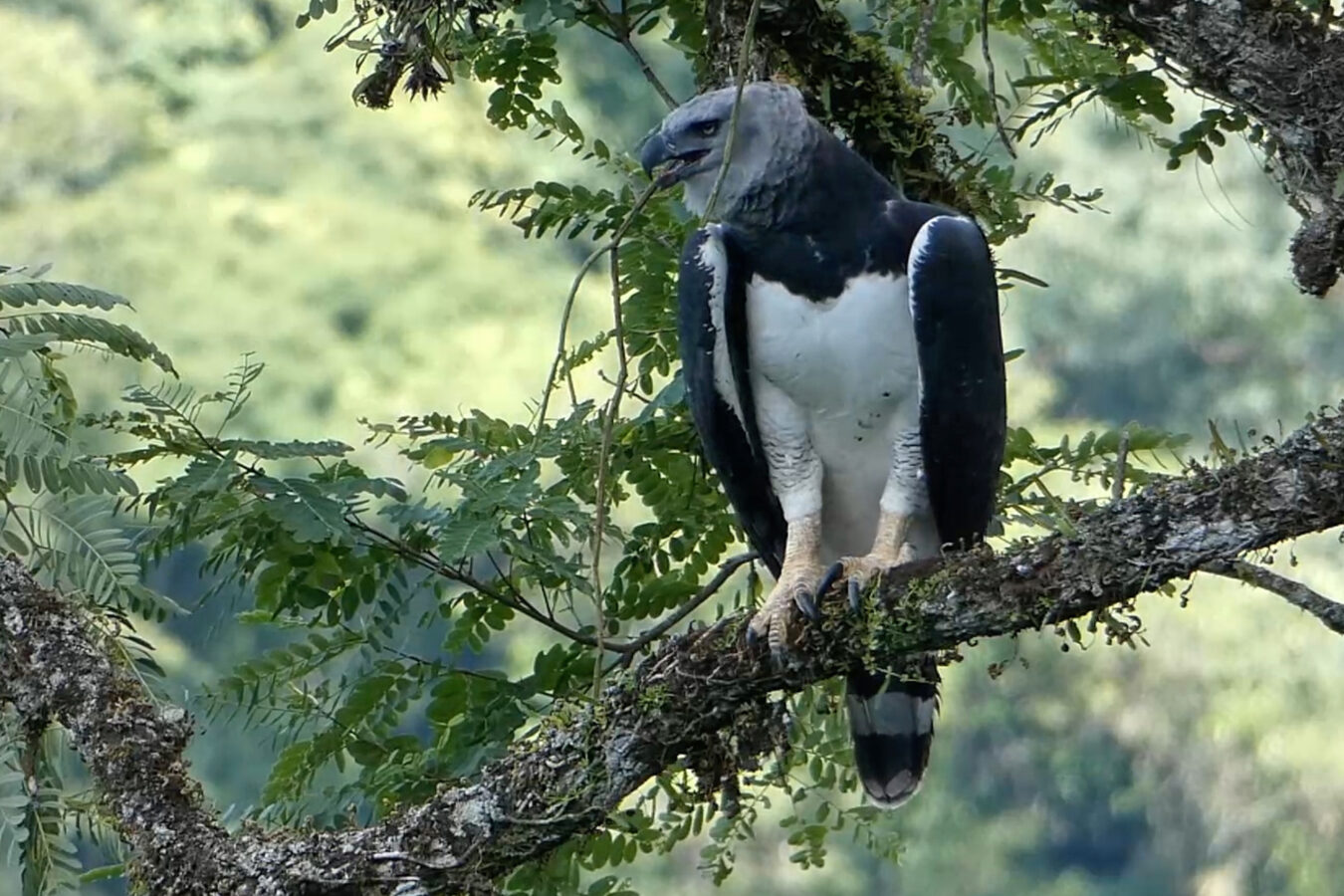
Most raptors hunt smaller prey, like rodents, smaller birds, large insects, or sometimes fish. A few raptors go the extra mile. Meet the Harpy Eagle. This massive bird of prey from Central and South America is well known for its habit of hunting medium-sized mammals, like monkeys and sloths.
These heavy lifters live in lowland forests. They hunt by perching high above in the canopy before darting out and seizing their prey from the branches below. They can lift and carry food items almost half their weight! With their especially thick, strong talons and a 6–7 foot (around 2 meters) wingspan6, it’s no wonder they’re considered the most formidable of eagles!
Specialized Grip – Osprey

Ospreys are notable for their diet of mostly live fish! They hunt by diving on their prey from high above, then pivoting midair to plunge feet first into the water.7 Their feet are specially adapted to hold on to slippery food.
Ospreys have the option of rotating their outer toe to the side in order to form more of a fish-catching net, or holding two toes in front and two behind for an easier time grasping. They also have tiny, rough structures on the skin of their feet8 called spicules. These little spines help them lock in and hold on to wriggling prey.
Watch these Wild Birds in Action!
See the Osprey’s powerful grip and fishing skills in high-definition, slow motion action in this quick video.
Powerful Kick – Secretarybird
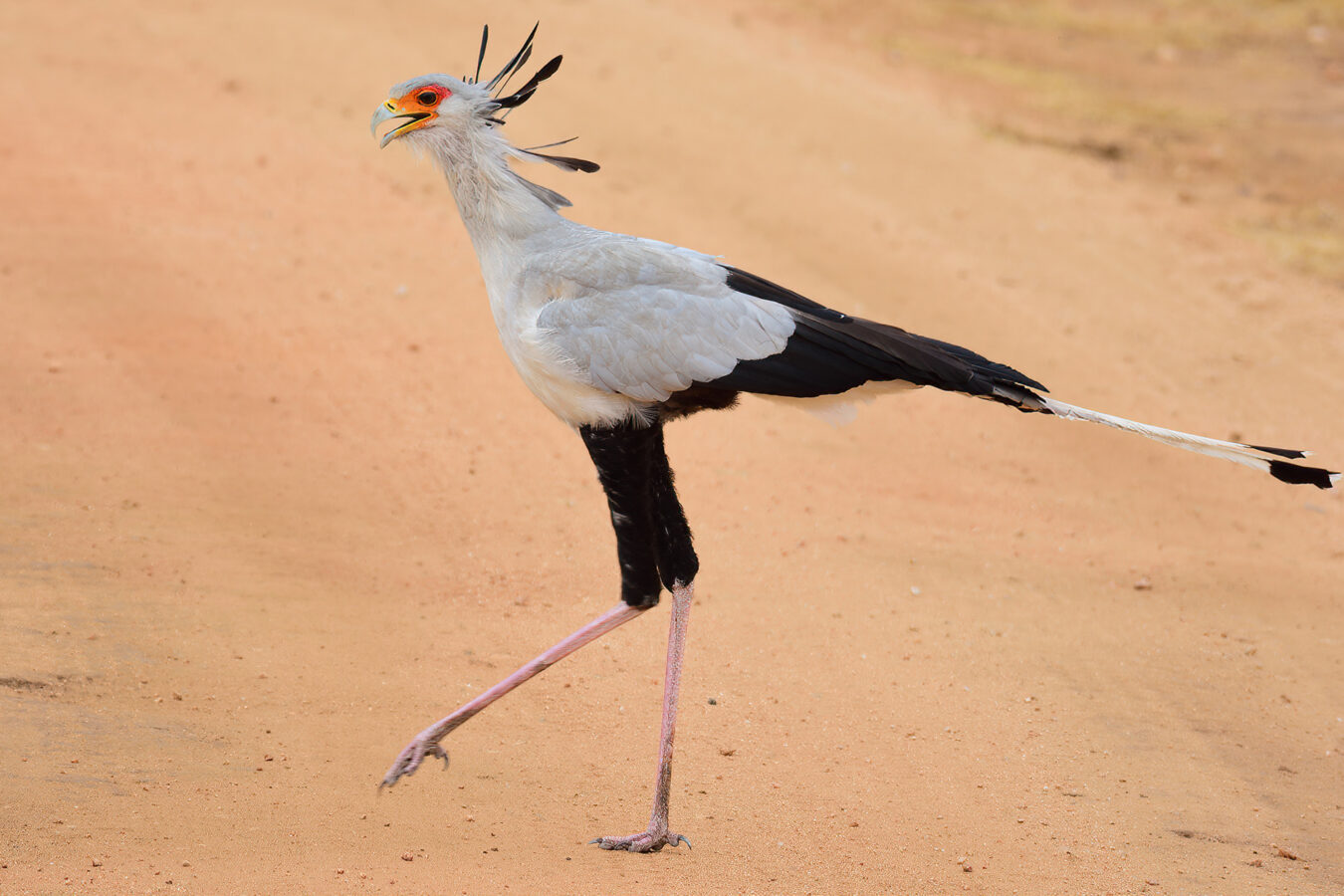
Secretarybirds don’t just have powerful talons, they have a powerful stomp. These unusual raptors live in the savannahs of Sub-Saharan Africa, where they chase down their prey on foot. Usually, they snap up grasshoppers, but they’re not picky. They’ll hunt most small animals they find, even venomous snakes!9
Rather than grabbing what they hunt, Secretarybirds have a unique method for killing prey. They stomp it to death! They have relatively short-toed, sturdy feet and can kick with a force of up to five times their body weight.10
Keep Learning with Bird Academy
If you love learning about all things raptor, you won’t want to miss these great courses. Keep learning with self-paced, online courses you can return to time and time again.
Off
Off
Off
References:
- California Raptor Center, U.C. Davis School of Veterinary Medicine. (2013, October 24). What is a raptor? https://crc.vetmed.ucdavis.edu/what-raptor
- McClure, C. J. W., Schulwitz, S. E., Anderson, D. L., Robinson, B. W., Mojica, E. K., Therrien, J.-F., Oleyar, M. D., & Johnson, J. (2019). Commentary: Defining raptors and birds of prey. Journal of Raptor Research, 53(4), 419. https://doi.org/10.3356/0892-1016-53.4.419
- Kaiser, G. W. (Ed.). (2010). The inner bird: Anatomy and evolution. UBC Press.
- Kirwan, G. M., Orta, J., Marks, J. S., Pyle, P., & Perlman, Y. (2025). Eurasian Hobby (Falco subbuteo), version 1.1. Birds of the World. https://doi.org/10.2173/bow.eurhob.01.1
- Rosenfield, R. N., Madden, K. K., Bielefeldt, J., & Curtis, O. E. (2025). Cooper’s Hawk (Astur cooperii), version 1.2. Birds of the World. https://doi.org/10.2173/bow.coohaw.01.2
- Schulenberg, T. S. (2020). Harpy Eagle (Harpia harpyja), version 1.0. Birds of the World. https://doi.org/10.2173/bow.hareag1.01
- Bierregaard, R. O., Poole, A. F., Martell, M. S., Pyle, P., & Patten, M. A. (2020). Osprey (Pandion haliaetus), version 1.0. Birds of the World. https://doi.org/10.2173/bow.osprey.01
- Cornell Lab of Ornithology. (n.d.). Osprey overview. All About Birds. Retrieved November 7, 2025, from https://www.allaboutbirds.org/guide/Osprey/overview
- Kemp, A. C., Kirwan, G. M., Christie, D., Marks, J. S., & Boesman, P. F. D. (2020). Secretarybird (Sagittarius serpentarius), version 1.1. Birds of the World. https://doi.org/10.2173/bow.secret2.01.1
- Portugal, S. J., Murn, C. P., Sparkes, E. L., & Daley, M. A. (2016). The fast and forceful kicking strike of the secretary bird. Current Biology, 26(2), R58–R59. https://doi.org/10.1016/j.cub.2015.12.004
Acknowledgements:
Author: Katherine Welch
Content Experts: Kevin McGowan, Samantha Hauser
Editors: Jill Leichter, Samantha Hauser, Kevin McGowan