The Cornell Lab Bird Academy › Discussion Groups › Bird Photography with Melissa Groo › Practice Getting Creative and Telling Stories
-
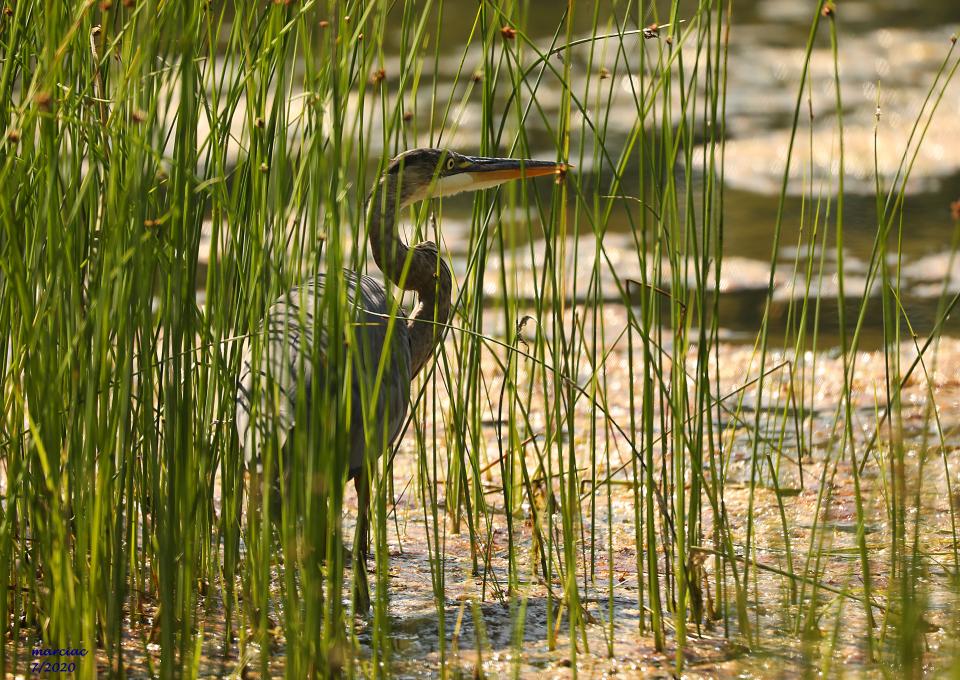
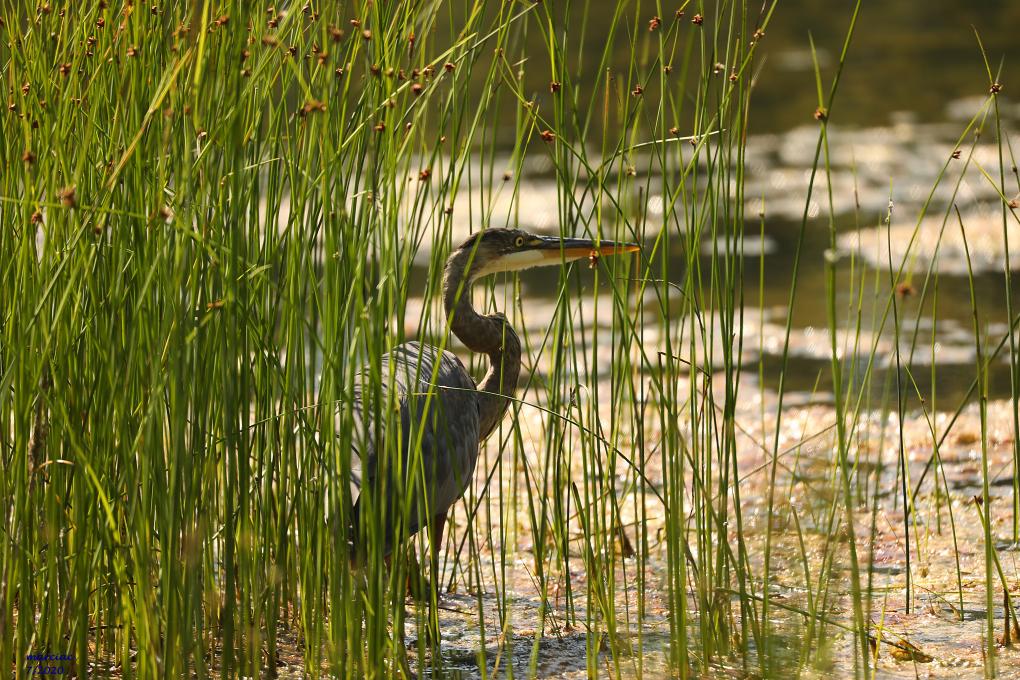
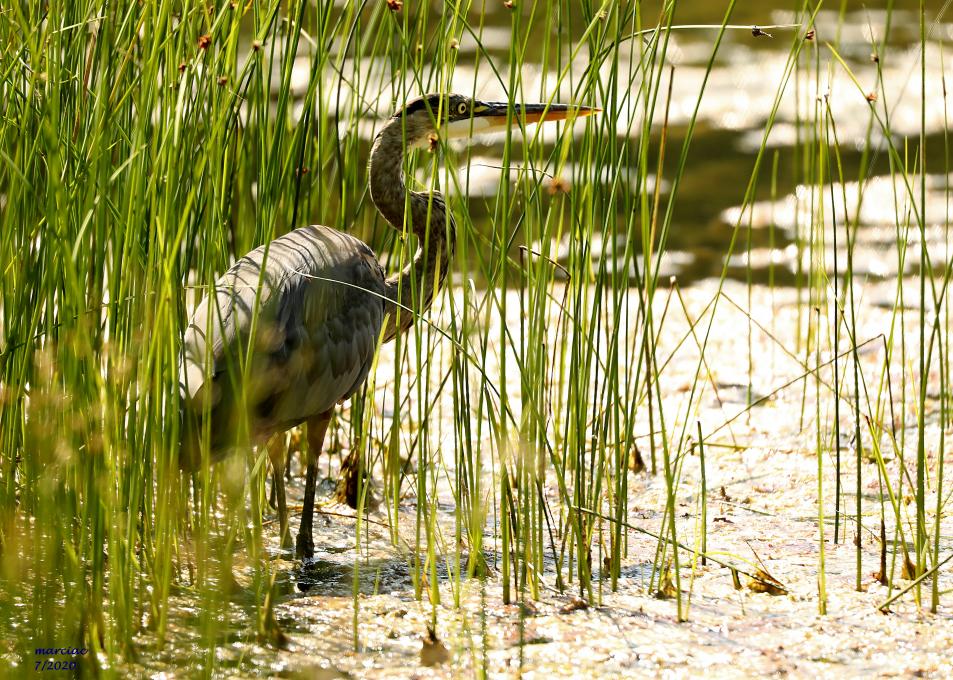
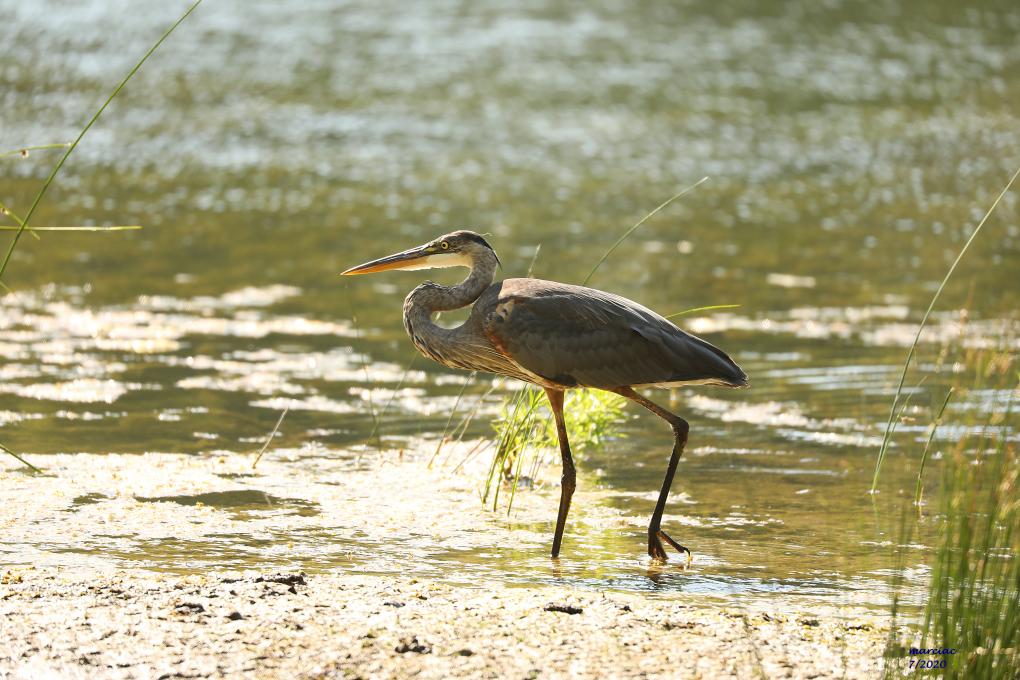
The final chapter in the story of the Heron is how it moves into the tall grass of the pond to camouflage itself as it continues it's fishing expedition. What I like about these pictures is that, when I go out searching for the heron I always make it a point to stop in these areas of tall grass. If you are careful and very quiet you can see them as they are hidden in the tall grass and they are quiet, themselves, and so concentrating on their goal, that you can actually camouflage yourself and spend a long time observing the Heron's actions. The area of Presque State Park and this pond is a high pedestrian area, so although the Heron is aware of and use to people being around as he fishes, and although initially out in the open, the heron eventually migrates to these tall grass areas for some privacy and then the heron is able to relax and work on the task at hand - fishing for dinner. I did not stay long enough to see him make his catch because when he went into the grass, I knew he needed his privacy and it was more important for him to get his dinner than for me to get a photo.I didn't want him to fly away because I was a distraction to him, or making him nervous. The Great Blue Heron is a fascinating bird to watch!

-
so beautiful!
-
Nice photos. Love these birds!
-
-
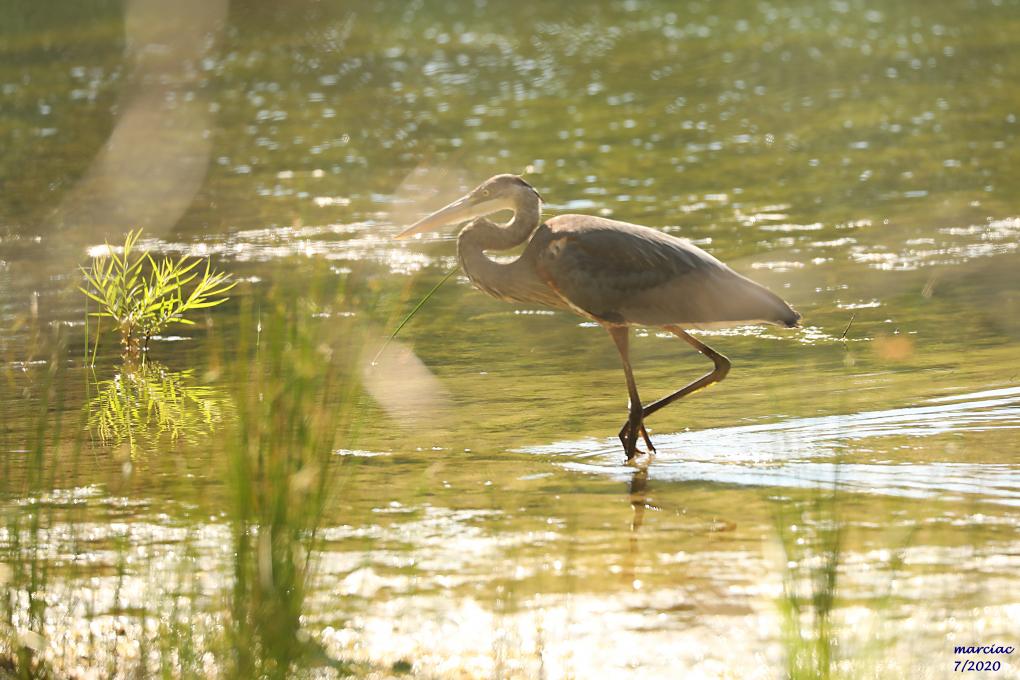
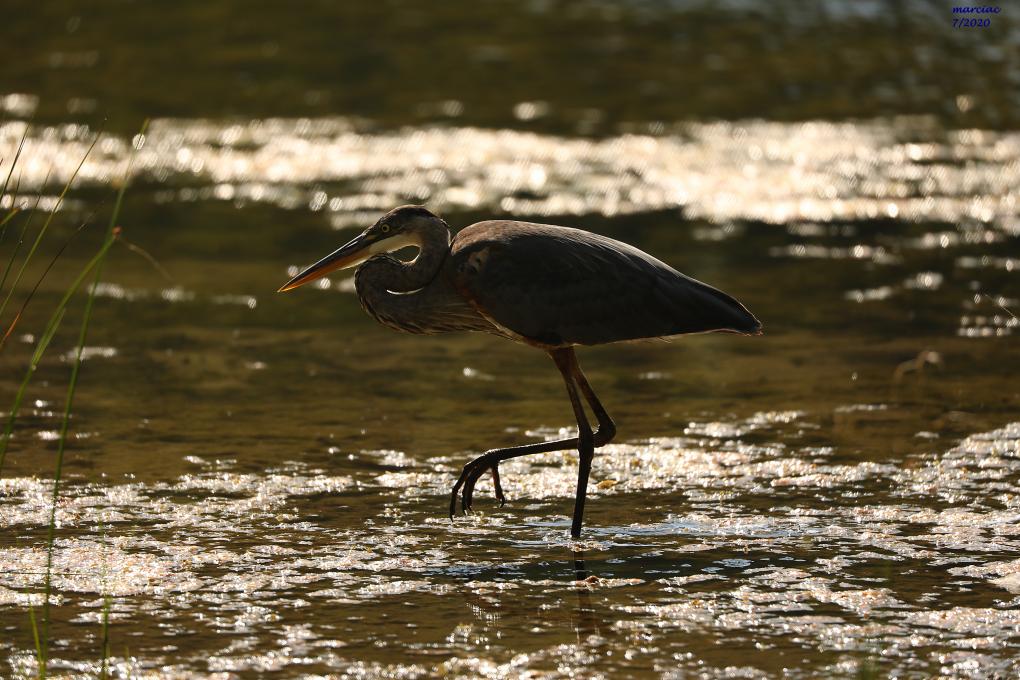
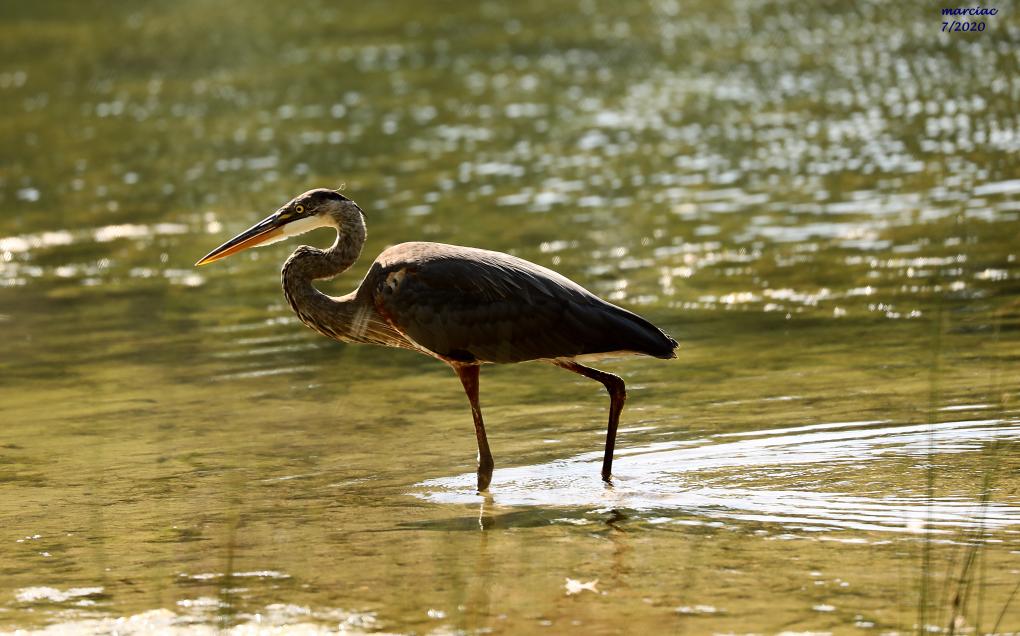
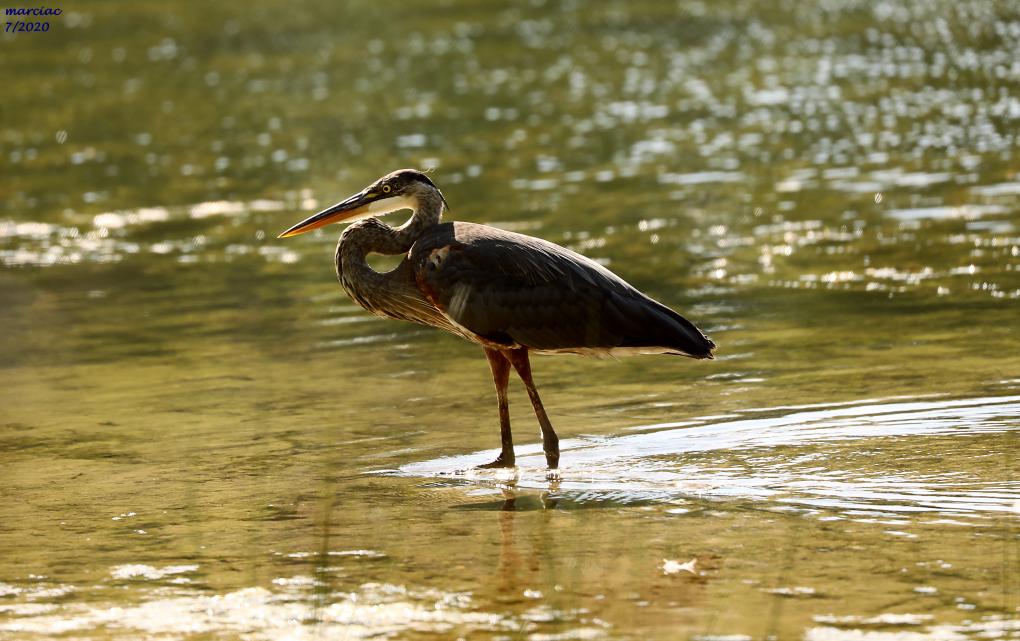
In continuing my story, I forgot to mention that Presque Isle State Park is on the shores of Lake Erie, in Erie, Pennsylvania. In the next set of photos, I played with the light as the Heron continued exploring the shoreline. It was late in the afternoon and at first the Heron was facing into the sun, so the images shows that sun on the heron, then as the Heron mades it's turns in the water the Heron moved away from facing the sun and I moved with him. There is a gradual shifting of the sun and and my position and the Heron's position in relation to the sun, and in the final shot the Heron was in between the sun and my self and you can see the highlights of the sun from that position.
-
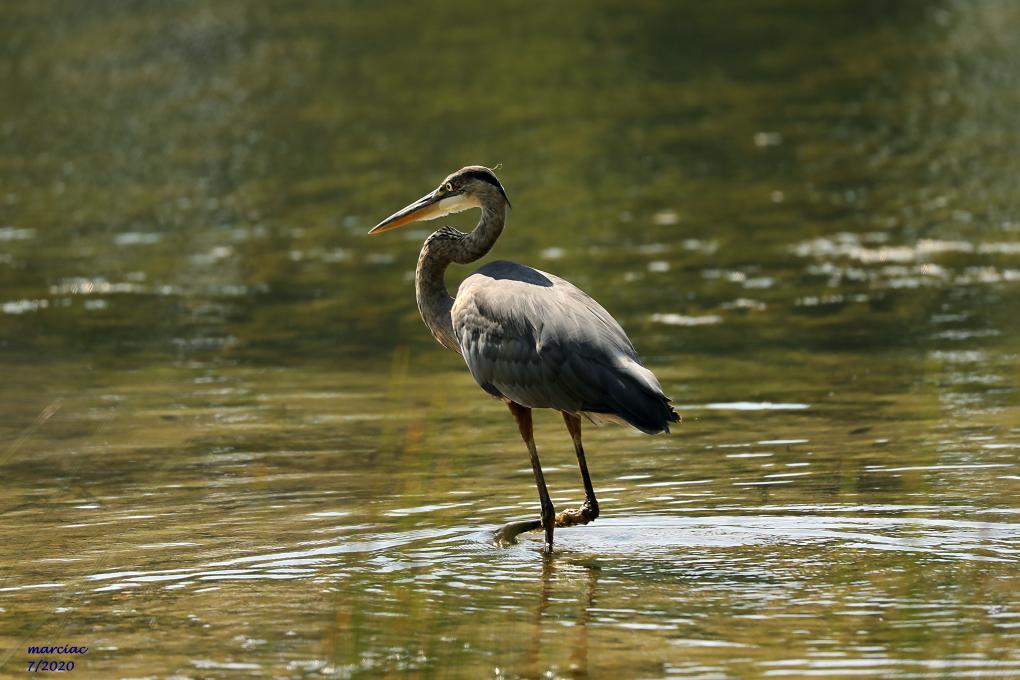
One of my favorite birds is the Great Blue Heron and I follow these Herons when they come into our area, from Spring to late Fall. Sometimes during a mild winter, we see them throughout the year. In this discussion I will be explaining the actions of a Great Blue Heron as he studied the shoreline of a pond on Presque Isle State Park. This Heron's story is of his fishing of this dinner as he explored the pond and the shallow areas of the water. The first set of pictures shows his movement as he walks around the pond shoreline. What I noticed in the Heron's movements was his intent and the determined direction of his hunt. In the photos you will see that the Heron and the water around him, point out his direction. The motion of the Heron and the water are very much connected. Initially the Heron is in a pool of water that surrounds it's legs, then as it moves the water creates an arrow showing the intended direction of the heron's moments. The Heron is very methodical in it's movements and the water supports and illustrates that methodical movement!
-
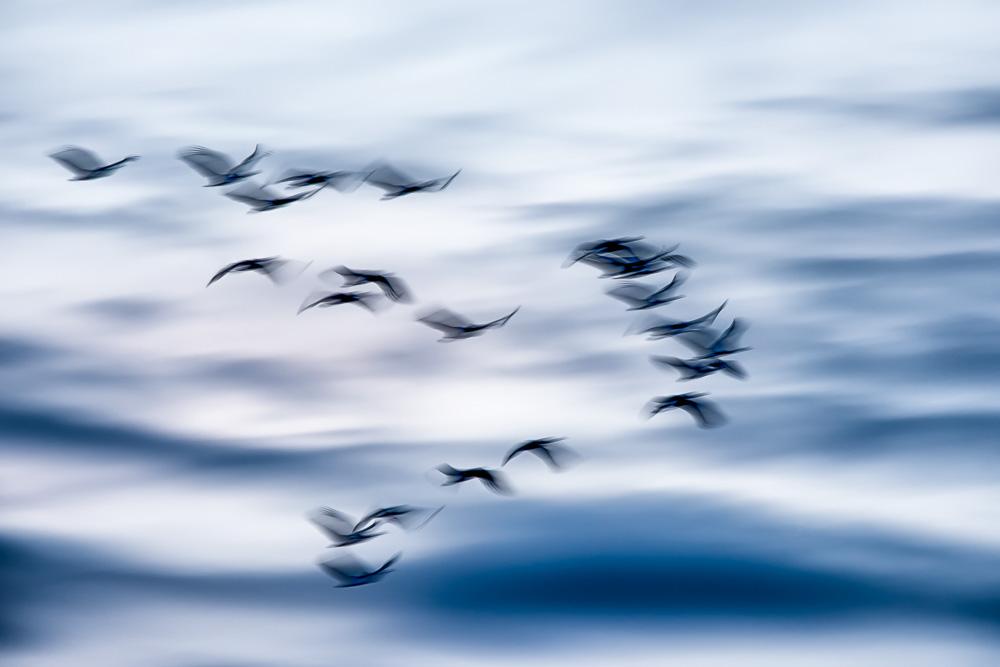
I had the opportunity to spend time in Kearney, Nebraska on the Platte river where hundreds of thousands Sandhill Cranes rest during their annual migration to observe and photograph this amazing event. I tried to capture the movement of these beautiful birds in flight by using a blurred motion pan.
-
That is a beautiful photo! It just catches your eye immediately. You just see and feel the motion of the birds.
-
You succeeded! It is a beautiful photo!
-
This is an amazing click! Mesmerizing photo...particularly great example of what happens when you are patient and explorative with breaking the rules :)
-
Absolutely beautiful image. I love ICM photos,especially with wildlife, and this is a great example. It looks like a painting and is so peaceful. :) Well done.
-
Remarkable photo... the blue tint adds such an atmosphere to the blur you were attempting ..well done.
-
That photo is absolutely art...love it!
-
Very unique! I love it!
-
-
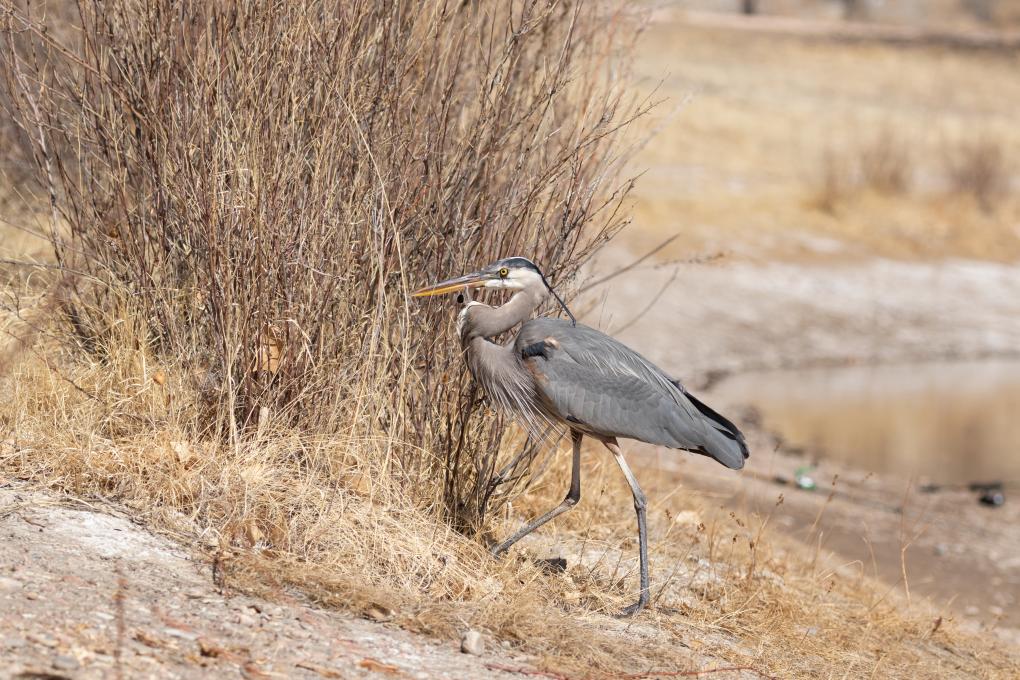
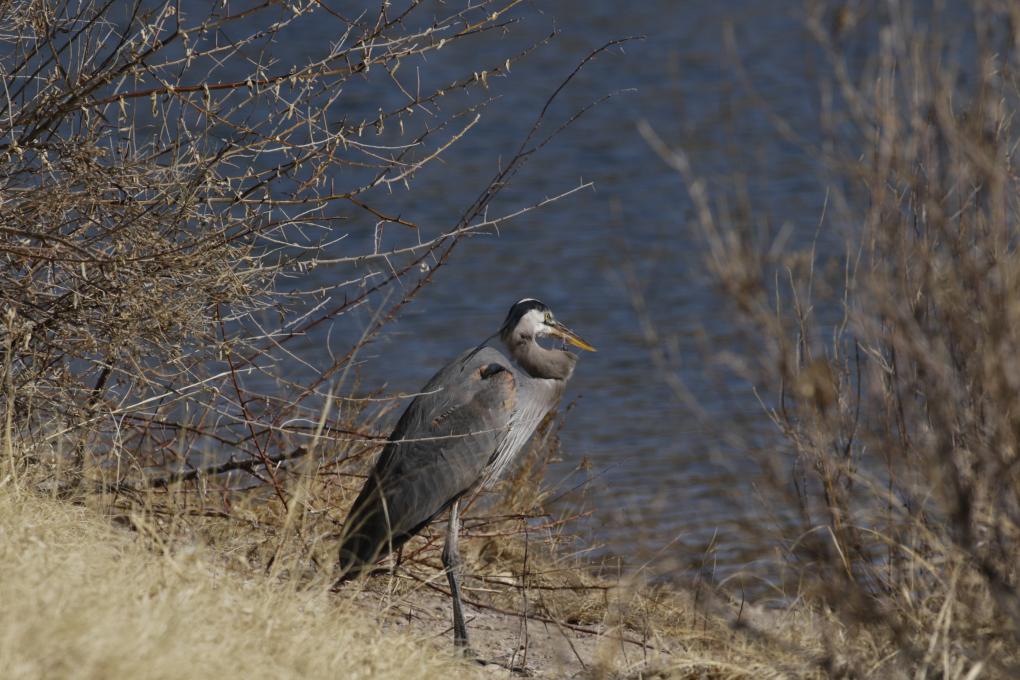
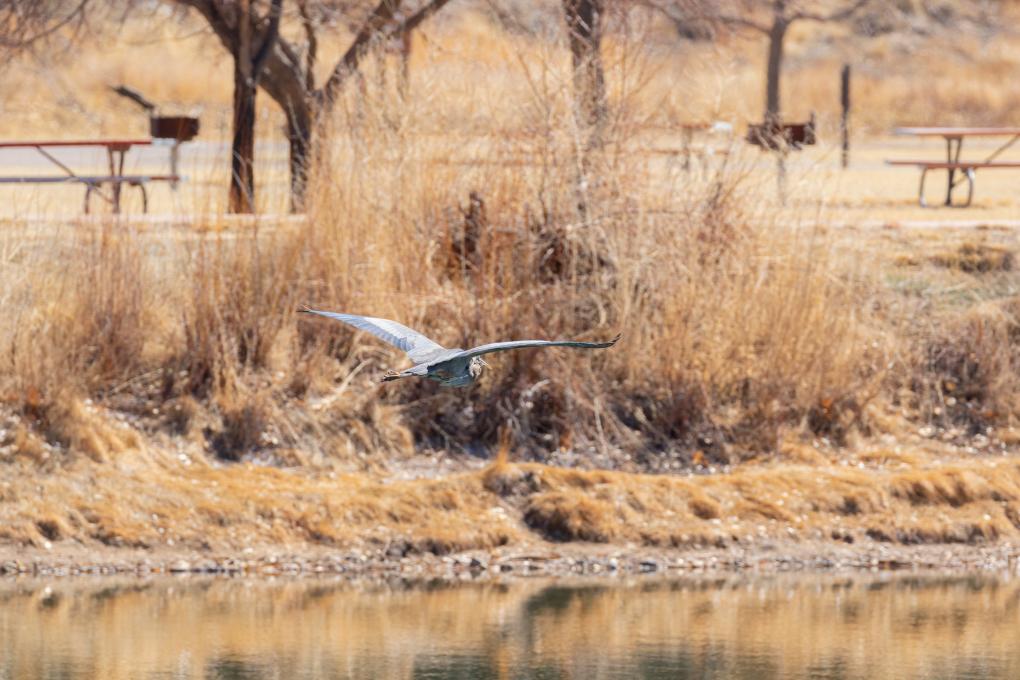
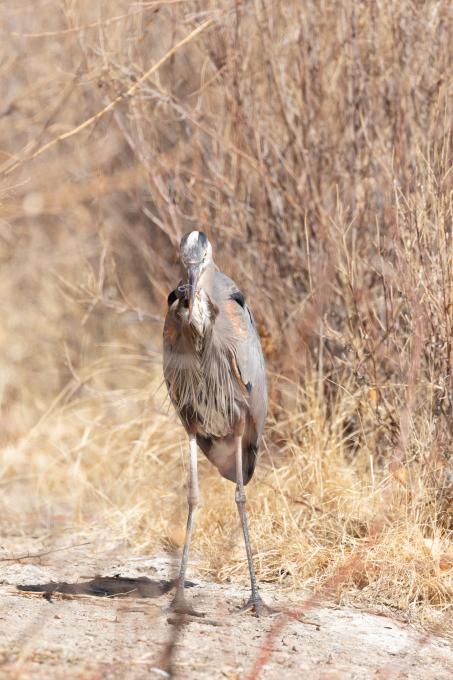
During a photography day shoot at Lake Pueblo State Park, I was thrilled to see a Great Blue Heron near a fishing lake. After a few shots, I realized he was in serious trouble! Broke my heart to see fishing line and a metal weight entangled in his beak!!! I immediately phoned the state park office of his dire situation.While I was waiting for the Colorado Parks & Wildlife officers to arrive, I watched as he kept walking close to the lake's shoreline, wanting to eat but couldn't open his beak wide enough to catch his food. The whole time I observed him, he hopelessly walked back and forth to the tall grasses, then back to the shoreline. I took some photos of him until three officers rounded the walking path forty minutes later. One was carrying a blanket. Of course as soon as they walked towards him, he flew off! I showed them my pictures, and they told me they'd keep tracking him, until they found him. I couldn't get him off my mind, so I returned two days later. My friend Les, who takes walks every morning with a 33 gallon trash sack, collects garbage lazy, thoughtless slobs leave EVERYWHERE, endangering wildlife & people! Les saw the GB Heron two days later, immediately got into his truck to the Wildlife office a few minutes away to report his sighting. This time the rangers had a fishing net they'd borrowed from the Pueblo State Fish Hatchery, and were able to free the GB Heron! Les says he sees him, & he looks healthy now too!I love stories with a happy ending!
-
What a story Linda! So glad that you took it upon yourself to save this magnificent bird. Thank you fir sharing this story and photos with us.
-
@Isabelle
-
@Isabelle Thank you Isabelle, happy you enjoyed it!
-
Wow! So happy to hear that they were able to get the Heron free from the fishing line. Your story helps everyone to understand the need to leave no trace of their activities in areas where wildlife can be harmed.
-
@Marcia
-
@Linda It really is heart breaking, as you can see how hopeless and forlorn he looks in the photo above. I was in the right place at the right time. I don't really know how long he suffered. The fisherman threw him a fish, (in the reply photo I sent to Isabelle, but he couldn't eat it.). Thank goodness for the perseverance of the wildlife officers! Hopefully those who were there that day at the lake who witnessed this pitiful scene learned a lesson.
-
Your photos are great, and even better knowing the story. It makes me so upset that people leave their garbage & lines with hooks all over the place around lakes. Last spring I found a robin dangling by one leg caught in a fishing line with the hook still attached. I was able to free the bird eventually, after a neighbor walked by and happened to have clippers with him. Thankfully the robin was fine and flew away. No photos to share, unfortunately.
-
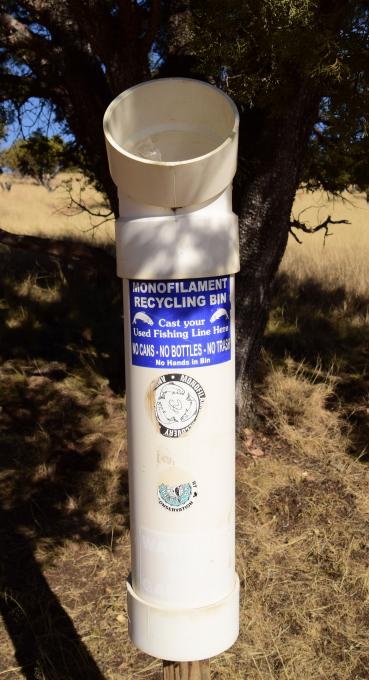
Fantastic help provided to the heron for the mistakes others had caused the heron. Kudos to the folks who helped the bird too, along with your help. Great story.I saw this recycling bin for fishline just last week and hope to use it in a future story of mine.
-
-
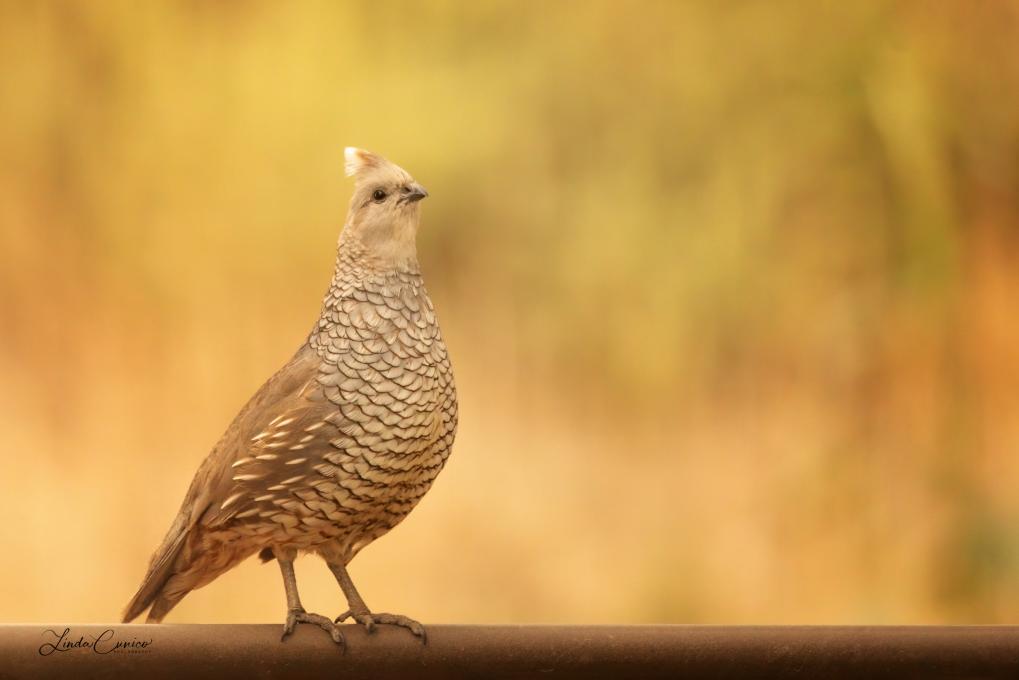
Colorado breeding season for Scaled Quail begins in February. I observed unmated males perching on top of the highest point they could find, like my mailbox post, readily seen, calling out to attract a mate in a hoarse, single note. He also does this to defend his territory. As of today, July 22, there is still one bachelor who mournfully belts out his call a few times a day, especially at sunrise and sunset.
In this photo I took last week, a torrential rain storm had just washed the atmosphere clean; ( a fire had been burning west of me for three days, polluting the atmosphere) . So I grabbed my camera to take advantage of beautiful, clear light, finally! Luckily the sun peaked out from the clouds for a few minutes, as I snapped this portrait of Mr. Lonely, perched on my patio swing. The background is weedy green scrubs and yellow tumbleweeds but this composition is an enigma; the sad bachelor with a happy background. I could have posted a shot where his head is hanging, eyes downcast; I SAW & FELT his mournful sigh in this moment. But I decided to share this one, showing an important element to wildlife photography, pinpointing my focus on the eye/ eyes as the focal point. Another reason I am showing a happy background is because it is attracting to viewers. So the viewer feels happy hopefully at first glance, but thenreads the story and feels sad. (Mother Nature shown brightly from the west, an hour before sunset, in this series, so the opportunity for a gloomy shot didn't happen.) -
The color of this entire photograph I love!
-
-
Sunday morning I set out to photograph in Bayou le Batre, Alabama. You might remember this place from Forrest Gump. Bubba’s hometown and the start of the famous Bubba Gump Shrimp Co. I see the shrimp boats from B.l.Batre every morning from my back porch, so I went in search of the likes of the St. John Joseph and the Blue Thunder. Interestingly, many of the boats are run by Vietnamese fisherman. This is a bit ironic considering that in Forrest Gump, he found in the Vietnam war. Back to birding and photography. I tried to make the background important in all of these pictures and tell a bit of a story as well of this little fishing village. The first pic to me shows the laughing gulls standing at attention, first thing in the morning for the pledge of allegiance. I also tried to make it 3-dimensional with the gull on the post in the front.
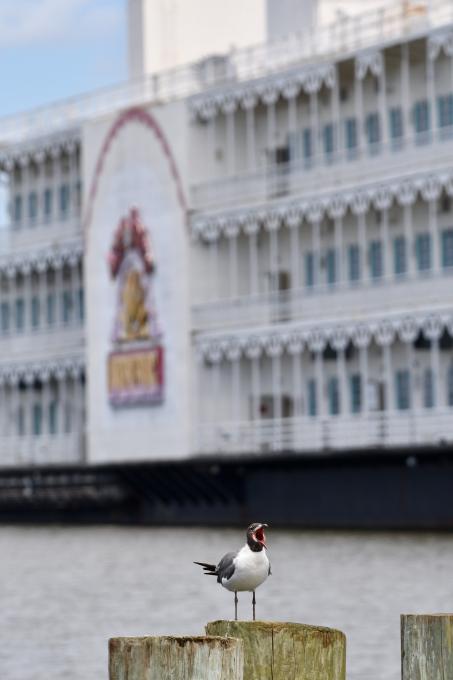
Much to my surprise, at the very end of the road, on the last inlet to the gulf, I found this old Casino Ship - the Argosy 5. Looks like its for sale if anyone is interested. I believe it is 5 million and change. I practiced with my lighting to F8/1000 shutter speed to get the gull in focus and the ship blurry.
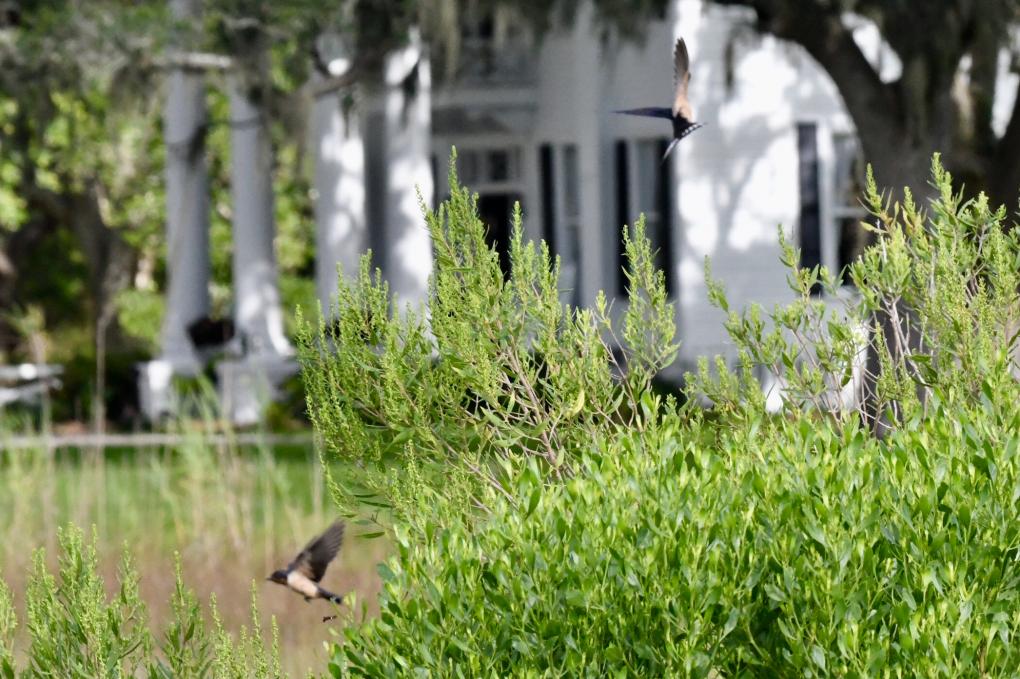
Lastly, I found the house that was supposed to be the home of Forrest’s mother for the movie. Turns out they filmed in one of the Carolina’s instead. For this picture, the barn swallows were moving so fast, I couldn’t get them and the house in the same shot. So, I focused on the shrub in the foreground and took a pic everytime I saw a swallow go by. This was the winner as I managed to get two in the same shot and they were in positions where in positions where they were clearly (if a bit out of focus) in view.
On my way to B.l.Batre, I got the craziest shots of black vultures feeding. If you are a bit squeamish, don’t look. I attached the pictures as a reply to Isabelle’s previous post. Take a look at the crazy vulture tug of war.
-
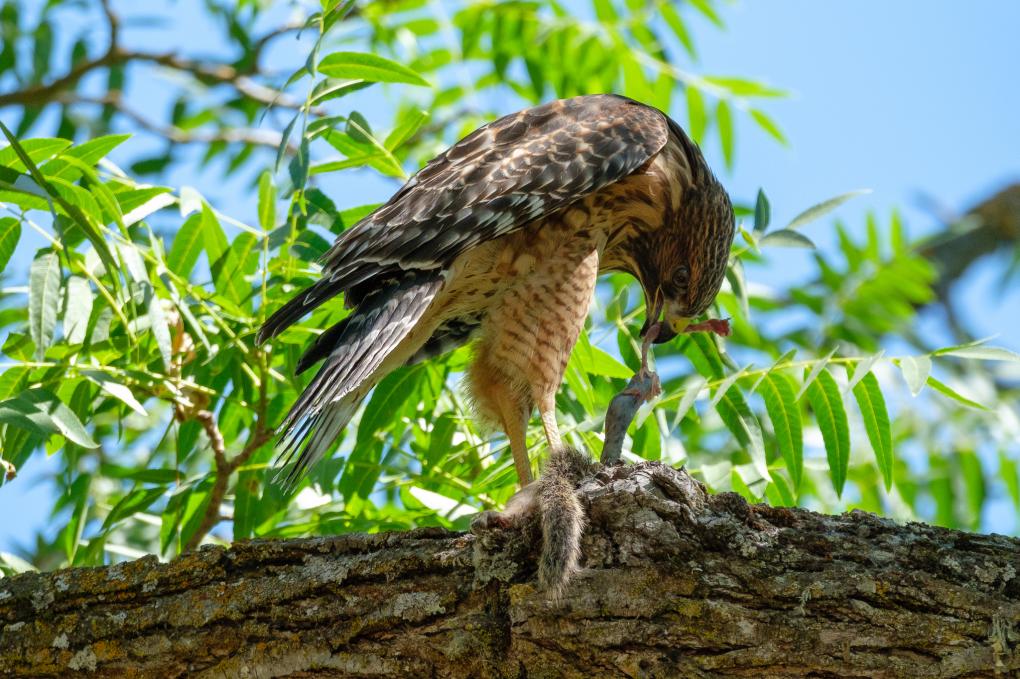
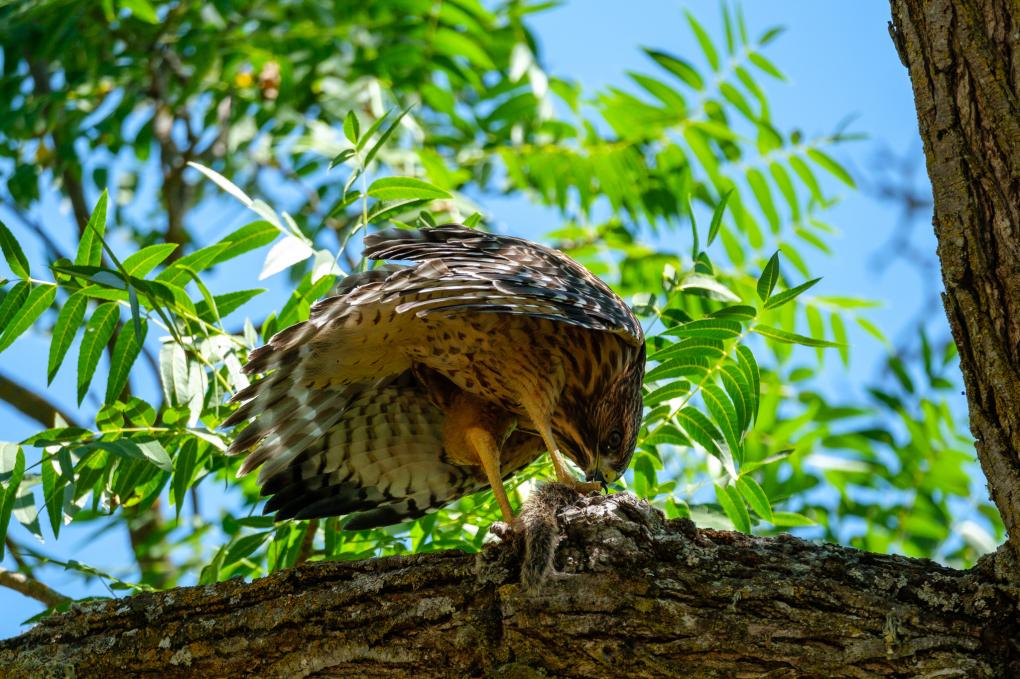
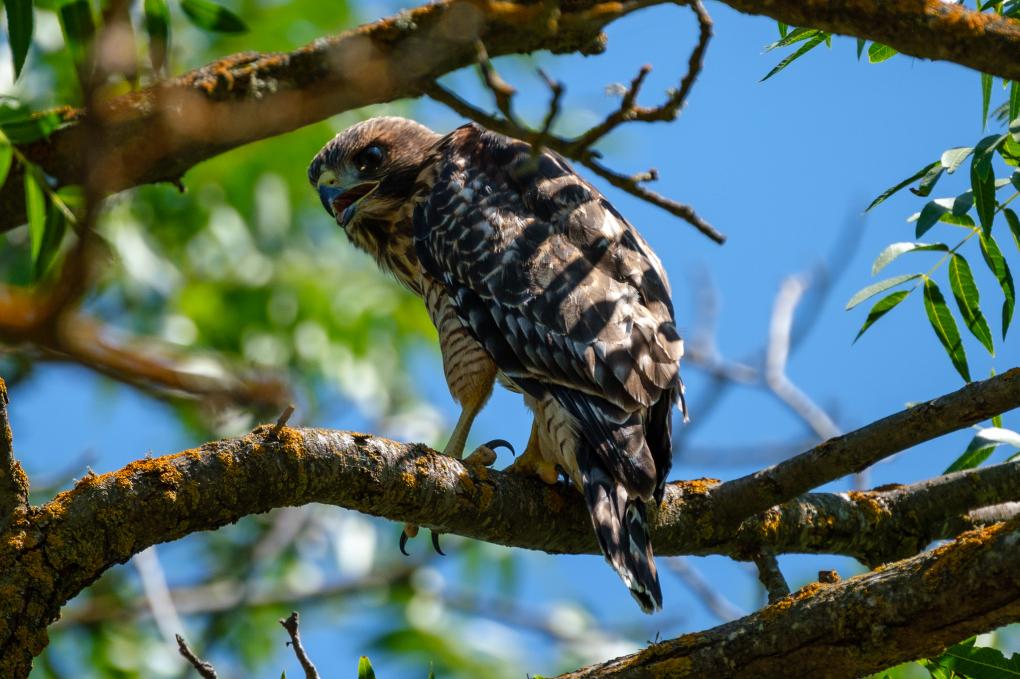
I like to take photos of birds eating, feeding their young, preening, moving, I like when there is some kind of action because the story is telling itself through the photos. But sometimes a particular expressing in the bird's eyes is also telling a lot. In the three shots below their is one red-shouldered hawk who has found a squirrel and is eating it. In the second one he is spreading its wings to cover its prey from another red-shouldered hawk who is screaming at him and wants to steal the food from him. He is perched just above him. (that's the third photo).
-
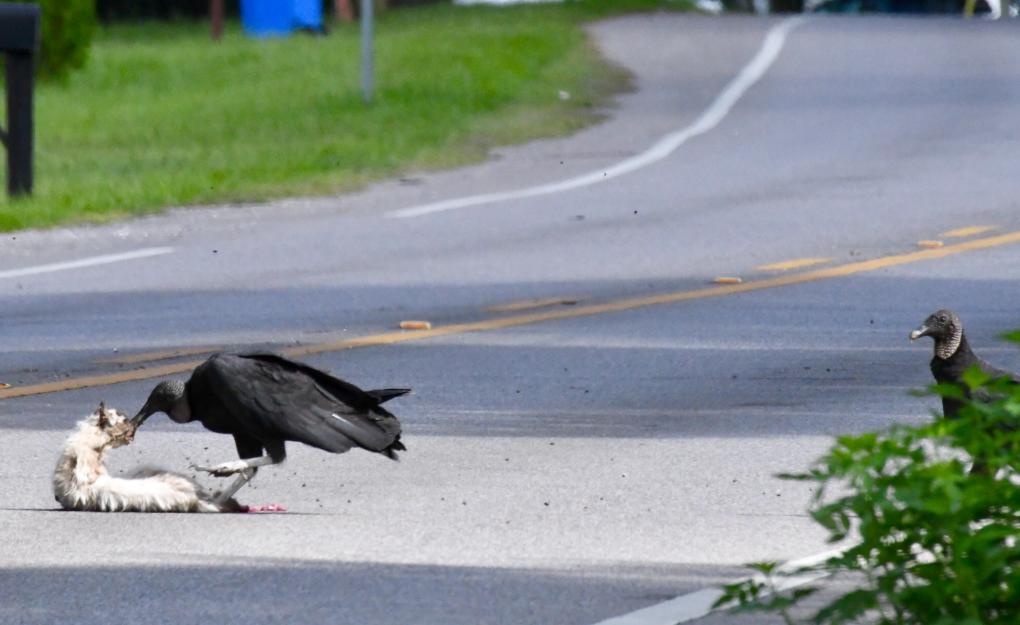
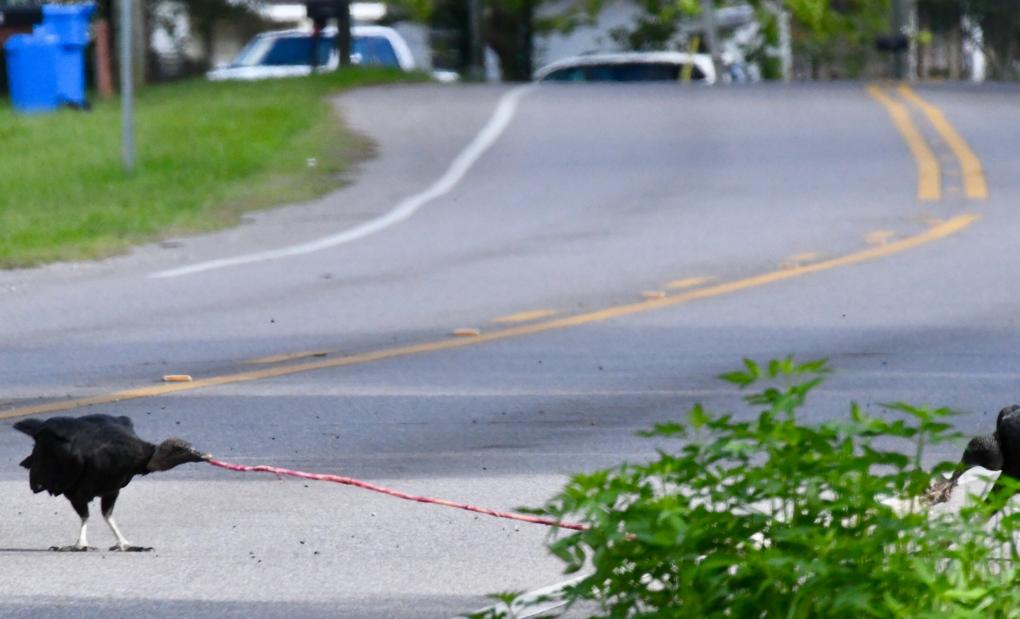
While I went out yesterday to go on an adventure birding from my car, using it as a “blind” I had your post about photographing birds while eating on my mind. I was on my way to Bayou La Batre, where Bubba, from Forrest Gump, was from and had his shrimp boat. I was going to try to photograph birds at all the tons of shrimp boats. Yes, it really exists and is a truly shrimping village. I was sure to get good feeding shots. On my way, I came upon these two black vultures in the middle of the road. I watched then as they fed, then were forced off the road as cars whizzed by. I never expected to see what I saw, much less get a picture of it! The 30 minutes were definitely worth every minute!
As you can see in this first photo, one of the vultures was feeding while the other looked on from the side. I guess the one on the left was tired of being run off by cars and decided to try to drag the kill off the road. As I watched, the kill was successfully moved off, but some remained. That is when the struggle began. The first bird went back out into the road to retrieve the “innards” while the bird on the right took this opportunity to suddenly try to get away with the kill all for himself...
That is when the intestinal tug of war began - yes those are the intestines - you can barely see the bird on the right holding onto the kill and trying to back away with it and have it all for himself. It was quite a struggle and quite an amazing site. Unexpected for sure, a one in a million shot. I only wish it was better composed.
-
@Cynthia Cynthia, I love your stories in the previous post and this one. Your photo with the intestinal tug of war is quite exceptional! I am very glad you stopped to watch the scene and share it with us.
-
@Isabelle Great shot..but yuckkie... it is what i like the most in photography is freezing the moment. You sure did.
-
@Cynthia Now that is a unique photo and I would be so amazed while taking the photo at the same time! Nice capture!
-
-
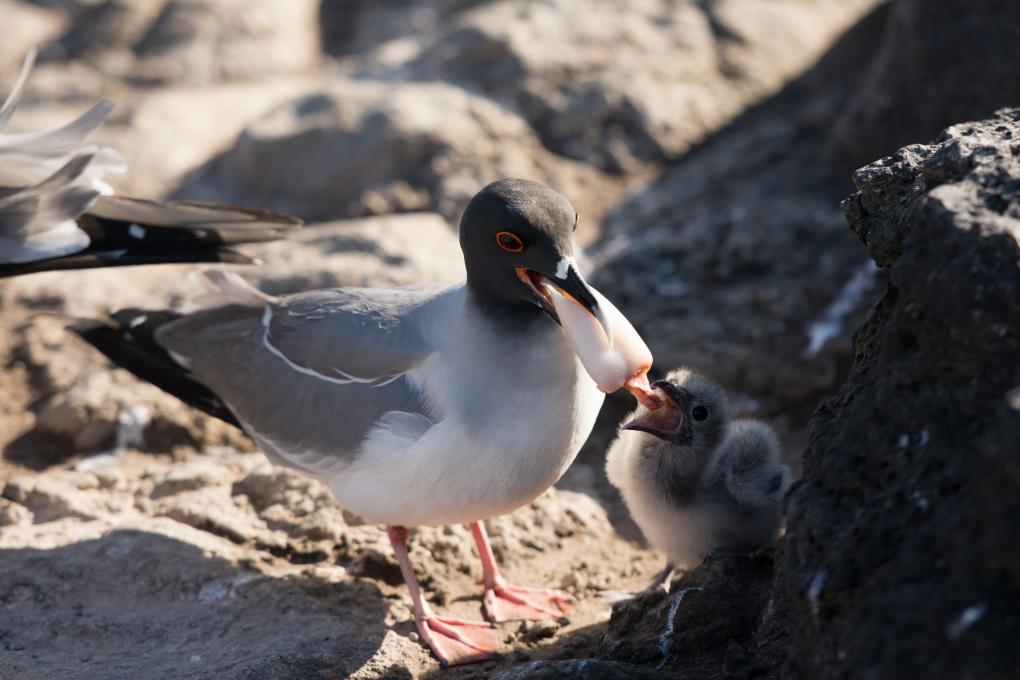
For storytelling, I like to photograph birds feeding. This is a Swallow-tailed gull feeding its chick with regurgitated squid. It was taken in the Galapagos at 420mm focal length. The Galapagos have strict rules in approaching birds, and restrict movement near bird nesting sites, as well as timing and number of visitors. This is good, as it allows us a window to the lives of the birds, as a reward for protecting their habitat and nesting grounds.
-
Wow! It is an amazing photo and story. The squid looks as big as the chick, was the chick able to eat it? Was it given to it whole or in little pieces?
-
@Isabelle What happened was that the chick grabbed the tip of the squid in a “tug of war” action and was able to extract a small piece, then the adult bird swallowed the squid back! This happened repeatedly and through co-operation, the chick ingested small pieces. I’ve been reading the Cornell Bird Biology Course and I found 2 facts that helped offer context to the behaviours of these gulls: a) birds have no teeth b) from Bird Anatomy Chapter 6 “some gulls are capable of holding one end of a large fish in the esophagus whilst digesting the other end in the stomach.” If you are interested, I’ll do up the next couple of frames and share this with you :)
-
@gnu_photographer That is super interesting. Thank you for the info. I'd love to see the other photos showing this behavior. Thank you!
-
-
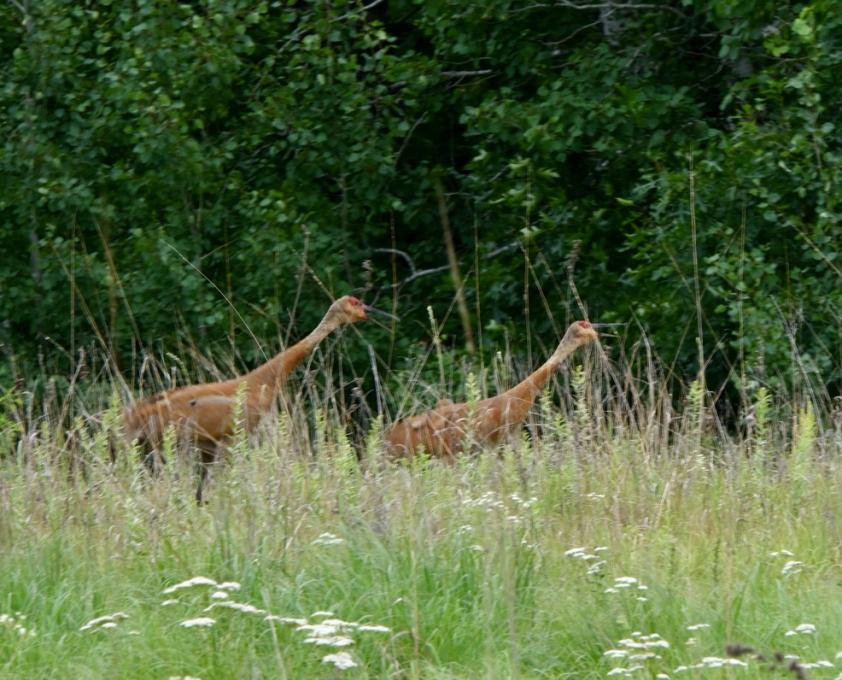
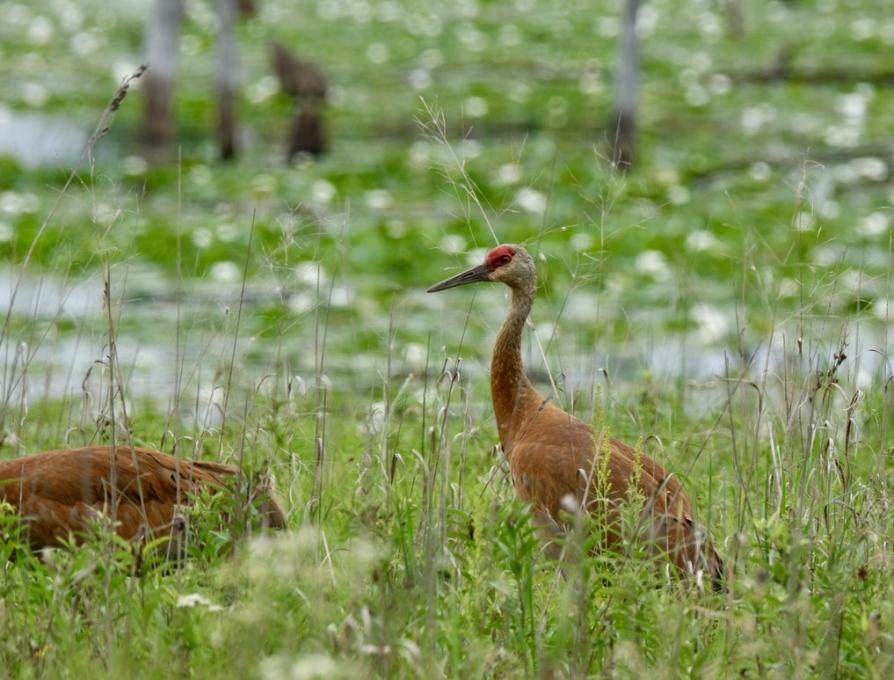
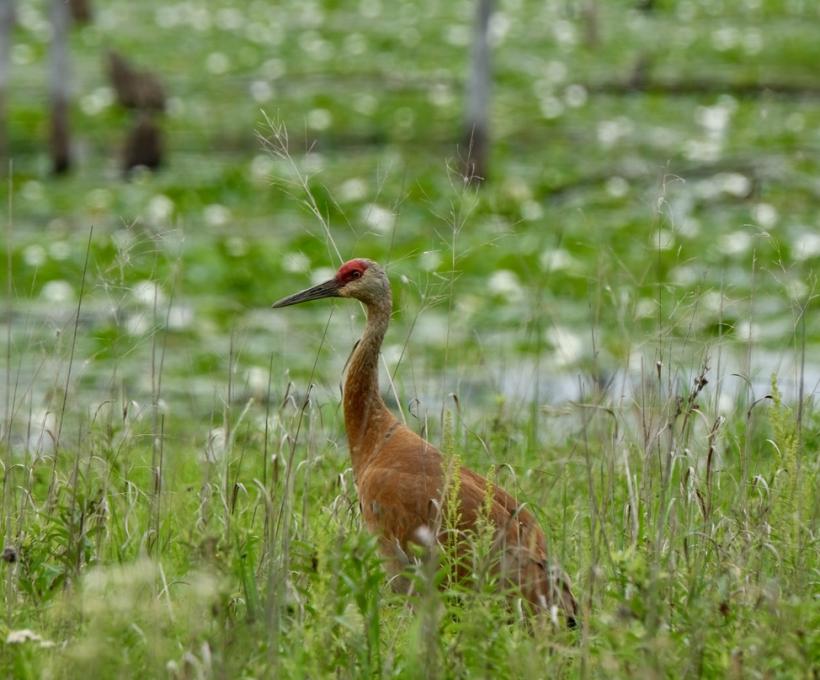
I visited these Sandhill cranes at Sherburne National Wildlife Refuge about an hour away from me. I took all these photos from my car so as to not disturb them. The first photo was a bit of a disappointment to me as it wasn't as focused as I hoped. However, it shows their habitat and them calling out to others. Their call is distinctive and it was what always alerts me to when I am nearby them. The second I also was a bit disappointed by because of only catching the rump of one of the cranes. Then I thought, what the heck, it shows how close these two are. Finally, the last one was when I isolated the bird and made sure my focus was on the eye with the aperture wide open. It still shows the grasses surrounding it which makes it a bit messy, but it does convey the habitat of grasses and wetlands that are common to the Sandhill cranes.-
I like the first photo too, it is the most interesting to me - makes me want to research what their call sounded like and why they are calling :) To me, the story of the photo overcomes the need for tack sharp focus.
-
-
Tell a story: I have a male black-chinned hummer which fiercely protects "his" feeder. I knew the second an intruder was in the area by his wide-flying arcs and deep dives.
-
Great story!
-
-
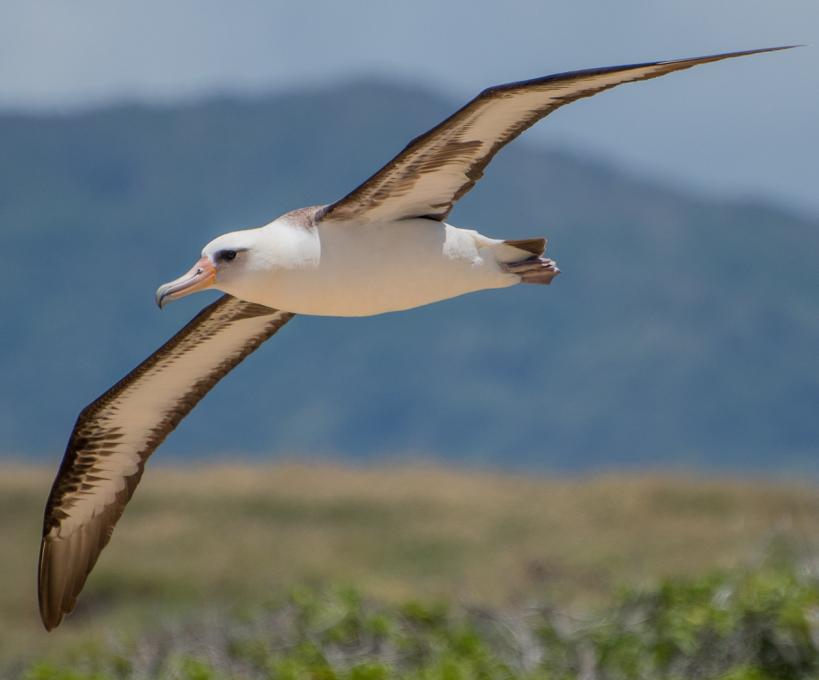
This one also show the hills but a close up on the bird. It needs more room to fly into. :-)
-
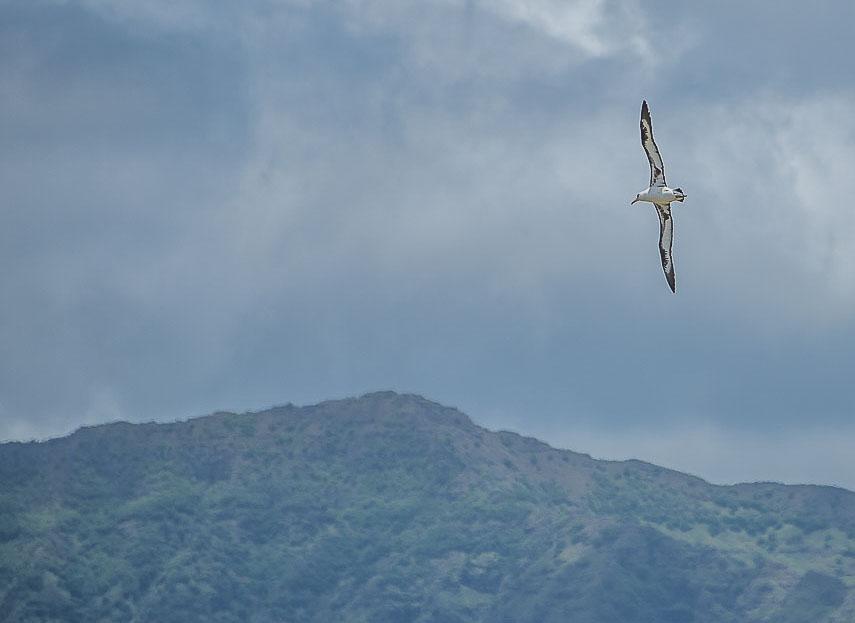
Habitat: This photo of an Albatros in Hawaii, show the pretty, lush hills near their nesting site. It is a protected area with a huge fence around it.
-
Great detail of the bird in the first photo but I prefer the bird in its environment as it gives me a better sense of scale and the bird's wings are beautifully detailed.
-
@Fred Thanks, Fred. It's my favorite, too.
-
I really like the composition of this second photo, the horizontal line of the mountain and bird's body and the vertical line of its wings. Great photo!
-
-
I've just spent far too long browsing my 'bloopers'! This last lesson from Melissa has really expanded my thinking on the storytelling aspect of bird photography. I was already aware of that aspect but even more so now.
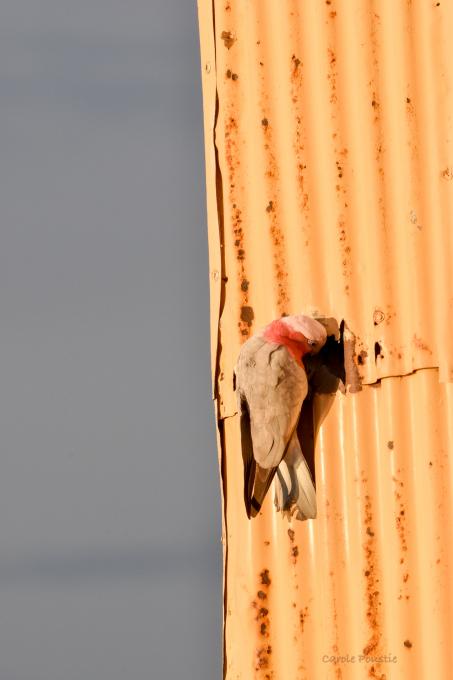
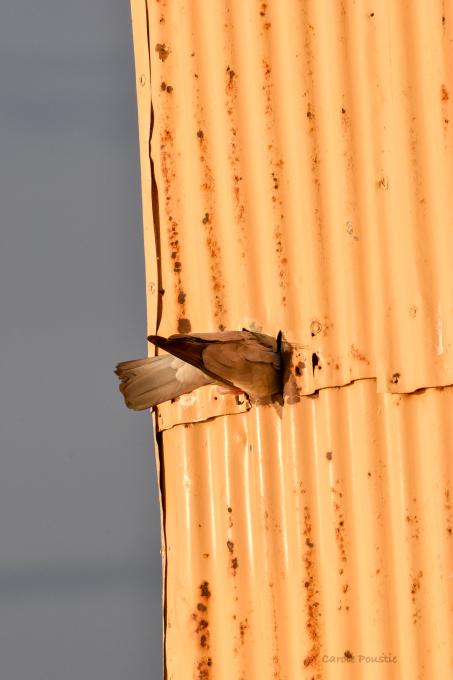
I was out walking along the Queenscliff (south coast of Victoria Australia) pier that houses an old dilapidated boat shed at the end of it. On several occasions I've noticed a few galahs hanging around here later in the day. I watched one displaying some unusual behaviour — alighting on the side of the building and continuously poking its head into a hole, then looking around. Then it became apparent what was going on! Hope the photos tell the story. -
Absolutely it tells the story! Really wonderful. I too have had my thinking and assumptions changed by this course, particularly the bloopers I have taken. I may need to change my editing of my photo collection.
-
@Julia Nice series and cool bird
-
-
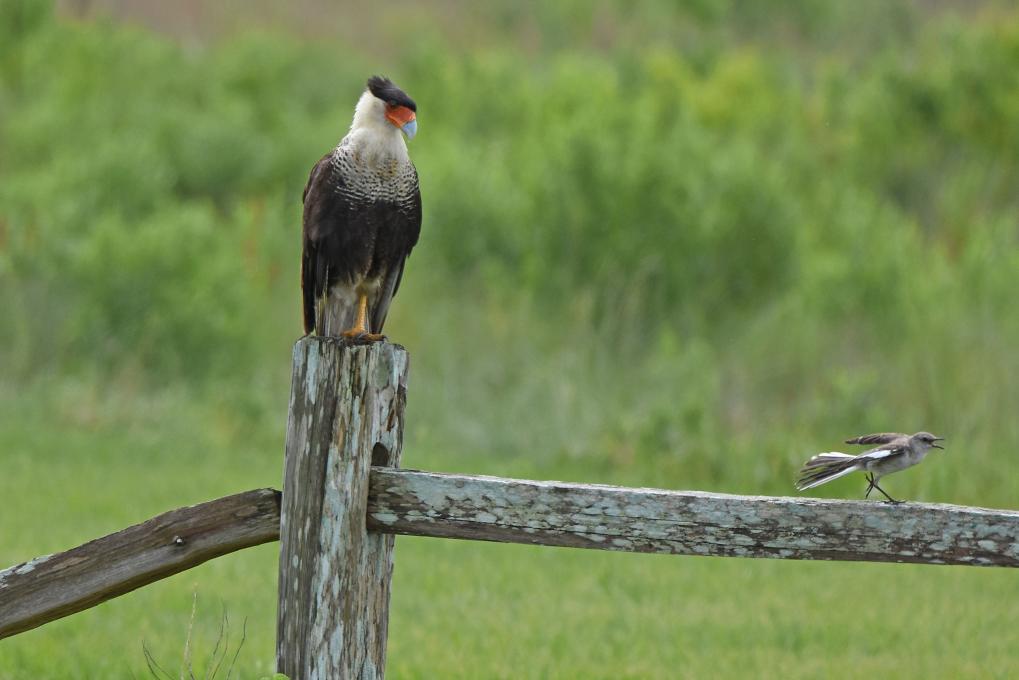
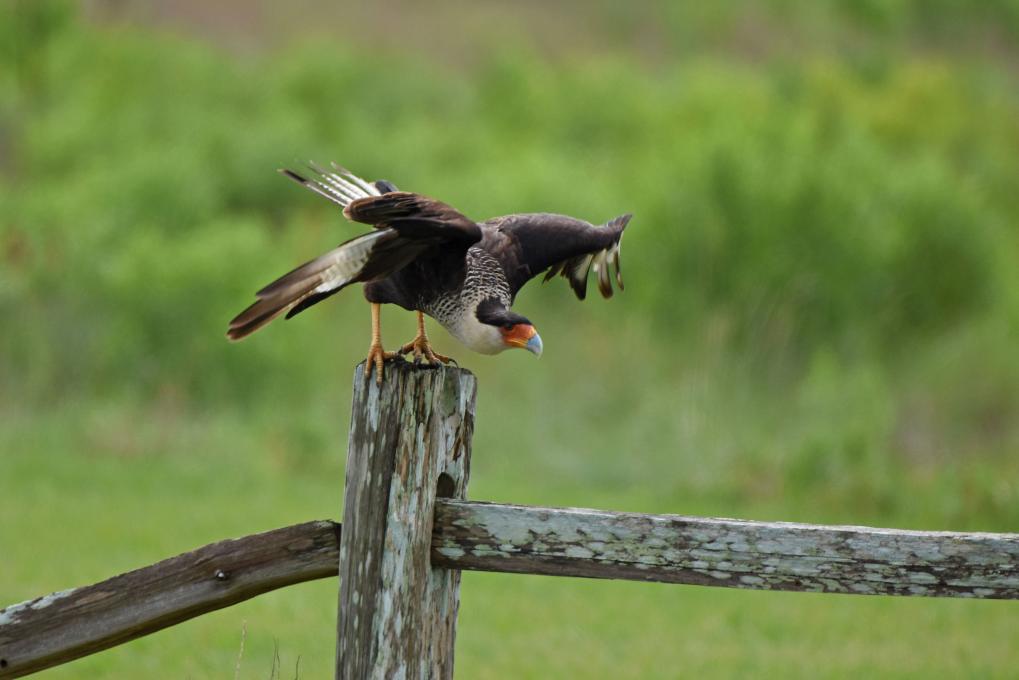
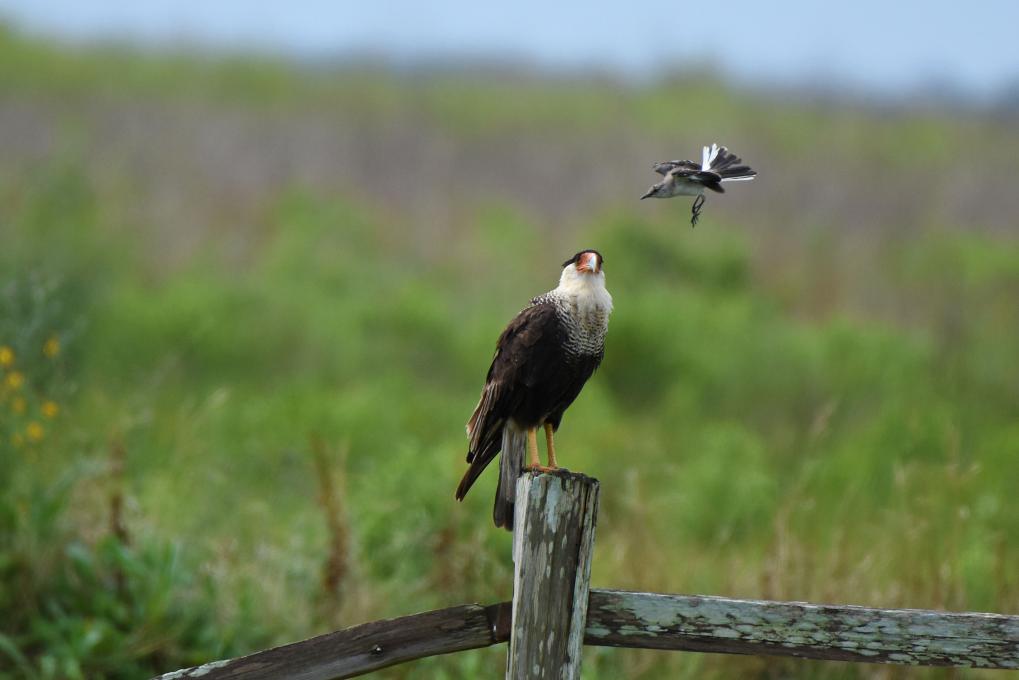
The Crested Caracara is what made me pull over for this shot. After that I noticed the mockingbird that was relentlessly harassing the caracara. Mockingbirds are know for their fierce protection of their territory and nesting area, often taking on much larger birds, animals and even humans. In the end the mockingbird won and the caracara flew away. These were taken during harsh Texas afternoon sun so I did work with shadows and highlights to soften up some.
-
Wow! Great shots that really tell the story!
-
@Carole Thanks!
-
Wonderful storytelling! Some days I feel like the Crested Caracara and someday the mockingbird!
-
Great pictures and story!
-
Wonderful story and photos! I have seen a mockingbird harassing a red-shouldered hawk in the same way relentlessly. They are fearless.
-
Great series! Love the caracaras! What part of Texas was this taken?
-
I love the series of photos you have here and about a bird I saw for the first time in just a few weeks ago.
-
-
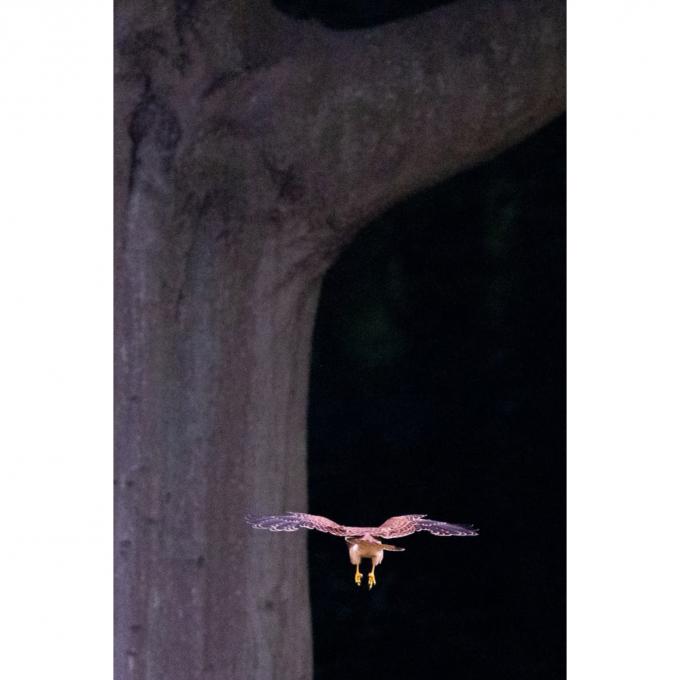
I had one of those moments that Melissa mentioned in her video - I shot this young common kestrel flying away from me rather than towards me and was a little disappointed. The funny thing is he was on his way to inspect a red squirrel on the ground (unfortunately I didn't get a good photo of that!). But when I was looking through the photos it jumped out at me as being intriguing. The bird is flying into the darkness (which looks almost like a cave) with its bright yellow legs dangling below it.
-
Great shot! I personally like to get a pic from the back every now and then. So many people take photos from the front of a bird forgetting photos from the back show the amazing colors and patterns birds feathers have.
-
And because you've captured the back of the bird I feel that the legs have been emphasised — so good! This wouldn't have been the case from the front where the viewer's eyes would have been drawn first perhaps to the face.
-
-
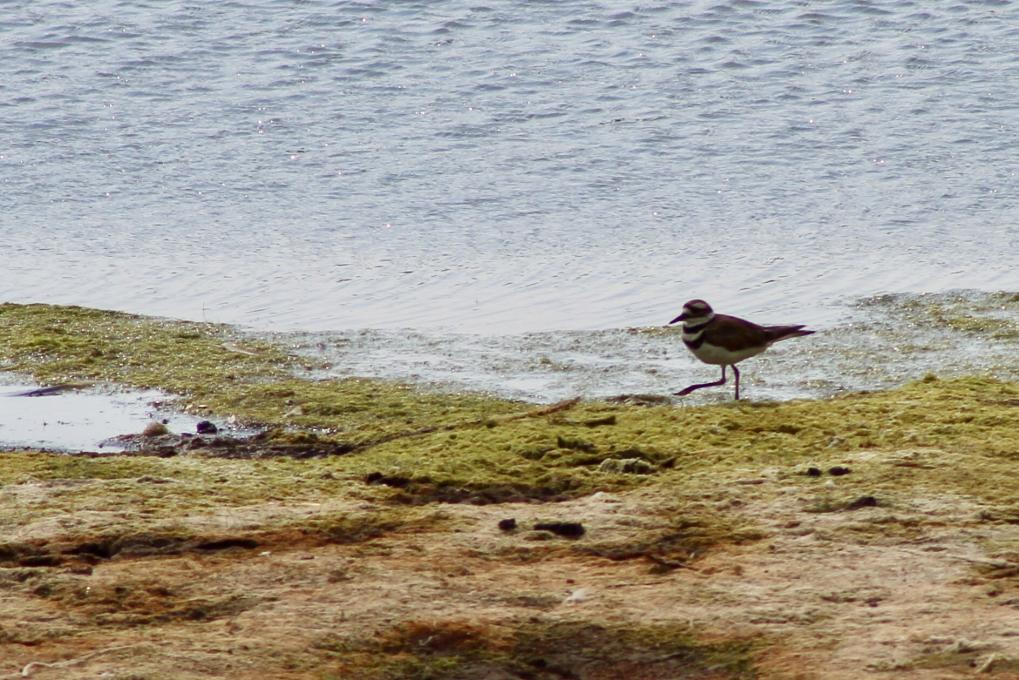
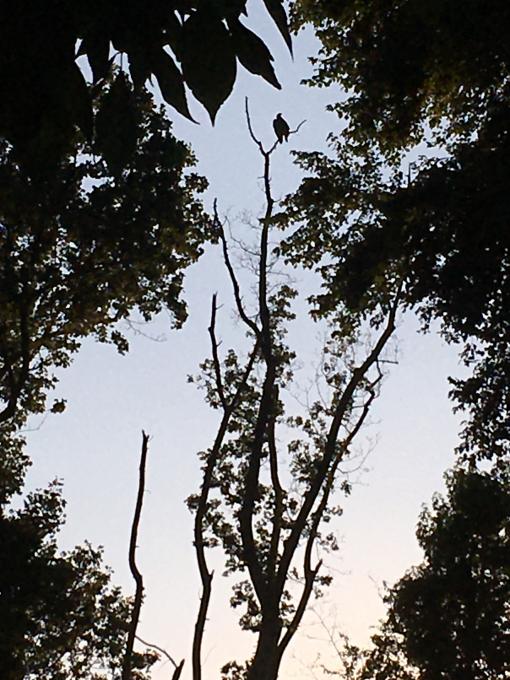
Two photos, both of which capture habitat rather than just the bird, and one of which has unusual lighting. The first, a Killdeer at South Cape May Meadows, leaves the bird in a smaller area of the picture (but still using rule of thirds) to show more of the wetlands habitat. The second, a backlit juvenile Bald Eagle, was actually just a quick iPhone snapshot to show the location (near Belle Haven Marina on the Potomac River), but the symmetry of the trees and the silhouette of the Eagle made for an interesting picture.
-
For the last 4 evenings I have gone to a location where I can sit and observe the birds fly in, forage, and engage in interesting behavior. Between 7 and 8 pm I have found at least 5 Snowy Egrets, 2 Black-necked Stilts, 2 Black-crowned Night Herons, and on the first evening 5 Black Skimmers skimming. Also a couple of Black Phoebes that fly in and perch on a close snag. Grackles abound, also a Mallard with chicks, and Red-winged Blackbirds. This is a marshy area that I drive to and then walk about 500 yards to a viewing platform. This is a well-known birding location in Santa Barbara - Andree Clark Bird Refuge.
I'm using a Canon 7D Mark 2 with a very old 100-300 lens ( from film days) with a 1.4 adapter. I've just completed the lesson on "telling a story", so I shoot a lot - (RAW) in burst mode (AI Servo). This is the first time I've tried shooting in Manual mode, setting my aperture to F8 (the widest available to me). The light is coming from behind me and the side as the sun is setting. Since I am not usually able to adjust my settings rapidly enough I get many photos (of the white egrets) that are very overexposed, and as the light fails my shots of the Black-crowned Nights Herons that suddenly flew out of the reeds where they were hiding these shots were quite underexposed.
There is one series of shots in which 2 Snowy Egrets were actively engage with one another. This occurred suddenly and at first I though this was dominance behavior, but is has occurred to me rather that it is mating behavior, something I've never observed before.
I have used the editing software provided with my Canon camera to edit the photos. I don't have Lightroom and my Photoshop is very old. All in all this has been a very interesting and challenging learning experience. I have posted a large group of my selected images on Flickr - where I have a PRO account. https://www.flickr.com/photos/digolov/. Scroll down until you find the Skimmer, always an exciting find for me.
Would love to have feedback. Dika Golovatchoff, Santa Barbara, CA. July 8, 2020.
-
Wow! Some great action shots! I love the one of the egret that looks as if it is running across the water.
-
-
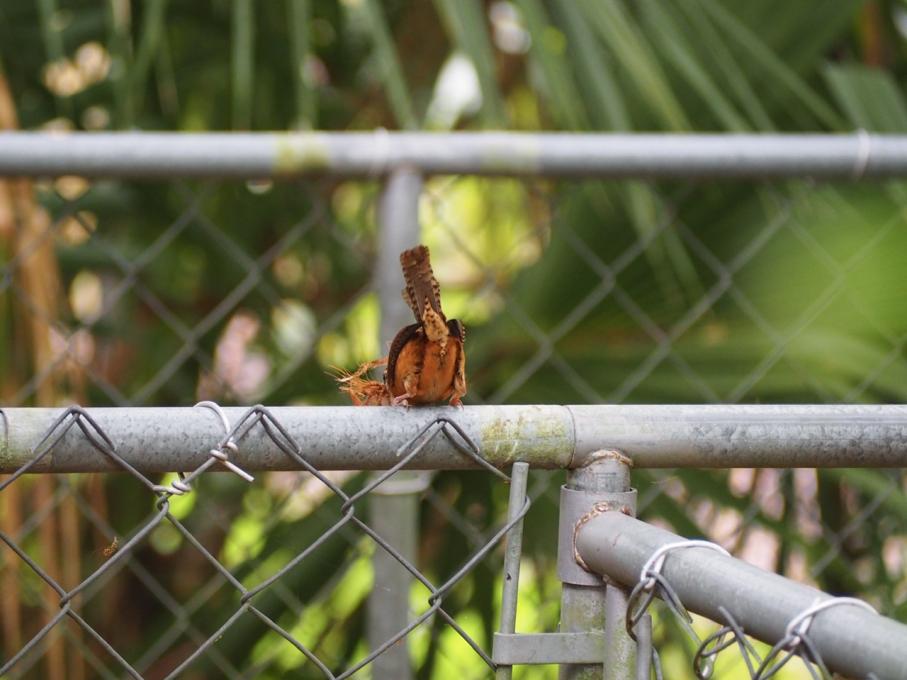
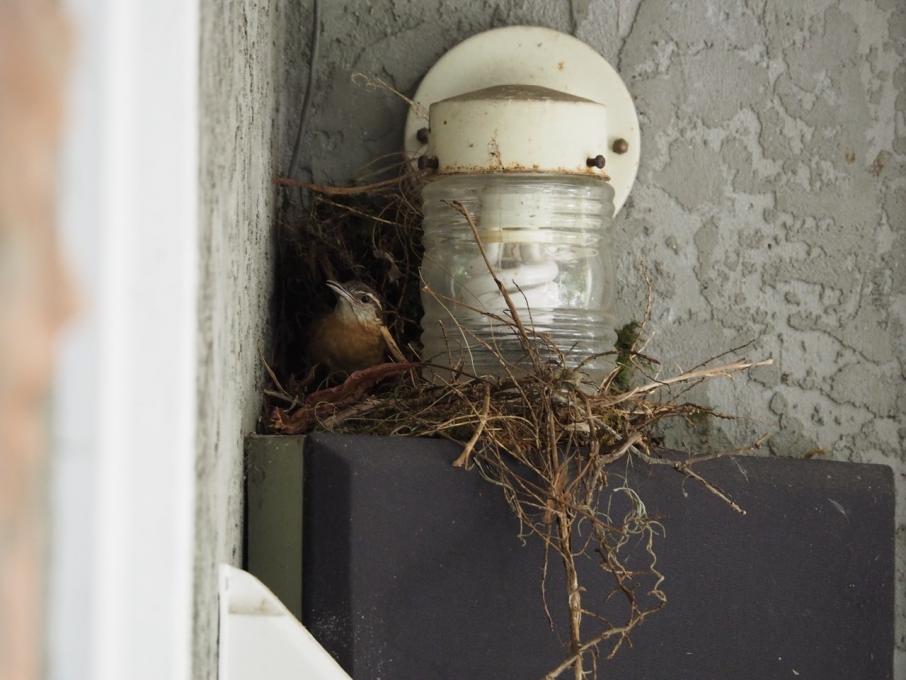
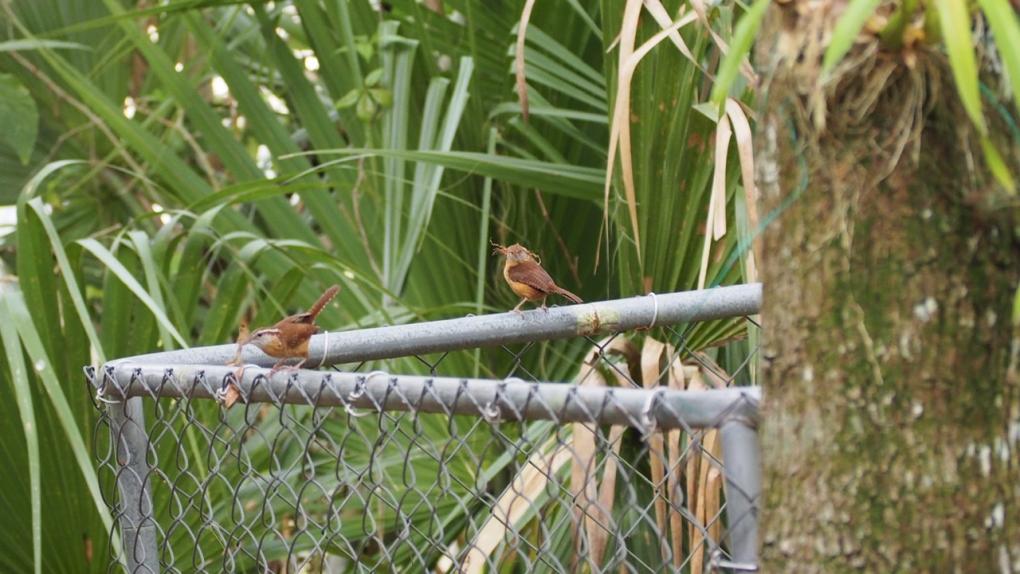
I spotted a pair of Carolina wrens gathering nesting material. They were on the top of a link fence and were building the nest, next to a light, on top of a speaker on the porch, which I thought was odd, given the amount of alternative natural sites on the property. I have since learned they are quite prone to nesting in domesticated areas. I thought the contrast of the habitat opposed to nature was interesting. I also chose to take a shot from behind one of them for a change from the norm.
-
Goodness! Does that light work?! Will they be in for a surprise one night? Oh!
-
Those are great photos they really bring us into the intimacy of the nest building of this pair!
-
-
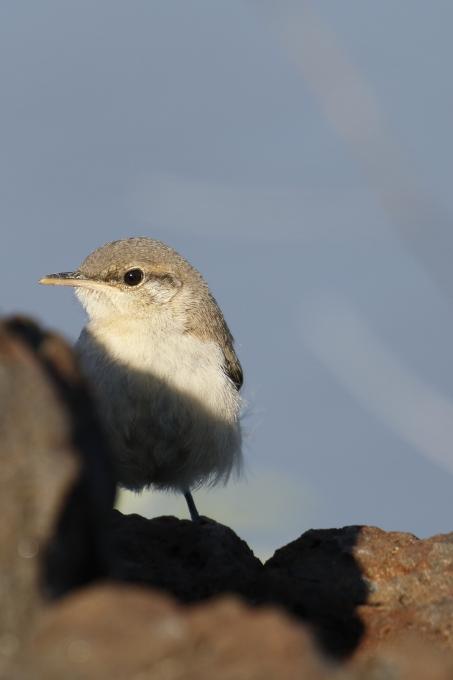
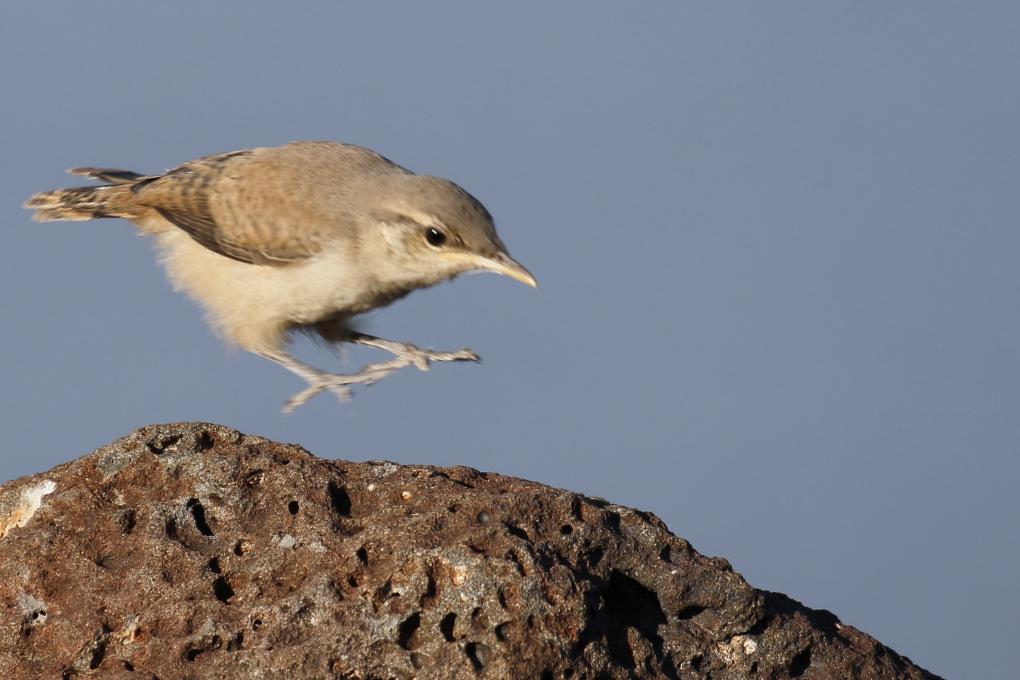
I went to a nearby reservoir and bird Reserve yesterday evening to catch waterfowl and shore birds in the sunset, but ended up spending over an hour with a family of Rock Wrens. They were quite friendly and let me hang out with them until sunset. I have several classically composed takes from the session but I pulled aside a few that I thought were interesting. The first shows the wren nestled next to a rock and has some unusual shadowing. The second is of one wren in immediate flight off of a rock.
-
Lovely shots!
-
I like the action of the second one and also to see it jump on a rock!
-
-
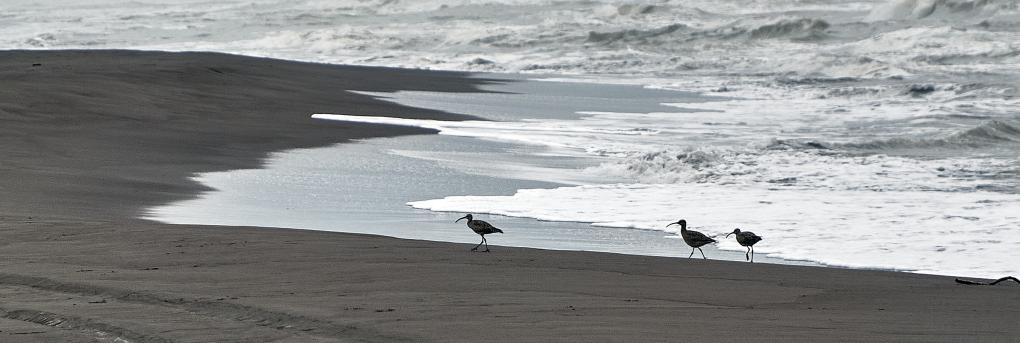
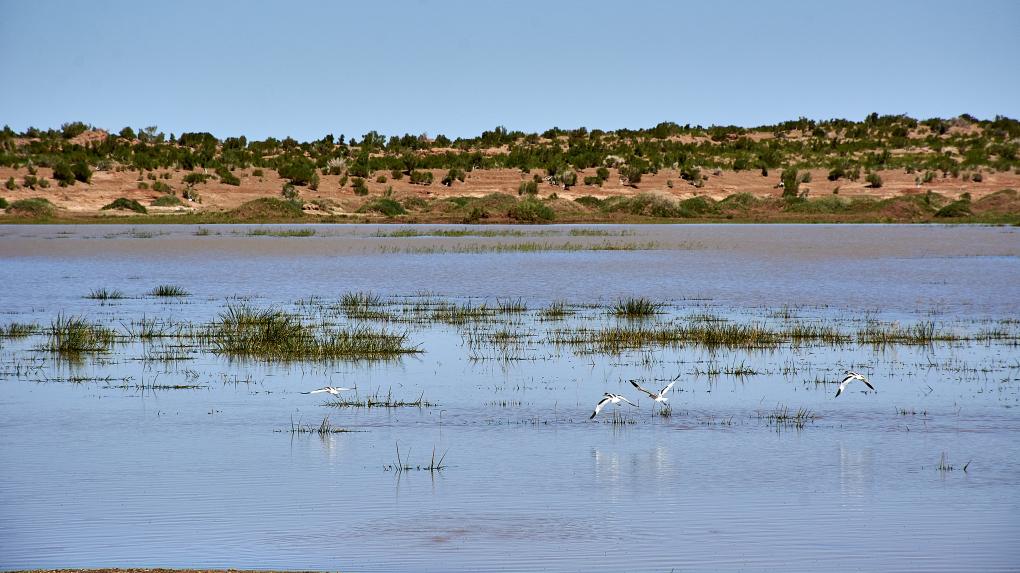
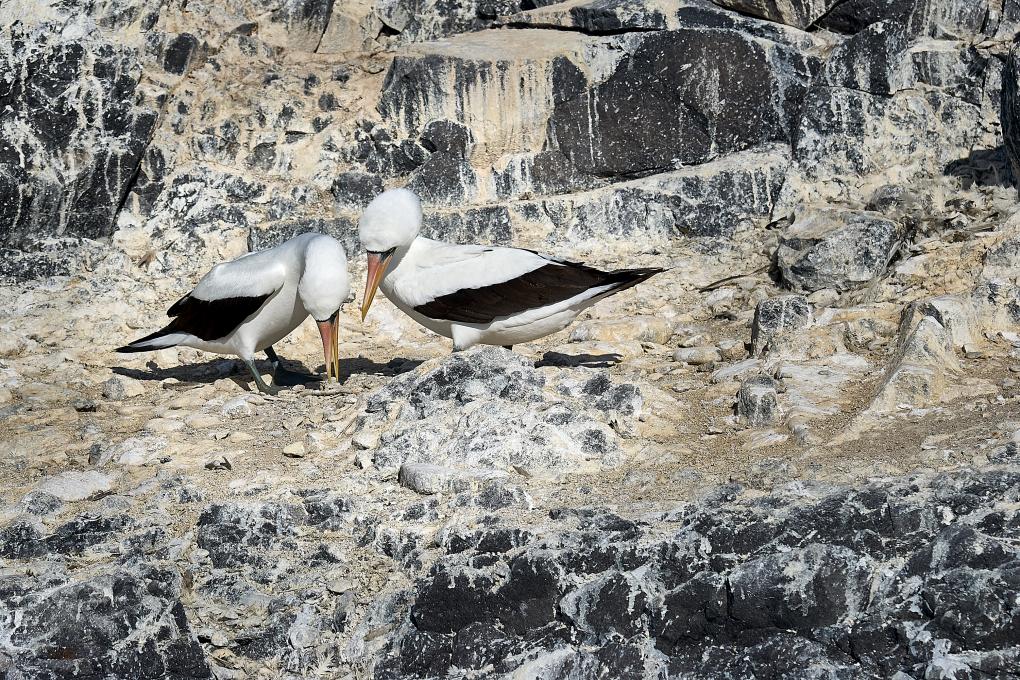
I have come to be extremely fond of environmental photos of birds as opposed to bird portraits and try to capture as much of the environment as possible while still keeping the bird or birds sharply defined, even if small in the frame. Two examples are the backlit Whimbrei and the Pied Avocets with their distinctive black and white patches and curved bills. I also like capturing stories as this one in a series depicting Nazca Boobys courting and nest building.
-
I love this photo! It makes me feel the bond between these birds.
-
Yes — that third photo really tells the story of their bond. You can feel it. Great shot.
-
All great, but that last one is really special. Not just the bond, but the black and white of the birds and rocks make for a nice "feel". Great work!
-
All of those photos are beautiful, they really take us where the birds live, it is as if we were walking with you along the shore and seeing the scene in front of our eyes. Wonderful!
-
Super shots...sharp and storytelling in perfect harmony.
-
 I love stories with a happy ending!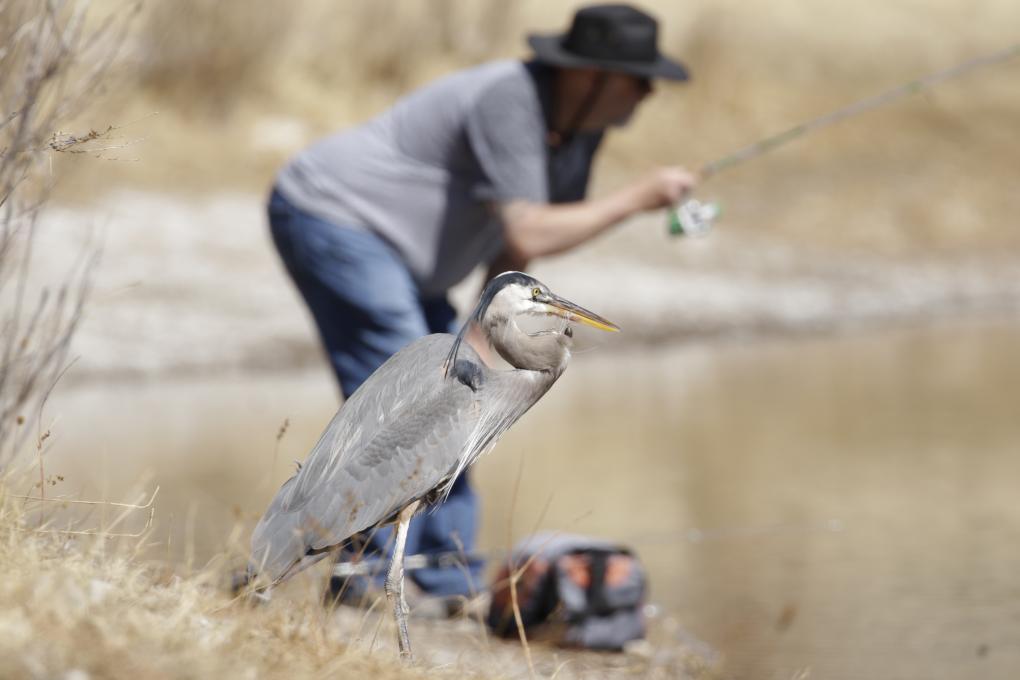
 I saw this recycling bin for fishline just last week and hope to use it in a future story of mine.
  reads the story and feels sad. (Mother Nature shown brightly from the west, an hour before sunset, in this series, so the opportunity for a gloomy shot didn't happen.)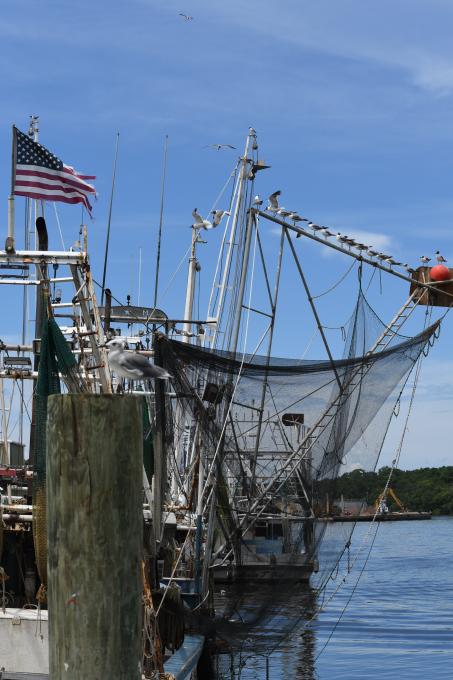
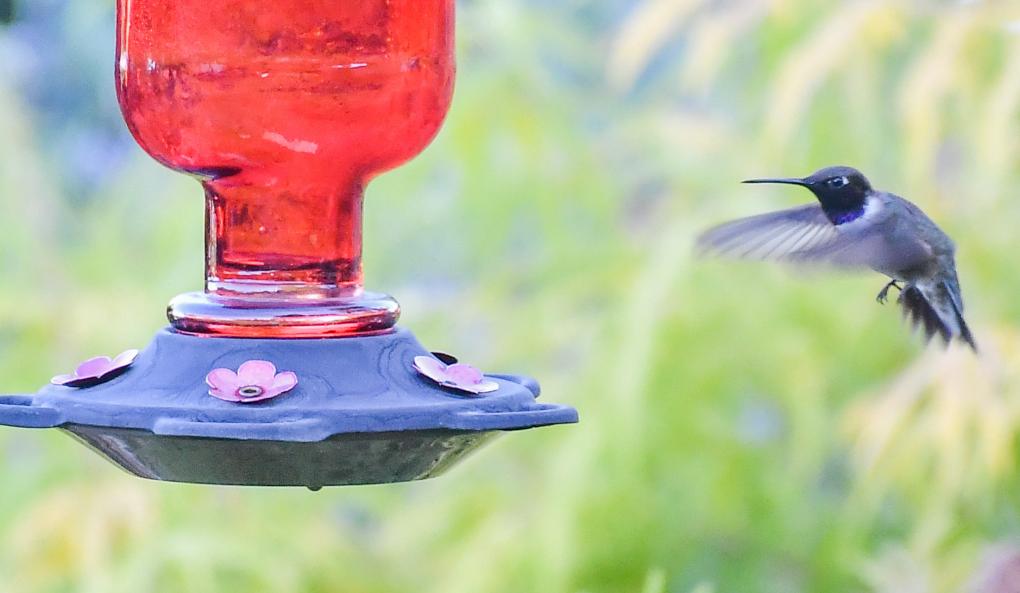
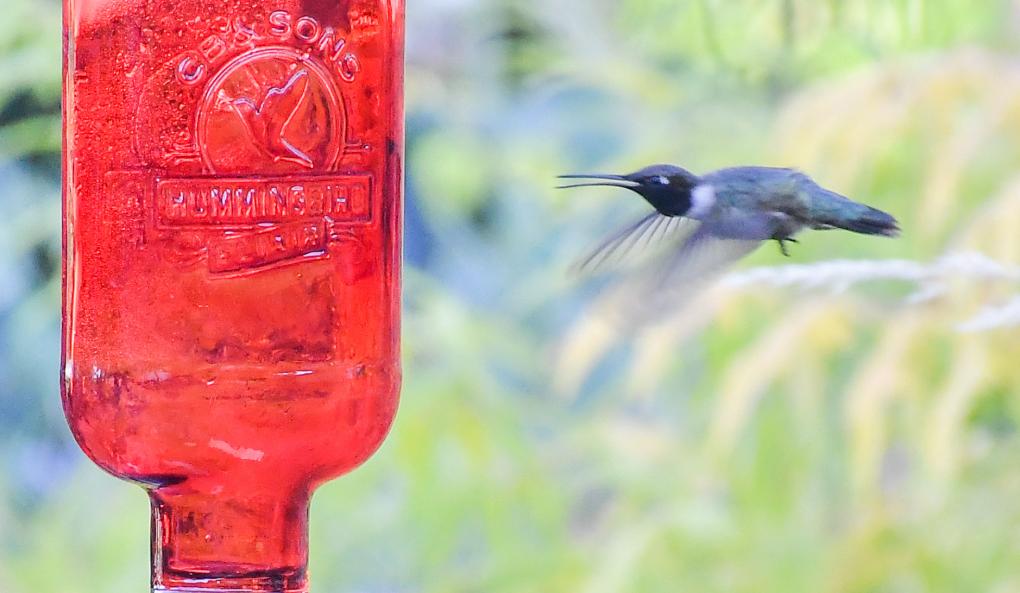
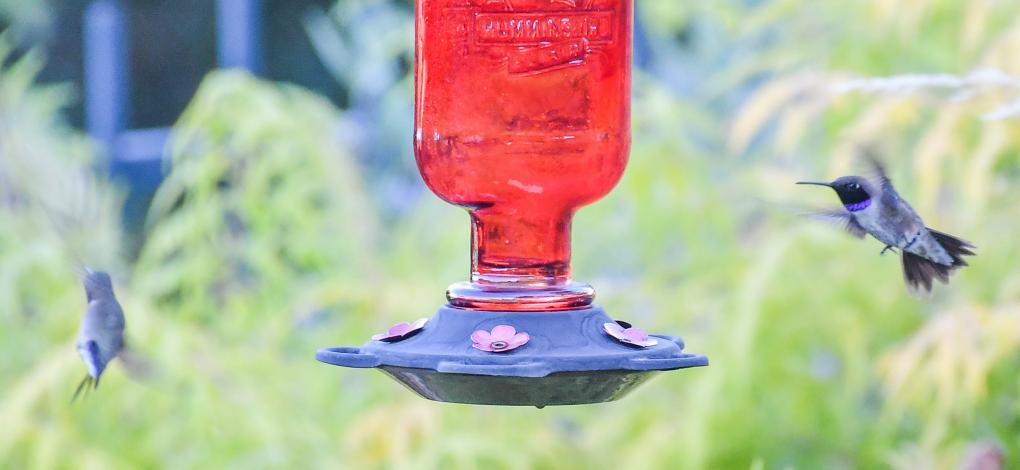 Tell a story: I have a male black-chinned hummer which fiercely protects "his" feeder. I knew the second an intruder was in the area by his wide-flying arcs and deep dives.
  This one also show the hills but a close up on the bird. It needs more room to fly into. :-)
  Habitat: This photo of an Albatros in Hawaii, show the pretty, lush hills near their nesting site. It is a protected area with a huge fence around it.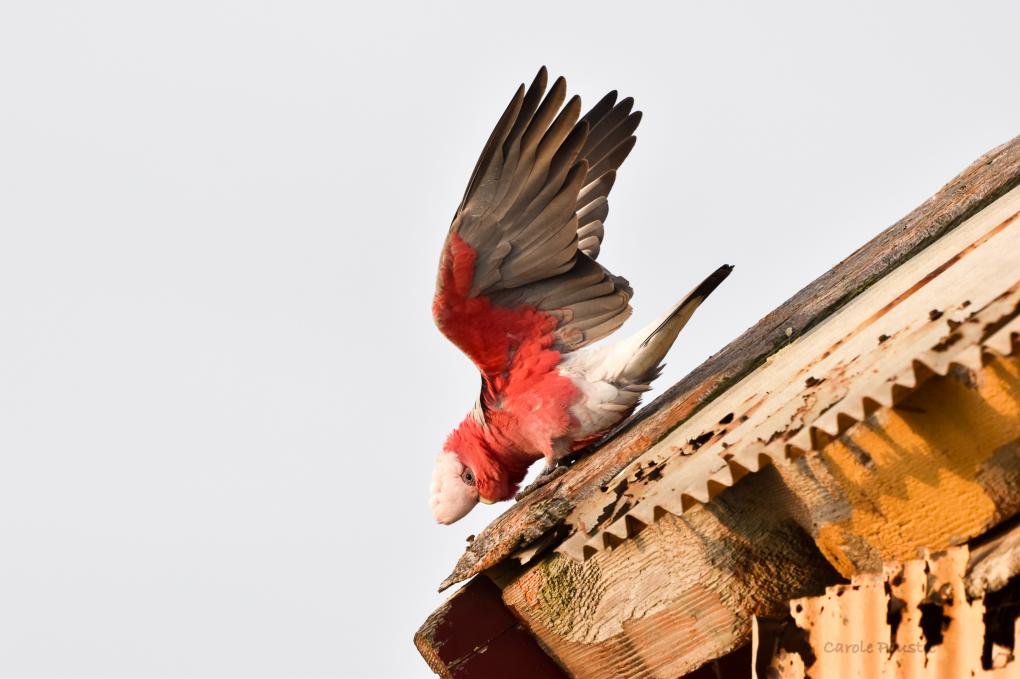
 Two photos, both of which capture habitat rather than just the bird, and one of which has unusual lighting. The first, a Killdeer at South Cape May Meadows, leaves the bird in a smaller area of the picture (but still using rule of thirds) to show more of the wetlands habitat. The second, a backlit juvenile Bald Eagle, was actually just a quick iPhone snapshot to show the location (near Belle Haven Marina on the Potomac River), but the symmetry of the trees and the silhouette of the Eagle made for an interesting picture.