Samantha: All right. Welcome again to today’s event. Are you an expert? First things first. Today’s webinar is hosted from Ithaca, New York, where both Cornell University and the Cornell Lab of Ornithology are located. It is important to recognize the original stewards of this land, the peoples who have a historical and continued connection to this place, and the traditional ecological knowledge held and shared from these communities.
Please stay with me as I read a brief statement acknowledging and made in collaboration with the indigenous people of this area. Cornell University is located on the traditional homelands of the Gayogo̱hó:nǫɁ, the Cayuga Nation. The Gayogo̱hó:nǫɁ are members of the Haudenosaunee Confederacy, an alliance of six sovereign nations with a historic and contemporary presence on this land.
The Confederacy precedes the establishment of Cornell University, New York State, and the United States of America. We acknowledge the painful history of Gayogo̱hó:nǫɁ dispossession and honor, the ongoing connection of Gayogo̱hó:nǫɁ people, past and present, to these lands and waters. All right. With me today is Robyn Bailey, project leader of Nest Watch, who is joining us live to provide her expertise to our trivia answers as we go.
Robyn manages the research, education and communication initiatives for Nest Watch, the Cornell Labs participatory science project focused on nesting birds. The Cornell lab has been monitoring nesting birds reproductive success since the 1960s, and this long term data base is the nation’s richest source of information on avian reproductive biology. A large focal area of the project is nest boxes, and how best to provide them and support the birds which use them.
Through Nest Watch, her research and writing. Focus on small things we can all do to help birds every day. Robyn’s inspiration comes from helping others find an emotional and intellectual connection to nature. She finds baby birds to be a very relatable way to do that, while also finding the esthetics and engineering of nesting of nests and eggs to be astonishing.
All right, now let’s dive into the game.
Let’s start with a practice question to get everyone used to this platform. Do you do Nest Watch? There’s no wrong answer here. We are just curious. This is purely for practice. So let’s get used to this so we can click yes or no. And it’s totally fine. Whichever one.
All right. Looks like we have quite the mix here. All right. And you’ll notice this leaderboard, it will show up between our questions. And for the sake of time, we’re going to skip over them between questions and look at them between the different rounds. All right. First part. These questions are all about nests. Are you ready? First question.
True or false? All birds make a nest. Click. Blue for true and false. Red for.
Robyn: False.
Samantha: All right. Get your answers in. Just a few more seconds.
Robyn: I’m in.
Samantha: All right. Fast. Good job. Everybody. All right, Robyn, tell us a little bit more.
Robyn: Yeah, it looks like most people got that one. It’s cracked, but not all birds make a nest. But, of course, there does still need to be a place where birds incubate their eggs and care for their young. But some birds have evolved other ways to do that. So, for example, the emperor penguin lives in a really cold environment and doesn’t have access to a lot of nesting materials, so they don’t make a nest.
They have a different way. They incubate their eggs on their feet. Some birds will simply place their egg on a branch like this, common PO2 in the photo, and just incubate it right there on the branch, and other birds will reuse the nest that was left behind by a different species. So, for example, great horned owl and merlin will often just adopt a nest that they find that another bird made.
Samantha: Great. Yeah. It’s so interesting. The different variety of nests and not nests you can see in bird. Awesome. All right. Great job. Next question. Which type of nest is pictured here. You’ll see in the picture in one second this red bellied fruit dove. Is it a cup cavity or platform nest? What do you think?
All right. Just a couple more seconds. Get your answers in as a platform nest. All right, Robyn, tell us, what is a platform nest?
Robyn: Well, this one was a bit tricky. Platform nest usually just kind of looks like a pile of nesting material. It can be a small pile or a larger pile. We’re looking at a fairly small pile here. And the key is that there’s usually a shallow depression on top of the nest that contained the eggs, and that’s where the bird will come in and incubate and care for their young.
So, we can see a little bit of that in this photo. We don’t see the eggs, but we can see that there’s kind of a fairly flat, fairly flat platform, which makes it not a Cub, not a cavity. So it’s a platform.
Samantha: Okay. Awesome. All right, next question. Is a bower a nest? And see this vocal bowerbird bower right here in this picture. Is this a nest yes or no.
Okay. Get your answers in. Oh, we are divided. Robyn, what is a bower? Why is it not a nest?
Robyn: It’s not a nest. Male bowerbird build these really unusual structures called bowers, which function exclusively just to help them find a mate. That means it’s part of their display and attracting a female. So it’s not a nest because the nest is a place to contain the eggs or young and to raise your offspring. And the bower has no part in that.
Yeah.
Samantha: So you could think of it almost like the bower is a stage. And the nest is the nursery.
Robyn: Exactly. Exactly.
Samantha: Okay. Next question. What strange nesting material is often used in hummingbird and vireo nests? So you can see this yellow throated vireo nest in the picture here.
Is it snakeskin spiderweb cigaret.
Robyn: Butts.
Samantha: Or mud?
Spiderweb. All right. Yes. Good job. All right. Robyn. Why? Spiderweb? What’s it used for?
Robyn: Well, spider web is kind of like nature’s elastic. It’s strong, it’s stretchy, and it’s also sticky. So it can help hold the nest together. If you look closely, I think you’ll be able to see some spider web on the outside of this nest. Here.
Samantha: Yeah. I mean, do the threads kind of going up and down it if you look real closely.
Robyn: They’re pretty common nest material. Yeah.
Samantha: All right. Last question of this round. Which bird species holds the record for the largest nest? Is it the Andean condor, sociable weaver, bald eagle or common ostrich?
Okay, just a few more seconds. Get your answers in.
Robyn: Ooh! Spread.
Samantha: All right, Robyn, tell us about the bald eagle nest.
Robyn: Yeah. So the answer to this is the bald eagles nest. And that’s because the largest nest ever recorded. That means the largest that we know of with a bald eagles nest in Saint Petersburg, Florida. That nest was 9.5ft in diameter and an impressive 20ft tall. It was estimated to weigh about two tons. Now the bald eagle’s nest can become that large because they reuse their nest and add to it year after year, sometimes even for decades.
So this nest was a real whopper. Yeah, yeah.
Samantha: Huge. All right, all right. We are at the end of our first round. Let’s look at our leader board. All right. King, let me, Wild goose chase there. And. Right you are all at the top. But anyone who’s not don’t feel bad. There are still plenty of chances to climb up the board. There’s so much game to play.
Robyn:
Samantha: And if anyone has joined in late and you’d still like to join, you can go to WW Kahoot dot it and enter the pin at the bottom of the screen. All right, we can start our next round. This one is all about eggs. First question what is the temporary structure on the tip of a bill used to break open the eggshell by chicks?
Is it called the egg tooth hatch? Tooth tipping point or bill cap? You may be even able to see it at the end of this bill. And the spotted sandpiper.
All right. A lot of people got an egg tooth. All right, Robyn, tell us a little bit more about the egg tooth.
Robyn: That’s right. The egg tooth helps. Baby birds break out of their egg at the little sharp point made out of keratin. It is temporary. So it does fall off after hatching, or it can be reabsorbed, which is why we don’t see it. Adult birds in the wild. Most birds have an egg tooth, including not bird animals.
This is a pretty common adaptation for even species like turtles and crocodiles to have an egg tooth, so it’s a pretty cool thing to have. Awesome.
Samantha: All right, next question. What is the term for a species that lays its eggs into the nest of another species? Is it a brood body? A surrogate parent, a brood parasite or host parent?
I think folks think. Just a couple more seconds.
All right. A lot of folks got this brood parasite. Robyn, tell us on a little bit more about brood parasites.
Robyn: You know, good job. Most people got that one. That means, you’ve heard of our brood parasites. Our most common one here in North America is the brown had a cowbird. These are birds that lay their eggs in the nest of another species for them to raise. And there are about 100 species of, of bluebird parasites worldwide.
It is a rare strategy given the total number of birds out there.
Samantha: Yeah, yeah, I know brood parasites have a bad rap, but, I study the black cat vireo, and, they’re one of the species in North America that’s heavily impacted by, brood parasitism. And I still love bird parasites. I think they have such a fascinating biology. So how do they know how to be a bird parasite?
Why don’t they think they’re a bluebird if they’re raised by bluebirds? Right. It’s very, very cool. In my opinion. All right, I’ll get off my soapbox and we can go to the next question, though. All right. Which bird species was impacted by DDT eggshell thinning effects. Was it the bald eagle, brown pelican, osprey or all of the above?
All right. Catch your answers in just a few more. All of the.
Robyn: Above. All right.
Samantha: Robyn, tell us what. What is DDT for anyone who might not know what happened with it.
Robyn: Yeah, DDT was a pretty commonly used pesticide that was widely used to control insect borne diseases. And crops, that were being eaten by pests were sprayed with DDT to control the pest. It was introduced in the 1940s. But the issue with it is that it bio accumulates in the food chain, meaning it especially affects large, predatory species.
And this pesticide causes eggshells to become very thin. And that means that the eggs would break when the parent bird would try to spit on the egg and incubate it so they couldn’t develop normally. And all of the above species were impacted, but also additional ones like California condors and peregrine falcons. It was happily banned in the US in 1972, and many species have since recovered, but it can remain a problem even today for some species.
Yeah. All right.
Samantha: Next question. What is the name of the featherless flap on an emperor? Penguins lower belly that’s used to hold incubate the eggs. Is it the bird patch, the mother’s patch, the incubation spot or the brood pouch? I will give a hint that I am being very tricky in this question.
All right. We have a split. Some fell for my trap. The answer is brood pouch. All right. Now, I mean, what is a brood pouch? And how was I being so tricky?
Robyn: The trick here was knowing the the subtle difference between a brood patch and a brood pouch. A brood patch is what we see in most songbirds. That’s a small, featherless area where birds can incubate their eggs. The unique thing about emperor penguins, is that they don’t make a nest, as I mentioned, and they incubate in some pretty extreme conditions.
So they actually have a more specialized solution, which is an extra fold of skin on their abdomen that forms a little pouch. And that’s where they incubate their egg. So very tricky. And to pay attention.
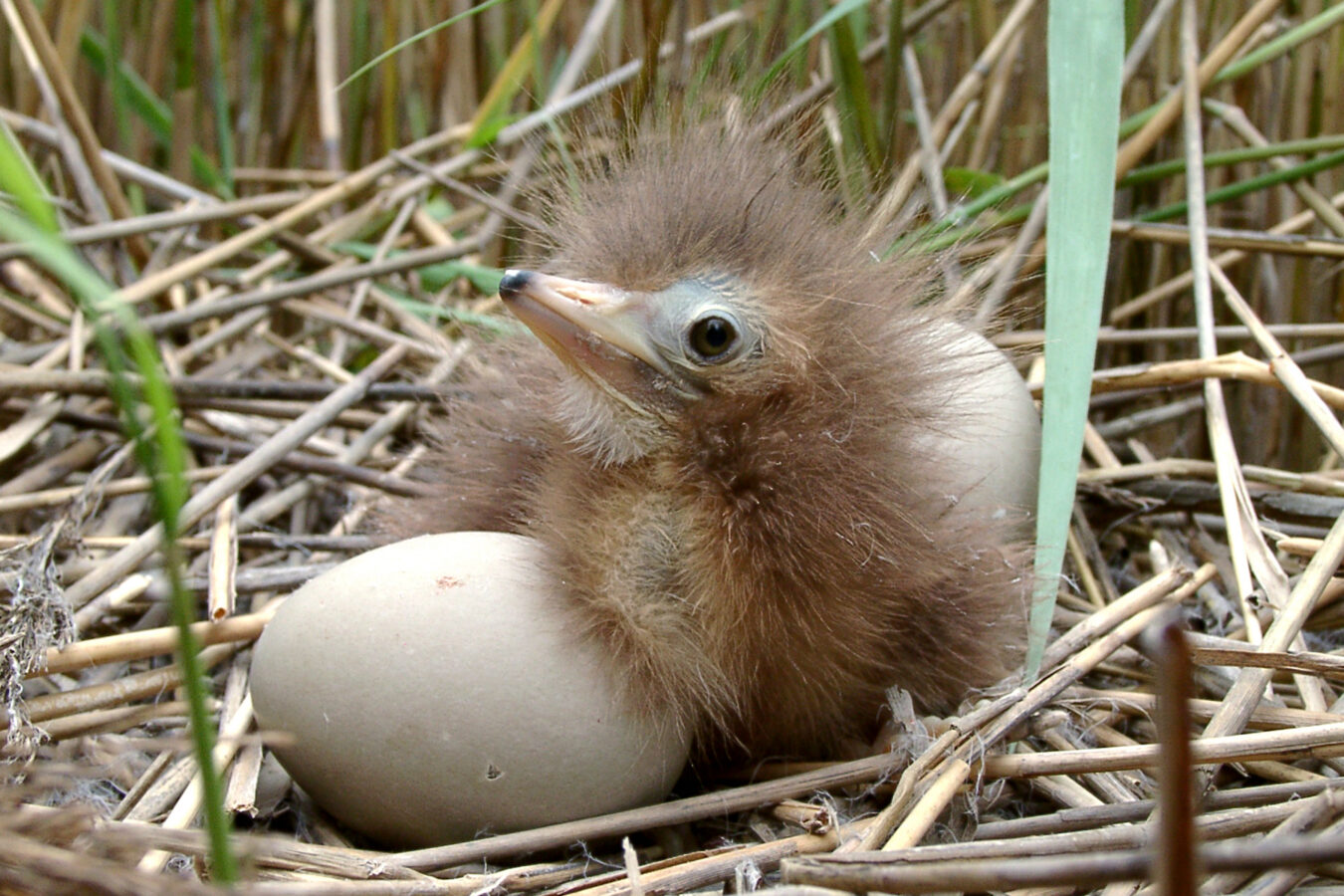
Samantha: All right. Last question of this round. Common mother eggs are conical in shape to keep them from rolling off cliffs. True or false? This is a hard question.
All right. Get your answers in.
Most people said true. All right, Robyn, tell us. Tell us a little bit about this.
Robyn: Well, I can see why most people would think this is true because it was thought to be true for many years, and it was even taught in ornithology courses. But due to some more recent analyzes, it’s actually changing and now we think that it may be due to these other factors. Based on more recent experiments, the older experiments were based on, empty shelves and museum collections or less realistic scenarios, but the more recent research suggests that it could be, a couple of other things, including, being more resistant to impact in that shape.
So less likely to break on that hard, rocky, nest that they make. They don’t really make a nest. So they lay the egg right on the rock. It also can keep that blunt end of the egg, which has the more of the pores that the chick breathes through, a little bit cleaner because it’ll be elevated up off of the ground.
And that also stays out off the ground while the parent is incubating. It, and it’s a bit more stable. So all those, you know, densely packed, murres when they’re jostling around in their nesting colony, you know, this is a shape that has evolved to help them be more successful, and it doesn’t actually stop them rolling off cliffs.
Samantha: Yeah, this is still not many places. So this is a very hard question.
Robyn: So yeah, don’t feel bad if you didn’t get this one. Yeah.
Samantha: All right. Where are the end of the first round. Let’s look at our leaderboard. All right. Wild goose chaser JB Lori Shrike. And guess it looks like JB jumped up. All right. But don’t give up. There are three more rounds to play. There’s much to learn and play. Whether you’re. But regardless whether you’re in first place or last place, I think we’re all learning cool stuff about birds and just having a great time.
Robyn: So,
Samantha: Let’s go to part three nestlings.
All right. What is the term for the action of a chick puncturing small holes through the shell? Is it cracking, pipping, hatching or cresting? I’ll give a little hint. You may have heard this term earlier in this game.
Right. Pepping. Good job everybody. All right, Robyn, tell us a little bit about pipping.
Robyn: Well, pipping, is the action of creating that first little crack in the shell using the egg tooth. Remember we talked about the egg tooth earlier. So that will be used to create a little pit in the egg shell. And it’s one of the first steps of hatching. The birds are going to create a little pip, and then they’re going to rotate in their shell and kind of create an opening where they can escape from the egg.
Samantha: Great. Okay. Next question. What type of nestling is pictured here. Bright here is an owl Tricia nestling or precocious nestling.
What is everyone think? Okay, get your answers in just a few more seconds. Ooh, I spread routine attrition. Precocious. All right, Robyn, teach us a little bit. What is an owl nestling?
Robyn: This? This is an owl, Tricia nestling. Some of the key characteristics to know about them that they hatch out of their egg. Pretty helpless. They’re naked or nearly naked, meaning they don’t have any feathers yet. They may have some wisp of down on them, but their eyes are usually closed, and they’re they’re, lying in the nest, and they’ll eventually grow and gain coordination.
And their eyes will open and their feathers will develop all in the nest with that parental care. So they’re not very independent when they hatch.
Samantha: Great. All right. Now that we know what an owl traditional nestling is, let’s go to our second question. What type of nestling is pictured here. Attritional or purposeful? I expect some people may have a little more insight now based off of the last answer.
All right. Get your answers in. Yes, it was precocious. Everyone was paying attention. Good. All right, Robyn, tell us about precocious.
Robyn: Well, yeah. So precocious is sort of the opposite end of the developmental spectrum. So bird can be anywhere on a on this developmental spectrum, from a very ultra shell to super precocious and somewhere in between. And if you’re on that precocious side, that means that you hatch in a state where you’re a little bit more independent, almost ready to go.
So these types of birds usually have their eyes open or their eyes will open pretty soon. And after hatching, they hatch with some down feathers already developed. And oftentimes they can sit up, vocalize, communicate, maybe even walk or swim pretty quickly so they might be ready to leave that nest at a moment’s notice, potentially even within a few hours of hatching.
So that’s, sort of the opposite of artificial.
Samantha: Yeah. And you mentioned that there’s a spectrum from mild Trisha to Precocious. Are there any other types?
Robyn: Yes. So kind of along the spectrum thinking again, back to artificial being the most independent or, sorry, the most, dependent, the most reliant on their parents. The next kind of category is semi artificial and that things like, raptors and herons, which have a little bit more advanced features when they hatch, meaning they might have some more down.
Their eyes might already be open, but they’re still going to stay in their nest and be cared for by the parents for probably several weeks. And then we have semi precocious, which is the next category means you’re almost precocious. You’ll still get it. You’ll have some of those features, like a layer of down feathers, and you’ll be fed by your parent, but you’re going to be in your nest for a little bit longer.
And then we have precocious at the far end of the development spectrum, which means you’re the most independent, many precocious young, can feed themselves, although some still need to be fed by their parents. But there’s there’s just this range. So from ultra short a female to show the semi precocious to precocious.
Samantha: Great. So, so many nestlings.
Robyn: Lots of strategies.
Samantha: Yes, yes. All right, next question. What is the most common food resource for songbird hatchling key word here is songbirds. The invertebrates seeds crop milk or small rodents. Get your answers in.
All right. Invertebrates. Yeah. So, Robyn, what are we talking about with invertebrates here? That’s a broad category.
Robyn: Invertebrates are things like insects, caterpillars, spiders, worms. These are all things that are really common food resources for baby birds. And that’s due to a couple of things. Their protein content and their fat content. Two things that baby birds need to grow pretty quickly, which you need if you’re, especially if you’re ultra shallow. You need to grow really quickly.
Samantha: So a lot of a lot of species that eat seeds is adult, right? You will eat invertebrates as babies.
Robyn: True. Yeah.
Samantha: All right. Last question of this round. Which of these songbird species. Oh, I should say this species do not feed invertebrates to their hatchlings. Choose all that apply so you can choose as many as you want here. Is it a mourning dove loggerhead shrike. Or that should be blue grosbeak. I’m sorry. House finch and Acadian flycatcher.
Yes. All right. We got a spread, but most people got mourning dove and house fans. All right, Robyn, over to you. But do that. The mourning dove do. And what does the house Finch do that’s unique?
Robyn: Yeah. So, both of these birds are vegetarian. And the birds in the pigeons and dove family, they produce something called crop milk, which is called this because it’s made from the cells in their crop, in their throat or esophagus. And it’s a type of milk that they make that is rich in proteins, the fat. And it’s great food for their growing chicks, but it’s based on their plant diet and health fences.
Although they don’t make crop milk, they are vegetarian, and they’re one of the few songbird species that feeds seeds and, plant matter to to their nestlings, which is not always the case. Sometimes even birds that it feeds and plants will still feed invertebrates to their young. But, health finches don’t do that. They crush the seeds before, feeding them.
Even though I think there was a slight snafu on a question here, I think if you answered it either way, I guess still be still be scored the same. Yeah, yeah, yeah.
Samantha: Bluegrass speaker, cane flycatchers and loggerhead chicks all feed their hatchlings invertebrates. So you are safe. All right. We’re at the end of the round. So let’s look at our scoreboard. Wild goose chaser is still in the lead, but we have a whole bunch of new folks. Holly T, green, Jay, Lori and chipmunk. So. Great. All right, anything could happen in the next round.
So let’s keep going. Who knew that learning about birds would be so much fun? All right, part four is all about behavior. Question one birds use their nests all year round. True or false? Another way to think about this is do birds use their nests outside of the breeding season?
False. All right. Overwhelming majority. Robyn, tell us a little bit more.
Robyn: That seems like most people may have heard have heard me say this before. Most birds do not use their nests all year round. They rely on it only for breeding. And even though this may be, a few species might visit their nest at other times of the year. A nest is really a vulnerable place to be, meaning that’s where they’re going to raise their young and they don’t want to attract predators to the nest.
They don’t want to draw attention to it. So once their nest eggs and young are out of the nest, they don’t want to be there. So, that just immensely to keep that nest a secret and keep it safe. But that being said, a few species do use their nest or their nest cavity, for roosting or for shelter at other times of year.
So there’s always an exception, but the majority of birds don’t use it all year. Okay.
Samantha: All right. Next question. Some birds, such as shorebirds, feign injury to distract predators away from their nest. What is this display called? Is it a death fanning display, a distraction dance or broken wing display? You can see a killdeer in the photo doing it. But what is it called?
All right. Most people got this broken wing display. All right. What is, what is the reason that these birds do the broken wing display? Is it effective?
Robyn: Yeah. So the broken wing display is, a way to pretend that you have an injury and the birds usually flail around and make noise and get the attention of a predator that may be near their nest to try to lure them away from the nest. Sorry. My lights have gone out. It is effective because what it does is it draws a predator to chase the bird that it thinks is injured, and then the bird lures it away at a reasonable distance and then flies away safe and sound.
So that’s different from a death fanning display. There are a few species that do a death faint like certain species of vultures, where they, lie down and pretend to be dead. But this is not the same thing as the very active, broken wing display. Yeah.
Samantha: All right, next question. It’s going to be a choose all that apply. What happens to nestlings? Poop. The parents remove their fecal sacs. The nestlings simply poop out of the side of the nest. Our nestlings don’t poop at all. It’s a trick question.
All right, just a few more seconds. So get your answers in. All right. Looks like most people got it. Yes. All nestling. All. All birds and animals. Poop. So, Robyn, tell us more.
Robyn: So, why clean your po’boy? Get rid of it. It’s pretty, pretty self-explanatory. But a lot of birds, will have a will excrete their poop and a little bag called a fecal sac. It looks like a little packet. You could mistake it for an egg or, like, a spider egg sac or something like that. It’s like a little white package that, the parents will carry away.
If they don’t do that, they most often will also just, alternatively, just poop off the side of the nest to kind of get it out and over the nest. And that’s so we don’t have feces accumulating inside the nest. So that keeps the nest more hygienic. And it also can, maybe help discourage predators from finding the nest if there’s a lot of whitewash around the nest.
Samantha: Right. Well, what about precocious birds that maybe are walking around? What do they do?
Robyn: That precocious birds that are walking around and they just let it go and walk away? They don’t have to worry about it. Yeah.
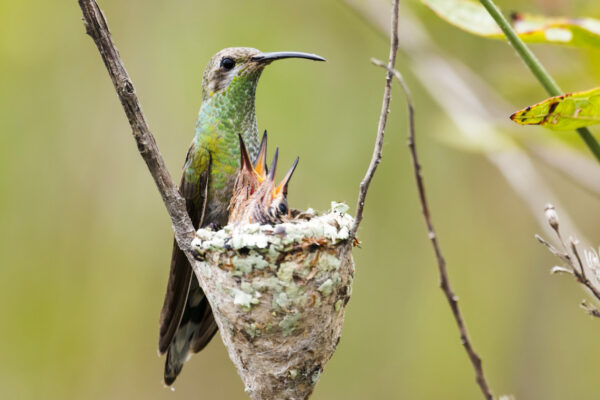
Samantha: All right. Great. Next question. This is also at she’s all plants and this is across all birds for birds all in general which parent or parents typically incubate the eggs. So it’s not specific to this picture. Hummingbird. Is it the mother father? Both or none?
All right. We’re seeing quite a spread. Good job. All right, Robyn, tell.
Robyn: Us.
Samantha: A little bit more why there’s so much variation.
Robyn: Yeah. There’s no easy way to generalize when it comes to who does the incubating, because it really varies by species. For some species, only the female incubate. For others only the male dot and other species will divide the responsibility pretty evenly. And there are even a few special cases where nobody incubates. And that is the mega pose. They are a special bird, a favorite of mine in a class of their own.
They rely on burying their eggs in the sand or soil, or sometimes in, other types of substrates that are warm and they don’t spill on them, so they don’t need to incubate their eggs. And also those brood parasites that we talked about earlier, they don’t need to incubate their eggs. They just, allow somebody else to do that.
Samantha: Right? They’ve outsourced that. Great. I’m sure the nun was a surprise to many folks. All right. Which of these behaviors is not used by birds to prevent eggs from overheating? Shading the eggs, sitting on the eggs, carrying water to the eggs, or burying the eggs. Oh, I’m sorry. The segments to be fanning the eggs. Their efforts do not come through.
All right, so I guess we should start with why would you want to cool the eggs down? We always talk about sitting on them to warm them up and keep them warm.
Robyn: Yeah. So of course, you do want to keep eggs warm, but you also want to keep them in, ideal range for incubation. So the sweet spot for temperature is about 99 to 100°F, or 37 to 38°C. So if you go over that, there’s actually not good for the eggs either. So birds will want to cool their eggs down.
And they, mostly do that by, shading the eggs. They can bury the eggs to keep them cool. They can do a number of different things. But what we’re supposed to say fanning the eggs, it’s not really one that we know of. And carrying water to the eggs is, It’s not. It’s not exactly how I would phrase it.
They don’t really carry water to the eggs. Some birds might wet the sand around their eggs to keep them cool, but they don’t really carry water to them. So our apologies for that one.
All right.
Samantha: We skipped over the leader board. All right. Let’s go to our next or moving on to the next section. All right. Any bird can be attracted to a nest box. True or false?
All right. Get your answers in. Force. Good job. Everybody. All right, Robyn, tell us a little bit about cavities and, Yes. Boxes.
Robyn: And so, a nest box is really a way to create a substitute cavity for cavity nesting birds. And in particular, our secondary cavity nesters, meaning birds that don’t make their own cavity like a woodpecker is a primary cavity nester. And this tree swallow is a secondary cavity nesters. So they rely on somebody else or something else to make a cavity in a tree or other structure.
So the secondary cavity, secondary cavity nesters are going to be the ones taking advantage of nest boxes. And other birds will make their own nest or find a nest or not make a nest. And they don’t use this cavity nest. So, a common question that we get with Nest Watch is can I put a nest box out for X species?
And sometimes that species is something that doesn’t use a nest box like hummingbird. That’s a common one that we get. And hummingbirds make their own. If they don’t typically use a nest box in any way, they make their own tiny little cut nest. So there’s species that that won’t really use it. And others that, they may nest in a cavity, but they can make their own.
So they also might not use a nest.
Samantha: Five yeah, I know hummingbird nest boxes are sold too, so it’s definitely great to get that message out.
Robyn: Yes, those are more sold as well. I hope, as a decorative home garden decor and rather than an actual nest box. But I guess if you if you put out a nest box for a hummingbird, I wouldn’t expect it to get used by one, unfortunately. Yeah.
Samantha: All right, let’s go to our next question.
All right. Fledgling or not, you’re going to see pictured bird here. Can you tell me is this a fledgling or not? A fledgling.
Okay, just a few more seconds. Get your answers in. It is indeed a fledgling I. Robyn, tell us, what about this bird? Makes it a fledgling.
Robyn: Yeah. So just a couple of things we can look for even without knowing what species this is. That can tell us whether it’s a fledgling or not. And what I could see in this picture right away is that short little tail. That tail is not developed yet. It’s very tiny. That’s pretty common for fledglings. I can also see, a visible gape, meaning the edges of the beak that are that a fleshy looking kind of red colored skin?
That is what we would call a gape flange. And that is visible to me. That will over time darken and not become not be very noticeable. So over time, that will not be something you would see in an adult bird. But that tells me that this bird is a fledgling. Yeah. So yeah. And its eyes are open and out of its nest.
Samantha: That’s perfect. I always love that fledglings because they look so grumpy with their little gape flanges. All right. We have another fledgling or not. Is this pictured bird a fledgling or not a fledgling.
Okay, just a few more seconds. Get your answers in. All right. This is also a fledgling, but we see a spread here. Okay, Robyn, tell us again what might make this a fledging. Why did people get a little tricked?
Robyn: I suspect that people got tripped up on this one because they didn’t expect us to ask the same question in two different ways, but we really wanted to reinforce to people how to know the difference between a fledgling or not. So you can tell that this is a fledgling by those same characteristics that I mentioned in the previous photo.
We can see a really short little tail. You can still see that yellow fleshy edge of the cape that’s still there. I can notice that this bird has really, kind of underdeveloped feathers. Those primary feathers are not long yet. And even even if you didn’t know what species this was, you know, it’s not a nest laying because it’s not, in the nest.
It’s definitely outside of the nest. Walking around. I’ve been alert and responsive. So this is a fledgling.
Samantha: The upright posture also helps to see if they can kind of perch on their own.
Robyn: Yeah. One of the things that can help you determine if a bird should be out of its nest or not, especially for those ultra shell nestlings, is whether, you know. So, for example, a nestling will most likely be lying in the nest. It might sit up and beg for food or, might not have a completely upright posture.
But if the bird is able to perch like look, imagine that it could perch on a twig or on, a pencil, then that bird is most likely a fledgling.
Samantha: Great.
All right. So we have another choose all that apply going along the same theme. What should you do if you find a baby bird out of its nest? Should you pick it up and take it inside? Leave it alone. Determine whether it’s a nestling or a fledgling. Would you all approach that now or call a wildlife prohibit rehabilitator?
But only if it’s injured. And this is a choose all that apply. All right. Great. Okay. Robyn, over to you.
Robyn: Yeah. Great work everyone. As I mentioned, you know, most young birds that are seen outside of the nest are fledglings, except in rare cases. So the best thing to do is to determine whether it’s a nestling or a fledgling. And if it’s a fledgling. You can leave it be unless it’s visibly injured, at which point you can contact a rehabilitator.
If it’s a nestling, then we do have some tips. We have a tip sheet that will share in the link in the chat for for you. And if you determine that it is a nestling, our advice is to call a rehabilitator to ask for advice before touching or picking up a nestling. We don’t, suggest you do that until you’ve had advice from a rehab or.
Samantha: Yeah. So, yeah, we can kind of inadvertently kidnap little fledgling, so we don’t want to do that. All right, last question on this section. Which of these actions help protect nesting birds? And this is a choose all that apply peanut plastics, keep cats indoors, limit time at the nest or avoid touching nests, eggs or chicks.
Robyn: Yeah.
Samantha: Everyone got, Good job. All right, Robyn, talk us through our options here, okay?
Robyn: We have a lot of good options to help nesting birds, but let’s start with plastics. Plastics can pose an entanglement hazard for birds and their nest, especially any kind of long, stringy, plastic like fishing line or with, with Easter coming up. For those who celebrate that, if you can imagine that long, thin, plastic, kind of decorative Easter grass, that is another item that can commonly be picked up by birds and put in their nest.
And it doesn’t degrade and it’s really strong. So those kinds of plastics can be harmful when they’re incorporated into a bird’s nest. Okay. Let’s talk about, keeping cats indoors. Cat are, a predator of both birds and their nests and eggs and birds are really vulnerable during this time period. So, you know, keeping cats indoors is a great way to protect nestlings, adult birds that are sitting on the nest and even eggs from, being found by those predators.
Another one is to limit your time at a nest. It can prevent birds from incubating or cooling off their eggs that might you might accidentally keep, a young bird from being fed by its parent if you’re spending too much time around the nest, stay, for example, trying to get a picture. We want to keep our time around a nest limited.
Now, obviously, some birds do nest right near us on our human structures like maybe right on your front door, but still a good idea to not linger around that nest and, not overly stress those parents out and finally avoid touching the nest. Not necessarily because of any smell, although that could be an issue, but it’s more just because, nests and eggs are very delicate.
Eggs especially, can be, easily cracked or, and nestlings are very delicate. They’re more delicate than they look. So we don’t want to touch them unless it’s absolutely necessary, for example, or a rescue scenario. But even then you want to be extra sure before you touch them.
Samantha: Yeah, great. All right. Well, now we know how to be friends to our nesting birds. And what a great way to end this. Well, thank you to everyone who has joined us today. If you’ve registered, to receive an email with the recording by the end of next week. And thank you to Robyn for joining us. And, providing such great context and information for everybody.
Robyn: I’m hearing from tech support that it looks like it might have skipped over the leaderboard.
Samantha: And, well, we’re all winners here. We all got to hang out and play a wonderful birdie game and learned so much.
Robyn: And I hope everyone had fun learning about nest and eggs and getting excited for spring and getting ready for those nesting birds.
Samantha: I’m hearing that it should display and a little bit after our last announcement. So before anyone leaves. All right. Our monitors are going to add some helpful chats for you. In the chat. Thank you all for joining. All right, so if you loved that all this nerdy nesting information, you’ll definitely want to check out our new course coming out.
Robyn is the instructor for that course, and she’s got so much more to show you and teach you. Thank you again for playing with us today. You can save an additional 5% off the new course, with a special code. That code is nest Trivia 26. And the course releases in just a couple days on April 2nd, so you can pick it up today and then jump in as soon as it is live.
Okay, we saw so many of you are already Nest Watch participants, but if you’re not already, we hope that you’ll give it a go when participants observe nest. As long as it’s done responsibly, it can be a crucial way for us to understand what’s happening to bird populations and advocate for effective conservation. And so we’re sharing nest Watches main page in the chat right now.
We hope you’ll join us for future live events. Keep an eye out for upcoming items and review recorded programs on our webinars page. Although this concludes our webinar, we’ll keep it open for an additional five minutes to answer any lingering questions in the chat. I hope you all have a great day everyone and happy birding!
Robyn:
Samantha: I ran away too quickly. We have our leader board. We have wild goose chase, our as number one, Holly tea number two, and Beth Moe as number three. Wonderful job to our winners.
Robyn: Congratulations. We just had to wait to do a big reveal.
Samantha: Yes, we had to increase the drama, but,
Robyn: All right. Thank you so much for having me, everyone. That what’s been a pleasure. I enjoyed playing with you all today. Thank you all.
End of transcript