The Cornell Lab Bird Academy › Discussion Groups › Joy of Birdwatching › Activities: Different Seasons, Different Birds
-
Activity 1 - eBird tool was useful in the comparison of the Cardinal vs Blackburnian Warbler.
I was able to compare the Scarlet Tanager vs the Western Tanager their breeding (Pre and Post). I noticed Scarlet Tanager traveled to the eastern side of Canada and the US and the Western Tanager traveled on the Western to Central Canada and USA. The Hummingbirds had a similar pattern.
Activity#2
I do not have a mobile phone but a cell phone and unable to look up on Merlin's app. The most likely birds here are robins, sparrows and swallows.
Activity #3
The Macauley Library was excellent. Two significant birds listed were American Gold finches and Loons with similar breeding times in the summer. In the winter, I noticed that the colors were dull, in the winter, for both types of birds.
Activity #4
My favorite place locally is the Consumnes River Preserve left from a man named Galt from Canada. It is a fun park and monitored by the Federal Government with a Ranger. There are 250 species of birds. Egrets come to this area and I saw a stork (no picture) which is rare and found down south at UCSB. I recently found out there are cranes south of here about 8 to 10 miles from Consumnes River but have not been to the site.
Also, UCD in Davis, CA has a wetland as well. I have not been able to locate but found the web page. I have not reached out to other groups but needed to review a course, such as this first, to regain information
Ruth
-
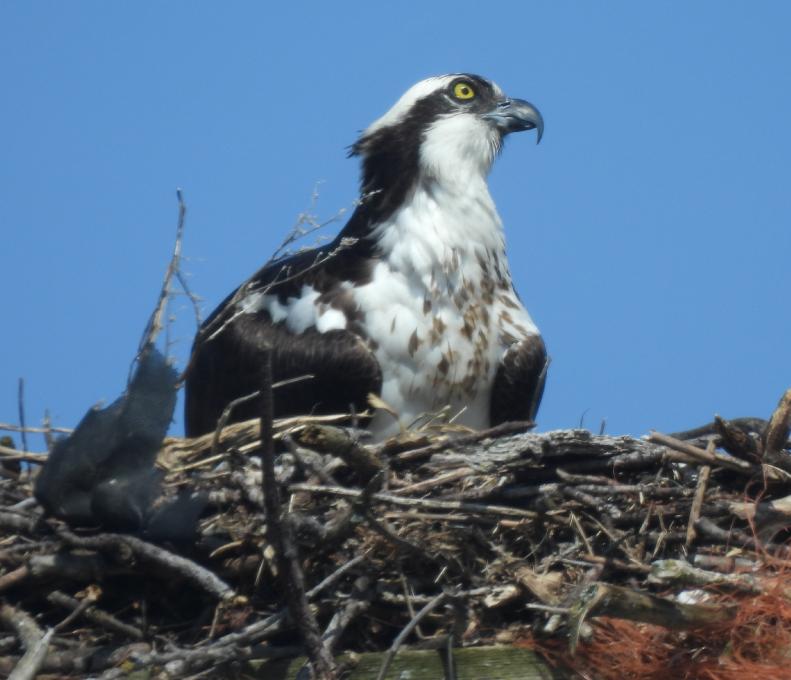
Actity 4 -My favourite birding spot is actually a short stretch of road that winds itself through the small township of Keene, Ontario. Along this road, the village has placed nesting nesting platforms. When I drive out to Keene, I like to look for the nesting platforms. This past week, when I was out there, I found Ospreys around the platforms working on building their nest. Most nests had one of the pair, sitting in the platform while the other one was collecting building materials or hunting. What a wonderful outing! and watching them closely in flight, eating and working hard always make my day.
It saddens me as well now, when I think of going out there 6 months from now only to discover the platforms emptyas the Osprey have raised their families and have started--or probaby already left to their winter grounds. -
Activity 3 - Comparing the appearance of a male American Goldfinch as well as a Common Loon in the summer and then in the winter. The male American Goldfinch is mainly a bright yellow - like a canrary-- in the summer, but he sports s black cap, black and white patches on his wings along with some black trim on the outside of his wings. His beak is bright orange.
In the winter the plumage changes to a dull brown. The cap on his head is now brown and a little lighter towards the back. There is still black and white on the wings and it's beak is brown.
The Common Loon has a solid black head and red eyes. There is a vertical-striped band of black and white stripes and a band of green on the neck.The back is black and white and the breast is white. In the winter the feathers change to grey and white. The head is partially gray with black striping. The band of green and striping are no longer visible on the neck. The breast is white and the back is a brown-black colour and the white striping is not as disttinctivre. -
Activity 2 -- 2nd Attempt.
According to Merlin, there are many birds likely to be in my area of Ontario, Canada--many of which, I have never had the pleasure of seeing! Three birds that are year-long residents and birds that frequent my feeders are: White Breasted , Red Breasted Nuthatch and the Hairy Woodpecker.
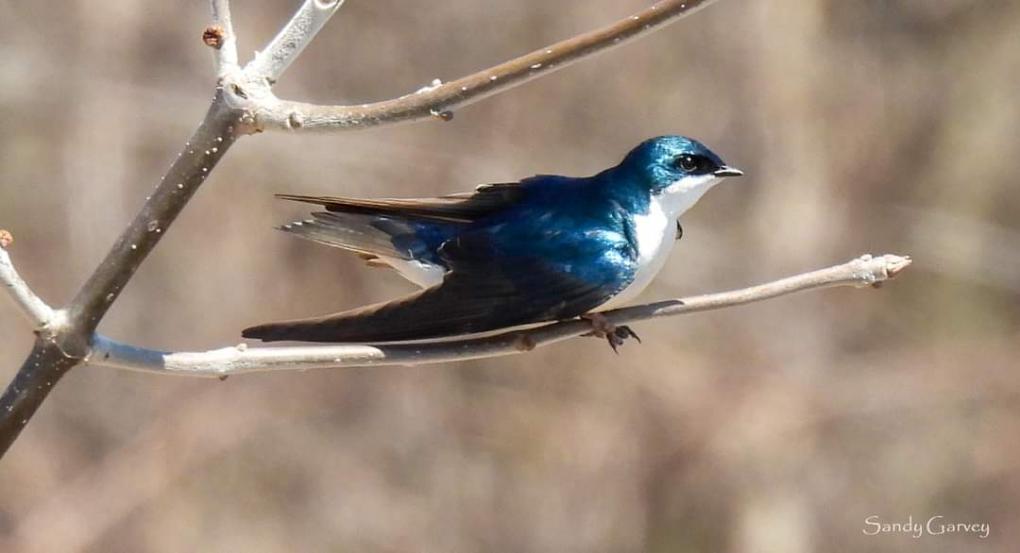
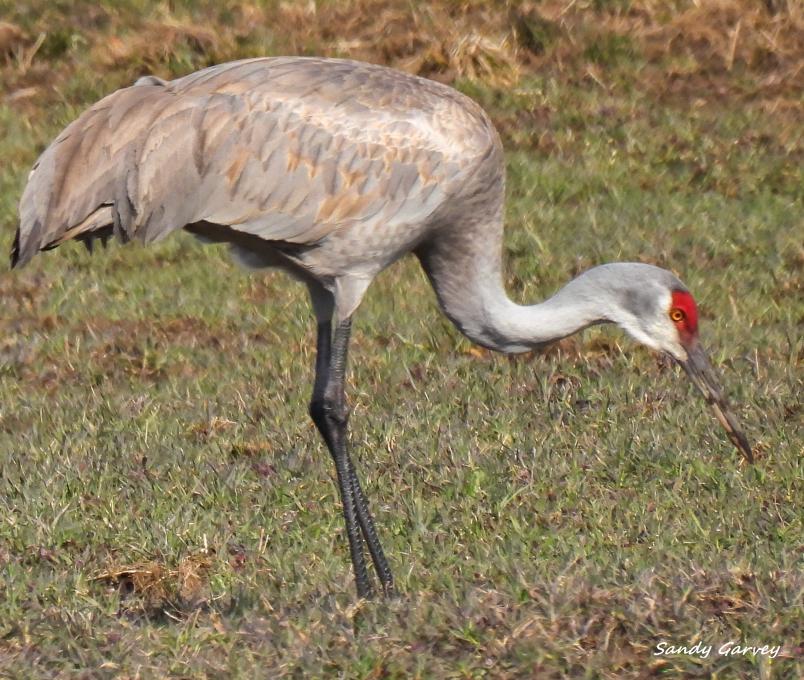
Three birds that are in the area now, that made my sightings special this week of April, were Osprey. Tree Swallow and Sandhill Crane--a lifer for me!!

Osprey on nesting platform. I checked out 6 platforms and all of them were either occupied or in the throes of nest building. It was so exciting.
Tree Swallow - Such pretty birds and watching them in flight--so graceful and fast.
Sandhill Crane - a first sighting for me. My grandaughter thought it was an Ostrich. Landed in a wet farmer's field. So cool to see. -
Activity 2: The birds that I see for year-round are red-bellied woodpeckers, mallards, and black-capped chickadees. In 6 months (October), I imagine there will be many migratory birds--different warblers, waterfowl (like grebes), and kinglets.
-
Activity 4: I have had feeders for several years but I am still new to birding as a hobby and mostly watch from my back yard or a wetland area a short drive away. I hope to get out and find a new birding location this spring / summer and if I do I will definitely visit again 6 months later to notice the difference.
For now the main difference that I notice is the spring return of the hummingbirds, bluebirds and robins since these birds were not in my area all winter. -
Activity 3: I love the way the goldfinches change color – especially the male goldfinch who gets so bold in the summer with his bright yellow color. He is dull and kind of drab in winter and I don’t usually notice him (if he is even here) but as spring comes he gradually starts getting brighter and brighter. It is a wonderful site that I look forward to each year. I love to see the bright finches feasting on sunflowers planted in a field not too far away.
-
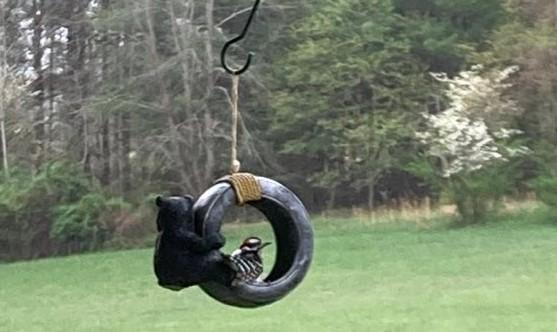
Activity 2: Three birds that are year round residents in my area are: Mourning Dove (I live their cooing song), Downy Woodpecker (I was able to photograph one today nibbling on suet balls - see attached picture) and American Goldfinch (Harder to notice in winter due to dull color but so pretty in spring and summer).
Three that live in my area for part of the year are: Purple Martin, Eastern Bluebird (My husband installed 4 bluebird nesting boxes – I hope they choose my yard to nest in this year), and Red-Winged Blackbirds (fun to see on fence posts or telephone wires as I take my walks on our country road) -
Activity 1: To be honest, I had a little trouble navigating the animated trend maps. I was finally able to view the Ruby throated Hummingbird but could not pull up the Rufous Hummingbird for a comparison. Until looking at the list and pictures on the ebird link I did not realize there were quite that many different kinds of hummingbirds in our world. What amazing creatures! Hummingbirds begin to return to my areas in Southern Ohio in mid-April and stay until mid-September. I hung my feeders out today and made my first batch of food for the season. I enjoy watching them all spring and summer. I will revisit the trend map to view more species soon.
-
Activity 2: For the year round residents in Western Washington, I chose the Red-breasted Nuthatch (so cute), the Anna's Hummingbird and the Downy Woodpecker which all visit my yard almost every day all year. For part-year visitors, I picked the Violet-green Swallow (just returned here in early April), the Golden-crowned sparrow (which will leave soon), and the Varied Thrush (beautiful all winter but gone mid-summer).
Activity 3: The American Goldfinches are rather amazing for the plumage change. We have them year round here in Puget Sound, but only a couple grayish hardy souls through the winter. The bright yellow birds disappear in November for the most part, then come back by the dozens in later March but they are only starting to molt so they are a mottled mess of grayish brown and bright yellow. Now in mid-April they are all >90% yellow. Amazing. I had no idea that the Common Loons changed so much - cool. -
Activity 1: It is fascinating to see how different the Northern Cardinal and Blackburnian Warbler are in migration. Two birds that I am not familiar with out west, and to see the Cardinal stay resident all year long while the Warbler mostly only passes through the United States during migration. Hard to believe that they travel so far from northern South America all the way to Canada and back! Between the two Tanagers, I was interested that the difference is not just west vs east in the United States, but that the Scarlet Tanager goes almost completely into South America whereas the Western Tanager stops in Central America. Both a long way! I knew that the Anna's Hummingbirds stay put all year in our area - interesting that a few migrate into Mexico though - but the Rufous and Ruby-throated ones stay in the same general area in Mexico/Central America but then go in completely different directions for breeding. We just got our first Rufous hummers back a couple weeks ago in late March!
-
Activity 1: I was very surprised to find out that Rufous Hummingbirds and Western Tanagers can been seen in the eastern half of the United States. It is exhausting to think that tiny hummingbirds are able to migrate such great distances and to even know which direction they need to go. Another question I have is, how to the birds that remain all through the year, know that they don't have to migrate?
-
Activity 2: For year- round residents I picked Northern Cardinal, Eastern Bluebird, and Tufted Titmouse. For part year residents I selected White-throated Sparrow, Dark-eyed Junco and Yellow-rumped Warbler. All of these birds are visitors to my yard. It will soon be time for my selected part year visitors to leave for the summer to be replaced by Wood Thrushes, Scarlet Tanagers and Summer Tanagers.
Activity 3: Summer male American Goldfinches are a sunny yellow with black cap and wings. During winter they become a drab brown color. A Common Loon is beautiful in the summer, sporting black and white checkered feathers, and a solid black head. All this turns to drab gray above with white below in the winter.
Activity 4: I like to visit various parks and greenways in my area. Birds I would expect to see now include Robins, Blue Jays, Northern Mockingbirds, Downy Woodpeckers, Carolina Wrens, Carolina Chickadees, White-throated sparrows, American and Fish Crows. In the summer I may see Scarlet Tanagers, Summer Tanagers, Wood Thrushes, Red-throated Hummingbirds, Great Crested Flycatchers and various swallows. -
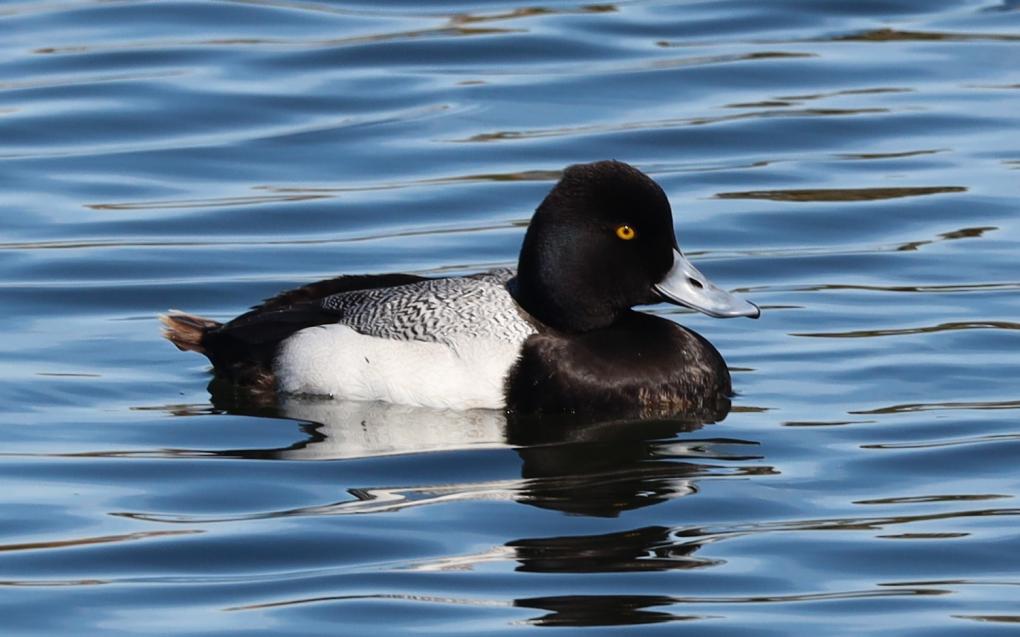
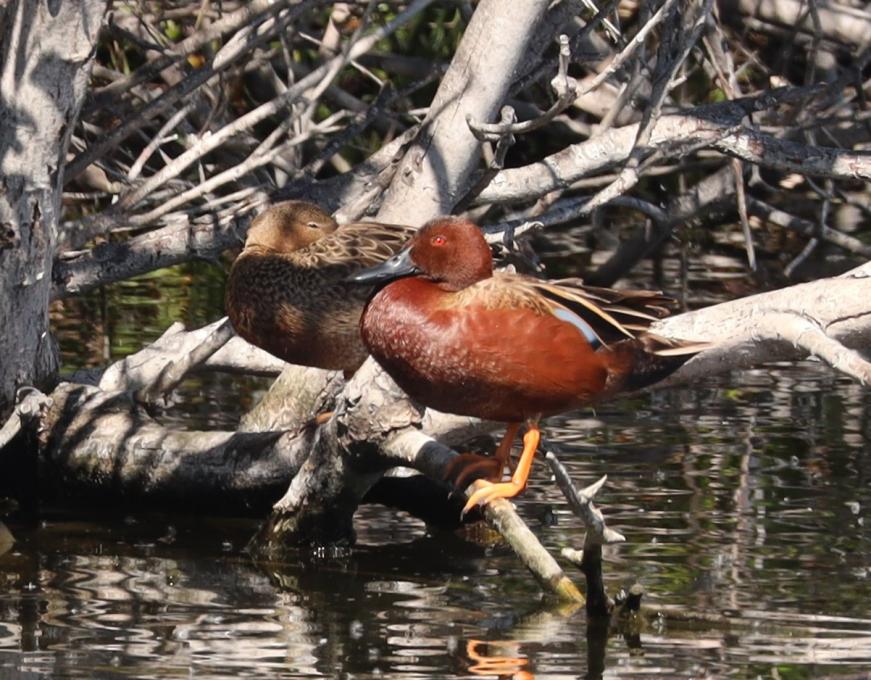
Activity 4: I've been visiting the fresh-water Ventura Ponds in Southern California regularly for five years now and I definitely see patterns. Right now (late winter/early spring) is the best when a whole array of waterfowl show up including Northern Shovelers, Gadwall, Lesser Scaup (below), Cinnamon Teal (below), Ruddy Ducks are in abundance. By Summer, they will be gone leaving only Mallards and Coots. In the nearby harbor, Western Grebe and Buffleheads show up in November and are gone by April.
-
Three birds that I see year round in Nebraska at my feeders are the Northern Cardinals, house sparrows and Bluejays. Three that I see only part of the year are robins, finches and hummingbirds. They leave for warmer weather as winter approaches.
-
Activity 2: Using Merlin’s “Likely Birds” feature, I have chosen three species that are year-round residents in Chicago: common goldeneye, black-capped chickadee, and downy woodpecker. Each of these species I see regularly, probably every day. Additionally, I have chosen three species that only live in my area for part of the year: barn swallow, ruby-throated hummingbird, and yellow warbler. These species come in spring and leave in the fall.
-
Activity 3: Birds that undergo a plumage change over the year will sometimes see a sharp change in their colors as the seasons pass. For example, a Goldfinch, which in May and the Summer breeding period will have a distinct bright yellow color, will gradually transition to a more drab, dull almost brown during the winter months. The color change may have to do with the shift from mating to winter survival.
Blue Jays, on the other hand, while they do molt, retain their colors even as new feathers come in. -
Three birds that I see year round at my feeders are the Eurasian Tree Sparrow, Mourning Doves, and Goldfinches. I am new to birding and I recently learned that the Eurasian Tree Sparrow is only found in the St. Louis region in North America. A dozen Sparrows were released in the area in the 1870's and have stayed in this region.
Three birds that are just here for the winter are the Dark-eyed Junco, the American Tree Sparrow and the Red-breasted Nuthatch. -
Activity 2:
I live on Hilton Head Island. I love all the shorebirds, waterbirds, raptors, and songbirds that live here.
Three that I see year-round are Anhingas (aka snakebird), Wood Storks, and White Ibis. I have different locations across the island that I can see these birds anytime of the year that I would like. The Anhingas and Wood Storks are usually spotted somewhere near a water source (fresh or salt) and the White Ibis are literally everywhere in every type of environment. I see the Ibis on the marshy side of the beach and I see them in my backyard.
Three that are temporary residents are Mississippi Kites, Yellow-bellied Sapsuckers, and Eastern Phoebes. Mississippi Kites took up residence over the summer as two adults raised 2 juveniles high in the canopy of the pine trees in our backyard. From sun up to sundown they were squawking for food. They were very cool to watch as they grew. Yellow-bellied Sapsuckers are winter migrants and are not hard to find in the local parks. Eastern Phoebes are also easy to spot in the park or even the backyard perched on a tree branch or the top of the feeder. -
As a backyard birder in Michigan it always makes me happy to see Northern Cardinals, BC Chickadees, Goldfinches and White-Breasted Nuthatches year round at my feeders. In the next six months I expect Red-Winged Blackbirds, Robins, and Baltimore Orioles. currently i've been seeing a lot of Dark-eyed juncos, a seasonal bird here in Michigan. and i expect to soon see a lot more Buffleheads, Canvasbacks, and Mallards, as they enjoy the ice on the river I live on.
-
As for Backyard birding, I love the Spotted Towhees, Robins, BC Chickadees, year round feeder visitors. Anna's Hummingbirds nest in my bushes (yearround) while Rufous is a migrator. As for Ocean shorebirds , This summer we saw Tufted Puffins, Brown Pelicans, OysterCatchers, Murres, Pigeon Guillmonts at the beaches ( ocean and rocky crevices) of WA and Or. (migration)
-
I love birding at Union Bay Nature Preserve (Seattle WA) each season and love migration ex:,Wigeons, Wood Ducks, Gadwalls of fall make way for the Swans and Northern Shovelers of winter. Year round Great Blue Heron and Bald Eagles, ate joined by today's Green Heron.
-
Three year-round residents in the Vancouver, Canada area that are on my life list are Great Blue Heron, Spotted Towhee, and Black-Capped Chickadee, while three year-round residents in the Vancouver, Canada area that are on not yet on my life list are Red-breasted Nuthatch, Double-breasted Cormorant, and the Northern Shoveler. In contrast, three bird species that are found in the Vancouver, Canada area for only part of the year that are also on my life list are Wilson's Warbler, Warbling Vireo, and Rufous Hummingbird, while three bird species that are found in the Vancouver, Canada area for only part of the year that are not yet on my life list are Pacific-Slope Flycatcher, Caspian Tern, and Lesser Yellowlegs.
-
The markings that common loon are known for, the interspersed black and white pretty much all over the body, are prevalent during the summer months, and greatly subdued in the winter months, often replaced by duller white markings interspersed with brown markings.
-
A favorite birding location in the Vancouver, Canada area is the Reifel Bird Sanctuary. As an example of how bird species move in and out of this sanctuary, Snow Goose, Bufflehead, and Trumpeter Swan are relatively less common now (August) than they typically are in February, while the reverse is the case for Cinnamon Teal, Kildeer, and the Tree Swallow.
Read More: