The Cornell Lab Bird Academy › Discussion Groups › Joy of Birdwatching › Activities: Exploring Birds
-
- I took a hike today at a local nature center. I think I identified a prothonotary warbler near a bird blind and some swallows flying around a lake. I am working on identifying the type of swallows.
-
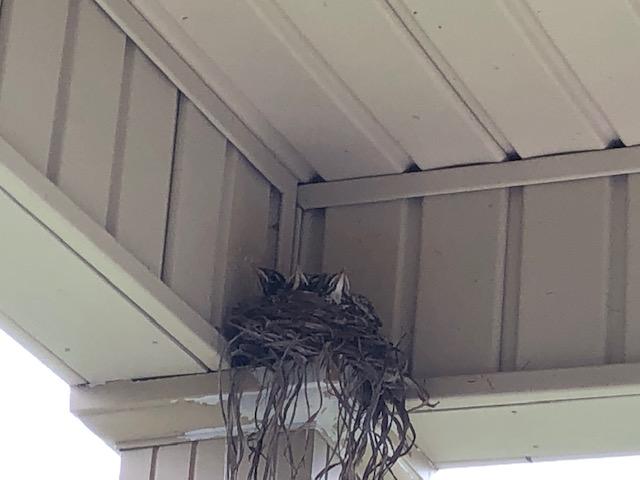
These Little guys on my front porch! Robins I think!

-
Cute!
-
We get robins that nest in my fern every year and I never get tired of watching the hatchlings grow up. But they can be noisy!
-
-
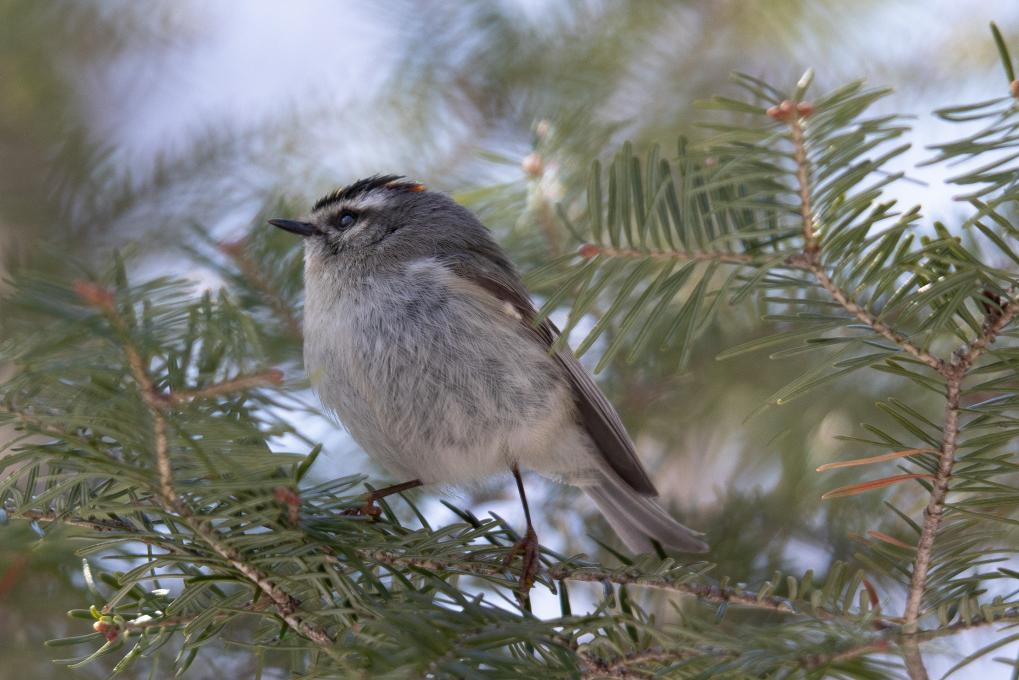
- The Golden Crowned Kinglet is my favourite bird in the spring. It is such a small and fast bird to catch in the moment. On this male you can see a touch of yellow on his head about the eye and his red swatch further back on his head.
-
Nice photo. Where is this?
-
Beautiful photo!
-
So cute. I love the little fluffy birds, like the Chickadee and Nuthatch.
- The Golden Crowned Kinglet is my favourite bird in the spring. It is such a small and fast bird to catch in the moment. On this male you can see a touch of yellow on his head about the eye and his red swatch further back on his head.
-
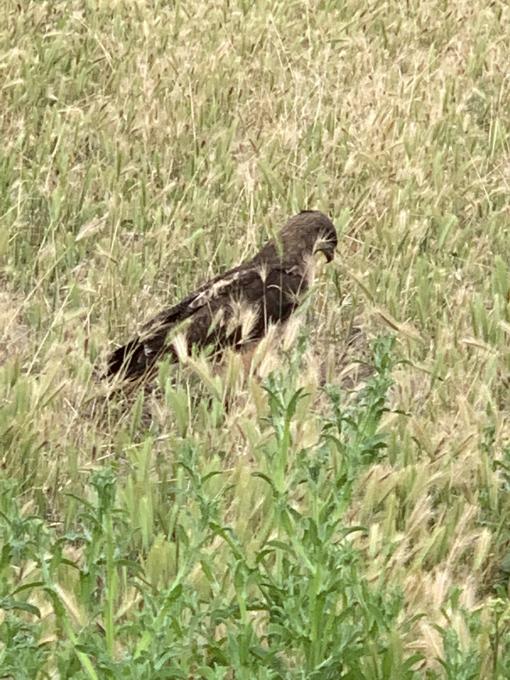
- The red tailed hawk is a favorite of mine as he surveys his world from atop a high electrical tower or soars gracefully above the spring grasses growing underneath the towers. One day he surprised me as he looked at me from the tall grass beside the walking path. I was able to get a photo of him with my iPhone.
- The red tailed hawk is a favorite of mine as he surveys his world from atop a high electrical tower or soars gracefully above the spring grasses growing underneath the towers. One day he surprised me as he looked at me from the tall grass beside the walking path. I was able to get a photo of him with my iPhone.
-
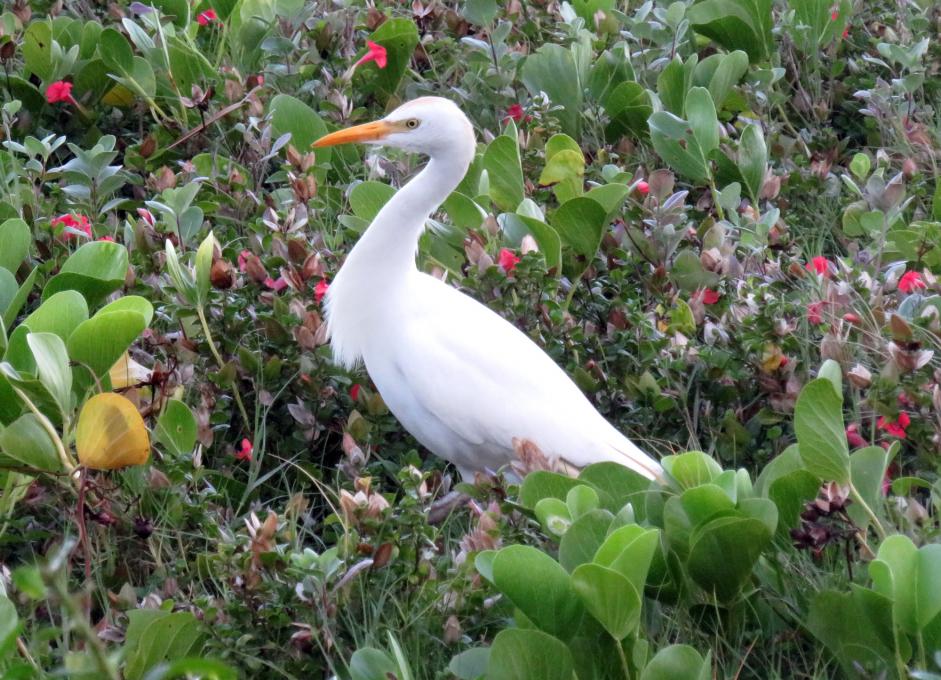
I was on Maui this past winter (back in the good old days when we were allowed to fly in airplanes and travel the world, before the current pandemic isolated us at home in Michigan). My favorite bird on Maui is the Cattle Egret. Egrets are "wading birds" but I always saw them in the bushes or grass along the ocean shoreline. -
My favorite bird in my neighborhood is the Northern Mockingbird. There are several that come to my porch every day and I love to hear them sing on my chimney. My sister's favorite bird is the Great Blue Heron. They fly over our house almost every day and they look really graceful and elegant.
-
I, too, want to mention the mockingbird as my favorite—probably the most common bird around my house, in Southern California. I woke up at about 1:30 this morning and heard a mockingbird singing loudly—a lone voice in the middle of the night.
-
-
We live on a lake and my favorite bird to watch right outside of our house is the Ruddy Ducks. It is a waterfowl. What I think is great about them is how vibrant blue the male's bills are. It's really cool to see that color blue in contrast to their redish/brown body. There are also a pair of Mute swans that live on the lake that are great to look at. The white of their bodies is brilliant and it is interesting to watch such a pretty bird be territorial towards other birds in their bay.
-
1. The Lilac-breasted Roller is absolutely beautiful--it blends into the sky's colors! Saw one in Africa this fall.
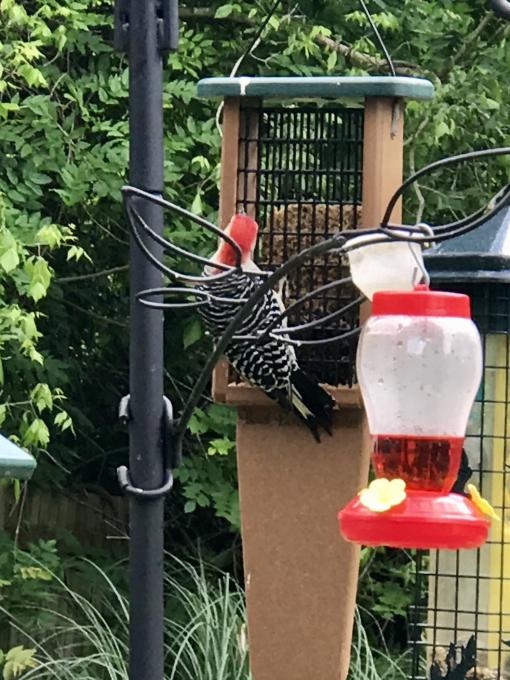
2. The American Goldfinch, Red Bellied Woodpecker and Tufted Titmouse come to my feeder almost everday and bring so much joy.
3.When the Osprey come back in March, you know spring has arrived and summer is not far off. They can't be missed in the sky with their white head and dark wide wing span. They dive down to catch fish and are successful more than 50% of the time. They carry the fish off in their talons. Remarkable!
-
Yes! There is an Osprey pair nesting in my neighborhood with three chicks about to fledge. It is so cool to see them fish for the family! My friend took some great pics this week, maybe she will share some.
-
-
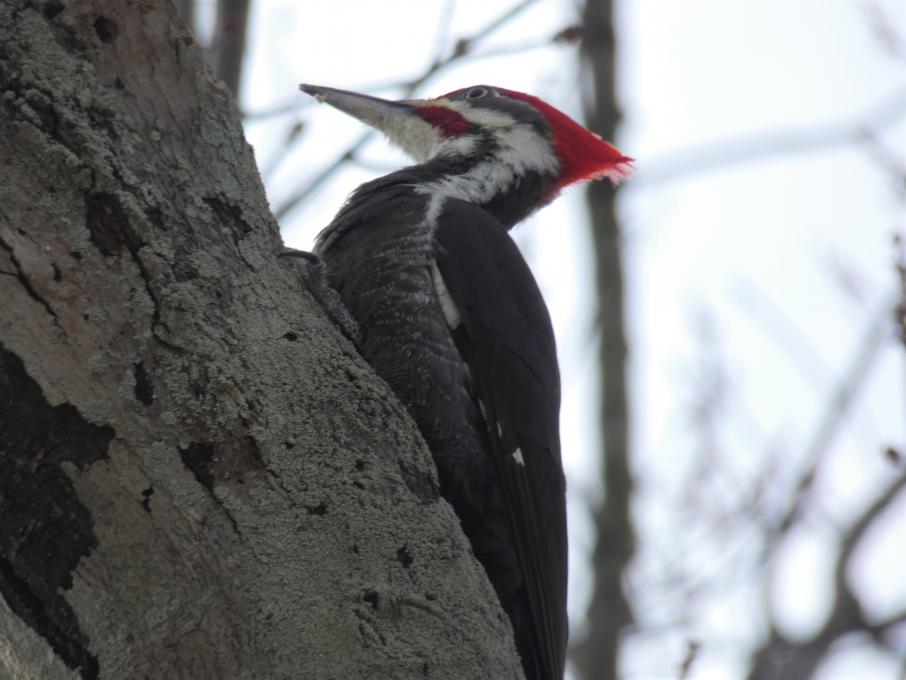
We have enjoyed seeing an Eastern Towhee spend some time in our yard. So he/she would be part of the sparrows. There is a Barred Owl in the park near our house- so he is a raptor. About a week ago we saw a pileated woodpecker which was a first for us and obviously part of the woodpecker group.
-
The Pilates Wood Pecker, I have seen them in the woods in Pennsylvania but I didn't realize just how large they are until I spooked one from the back side of an old log I was hiking past on the Appalachian Trail. It really startled me. -
@Bruce Awesome picture of the Pileated woodpecker. It does look huge! It must have been amazing to almost stumble into one. I've seen a few of these in Maryland in the woods and recently just outside my apartment. But I have never been so close to one!
-
-
Gila Woodpecker visits my agave bloom multiple times a day. He noisily announces his presence. Phoenix, AZ
-
Excellent shot — thx for sharing it.
-
That’s a great shot of your woodpecker. The ones around my house are mostly interested in stealing from the hummingbird feeders.
-
Excellent photo! Thanks for sharing.
-
-
NYC, Central Park.
Red winged Black Bird. Crow family?
NYC, Central Park.
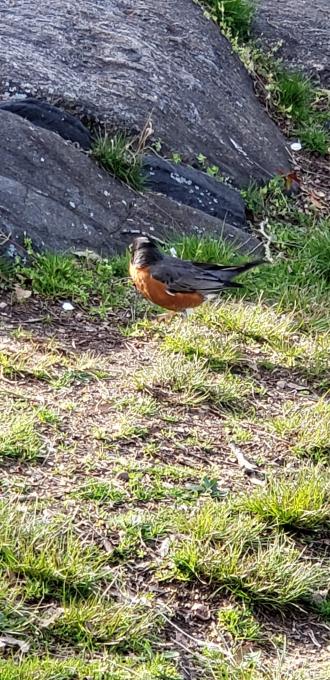
One of about a million Red Robin's sharing their Springtime joy in the Park. You cant miss them, they're all over the place.-
We have many red-winged Blackbirds. Noisy and fiesty. I had to look it up; they are in the Icteridae family.
-
-
Activity 2
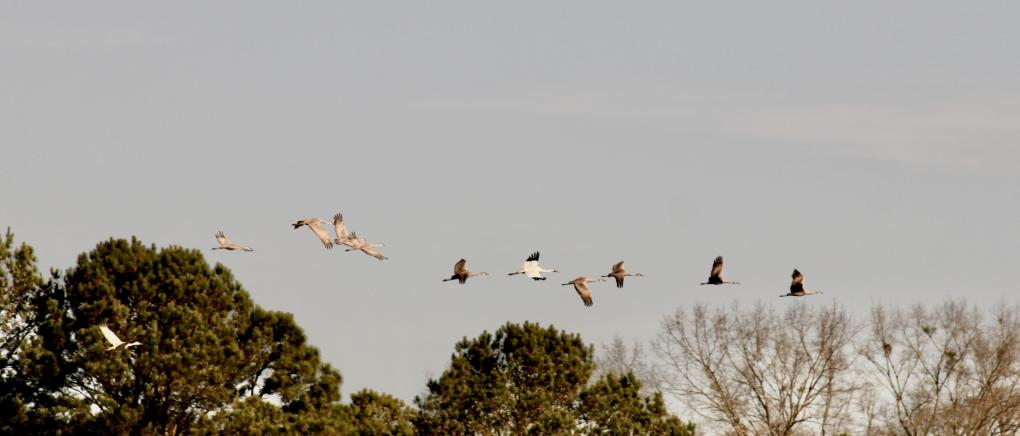
Sandhill Cranes and Whooping Crane in Alabama -- Family: Gruidae
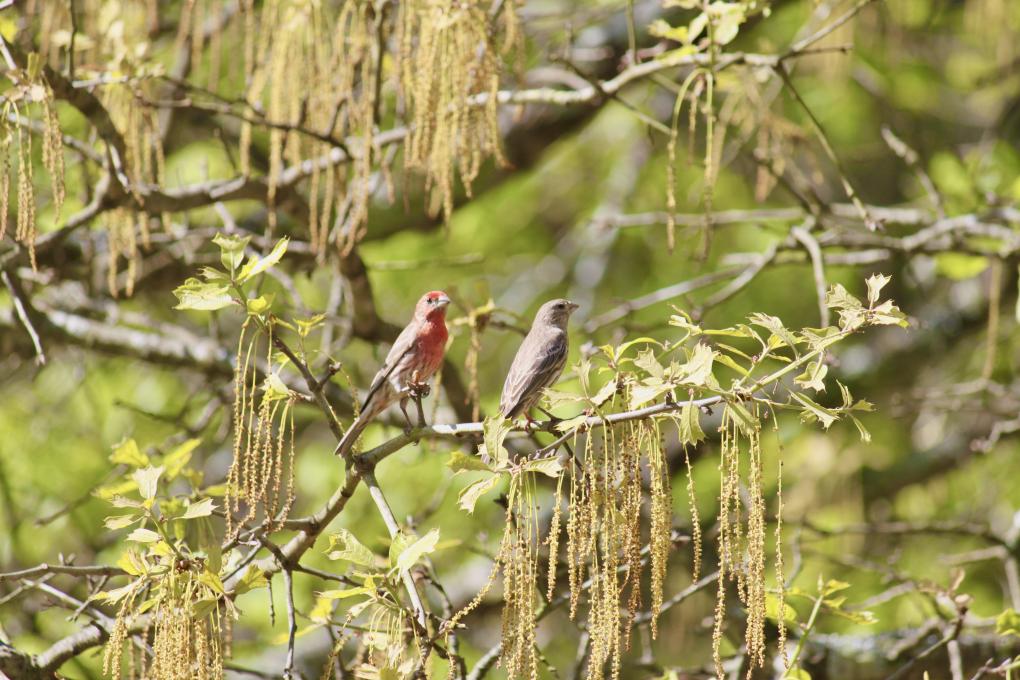
Pair of House Finches in Alabama -- Family: Fringillidae
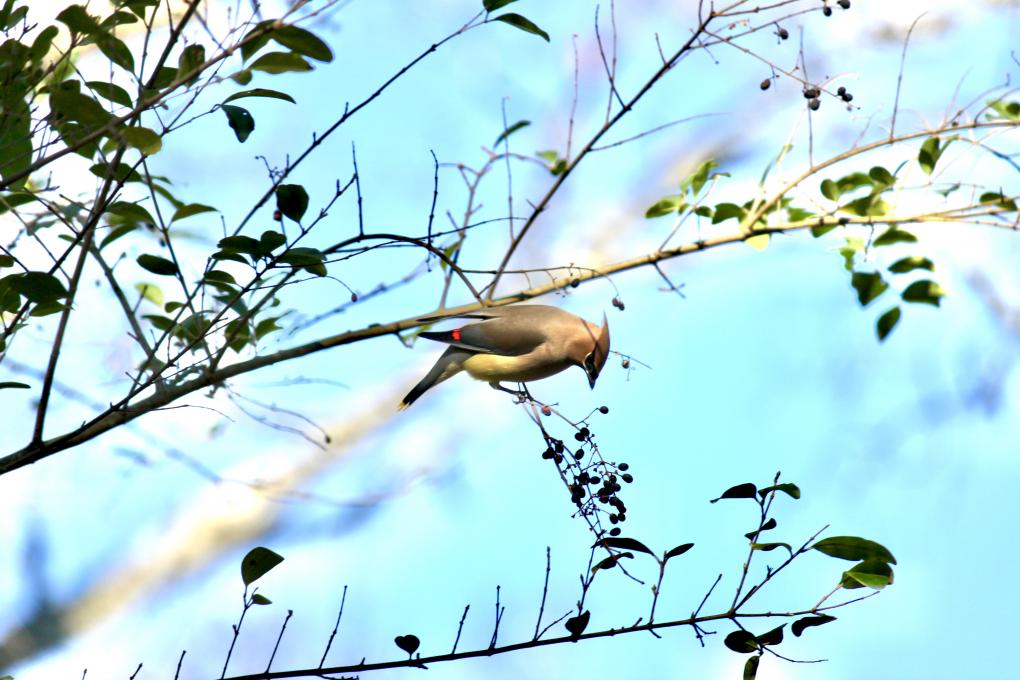
Cedar Waxwing in Alabama -- Family: Bombycillidae
-
Great photos! I love the Cedar Waxwing and I have only ever seen it at Magee's Marsh on Lake Erie. Hopefully, I will see it again soon.
-
-
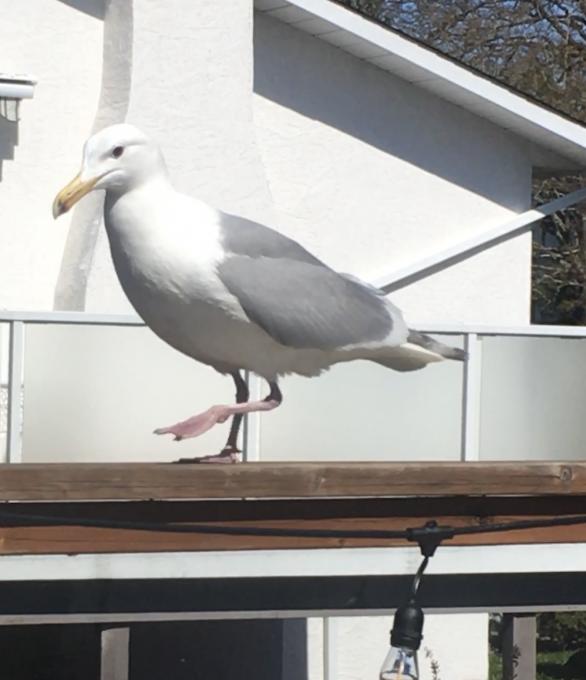
Glaucus-winged gull made an appearance on my deck while I watched song birds at the feeders. Couldn't figure out what he was after - bird seed? suet? He was quite silly and stumbled over his webbed feet as he walked along the rail :) -
While looking at this incredible course, and discovering the wall of birds, I have my bird feeder right outside the window, and I'm watching Northern Cardinals, Brown Headed Cowbirds, and White Throated Sparrows fly in and out, plucking up the seed. Thank you so much for organizing this course! I look forward to the other lessons ahead! Does anyone have any field guides that they recommend. I got the Merlin app this morning. For activity 3, my personal favorite bird that I see around my house is the red bellied wood pecker. I love the black and white patterns on the back of their wings! They occasionally stop by at my homemade bird feeder! Thank you!
-
I use the Sibley Guide particular to my region. It's very helpful and the illustrations are fantastic.
-
@Wren My birding satisfaction increased immensely when I did two things. I purchased a camera capable of getting close up shots. This has allowed me to study a bird which I could not see for long in the wild. The second is the downloading of the Merlin Bird app. This is an incredibly power tool for identifying birds. It has rarely failed me.
-
-
I live in Duluth MN and the past couple weeks we had a small hawk like bird calling almost the enterer day. He must have been successful because they are now nesting in a large spruce tree on our block.
I was watching it with my neighbor who happens to volunteers at the famous Hawk ridge raptor area. I asked him if it was a type of Kestrel which I grew up seeing a lot of them in Wisconsin, but it just did not look the same. I was told me it was a Merlin.
I will keep an eye on it into the summer -
As I am taking this course I'm observing the Common Flicker, Yellow shaft. So interesting to find them moving into my yard. Last year I only had one, this year, a group. Learning to distinguish the male and female, took awhile, but I get it. A male is starting to carve out a hole, in a pine tree. Hope he makes it his home. The newest bird that has been seen, only once, was the Brown Creeper. And it really dose creep. It's feathers are camouflaged to blend into trees. The Eagles are moving in, off of Onondaga Lake, so the bird mix is beginning to change. I don't see the Peregrine Falcon as much.
PS: Glad I didn't destroy a rotted tree stump, apparently, it has tons of ants in it!
Thank you, Helen -
Activity 3: I love watching the nuthatches around my house. The most common one I see is the red-breasted nuthatch, with a handsome red breast, slate-blue back, and white and black eye stripes. They way that they move around, "hop-clinging" both up and down tree trunks, is so unique.
-
Northern Cardinal is my favourite. It sits in tree in front of my bedroom window and keeps me in tune all day! It adds a bit of brightness to the world even in these tough times
-
1. I played around with the Wall of Birds interactive for some time. I loved getting to see the long "eyebrows" on the King-of-Saxony Bird-of-Paradise (I also enjoy its long name!). The Bird-of-Paradise family is one I hope to learn more about.
Seeing proto-birds and closest-living-relatives was helpful in visualizing the place of birds in the global "family" (used colloquially) of species. I especially enjoy the depictions of what I would describe as dinosaurs.
2. After reviewing the lesson, I took my newly-acquired Sibley bird guide and stood in the yard for a bit. I saw a Steller's Jay, with its bright blue body and black hood, in a tree near our bird feeder. On the ground, I noticed a Junco and two Robins. We often have downy, hairy, and White-Headed (!!) Woodpeckers in our yard, too. I'm lucky to live in Eastern Washington, with such a diverse offering of birds.
3. My favorite neighborhood bird is either the Junco or the White-Headed Woodpecker. I think Juncos are adorable, with their little black heads and brown bodies. They're small and round, and look like they could just fit right in your hand! How darling! The White-Headed Woodpecker is (somewhat) common here in eastern Washington, but exceedingly rare in other parts of the country and the world. I always stop and stare in awe, grateful for my opportunity to so easily witness this creature.-
I love juncos too. The last 2 -3 weeks I have had a yard full of them. They chased the chickadees away from the feeder. Yesterday they all disappeared.
-
-
Among the many species I see at my feeder, the Mourning Dove is a favorite of mine. They are so laid back and gentle as they nibble on the seed or just resting in the sun! As you can see in the first picture, they built a nest on top of our porch light and were not skittish as I came and went through the door. I enjoyed watching at the time the eggs hatched and the little ones being fed!
-
I love the dove too - their sound welcomes me to each day. I just wish they were smarter about their nesting choices - too often the wind destroys them or they are too small for the chicks.
-
-
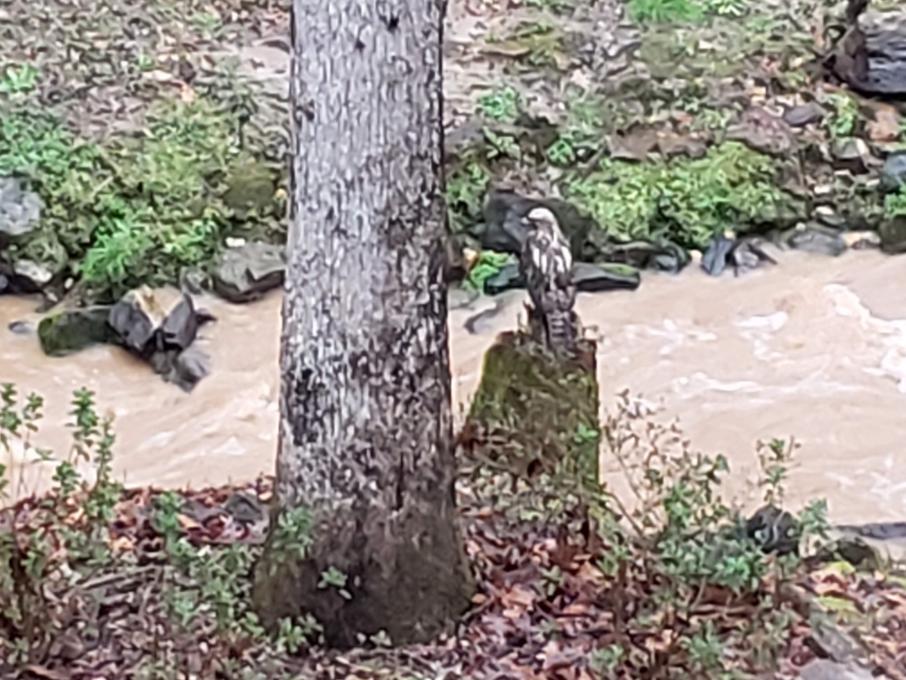
I believe this is a Red-Shouldered Hawk, maybe a juvenile. We've watched it all winter. It catches crayfish and maybe fish and salamanders from out creek.
-
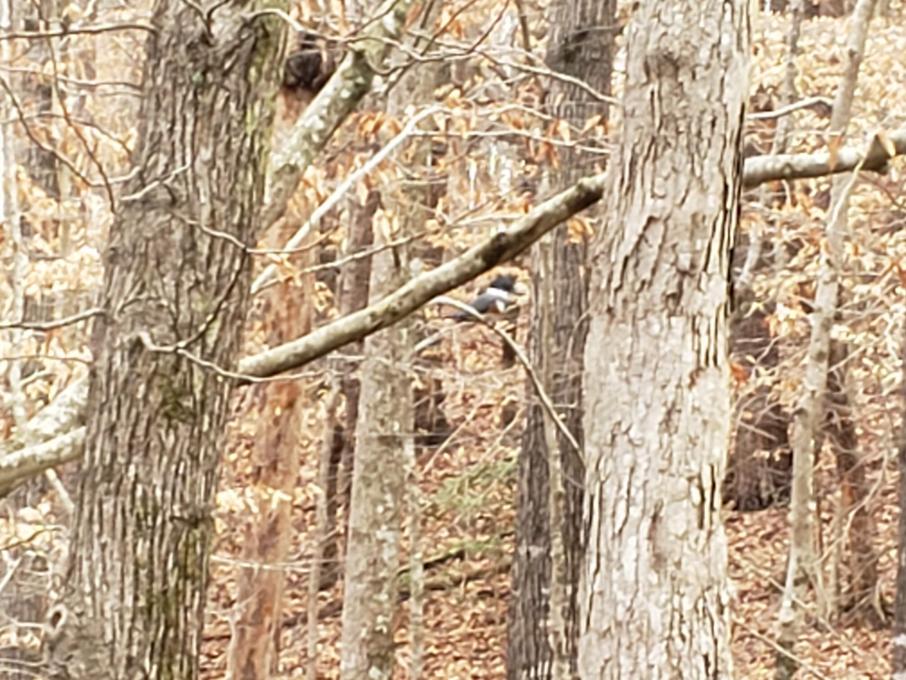
This is a Kingfisher. Sorry for the poor quality of the photo. I believe it is a female because of the rusty-colored belt. I'm not sure what group they belong to. I'd say either waterfowl or wading birds, but they don't have webbed feet or long legs! If anyone knows, I'd love to be informed.-
I think Kingfishers are in their own group - different species can be found all over the world!
-
-
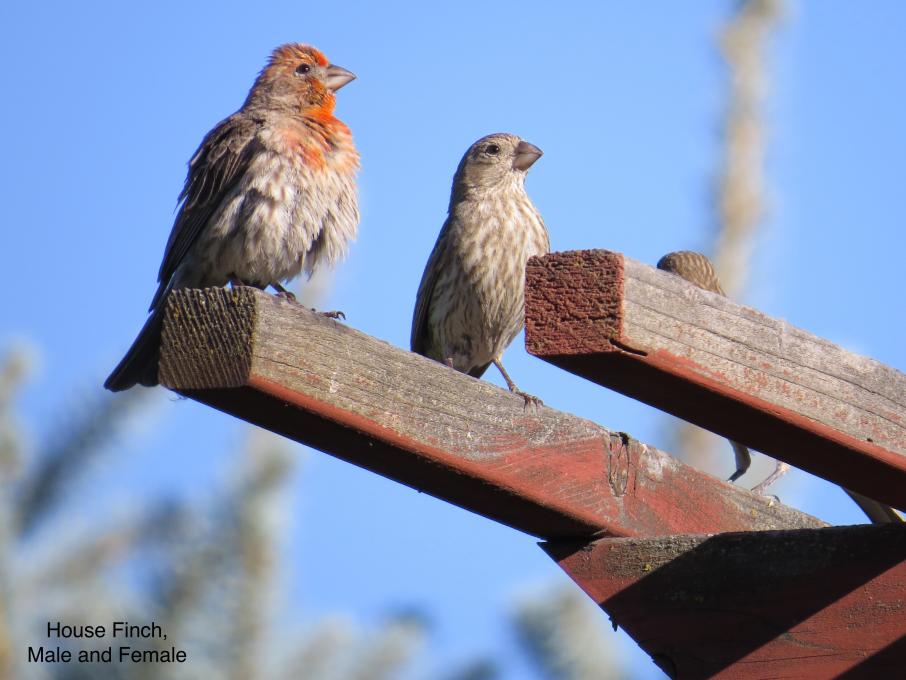
Male and female house finch. He is very fluffed up, but she is smooth. I enjoy these birds because they like my feeder and their vocalizations are lovely.
-
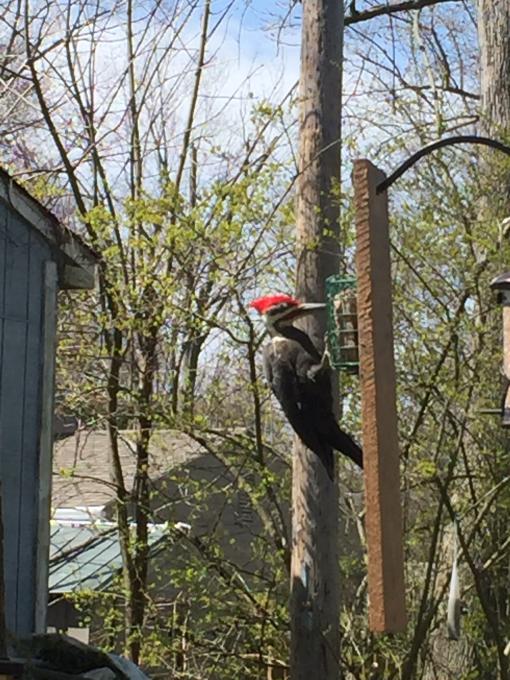
I love woodpeckers! This was taken today 4/22/2020 in my yard in northeasy Ohio. He's been visiting every day for the past week.-
I love woodpeckers too. I have a red-bellied one at my feeder in Charleston , SC.
-
Love this picture. I live near Caesar Creek State Park in Waynesville, Ohio and love to see these birds, especially flying.
Patti -
We have a lot of finches in British Columbia. I was curious why they are called "house" finches. I found a story about finches from California in the 1940's that were caged and sold in the eastern U.S. Many got free and they started to populate many new areas.
-
-
1: The inclusion of the proto-birds and extinct birds in the bird wall was really cool! I'm glad that ostriches are still here, but I wish moas were too. I had no idea that a type of albatross has an 11+ foot wingspan. That's crazy! I thought eagles would have the longest wingspan. I'm a fan of the monkey-snatching Harpy eagle.
I was obliged to read more about the oilbird online. ...Is it oily? The parents make the chicks fat with fruit (a third heavier than the adults), and people would use the chicks to make oil. The parent birds probably feed the chicks out of guilt for raising them in a nest made of droppings.
~~~
3: There is a bird in my neighborhood that I have never seen, but I sure can hear it. It is my favorite bird because it is my quest to classify it, and it has the prettiest song. It sounds most like a white-throated sparrow, but I haven't found a recording that sounds like it. Very long notes that sound like someone whistling. It is high in dense trees. There are multiple birds, and they take different notes. One will do two long, high whistles. The other will do the same whistle, but a perfect fourth lower. Later I'll hear three descending pitches, with the final one sometimes in the "Canada, Canada" rhythm. I could try to lure it to a feeder, but my neighbors have an outdoor cat and I don't want to put the birds in danger. I live in the non-breeding range of the white-throated sparrow, so it may disappear soon.
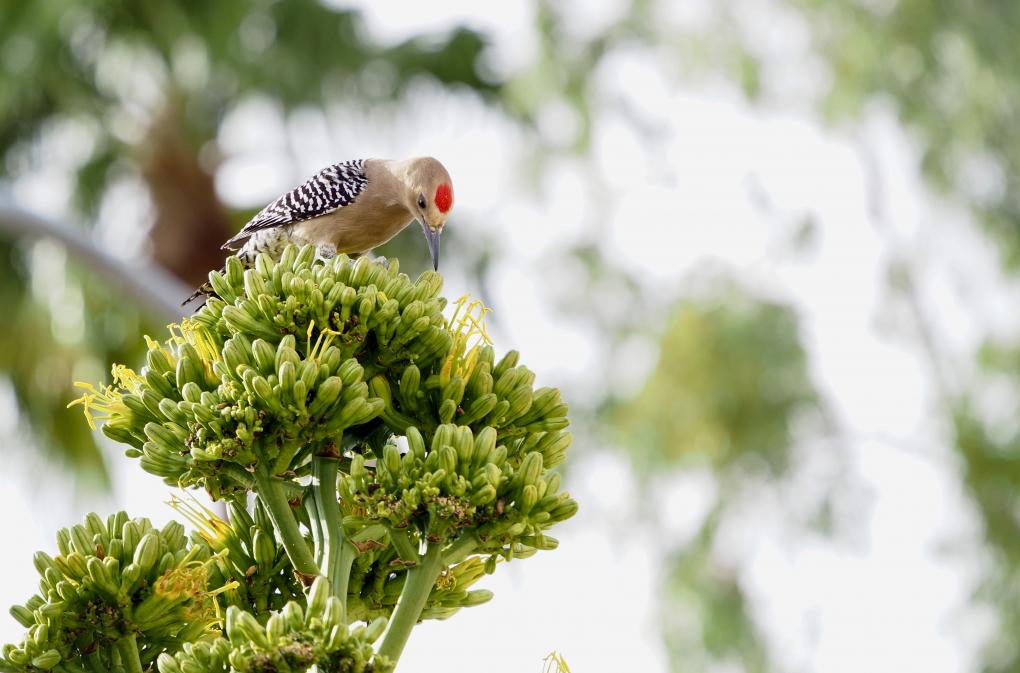 Gila Woodpecker visits my agave bloom multiple times a day. He noisily announces his presence. Phoenix, AZ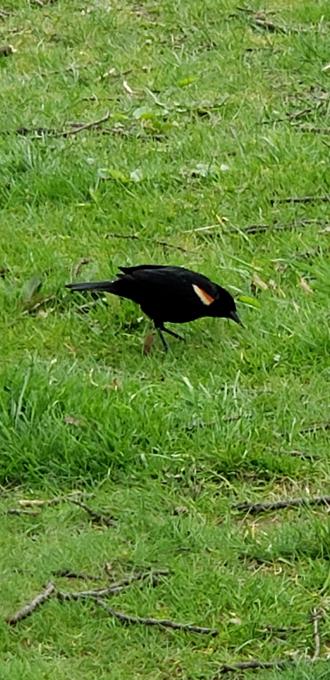
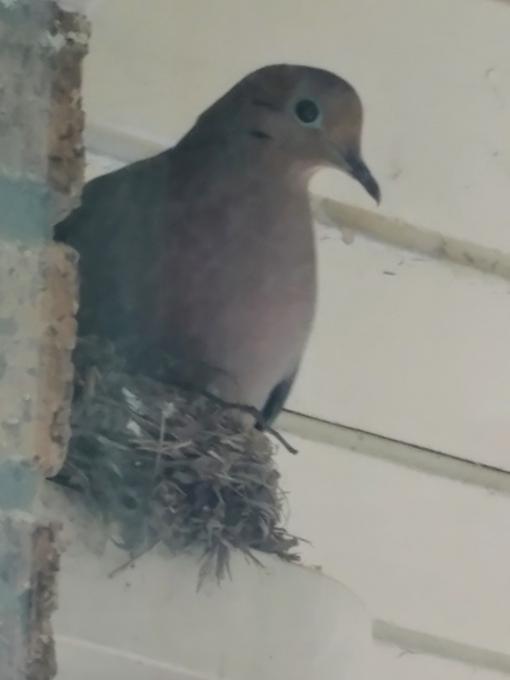
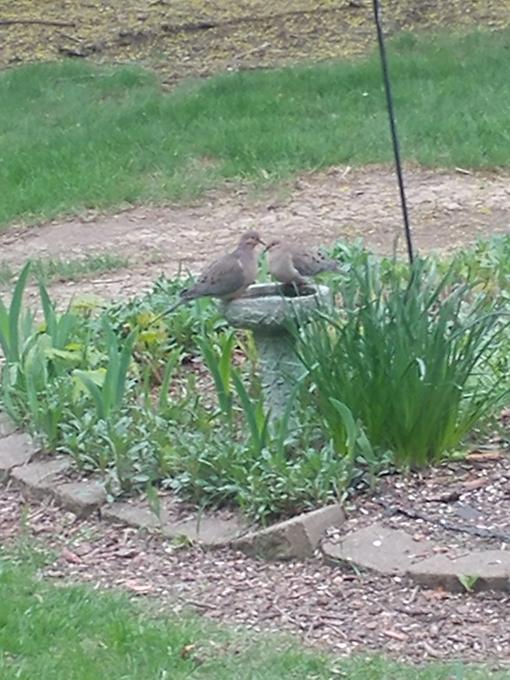 Among the many species I see at my feeder, the Mourning Dove is a favorite of mine. They are so laid back and gentle as they nibble on the seed or just resting in the sun! As you can see in the first picture, they built a nest on top of our porch light and were not skittish as I came and went through the door. I enjoyed watching at the time the eggs hatched and the little ones being fed!