The Cornell Lab Bird Academy › Discussion Groups › Joy of Birdwatching › Activities: Local Bird Exploration
-
Activity 2:
merlins most likely feature for Chincoteague today which is 8/30 shows laughing gulls, great egret, snowy egret, forester terns, double crested cormorants, willets, tricolored herons, willets semipalmated plovers and great blue herons just to name a few.
I've seen laughing gulls (heard as well), a great egret, a snowy egret and i still struggle with terns but i have seen some terns which i believe are the forester terns. -
Activity 1:
I went bird watching in the back section of the RV park I’m living in at the moment. It has some big tide influenced ponds for water fowl and during the mid tide i was able to see a lot of shore birds feeding. I saw a few ducks probably black or mallards. I saw a bunch of sanderlings and semipalmated plovers. I saw and heard a laughing gull flying over head. I saw 2 grackles fly to a nearby tree. I also saw a great blue heron fly overhead. I did have trouble with one lone bird. He reminded me of a willet but seemed too brown.
The area is such an interesting place and I’ve seen so many birds from shorebirds to song birds. Some birds I’ve never seen before in person like an eastern kingbird, some Carolina chickadees, a few northern flickers and a downy woodpecker. -
Activity 3: Searching on the Merlin app, easily I found 5 birds in my location that I did not know they were there. The Red-headed Woodpecker that could be spotted easily it seems like for the way his head is fully red. And this bird stays in my region all year around according to the map. This type of woodpecker is unlikely like the other woodpeckers how the bird has solid colors instead of having patterns. Listening to the sounds, I did recognize some of them by the way the bird would hammer its head on the tree trunk. An Indigo Bunting would breed here in the summer. This striking blue bodied bird which is a male I have never seen and would love to find. The only Blue Bird I have seen in my location is the Blue Jay. The Indigo Bunting would breed in shrubby areas and edges of the forests and fields. The females are plains brown with a whiteish throat, blueish tail, and have faint streaks in the underparts. I could of possible see a female without knowing it was an Indigo Bunting and thinking it was either some type of sparrow or finch. And again I have heard of their sound before. There is a rare bird breeding in my location that is called the Scarlet Tanager. The males are a bright red during their breeding season and could be easily spotted with such color. Both female and male would be the same color of yellow-olive when the male is not in breeding season. Their song is described as a American Robin with a sore throat. A water bird called the Hooded Merganser would be in areas such as wooded swamps, ponds, and rivers. Looking at the picture of the bird I would not expect on seeing them since they look like the types of bird that would be in the tropical areas the way they have puffy heads and the colors of brown, white, and black. During the winter they would be in calm bodies of water but they will never be in the ocean. Their sound kind of reminds me of a crow. A bird that has red eyes and is hard to see its eyes in person is the Red-eyed Vireo. They are a plain olive green with whiteish below with no wing bars. Would breed in mature deciduous forests and would actually sing all day long. They would flock with Chickadees and Warblers during their migration routes.
-
On my usual daily walk along I was able to use Merlin and the call ID feature to tell whether I was seeing the raven I thought I was or if I was seeing a crow. Their calls are very different. I was happy to verify that it was a raven.
-
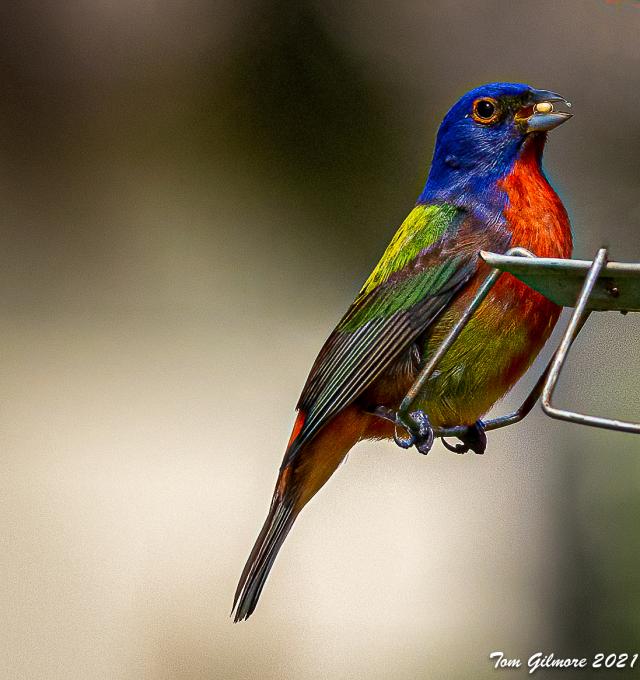
One of my favorite birds that visit my backyard feeder are the Painted Buntings. The Male is so colorful! I look forward to their return later this year to the south and my feeder stations.

-
I’ve spent a few hours bird watching around my home. Spotted a green pigeon flying in and out of a leafy tree with what I presume is nesting material (like twigs) - each time flying an almost identical path to source area. I identified the bird as Little green pigeon, but seeing it better today as it perched on an overhead wire i noticed it had red eyes - so the fist ID was wrong. It is a Pink-necked green pigeon. Before doing this course I would not have spotted that difference (the birds are quite similar to a beginner).
-
So excited that I am able to identify some birds now. On a nature walk in Pennsylvania with friends, I saw a red winged blackbird flew by us and heard a loud tapping sound made by a woodpecker. I am so excited learning more and more our winded creatures.
-
For the 3rd activity I found the following 5 species that live in my county: gadwall, common gallinule, nanday parakeet, bells vireo, and purple finch. I am particularly surprised about the nanday parakeets. They are very colorful birds native to central south america, but there are some that live in my county. This would be a particularly fun bird to find and watch to see how it behaves in the Californian habitats.
-
Found the Red Cardinal found on Merlin, but the sound and other information I am having trouble finding on Merlin. I will attempt to get better at using Merlin. But the the location, colors, size did fine the Red Cardinal, so not all was a loss.
-
I completed all 3 activities.
Activity 1: I tuned in to the birdcams for the (a) barred owl, (b) Panama fruit feeders, and (c) Savannah osprey. With regard to (a), the owl was sleeping [I tuned in at 9am EST], which gave me the perfect opportunity to get a long look at the design / pattern of its feathers. With regard to (b), I didn't see any birds, but the location was so beautiful, and I was excited to learn that the location is open for visitors! With regard to (c), I saw a baby in the nest. What struck me was how non-plussed it was by the sound of a nearby leafblower.
Activity 2: On my way into the office this morning, I heard so much birdsong, but couldn't identify the birds. Using Merlin's "Most Likely" feature, I was able to identify three birds I was hearing: (a) robin, (b) blue jay, and (c) house finch.
Activity 3: First, I have to say I was surprised by how many birds are common in my area this time of year! I chose my 5 based on their names alone: (1) white-throated sparrow*, (2) cowbird, (3) Eastern towhee, (4) killdeer*, and (5) pine siskin. The * indicates that these are birds that I have heard quite often without realizing who they were. :-) -
Activity 1: Used the Merlin app to find out that brown headed and white-breasted nuthatches have visited my deck!
-
I live near Ventura Harbor Ecological Preserve in Ventura, California. I regularly do Activity 1 there. Yesterday, I saw Ruddy Ducks, American Coots, Gadwalls, Mallards, Northern Shovelers, Snowy Egrets, Black-crowned Night Heron, Pied-billed Grebe, and my find of the day, a Ring-necked Duck. Just outside the preserve stood a Great Blue Heron while a Red-tailed Hawk stood on a nearby lamppost.
-
Activity 3. I did not know the the Fish Crow, Ring Billed Gull, Great Egret, Herring Gull or Northern Pintail could be found so near to where I live. I shall be researching not only these birds, but also the location that I found on e-Bird where people have seen them.
-
A few days ago I saw in the Cornell lab sapsucker woods cam mourning doves, blue jays, chickaadees, cardinals, woodpeckers, and a bird that is common and comes in groups that I do not know.
In my area pass black crested ant tanagers, scaly breasted wren, house wren, golden naped tanager, and blue backed tanager I didn´t knew that
-
Just getting started with this group. Been watching birds at my feeders here in Athens, GA for a couple of years. Just a few minutes ago heard a barred owl call, during the day. This is unusual, I usually here him about 4 in the morning. Just recently was able to use Merlin to ID the Clay colored sparrows at my feeder. I hadn't seen them before. Hoping to connect with the local Audubon society and maybe do some field trips soon.
-
This lesson inspired me to like a few bird-focused pages on Facebook and check out a few upcoming festivals as well. I knew that birding was a "thing," but I didn't realize how big the community is!
-
-
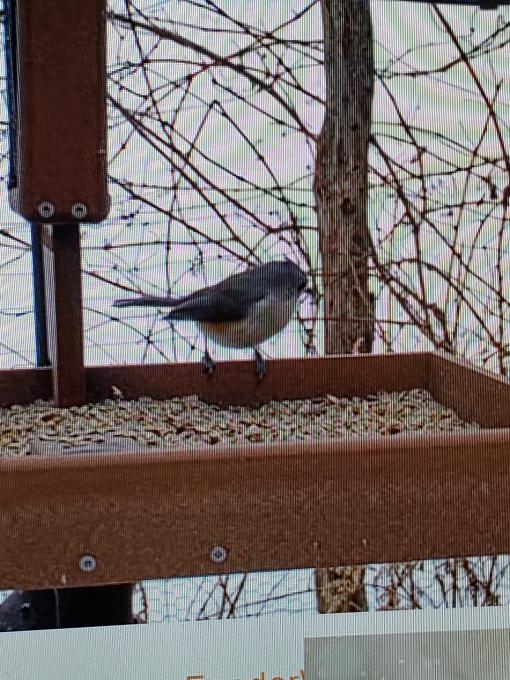
Just spent 15 minutes watching the birdcam at Cornell. I saw a woodpecker, blue jay, cardinal, crow, and this bird in the picture. Can anyone help me identify it?-
ElizabethBird AcademyI'm glad you checked out the Cornell feeder cam! That is a tufted titmouse.
-
-
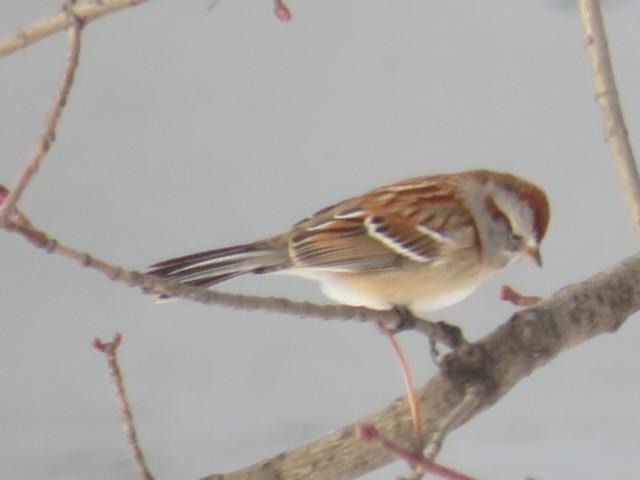
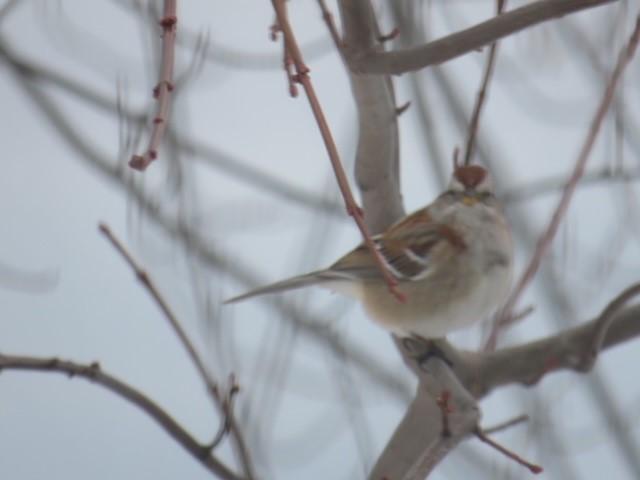
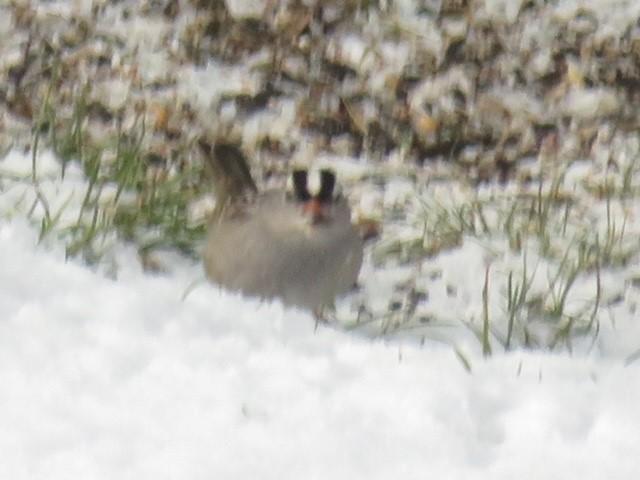
Much to my surprise, there are so many different varieties of sparrows in my neighbourhood. Some are common, some infrequent and some quite rare. Here are 3 examples. I will review their songs and compare them to determine different species. The tree sparrows are common , the chipping sparrow is common but the white crowned sparrow is apparently rare. Using Merlin, I will review their range, their song and the differentiating characteristics of these small sweeet birds
-
Activity 1: I did my 15 minutes watching birds at my feeder a little after 2PM today. Clouded over with light snow. I witnessed 6 species: the five I am sure about was 2 Tufted Titmouse, 2 Red-bellied Woodpeckers, one Downy Woodpecker, 8 Dark-eyed Juncos, and a male North Cardinal. THere was also a sparrow, that I believe was a Tree Sparrow. Sparrow size, burnt orange head patch. Looking at Merlin, this bird looked closest to a Tree Sparrow.
Activity 2: Merlin lists the most common to see as Black-capped chickadee, Blue Jay, Tufted Titmouse, Northern Cardinal, Dark-eyed Junco, Mourning dove, and White-breasted nuthatch. I saw three of these species today and have seen all of these species here at my birdfeeder.
Activity 3: Five species that pass through here include: Pine Siskin, Red Crossbill, Hoary redpoll, Horned Lark, and Lapland Longspur. Another less common visitor is the Snow Bunting, which I saw today in a group of 25.
Interestingly, they listed the Great Blue Heron as rare. Given the fact that I see multiple Great Blues on my way to and from work everyday when the water bodies are NOT frozen over, I find this hard to believe. There are at least three rookeries that I know of within 10-12 miles of here and probably more that I don't know about. -
I have found a spot near my house where I see a lot of birds, so I walked down there. It was probably a bit late - there weren't all that many birds. Did manage to see a house sparrow, though (so, at least I know the binoculars work...). I finally got the bird pack downloaded, so I've been able to listen to it's calls, and they match, too! (I heard it before I saw it)
-
I am excited to use many of the Merlin tools-I have been using the Audubon app since May and I like it and have my bird lists there, but some of the frequency charts in Merlin are so cool! I wish there was a way to share data between Merlin and Audubon so my ids could appear in both places. Anyone know if this is possible ?
-
I watched a webcam located in Ontario, Canada and saw what I think is a Canada Jay, based on likely birds in Merlin. It is Robin-sized, I think, and is shaped like a Northern Cardinal or Blue Jay without the crest. It has a long tail, is gray with white on its face and neck. The nape of the neck is darker, almost black, compared to the rest of the body. Merlin says these birds often are in small family groups, although I did not see other such birds. They are often found in campgrounds. According to “All About Birds,” these birds use sticky saliva to help store foods above the snow line and this might explain why they are able to live so far north.
-
I kept seeing an interesting bird while kayaking in the early autumn this year. When I looked it up in the bird book, it seemed to be an American Bittern, but I had never heard of them being in our area (actually, I knew very little about them in general). I just went onto eBird and discovered several sightings of American Bitterns over the past five years, all around the Hudson River within several miles of where I had been seeing one. Now I'm pretty sure that I was correct in my identification.
-
LOTS of BCC, nuthatch and titmouse activity. Swarming the feeders. Fun to watch.
-
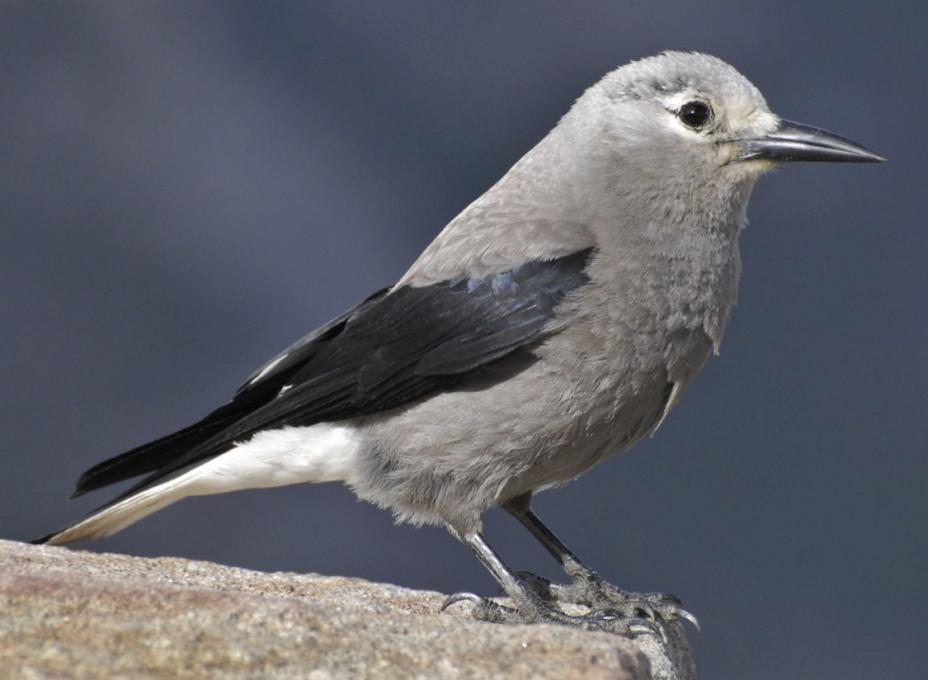
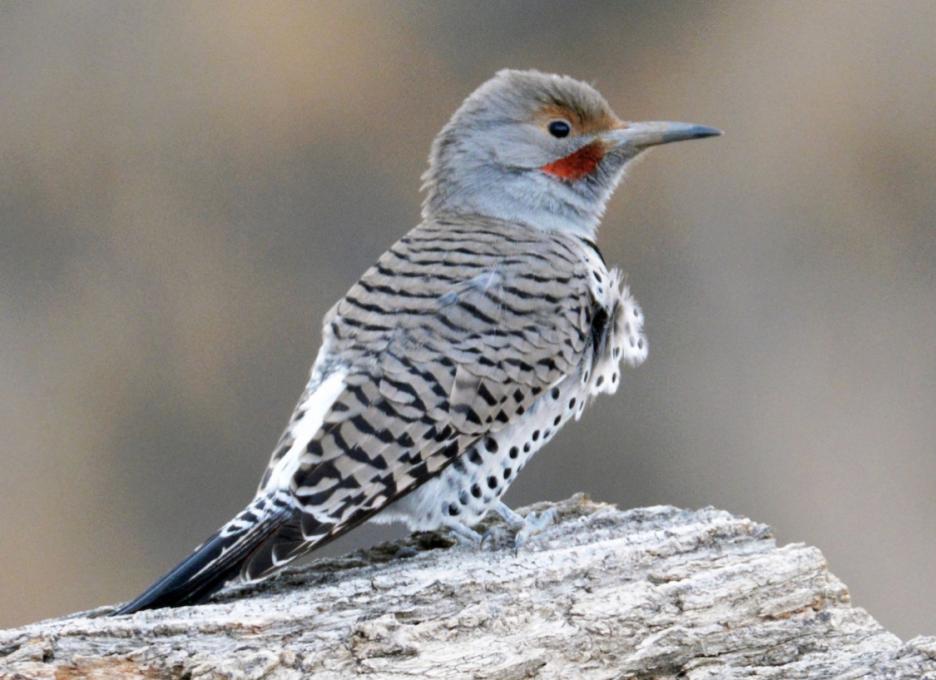
I watch my bird feeder every day, and I get excited whenever I see a new bird and make an ID. Today I saw a flock of little gray fluff balls swarming on my suet feeder, in constant motion. I looked them up in Merlin and it was easy to find out they were Bushtits. So cute! I’m going on a high elevation hike this weekend and I used ebird’s explore hotspots to see what’s been spotted there recently, so I’ll know what new birds to look for. A Clark’s Nutcracker and a Northern Flicker were spotted there two months ago.
-
Activity 1: I just decided to spend 15 minutes watching birds through my window. I saw:
- A flock of 13 dark-eyed juncos (the oregon variety). Very common here.
That's it. Not a great birding session.
Don't think that there's much to write for activity 2.
Activity 3:
- Mountain Bluebird
- Northern Saw-whet Owl
- American Kestrel
- Common Goldeneye
- Gadwall
Read More: