The Cornell Lab Bird Academy › Discussion Groups › Bird Photography with Melissa Groo › Practice Capturing Birds in Flight
-
A few days ago I found 4 little barn swallows all in a row on a fence waiting to be fed by their busy parents. I stayed about 1/2 hour and tried to capture the feeding in flight. I put my settings as recommended by Melissa. Swallows are super fast but it was super fun to see the results. A little one nearly chocked on a bee but managed to swallow it.

-
I went to Eolian Dunes Preserve this afternoon to practice. Wow, this was hard work tracking those birds! I am happy with the results. Thank you, Melissa! -
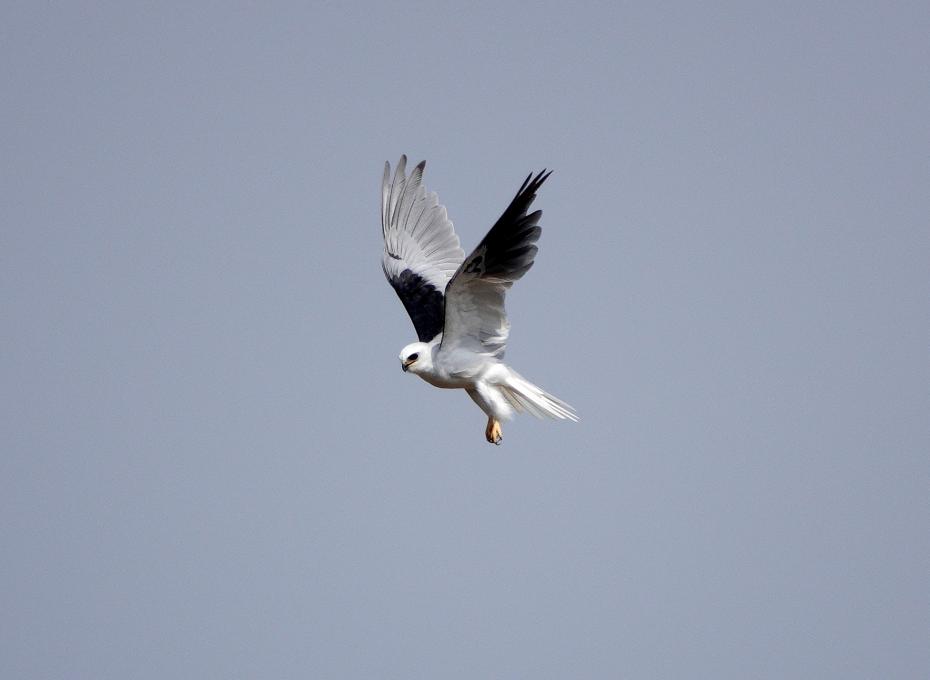
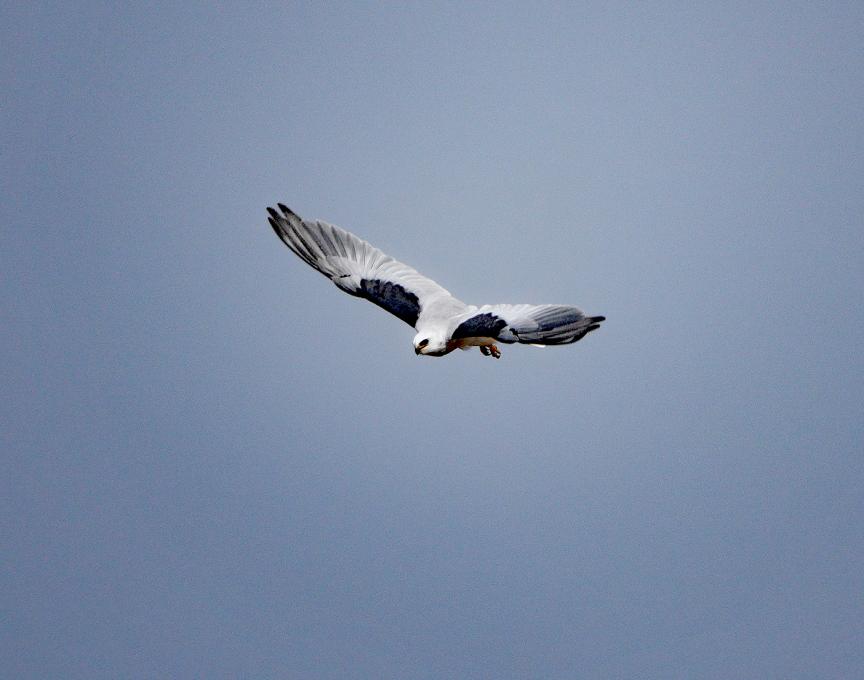
This morning I drove to the Carpinteria Salt Marsh Nature Reserve to see what birds were there. A lot of Cliff Swallows darted so fast it was nearly impossible to focus on one in flight. I had better luck with a distant White-tailed Kite that I was able to get the camera on. My focus in this class has been on birds in flight so I caught a few attractive flight photos of this beautiful bird.
Obviously I had to crop a good amount. I was shooting F4, 1/1250 at ISO 100. In burst mode this camera gets as many as 20 shots per second. What I noticed was that in every other photo the bird's wings were up and the other they were down. In the 3rd one the bird was flying directly toward me. The advantage of photographing a kite is that once you have the camera on the bird it pretty much stays in the same location in the sky. -
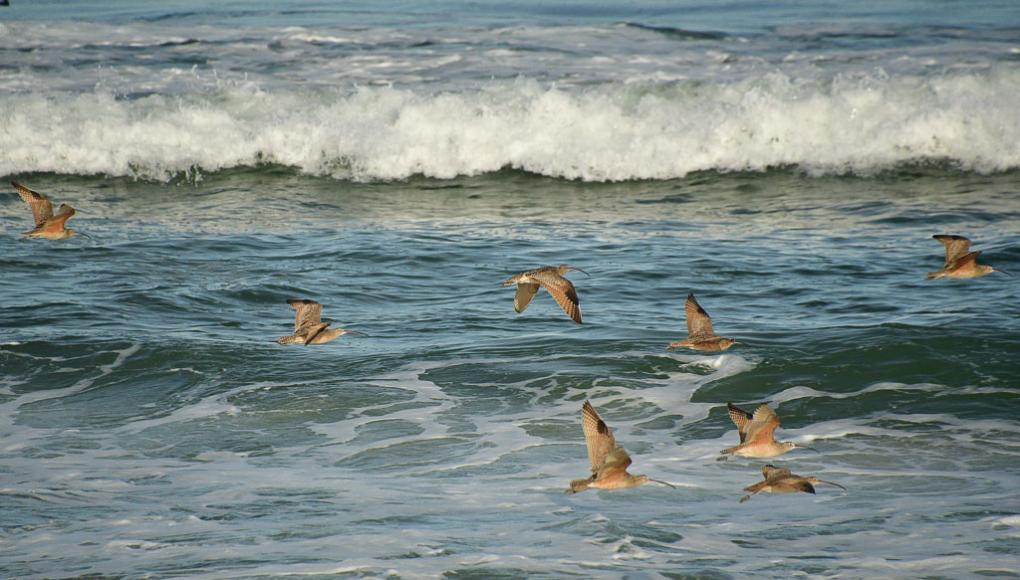
I liked this one because you can see some wings up, some down and the action of the ocean behind them. -
-
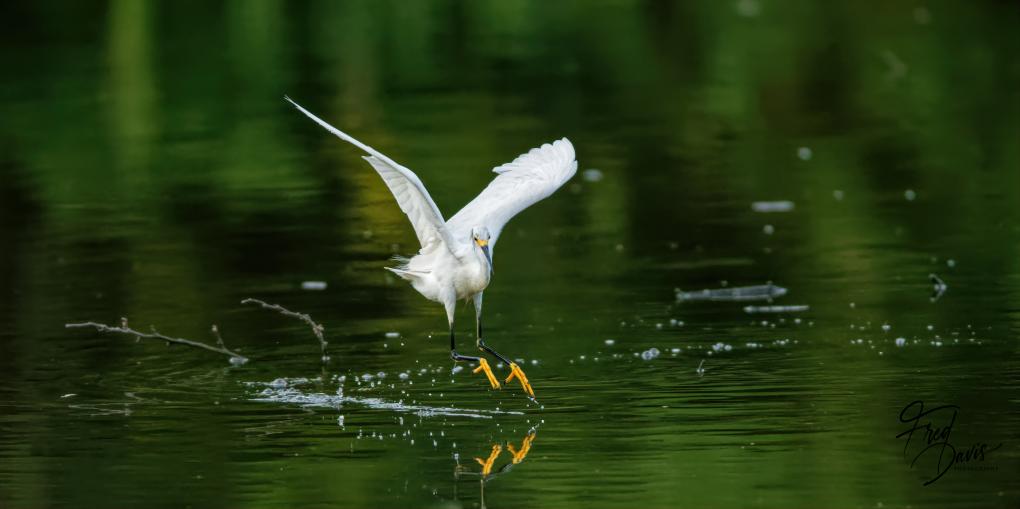
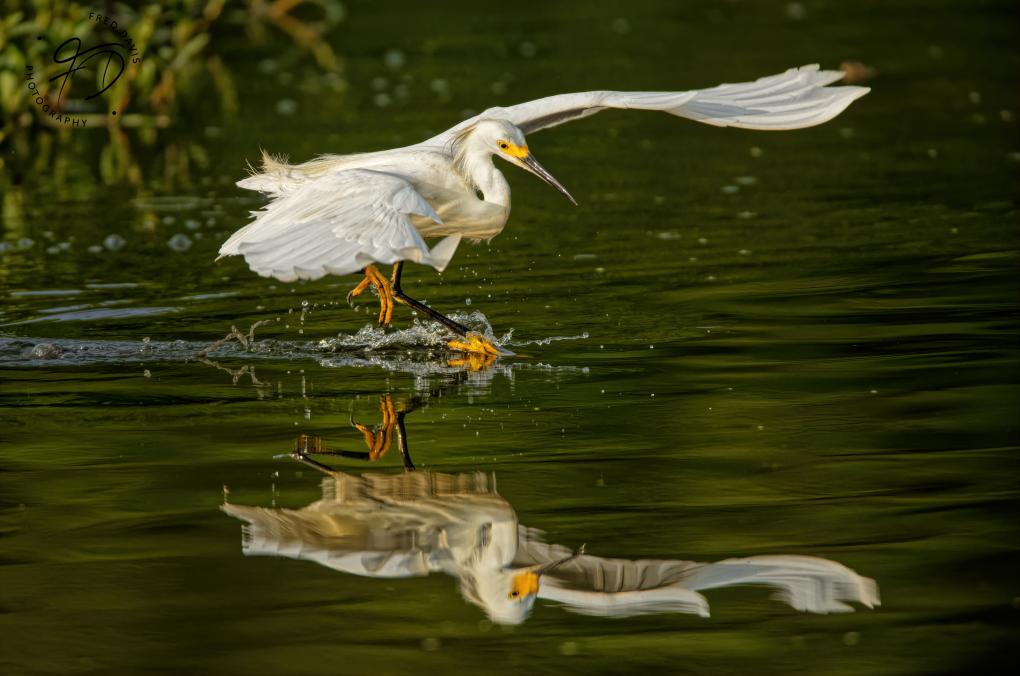
Two images of a Snowy Egret I managed to capture one morning while shooting at local park with a small lake in East Texas. The Snowy Egrets intentionally hop around on the water to stir up fish and other prey while it is feeding.
-
Really cool photos! They do seem to hop around on your photos! Such a graceful bird.
-
Beautiful photos. I love the action, the light, the reflection. Nice!
-
The reflection in the second shot is amazing!
-
-
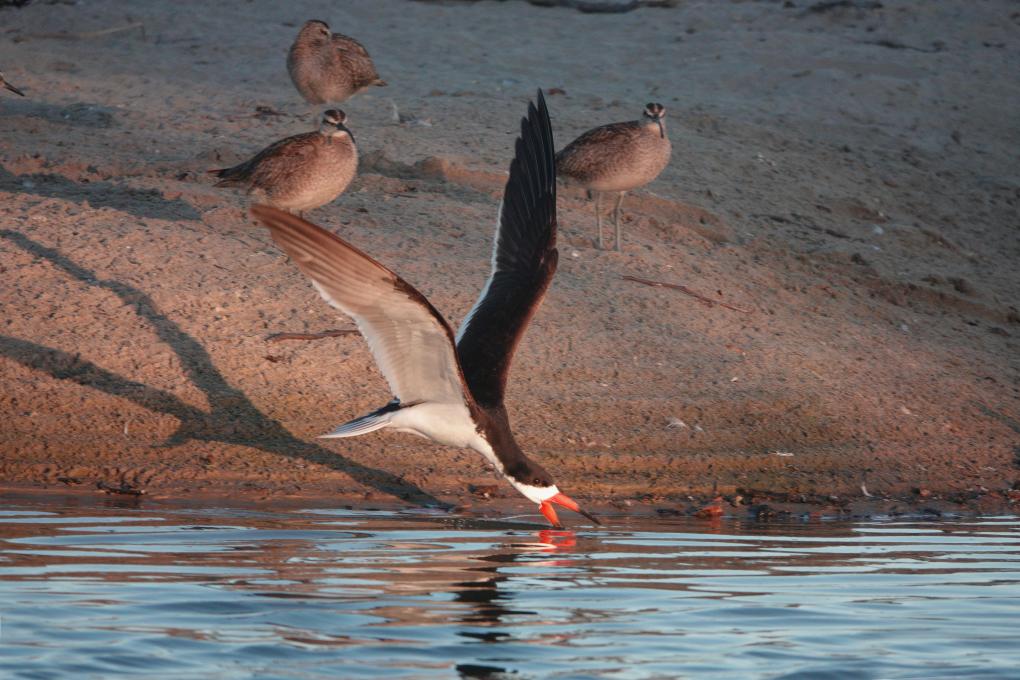
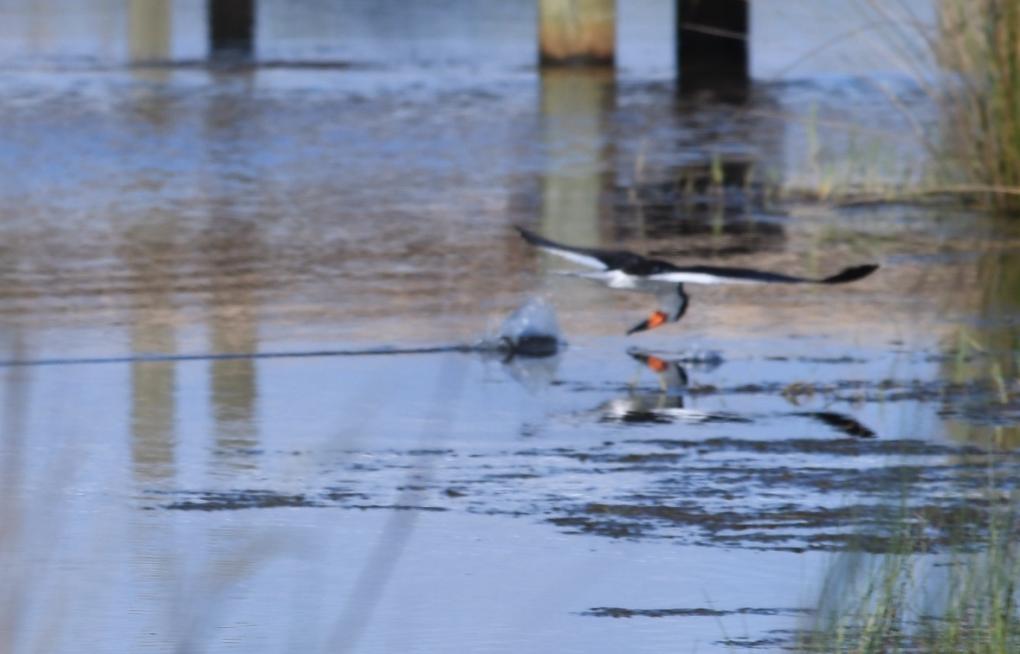
I have continued to photograph Black Skimmers at the beach in Santa Barbara, CA, this time with my Sony RX10 Mark 4. I shot in manual mode with auto ISO. F4 at 1/1000. I was shooting in burst mode at about 20 per second. Tracking these birds is really hard as they often fly out of the frame and if I'm zoomed in too far a wing tip will get chopped off. I am trying to allow for room for the bird to fly into as Melissa stressed. My criteria in selecting an image are: sharpness of bird, attractive wing position, catch-light visible on the eye, and in this case mandibles shown in skimming position.
There is a period of about 1/2 hour where the light is good before it fades. Many of these birds were skimming at once over a narrow channel parallel to the ocean. This depends on the tide. There were shorebirds in the background on the beach, in this photo 3 Whimbrels. I liked the warm light on the sand and the shadow behind the bird. I shot in jpeg this time and the only small edit I made was to bring out a bit more detail in the skimmer's lower wing. Just to give an idea I came home with about 200 images. I project on the TV first direct from the camera and do successful delete until I'm left with a manageable group. I used the newest version of Adobe Photoshop which is part of Elements, which also includes Premiere since I'll try making a composite video. I learn a lot from each shooting session. Sorry, I forgot to include my name: Dika Golovatchoff digolov@gmail.com -
Armed with all the great information from my lectures, I set out to improve my flying bird photography. I spent the last three mornings, getting up at 6am, grabbing my coffee and sitting on my boardwalk for hours at a spot where skimmers have been feeding. I made myself a blind behind a shrub and waited. I was determined to take my new Nikon 500 with a 200-500 lens off program mode and practice the settings as Melissa suggested. Trying to steady the camera and pan has been hard as using this heavy lens is new for me. (My previous camera was an iPhone 😂) This weekend, I practiced holding my arms in at my side thus creating my own tripod as Melissa suggested which helped immensely, although, I still had mostly blurry pics as trying to move smoothly and pan is still rather difficult as the birds were so fast and unpredictable. I was more aware of when I had jerky movements, which before I was pretty clueless. Like many of the others have commented, I often lost the bird in the viewfinder as I’m trying to pan. This is made even harder when I also try to change my zoom setting. Many of my pics had the skimmer’s trail and no skimmer! As everyone agrees, practice is the key. My best shot was taken at F 6.3, Shutter 1/2500 and ISO was set at auto and read 640.
-
Cynthia - This is a lovely photo of the Black Skimmer. I didn't know they ever skimmed in the morning - I always go out around 7- 8 PM. Where do you live?
I have always been out in the open with no need to hide from the birds. There are a lot of people walking on our beach - children and also dogs - who chase the birds off, but they always fly off and come right back to the same or close by location. You are very ambitious to use such a long lens - I wouldn't even try to hold such a long lens.
-
-
As Melissa says you have to leave enough room for the wings of the bird--Here I was using a fixed 500mm lens which did not allow me enough room in the photo to have been feet and tips of wings. I realize I needed a shorter lens when photographing birds from my car along the road.
-
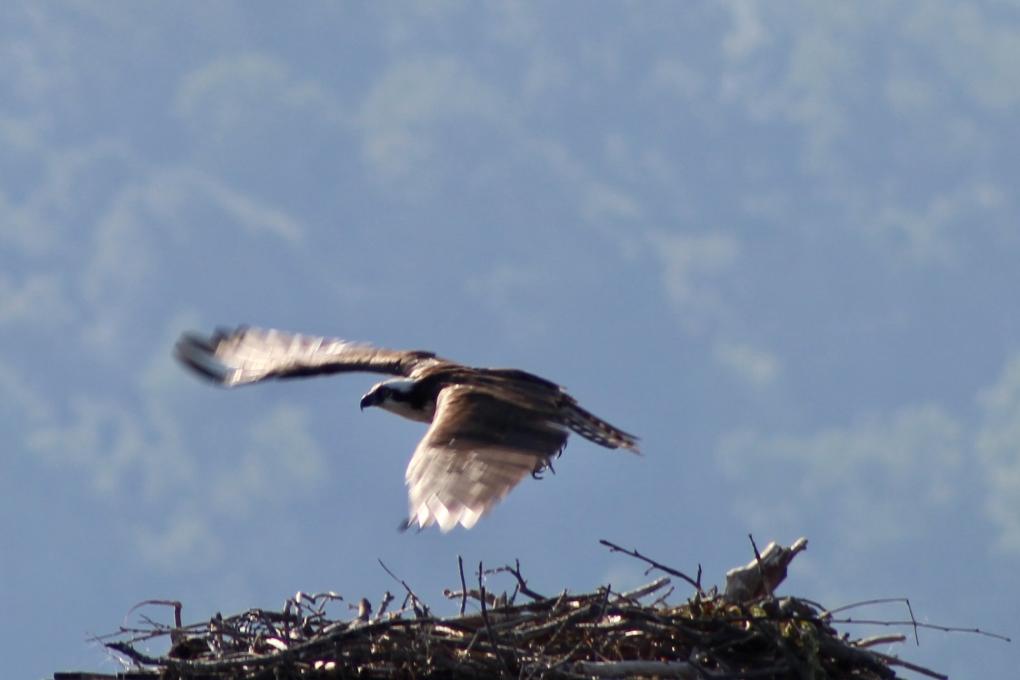
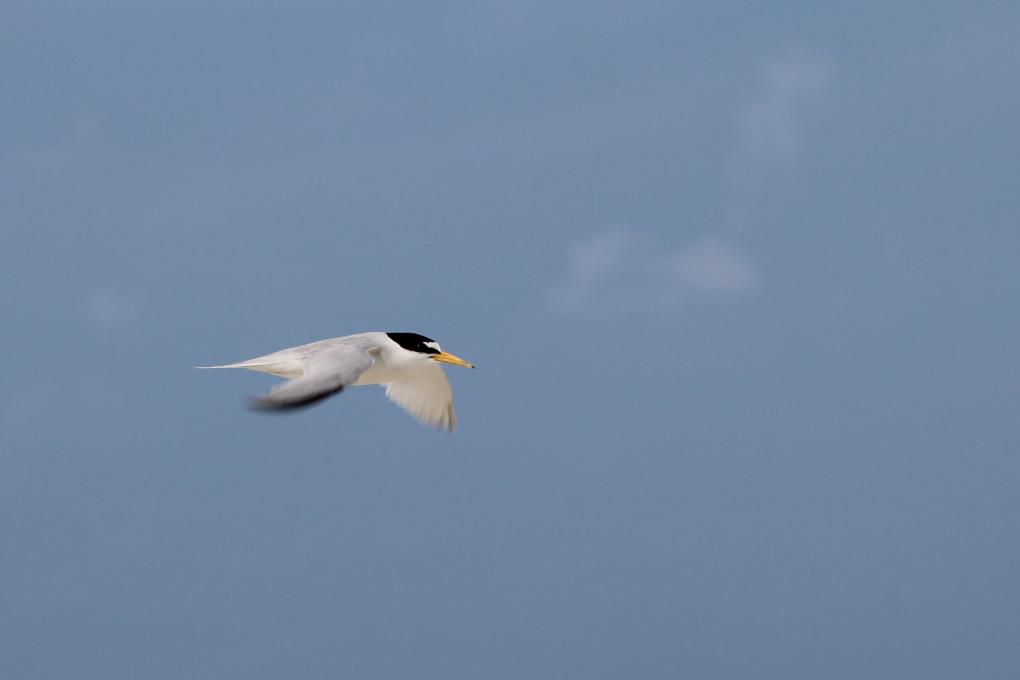
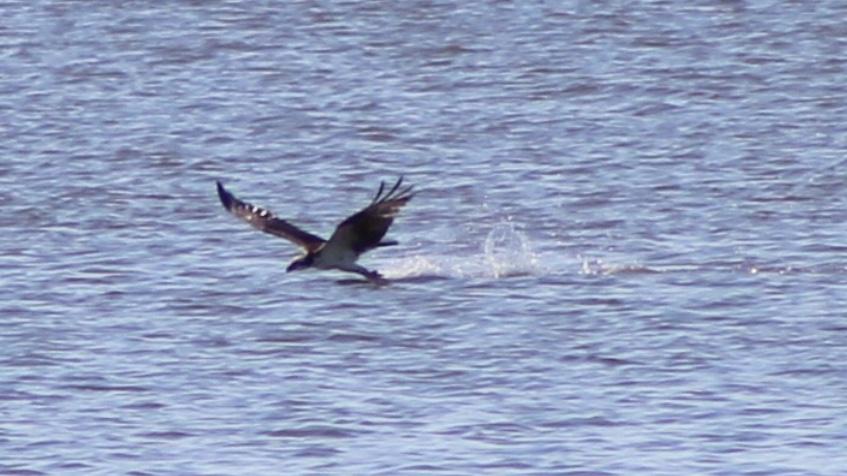
I still need to find a location with people-friendly birds, with the sun and wind at my back, but here are a few attempts at birds in flight. The Osprey was at Belle Haven Marina, taking off from a nesting platform, and diving for a fish in the Potomac. The Least Tern was at South Cape May Meadows.
-
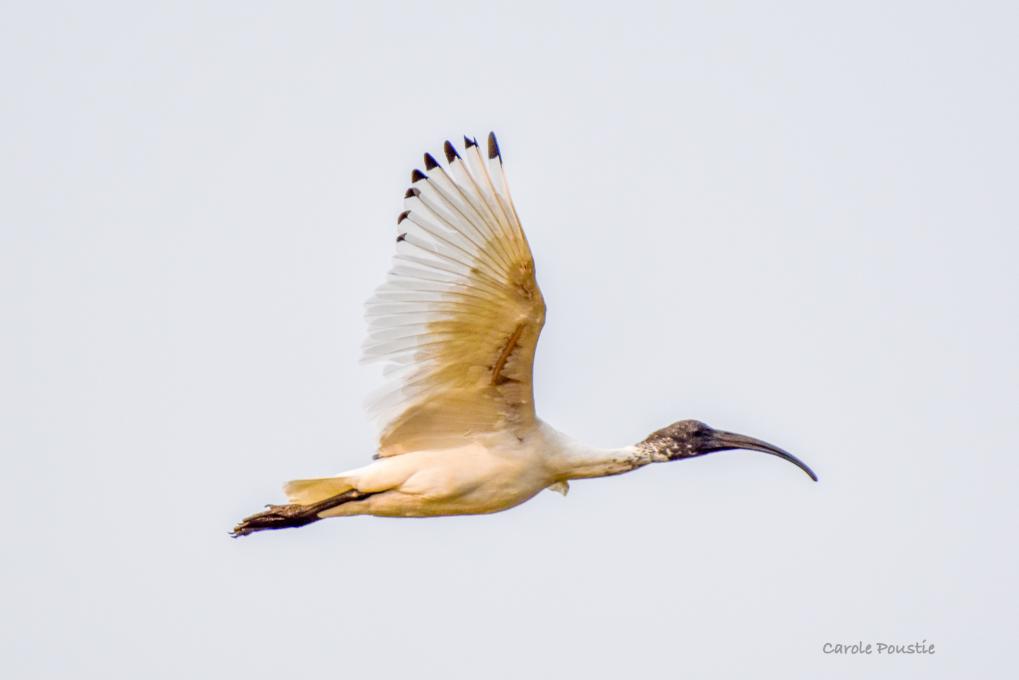
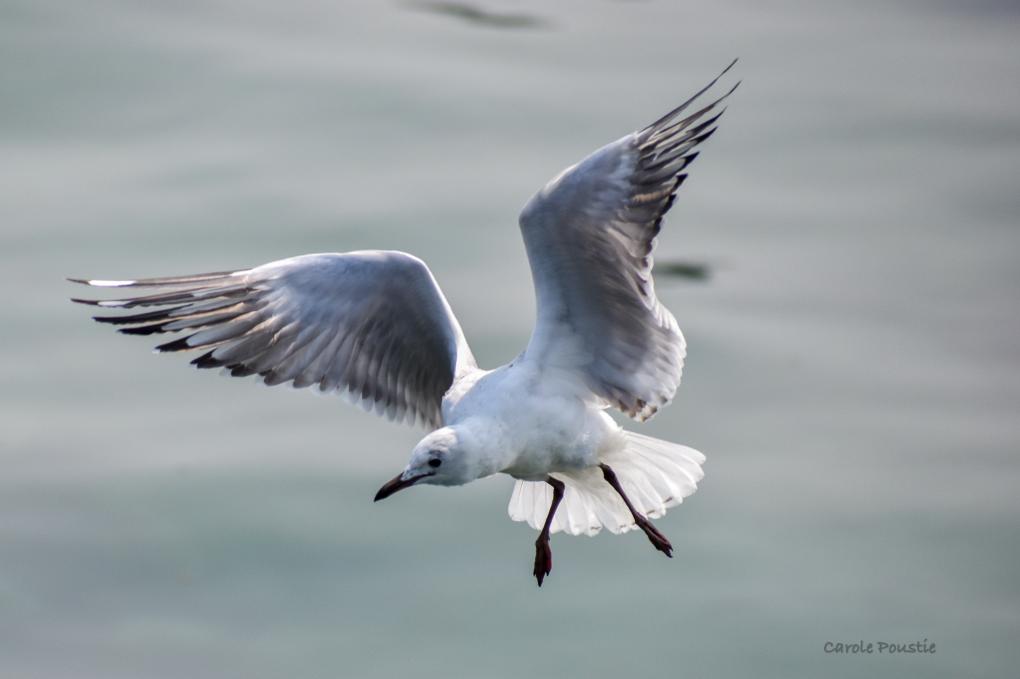
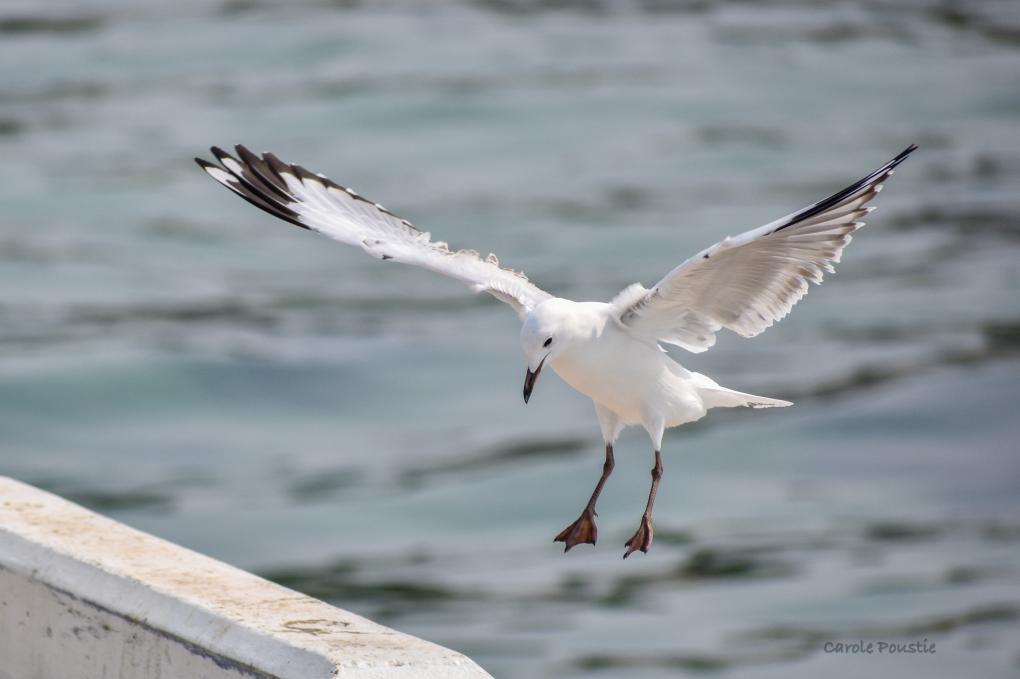
Definitely the hardest aspect of bird photography. Lots of practise ahead for me! Melissa's tips have been really helpful and I have been encouraged to keep trying. Here are some of my successful shots: two silver gulls (great to practise on! ) and a white ibis.
-
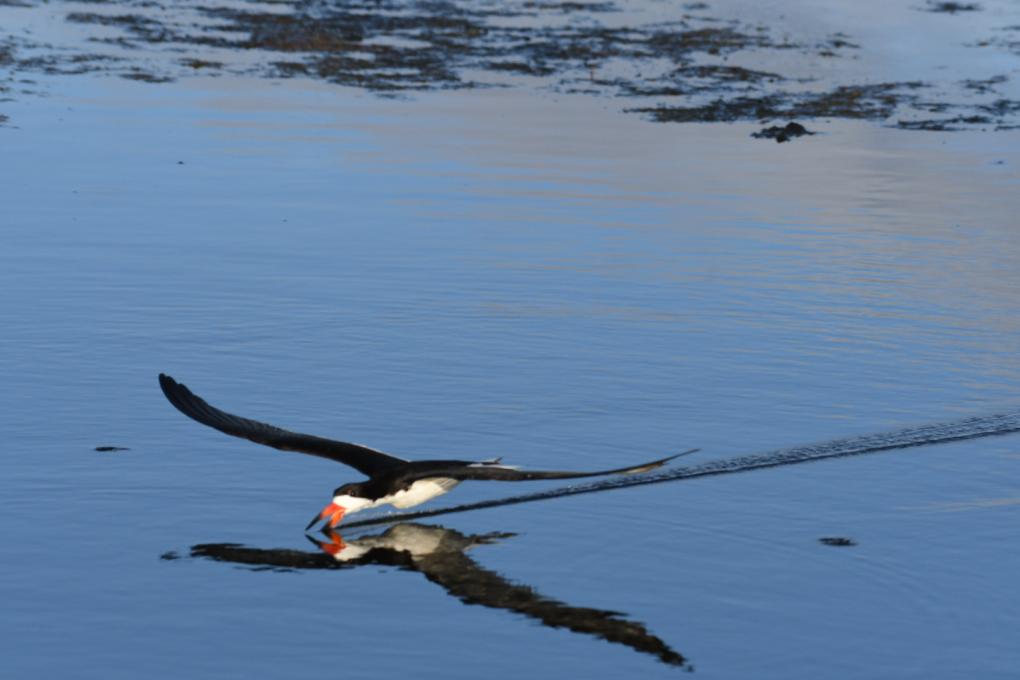
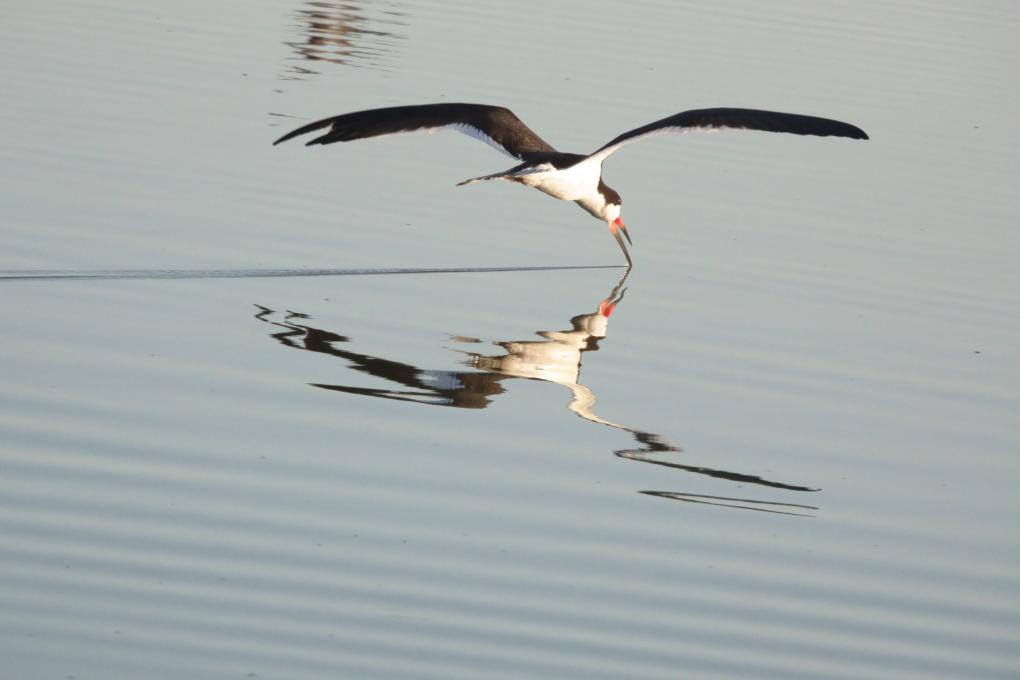
Practice, Practice, and practice - Melissa is right. I wanted to capture one or more Black Skimmers flying - but more specifically while skimming for fish. I went 4 evenings to the same location, selecting different vantage points for observing. The best time was between 7 and 8 PM as the sun was going down. The light changed a lot during the one hour I was there, and in the end it was quite dark.
The first two nights I used my Canon 7D Mark 11 with 100-300 mm lens and 1.4 extender. Second 2 night I used my Sony RX10 Mark IV zooming its lens between about 300-600 mm depending upon where the bird was in its flight. This is very challenging - as multiple birds fly very quickly and my goal was to catch one on a smooth water surface and showing clear reflection of bird. I used manual mode all the time which made things more challenging for me as many exposures turned out to be off and I found myself using exposure compensation quite a bit. My Sony does not permit ISO auto in burst mode, so all my 3 values were pre-selected.
This is one of my most pleasing shots as it also shows the trial left in the water by the skim. My next goal would be to be more right on with exposures. I was shooing RAW and used the digital editing software provided by the camera makers. This was my first experience using Imaging Edge from Sony. (I do not have Lightroom).
I have more experience with the Canon (having shot skimmers before with it) than the Sony. Its a challenge, and I'll keep trying. I find Black Skimmers a very interesting species and learned that they do not rely on their eyes for finding prey, in fact their eyes are slit vertically.-
Great capture, Dika! Great to get the skim line in and the reflection!
-
Dika- I also love to watch the skimmers and I enjoyed your comments. I wondered what would happen is they suddenly hit something in the water with their bills and wondered the consequences. While looking over my pics from this weekend, I found a bit of an answer. I know this picture isn’t the best quality, but I thought they were worth sharing. It’s amazing to see that the skimmer’s head is tucked back under himself, almost to his tail. He managed to stay “upright” and continued to fly off.
-
-
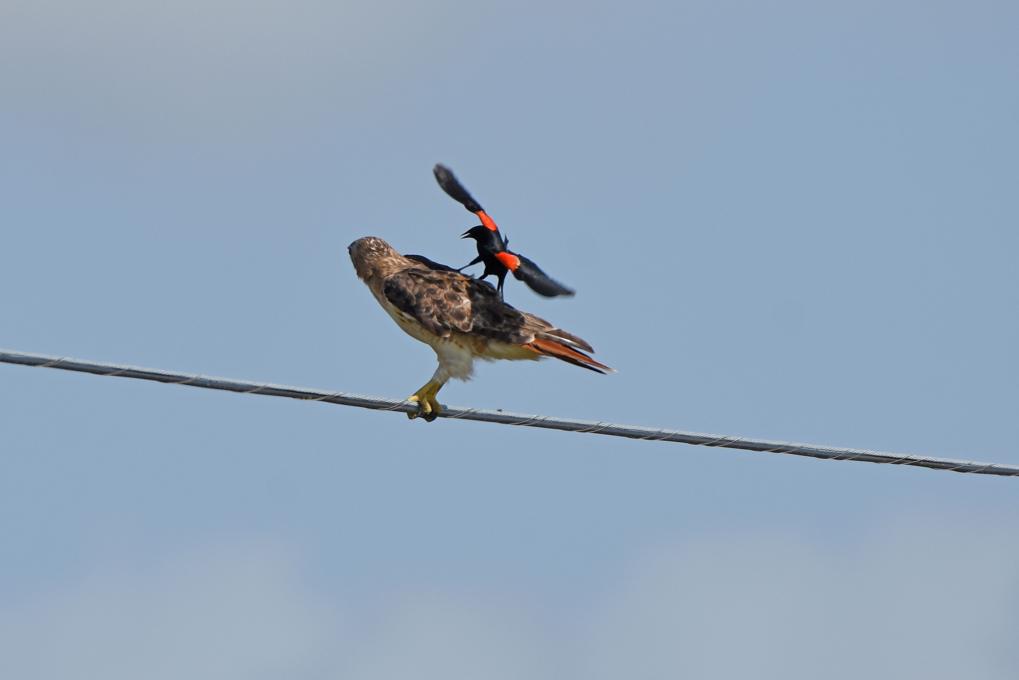
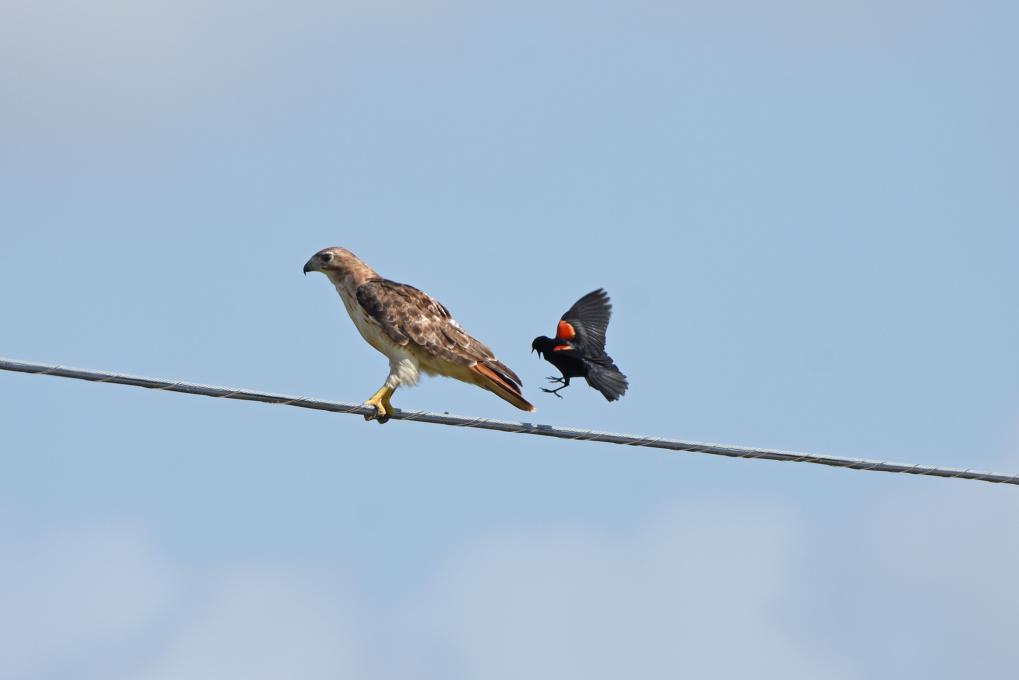
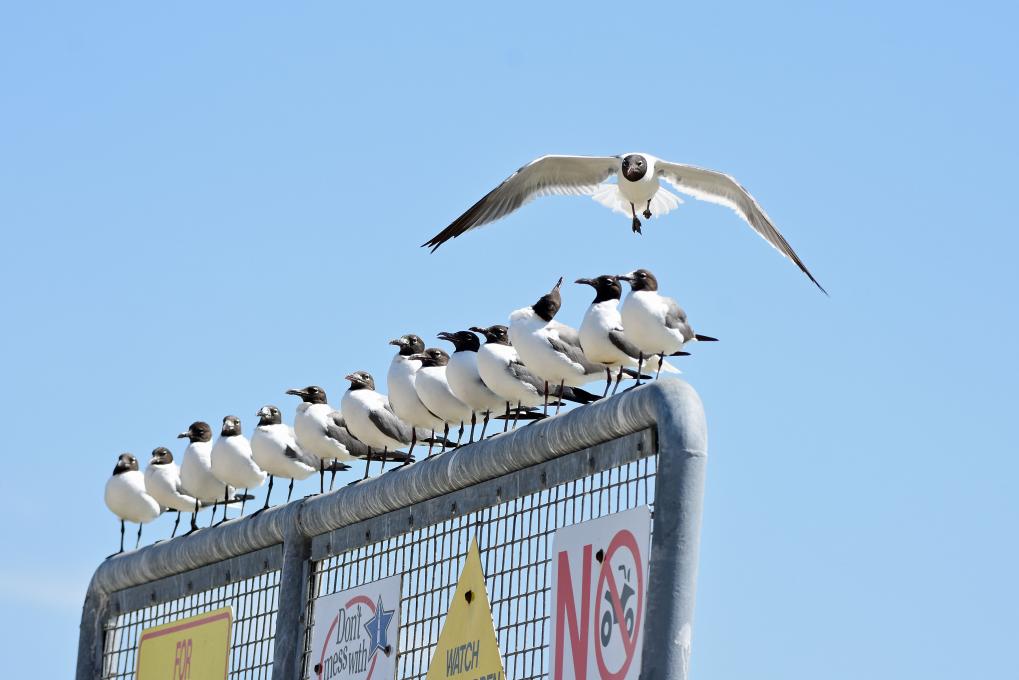
I was drawn to the seagulls sitting in a row on this sign and tried to capture this one trying to squeeze in. It was a fun photo because of their positioning and the third one from the right seems to be telling the incoming seagull that there really is n't any more room. The other two photos I too this morning while driving some back roads to get home. I initially stopped to take some photos of the hawk but a red-winged blackbird came in and added a bit more drama.
-
I love these, Lucy! Great stories with each of them as well!
-
-
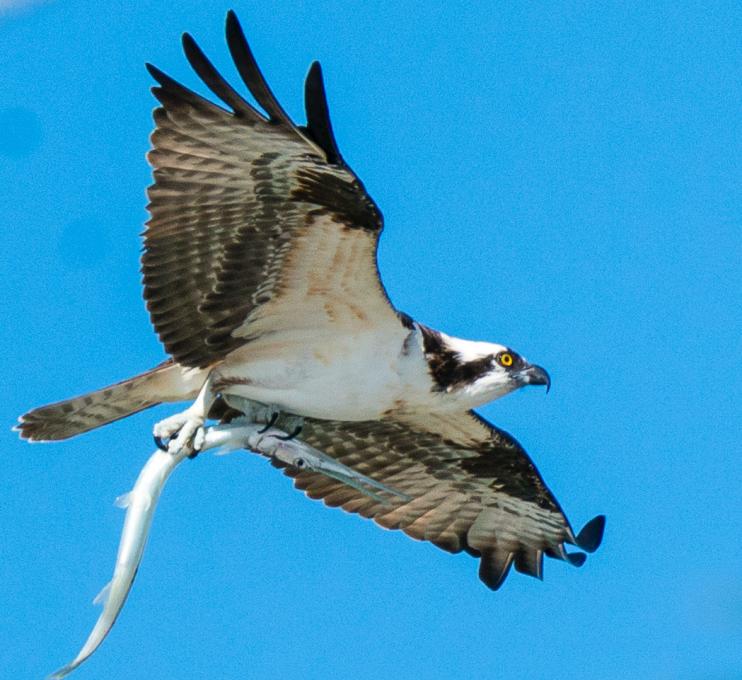
Below is a shot of an osprey after finding its lunch. Flew directly overhead. SS 1:3200, F5.6, Auto ISO telephoto 600mm.
-
-
Great capture!
-
What a superb photo of the Osprey with fish! You are a real pro.
-
Great photo, Richard. Excellent capture of the capture!
-
Awesome shot!
-
-
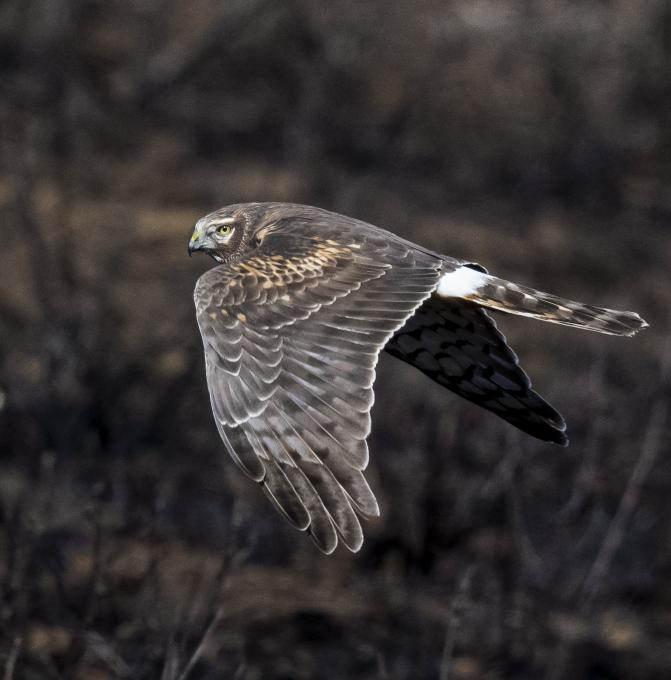
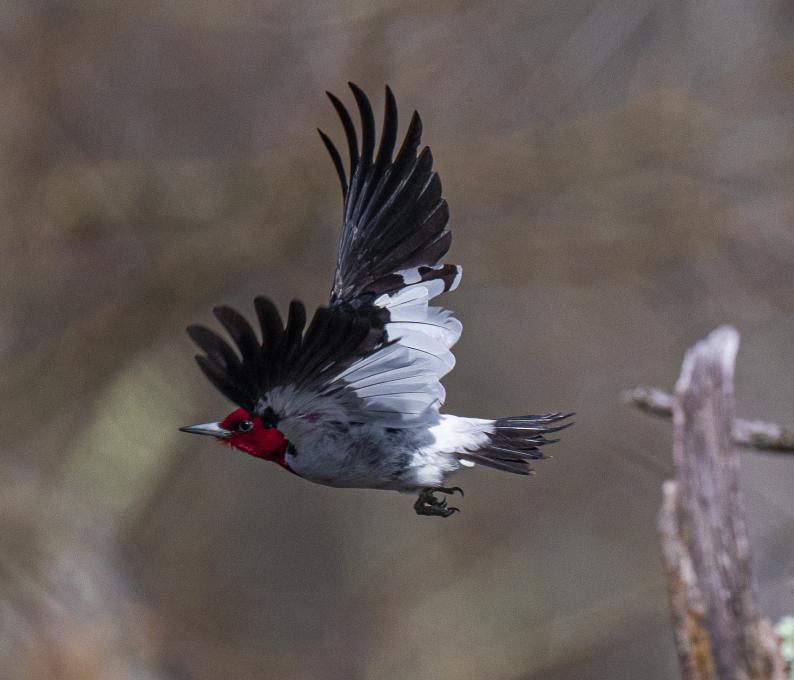
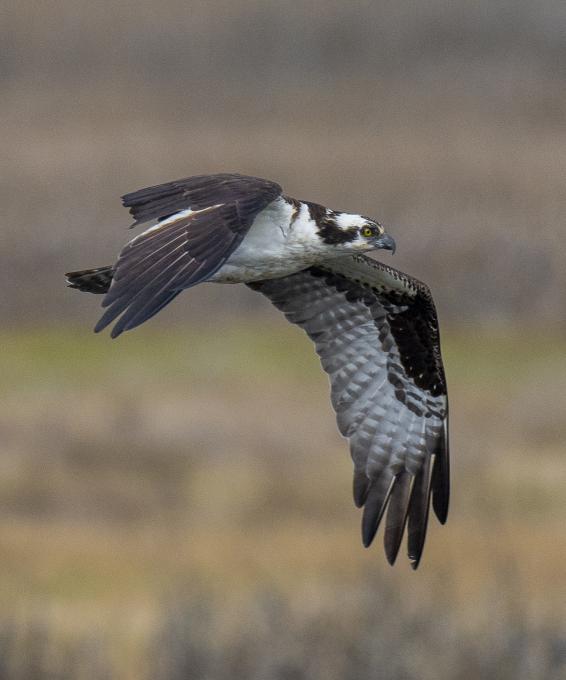
I have found capturing birds in flight to be the most challenging. I am still struggling but here are some shots from this year that I saved,
-
These are wonderful. I know it is especially hard to photograph a harrier.
-
Wow! Fantastic shots, Kent! The focus is spot on and especially the eyes. That is so hard to do!
-
Seeing a Harrier, let alone capturing one in flight, is quite an accomplishment!
-
-
Capturing birds in flight has been challenging. I typically a shutter speed of 2000 and f/5.6 and auto ISO. I also use some custom tracking settings in my Cannon EOS 7D that are supposed to help. I also use most of the settings Melissa calls out. All this aside, I’m lucky if I can get one out of 20 photos to be focused and clear. Here are a few of my recent shots.
-
Well done to capture these, Krispen. Great photos!
-
-
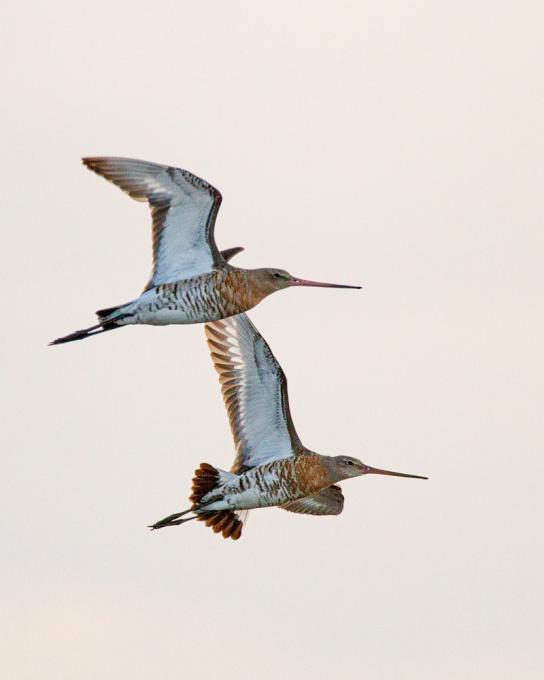
Fred, I recognize your difficulties as I experience the same. I can manage to home in on a bird in flight up to about 500mm but then lose it. Then I zoom out and back in but it's usually too late. I was very pleased to get this shot of some black-tailed godwits yesterday but the vast majority of my shots were blurred. All the birds I was trying to shoot were fast flyers. It was at sunset so the light was fading, which didn't help.
-
I have the same problem, Lynsey! So frustrating! Practice and patience I guess. And also luck! Great to capture both birds flying alongside each other — both in the frame.
-
-
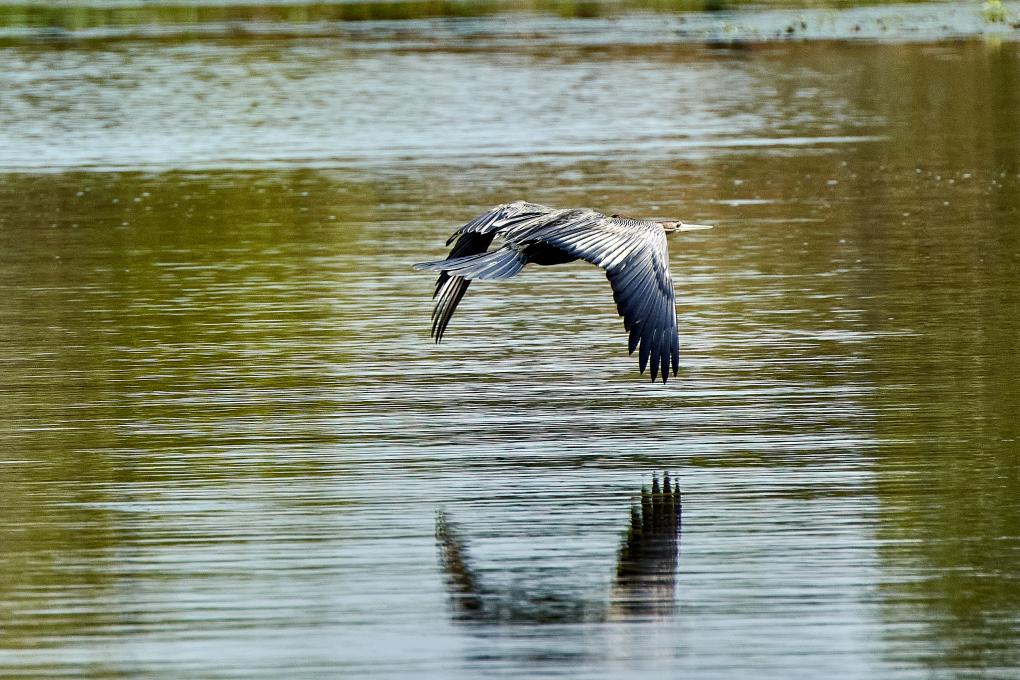
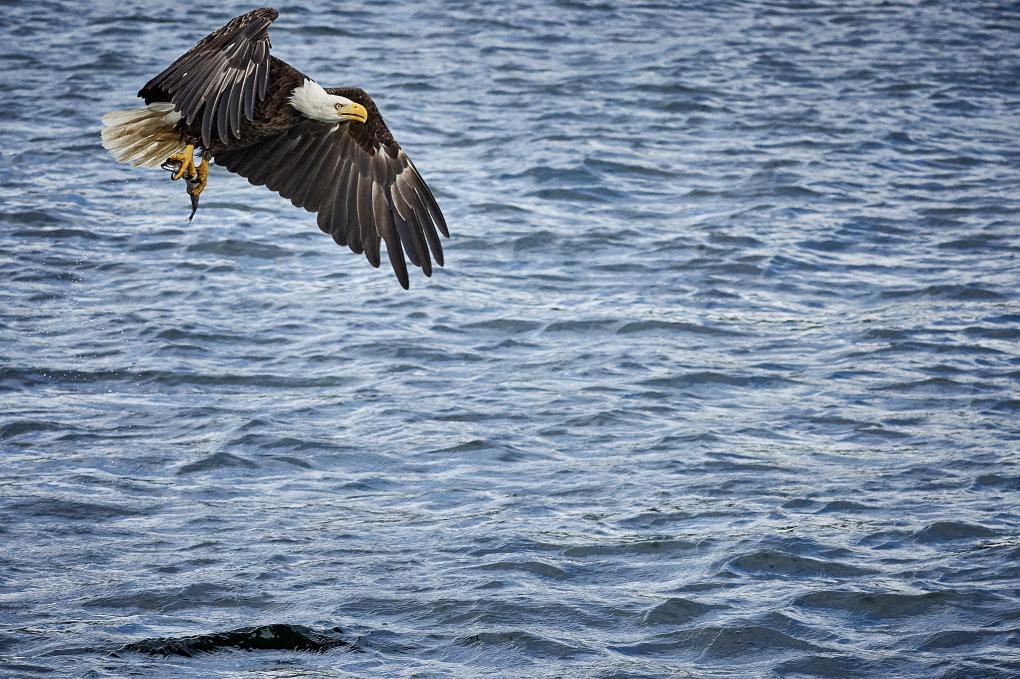
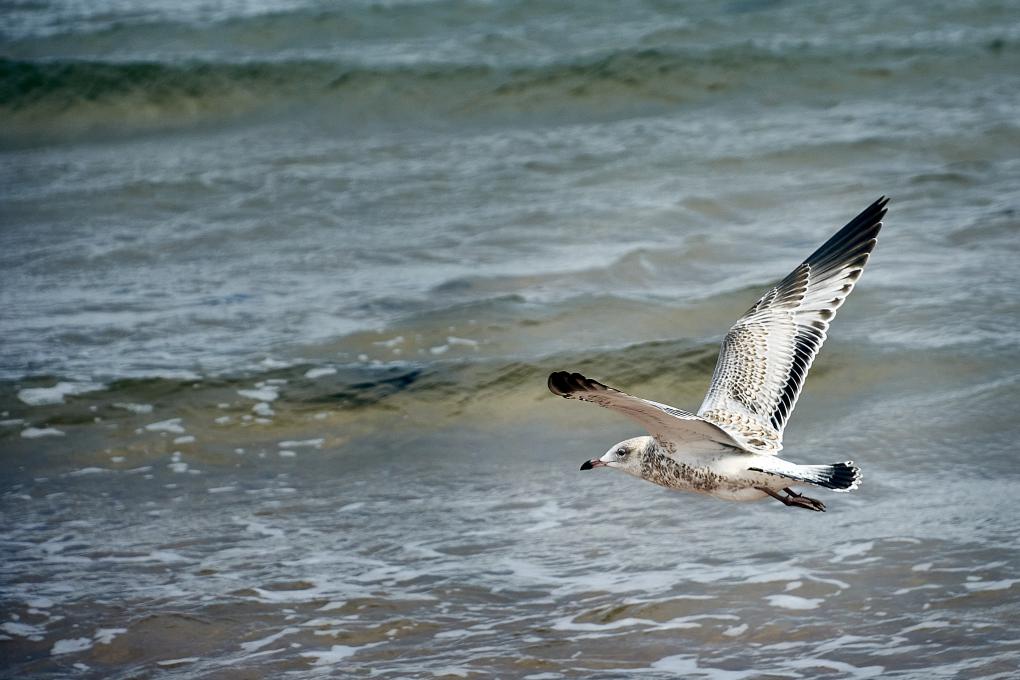
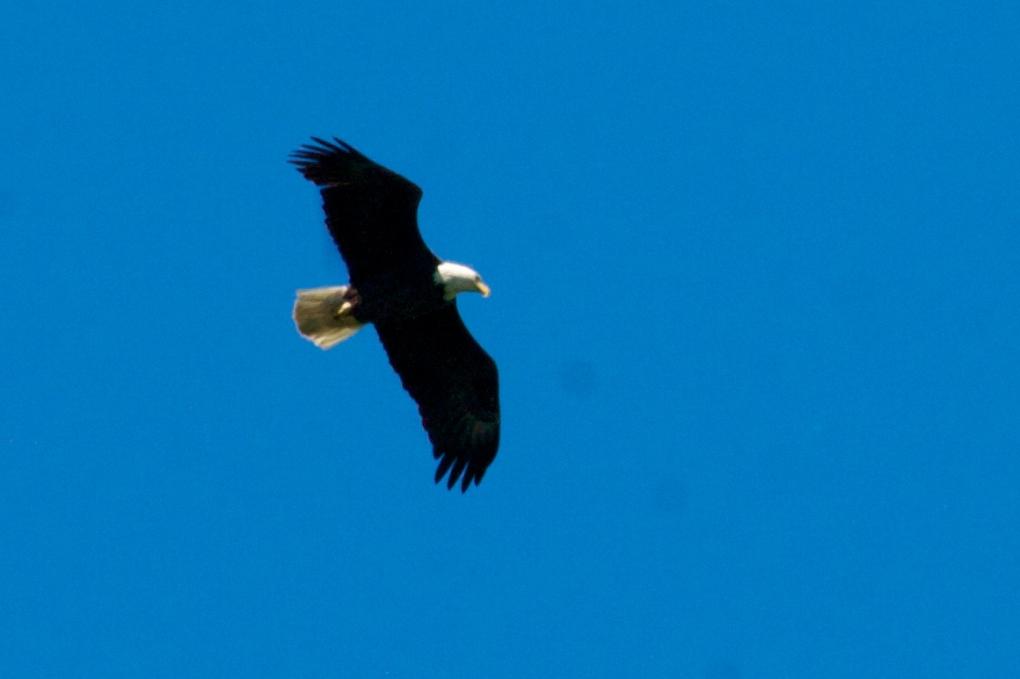
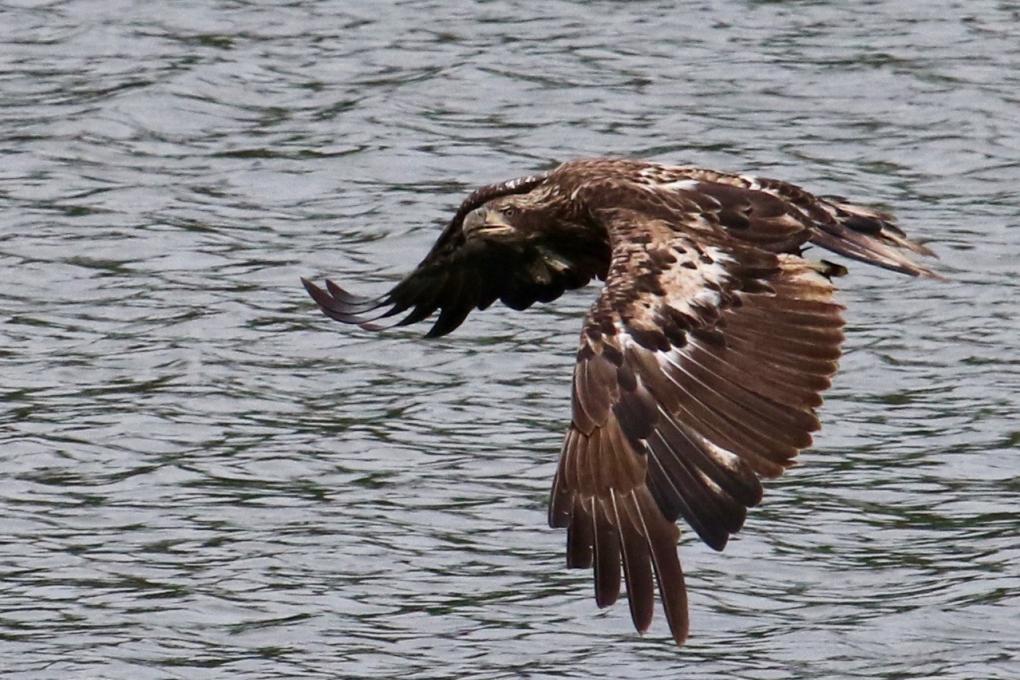
My biggest problem photographing birds in flight are finding them through the viewfinder when zoomed to maximum focal length. I try to find them zoomed out but oftentimes forget/don't have time to zoom out again. I shoot aperture priority and may try practicing with shutter priority. One question - Melissa is choosing the widest aperture she can but I have also read that closing down the aperture is best to keep the whole bird in focus as the depth of field can be quite shallow especially with long focal lengths. Does anyone care to comment? Despite these issues, I have been able to obtain some very nice photos of birds in flight and share three of them. From top to bottom: African Darter, American Bald Eagle, Ring-billed Gull.
-
Yes — I agree with you and Lynsey. So hard to find the bird in the viewfinder when they are flying, especially when you're holding a heavy lens, keeping it steady and tracking. These are great shots. I like that you show some of the bird's environment in each of your shots, not just sky behind.
-
Generally speaking, if you are not getting the whole bird in flight in focus it is probably because you missed on the focus in the first place. Something that I finally figured out after a lot of shooting. At f/5.6 you should have plenty of depth of field to capture the entire bird in focus and certainly at f/8. To get a better feel for this, you might want to play around a bit with a depth of field calculator. A easy one to use that I have played with is at: http://www.dofmaster.com/dofjs.html There are also Apps available if you would prefer.
One of the greatest advantages of the change from film to digital is that other than the time spent in editing, it doesn't cost you anything to take a lot of shots. Birds in flight are just hard to get right and I often will throw out 90% of my BIF shots either due to not in focus or just not the right angle or lighting. This Bald Eagle was about a kilometer away and I fired off a stream of shots to get this. It was very humid and at that distance there was enough atmospheric distortion that I was pleased with this sharp of a shot.
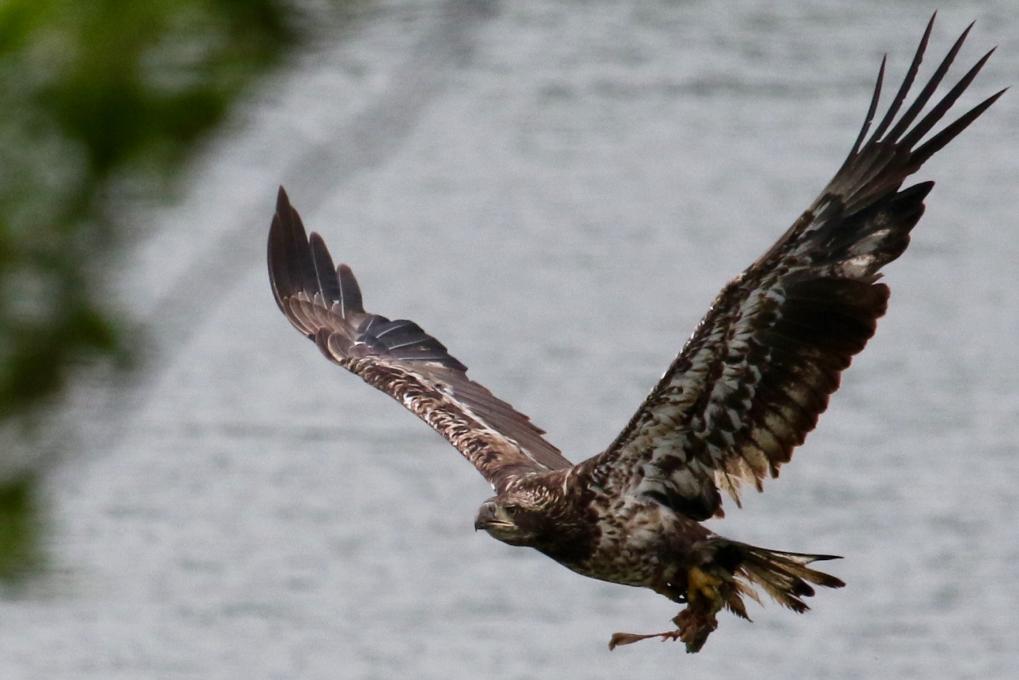
This Bald Eagle was from the same general location but was more like 20 meters away when it unexpectedly appeared and made a pass through the geese I was slowly moving into position to photograph. I just instinctively pulled up and held the shutter down.
-
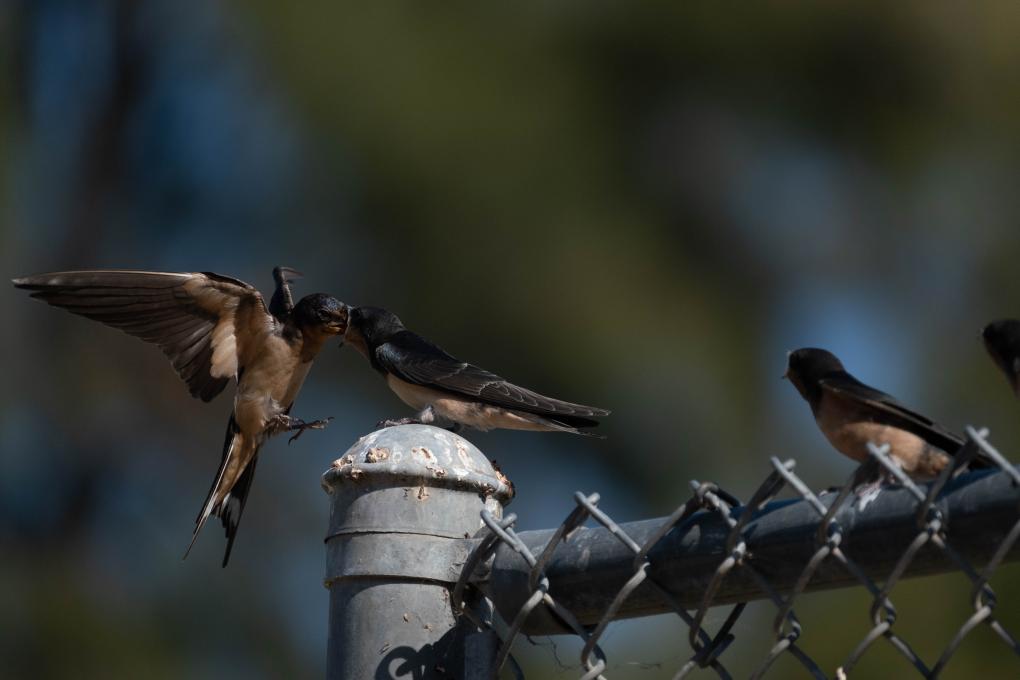
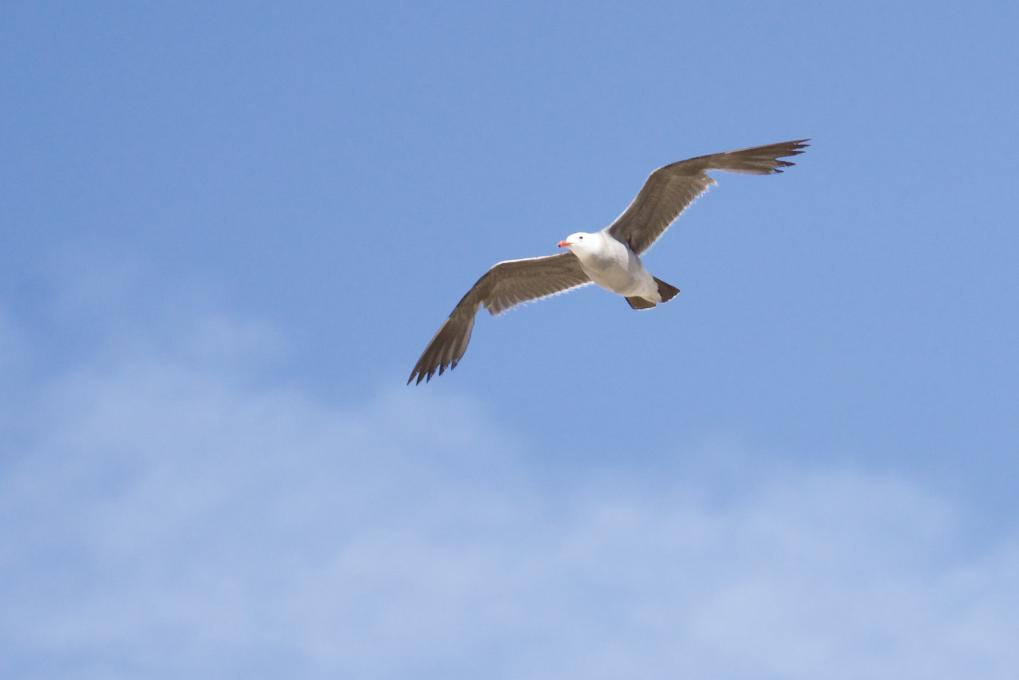
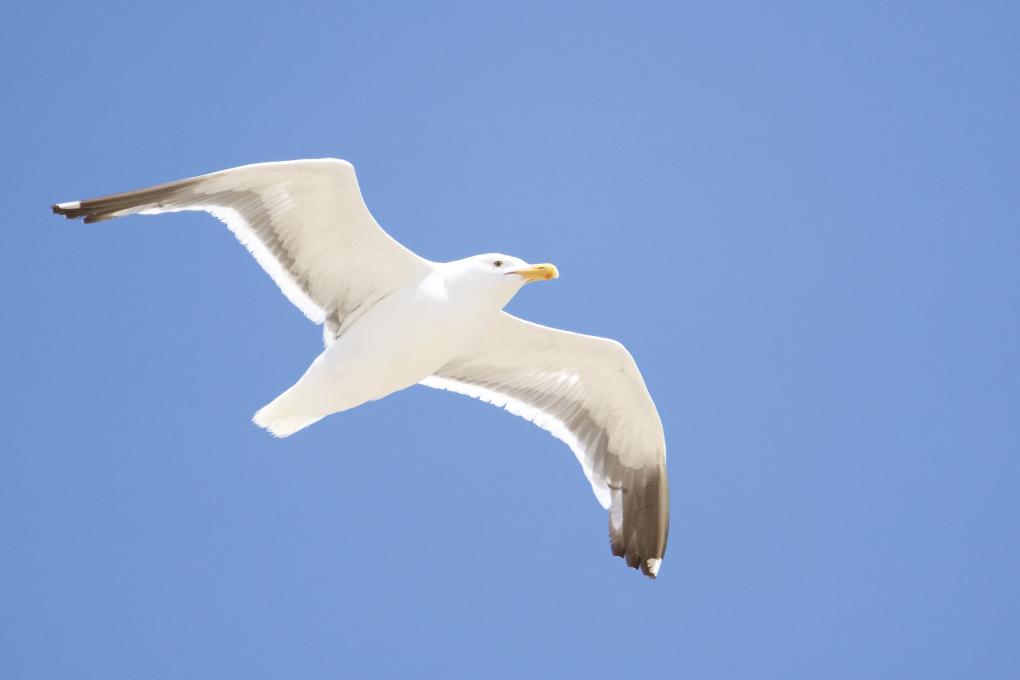
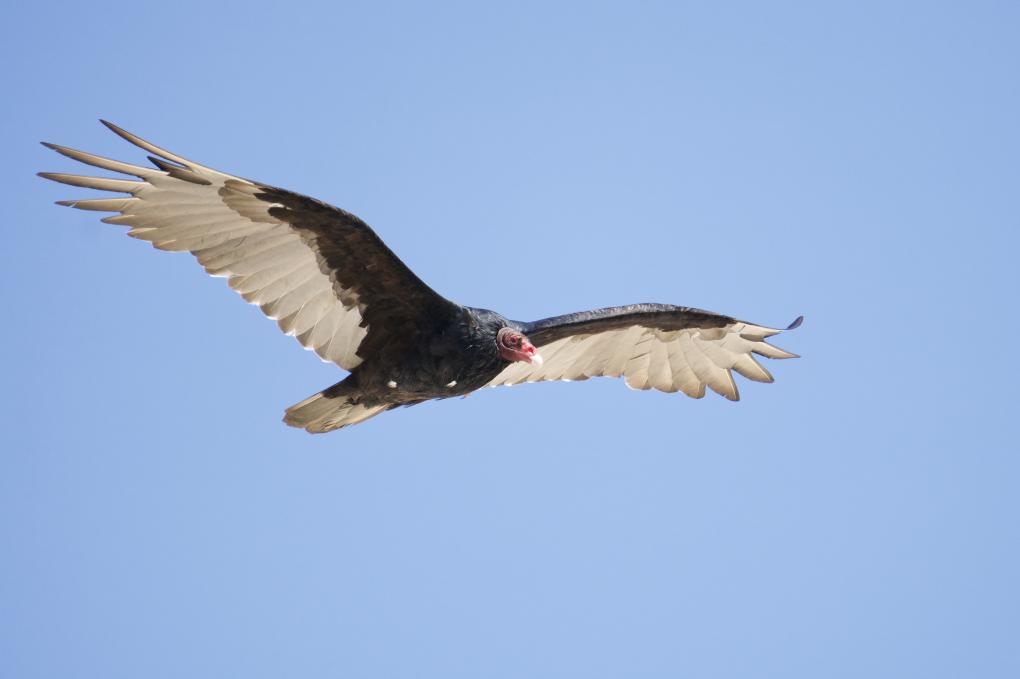 I went to Eolian Dunes Preserve this afternoon to practice. Wow, this was hard work tracking those birds! I am happy with the results. Thank you, Melissa!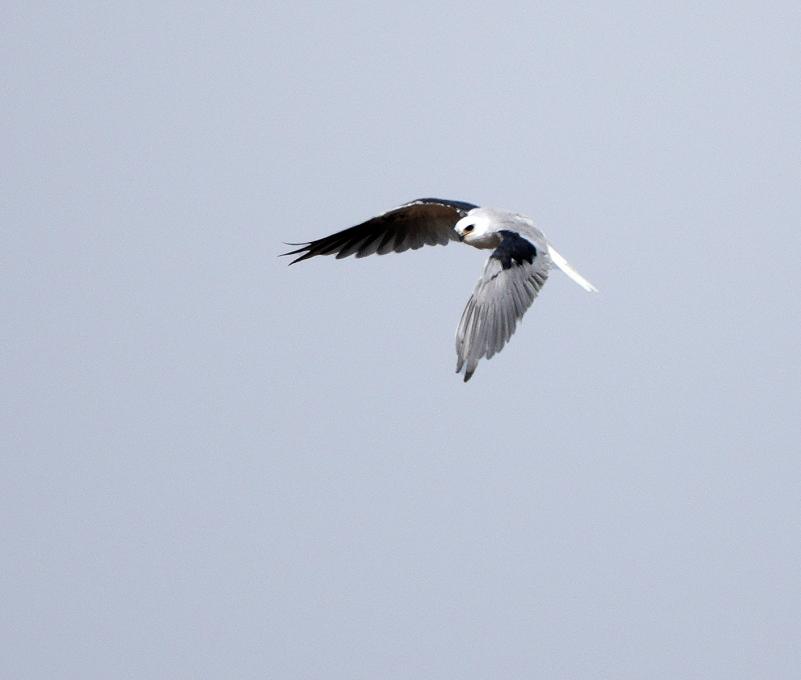
Read More: