Free Preview: The Hidden World of Nests and Eggs
Enjoy this preview of content from the self-paced online course The Hidden World of Nests and Eggs
Welcome to the Hidden World of Nests and Eggs
There’s so much to learn about the earliest stages of bird life. Explore this video from Lesson 1 of the course.
(music)
(Robyn Bailey) Welcome to the course! I’m Robyn Bailey, and I’ll be your guide into the fascinating world of nests and eggs!
Nesting birds have captivated people for as long as we have lived alongside them. What is it about them that we find so fascinating?
Other animals make nests, so it’s not a unique phenomenon…but still when you hear the word “nest,” you probably think of a bird nest. Maybe that’s because, for a short period of time, these flying wonders are bound to the earth.
Nests give us a chance to witness the lives of birds in ways we can’t during other times of the year. So, let’s dive in and explore what makes birds’ nests so interesting.
What’s the purpose of a nest?
For birds, the nest is a place to provide warmth and safety for the eggs and young until they’re ready to explore the world on their own.
A nest can be as simple as a scrape on the ground or as elaborate as a one-ton Bald Eagle’s nest.
A nest is more of a “nursery” than a “home,” because it’s only needed for reproduction. The goal is usually to stay no longer than necessary.
While you might think that the family would want to stay in their cozy nest for as long as possible, a nest is actually a vulnerable place to be for the young—and sometimes the adults as well. Eggs and most small chicks are “sitting ducks,” that is, defenseless and vulnerable to predators on the hunt for a nutritious meal. For pairs hoping to pass on their genes to the next generation, every day spent in the nest is a risk. They literally have all their eggs in one basket.
Let’s consider some of the natural pressures that influence life in the nest. The nest, along with the eggs and eventual hatchlings, need to be hidden from predators.
There’s a nest here but can you find it or see its opening? Predators like reptiles, mammals, and other birds would have a hard time seeing it too.
Weather extremes exist all over the globe. Having some shelter from the elements is very important. Imagine an early spring snowstorm…a nest like this one offers some protection for the eggs from the extreme cold and wind.
Local building materials play a role, too. Notice how these nests from different regions are built from what’s locally available.
When we look at the variety of insects and blood-feeding parasites that are attracted to nests, some of which can have a big impact on the health of nestlings, birds have devised some ingenious behaviors to ward away such parasites.
My favorite example is that of Eastern Screech-Owls, which are known to bring a tiny, worm-like snake into their nest to eat parasites, in what scientists believe is a live-in, pest-removal service! Though, this doesn’t always end well for the tiny snake-housekeepers, as they may eventually become a quick meal.
Many other factors play a role in nest design, and sometimes individual bird preferences come into play as well!
So how do they handle the demands of nesting? Like most things—one step at a time!
In general, the nesting cycle involves some, or all, of the following steps depending on the species:
Choosing a mate
Selecting a nest site
Nest building
Copulation and egg formation
Egg laying
Incubation
Hatching
Feeding the young and
Leaving the nest
And all of this is carefully timed so that the eggs are hatching just as the primary food source is peaking.
That’s the general process, but nature is complicated and some of these steps can be happening at the same time or skipped entirely.
For example, for some species, nest-building can be part of the courtship process. Notice how this Chestnut-and-black Weaver demonstrates his nest-building skills while also quivering his wings seductively, in the hopes of attracting a female.
And as with anything in life, there are always exceptions to the rules. Some species don’t make a nest, while others manage to skip parental duties like caring for eggs and young altogether!
But more on that later.
Birds have evolved a staggering diversity of tactics to overcome the challenges that await them each breeding season, and there are as many approaches to nesting as there are species. And with more than 11,000 species on Earth, this variety is what makes them so interesting to study!
Exceptional Eggs
Enjoy some exceptional eggs from around the world! Step through this interactive to learn about each gem-like wonder.
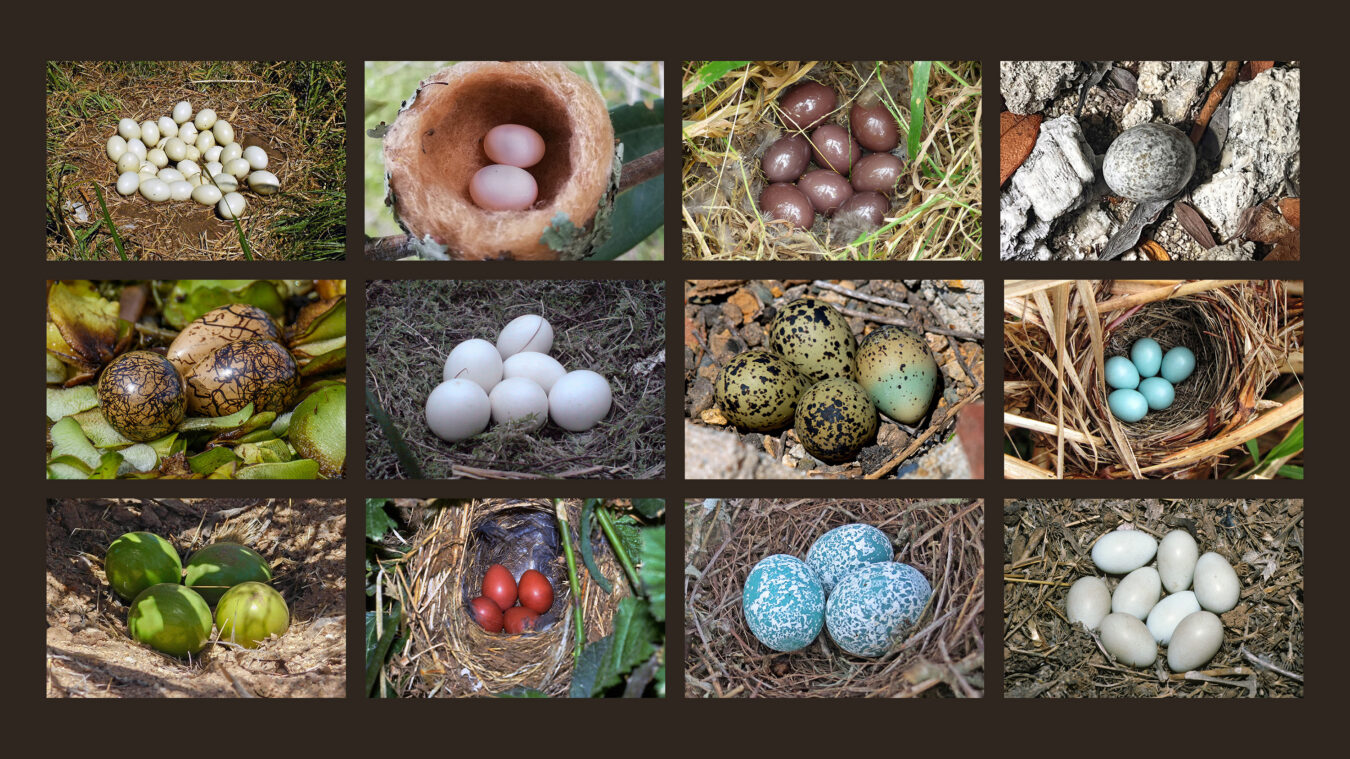
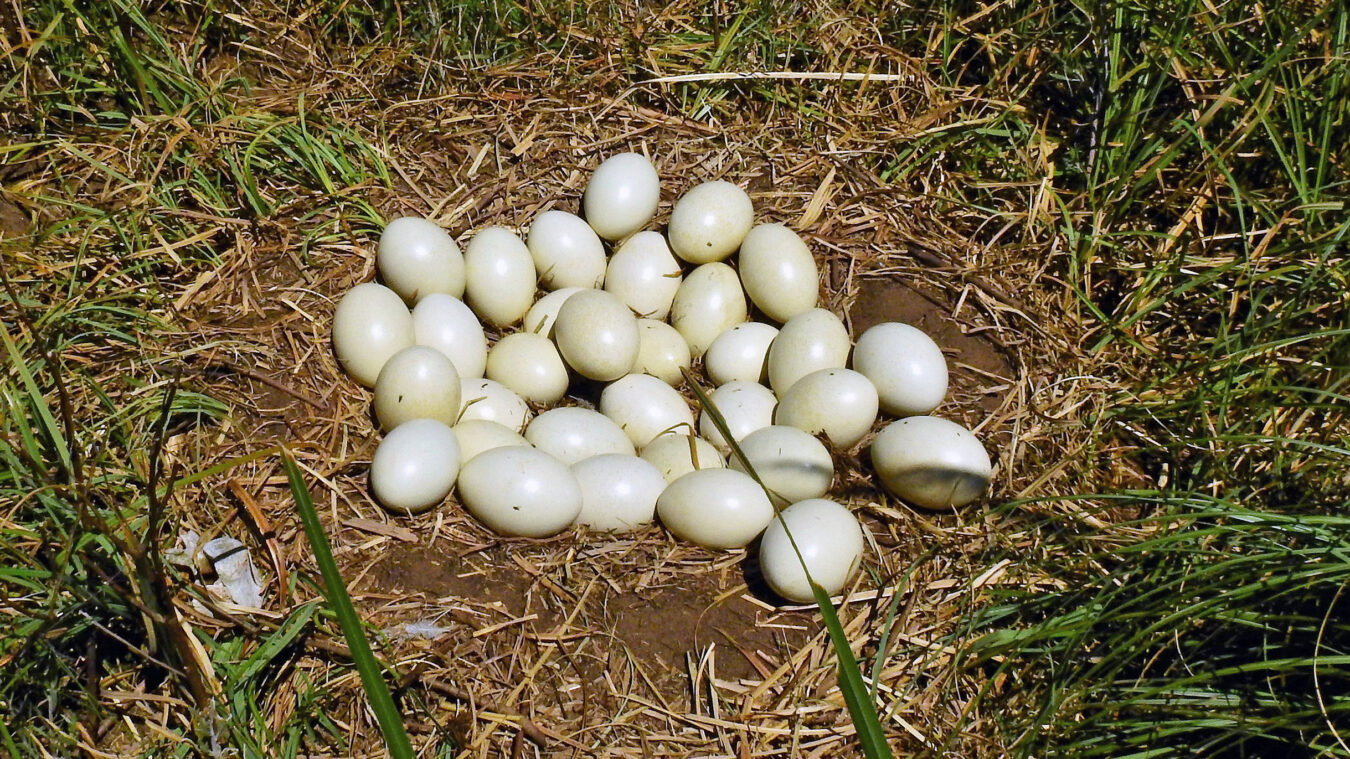
This Greater Rhea nest showcases communal laying, where several females contribute their eggs to a single nest. Talk about a full house! (Argentina)
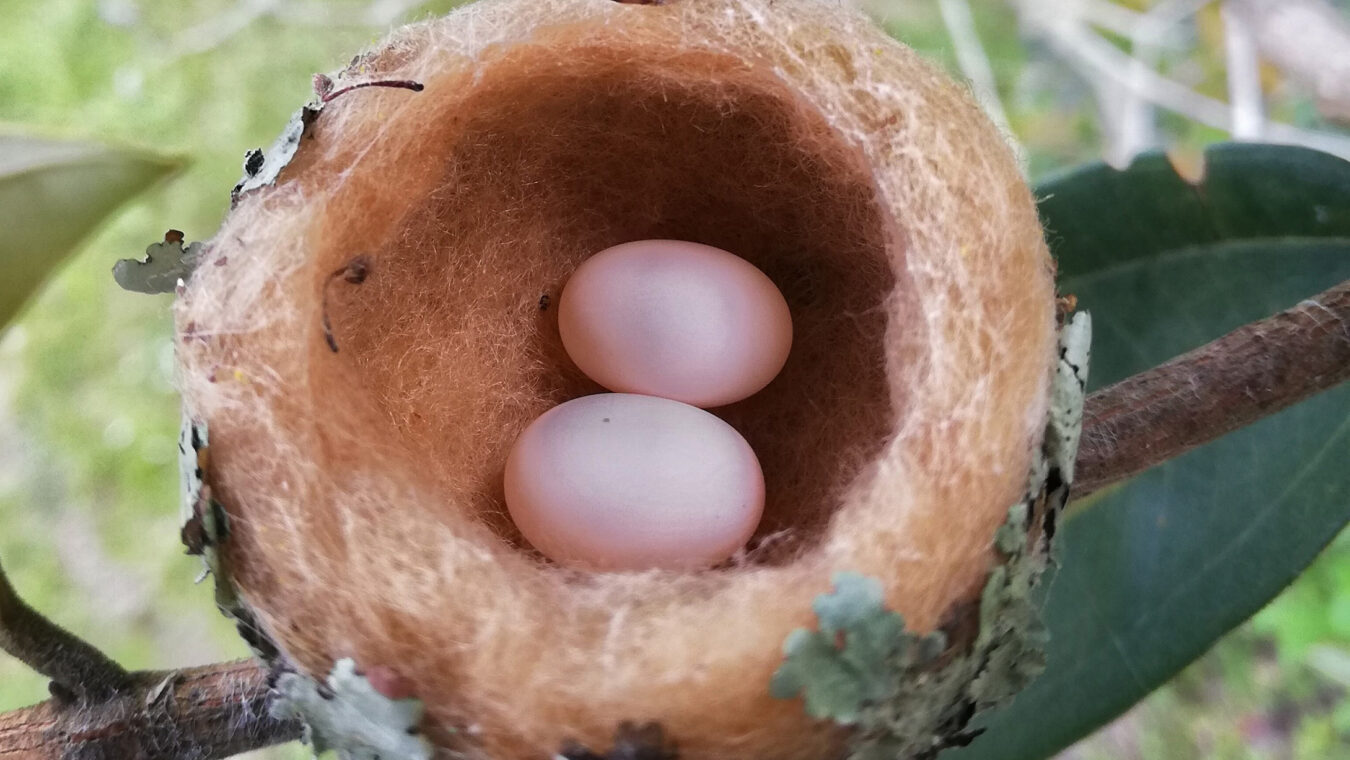
These tiny eggs, barely the size of a jelly bean, belong to the Copper-rumped Hummingbird. (Venezuela)
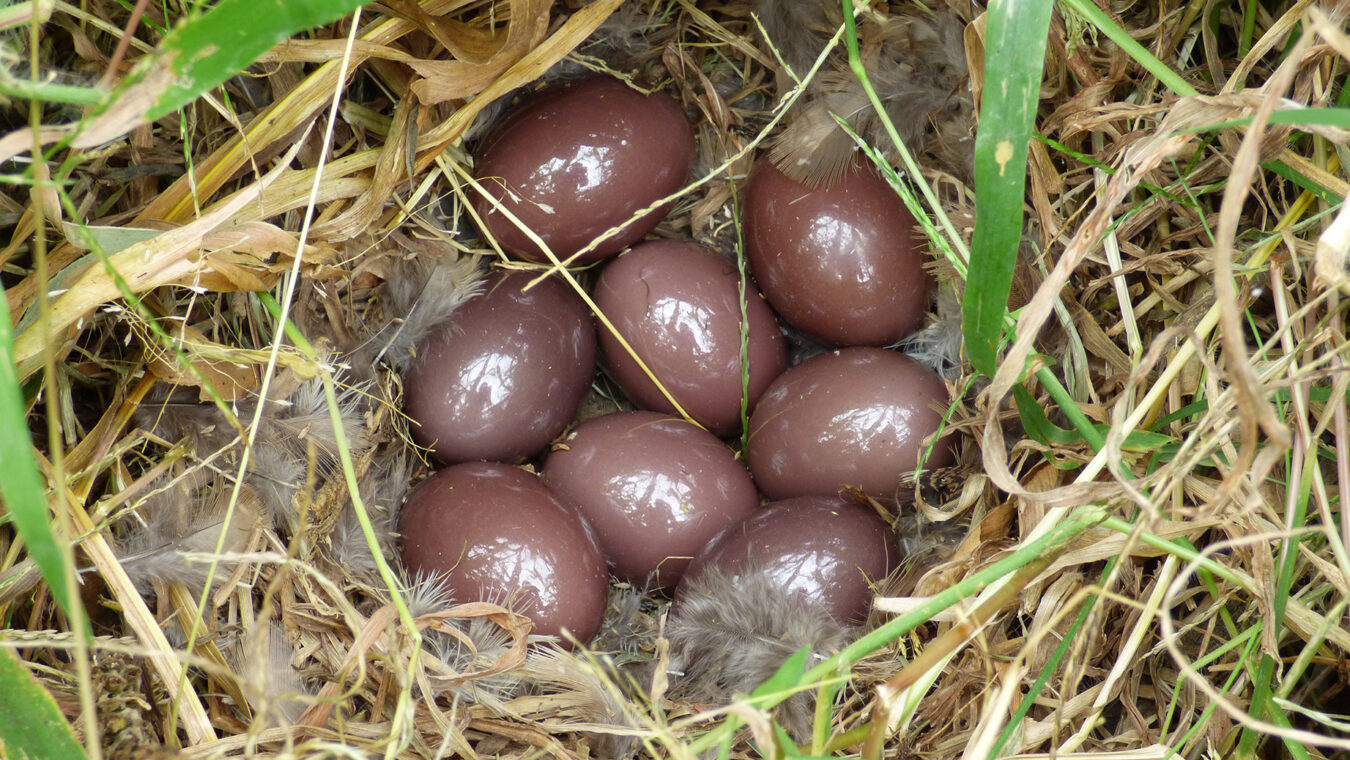
Darwin’s Nothura eggs are uniquely shiny, setting them apart from other bird eggs. (Bolivia)
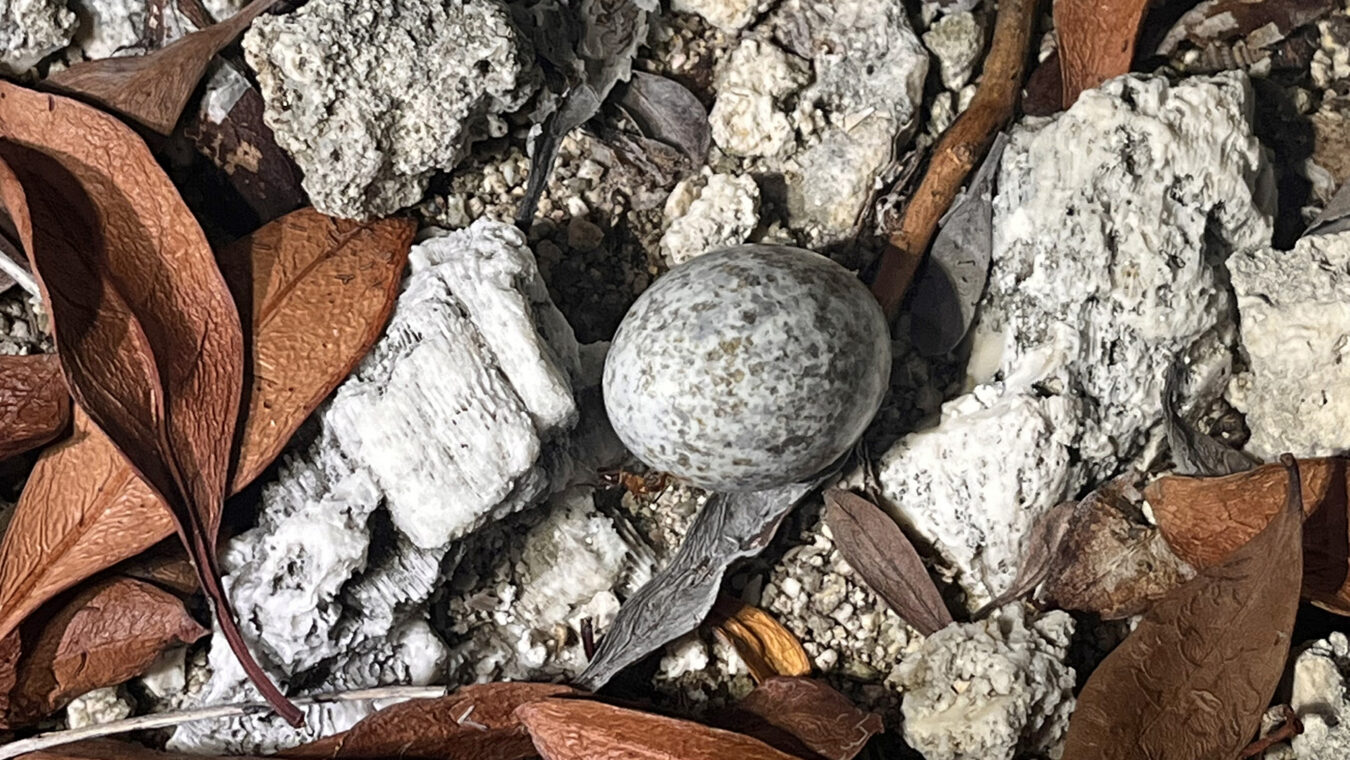
This Antillean Nighthawk egg is perfectly camouflaged among the rocks. (U.S.)
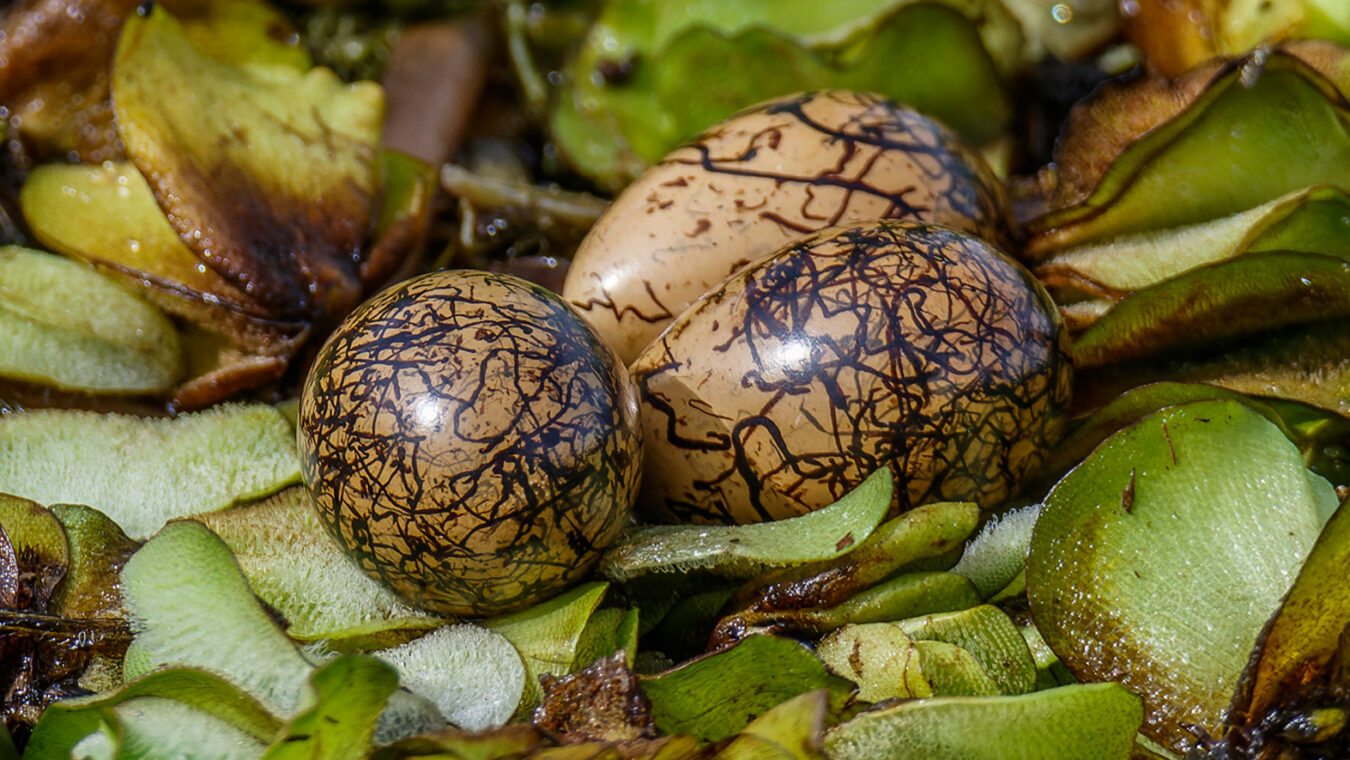
The distinctly marbled eggs of the Bronze-winged Jacana are striking. (Thailand)
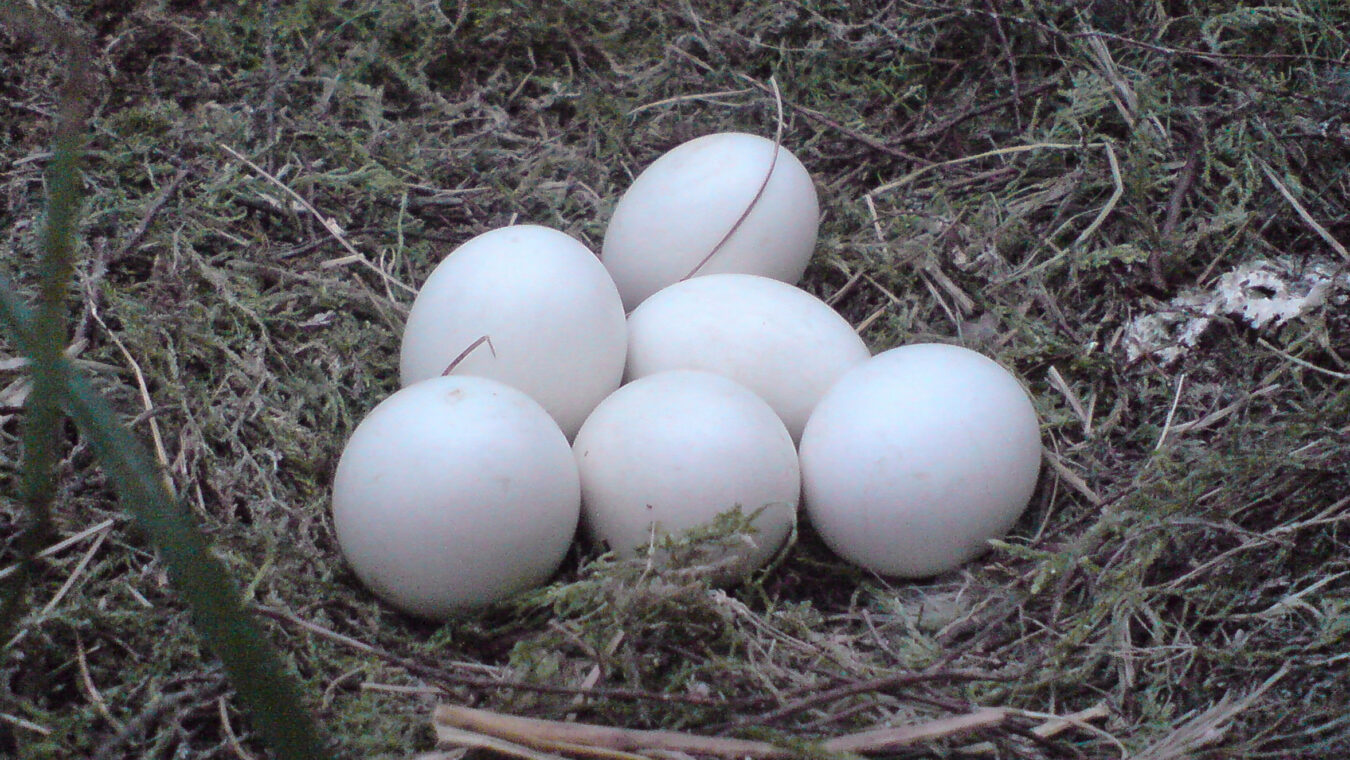
While most bird eggs are oval, these Short-eared Owl eggs look more like ping-pong balls. They’re almost perfectly round! (United Kingdom)
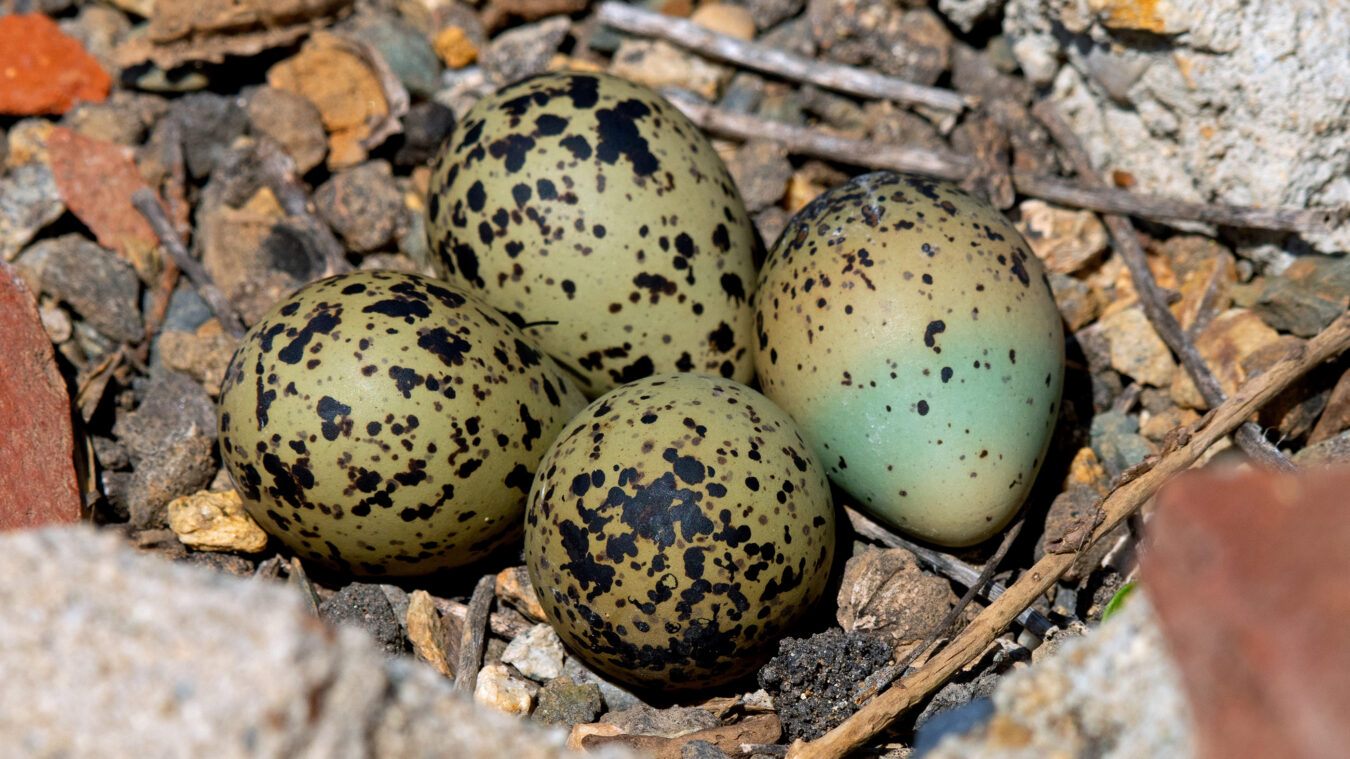
Even eggs within a nest can look different. See how each Black-necked Stilt egg has its own unique variation in color and pattern. (U.S.)
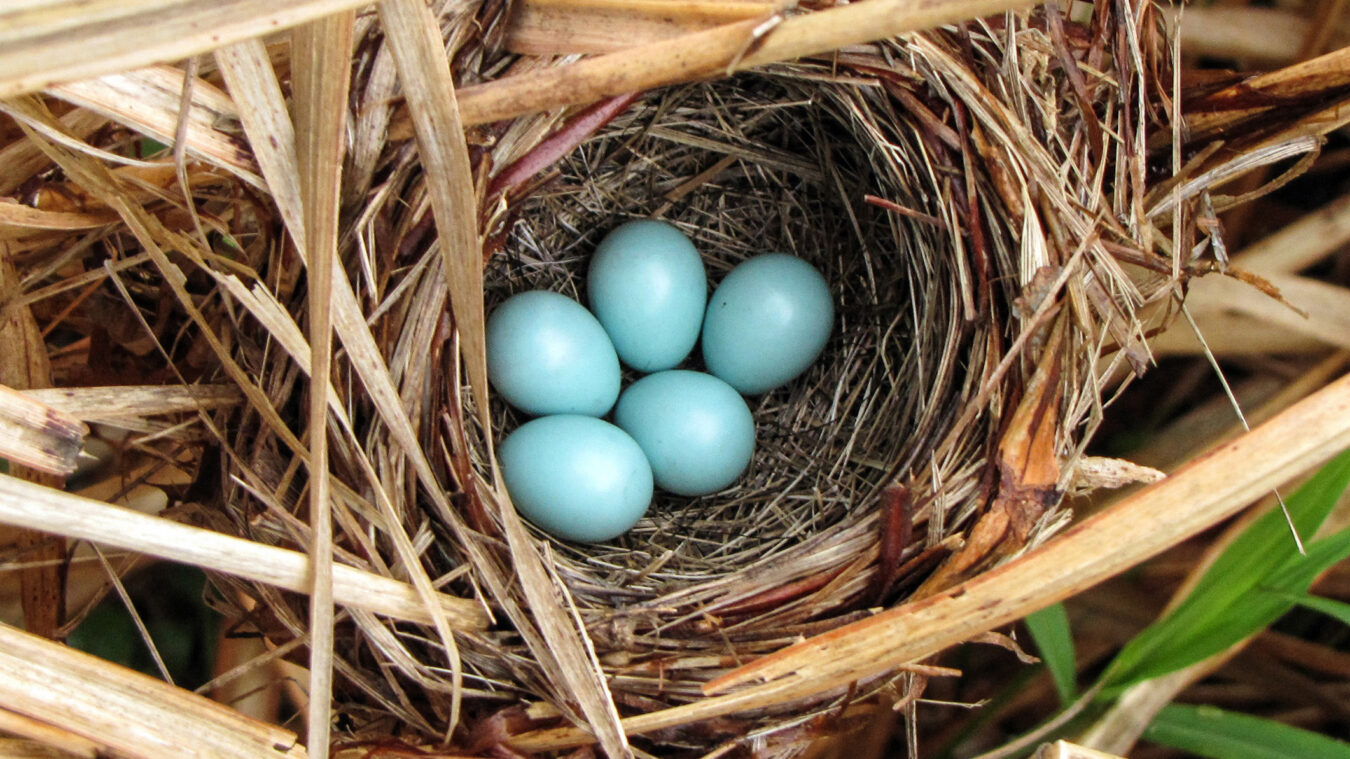
“Robin’s egg blue” isn’t just for robins. These Vinous-throated Parrotbill eggs are an iconic shade of blue that is common among many species of birds. (China)
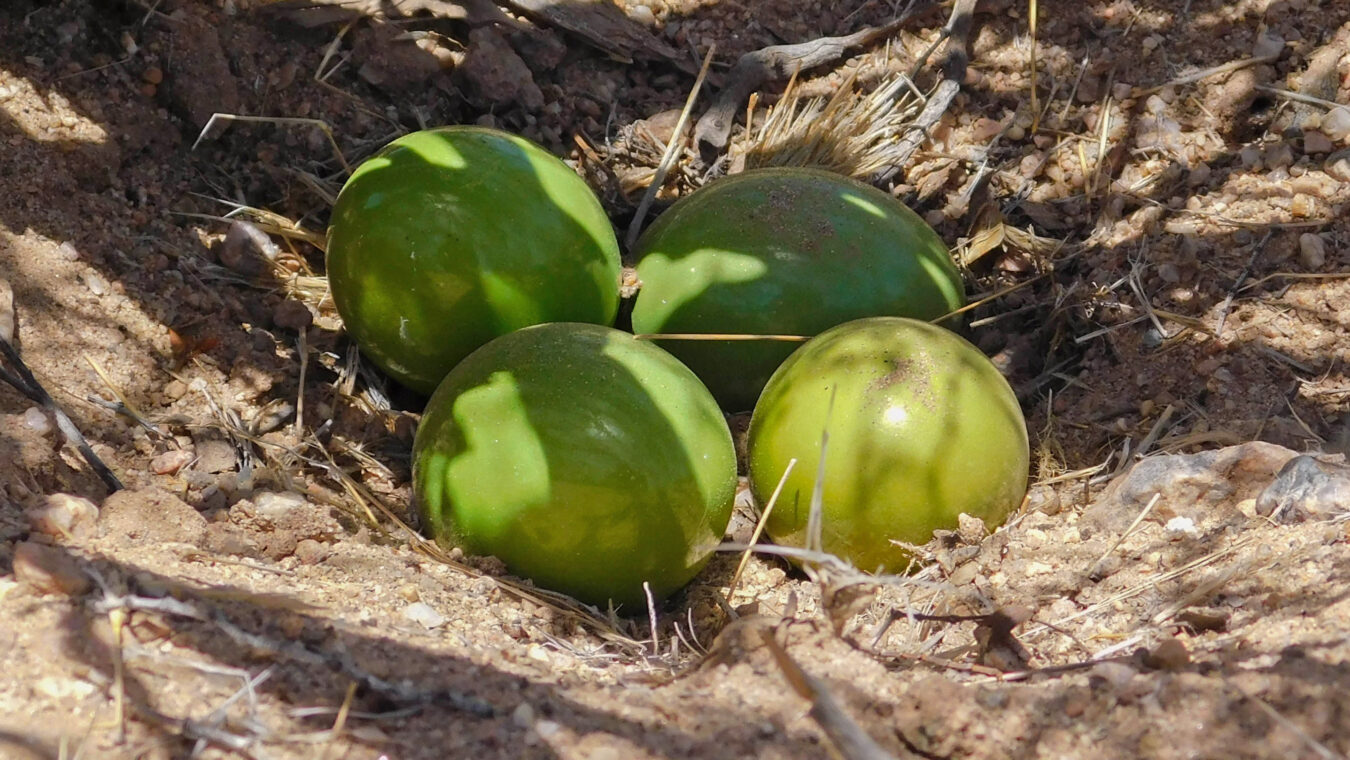
The Elegant Crested-Tinamou sports one of the most unique colors in bird eggs—lime green! (Argentina)
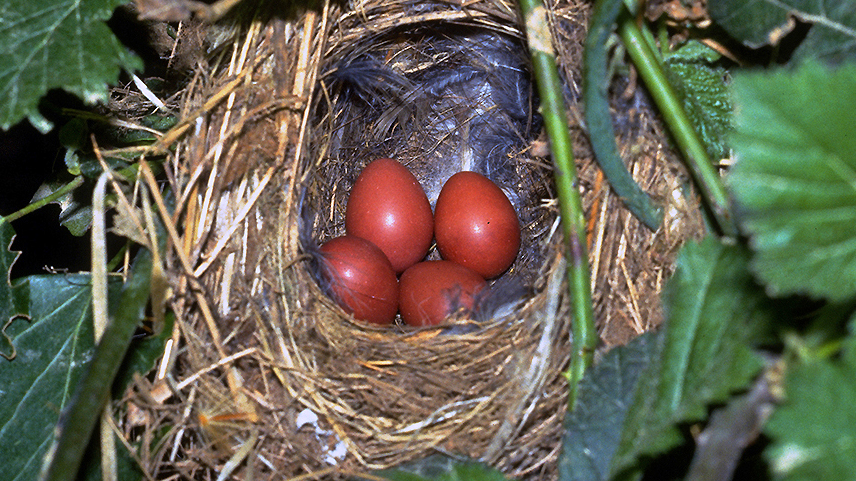
The eggs of the Cetti’s Warbler are remarkable for having some of the most saturated shades of red. (Italy)
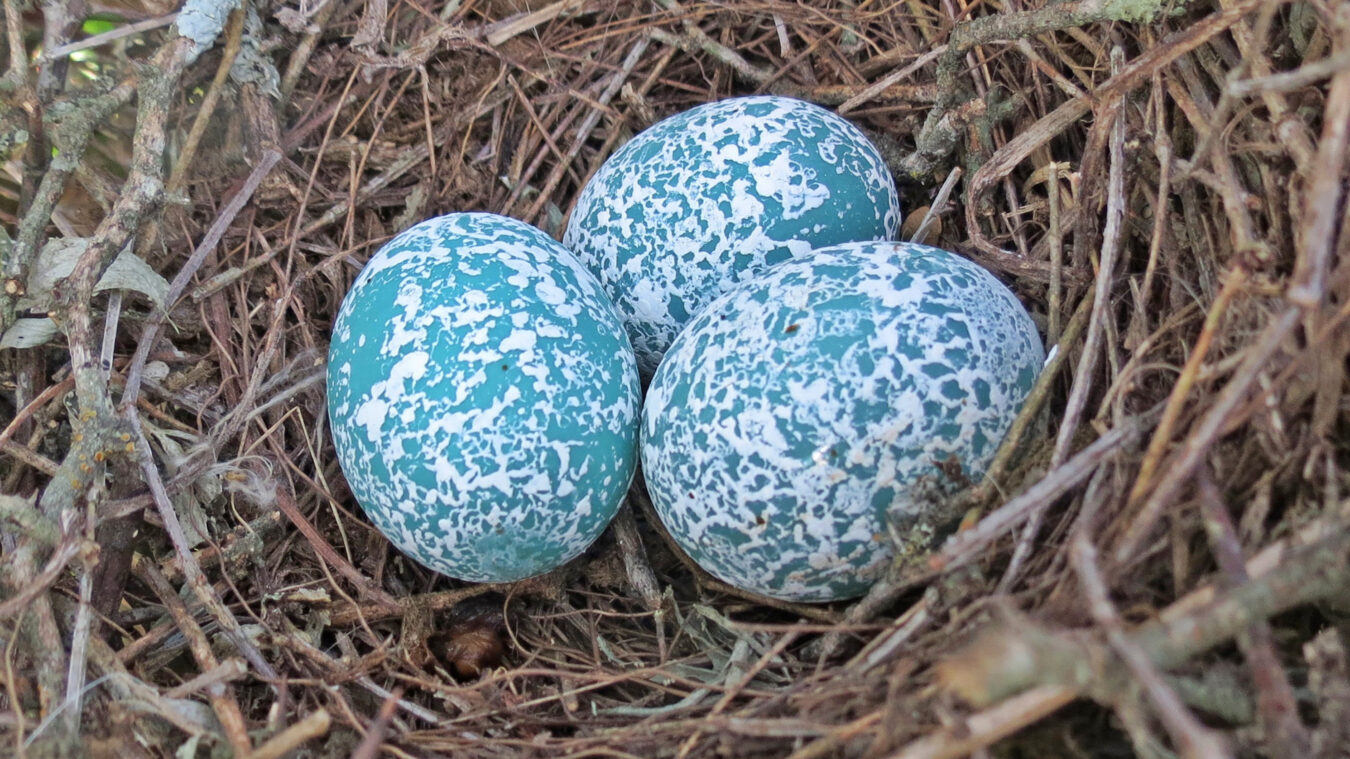
Eggs of the Guira Cuckoo are a beautiful teal with a textured white lattice on top. (Argentina)
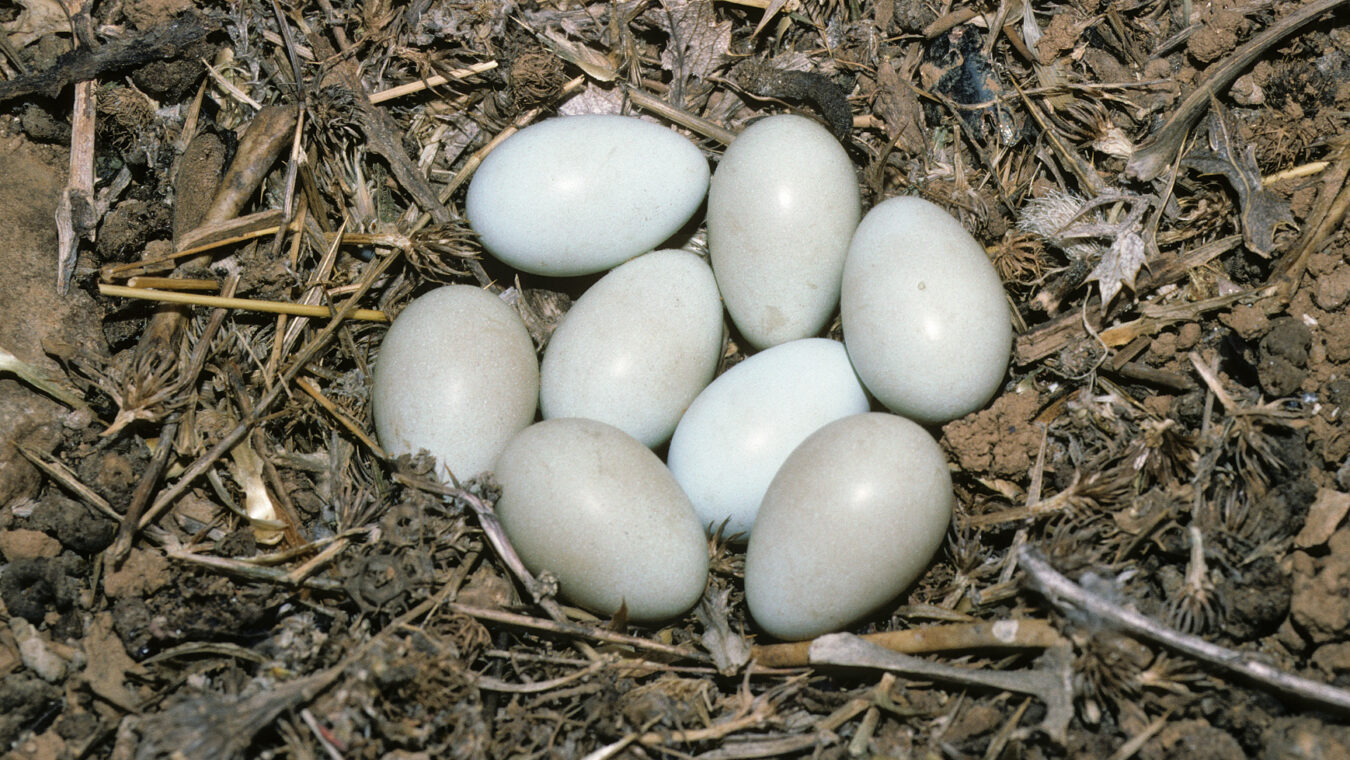
Common Hoopoe gets the unique “honor” of having the worst-smelling eggs! The eggs, which smell like rotting meat, are uniquely pitted to absorb the notoriously stinky antimicrobial secretions that their mother paints on them. (France)
From Helpless to Hustling
Birds hatch with different levels of maturity, so the amount of time and effort required from the parents for successful fledging varies widely from species to species. Some hatchlings need constant care while others are much more independent. Flip each of these cards to learn how to categorize chicks across the developmental spectrum and see who’s independent and who’s helpless.
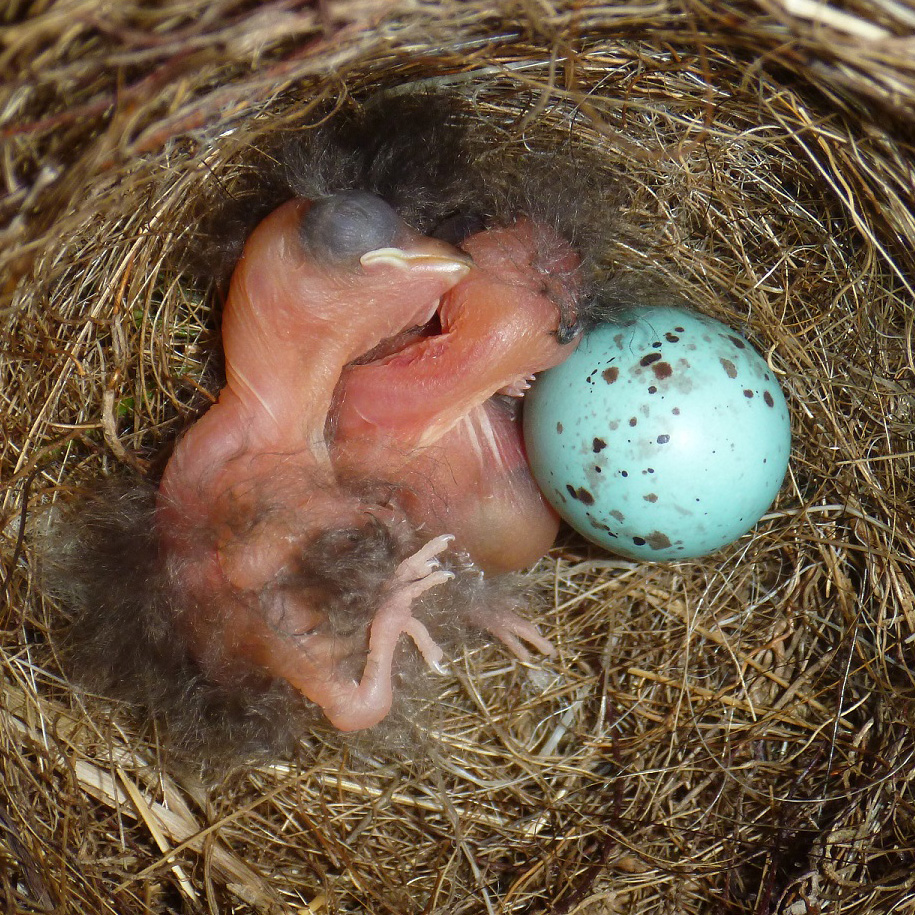
Altricial
Naked, blind, and helpless at hatching, altricial chicks are 100% reliant on parental care for warmth, food, and waste removal.
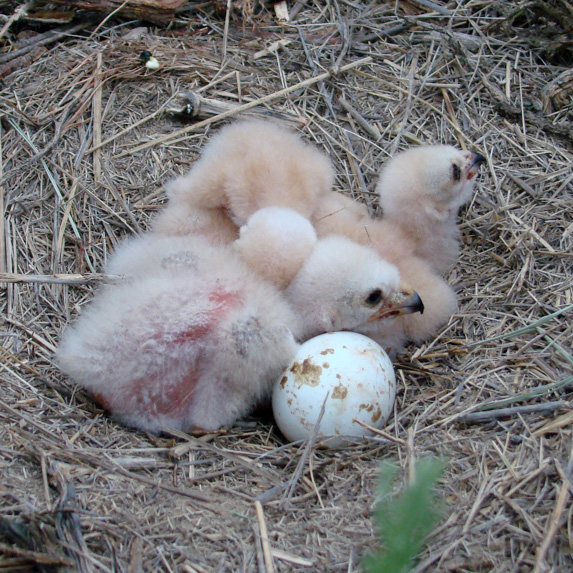
Semi-altricial
Covered in down, with eyes open or shut, semi-altricial chicks are slightly more advanced at hatching, but still need constant care.
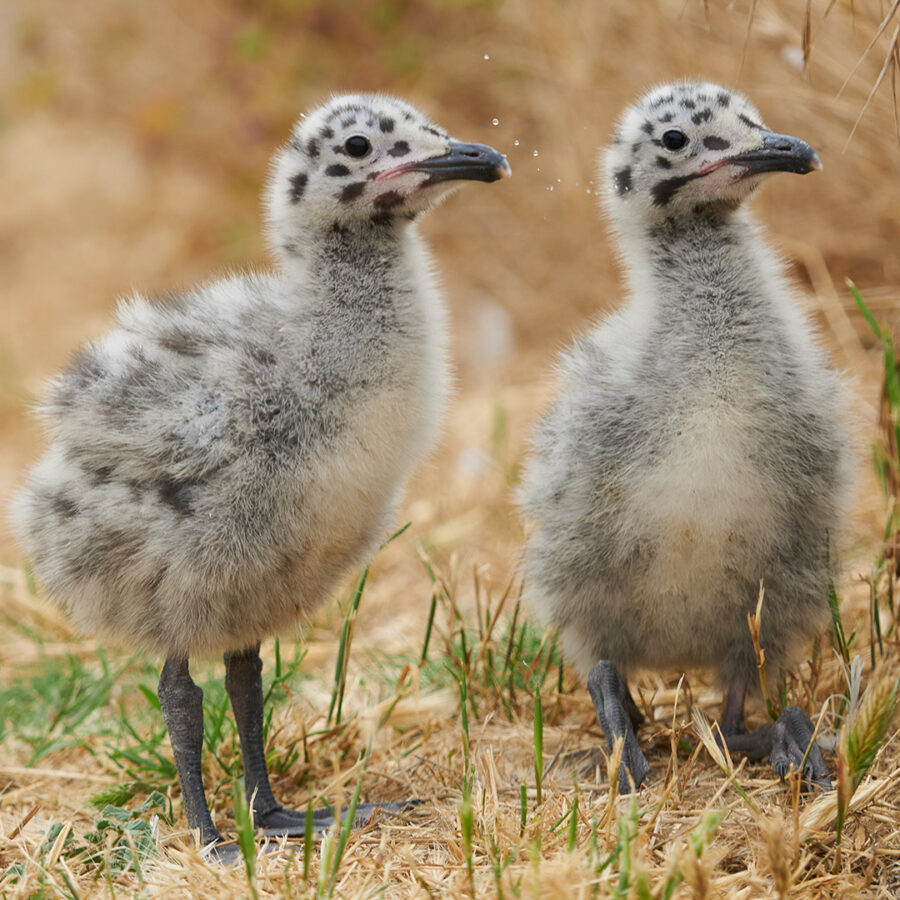
Semi-precocial
Able to swim or walk within hours of hatching, semi-precocial chicks still stick to the nest for a while and are fed directly by parents.
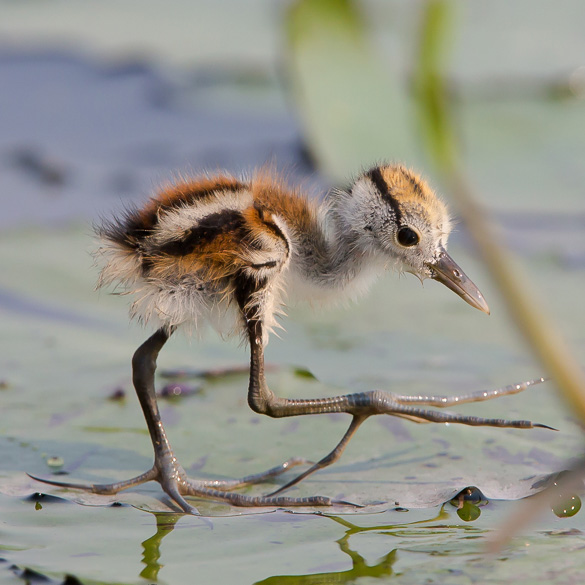
Precocial
Open-eyed and alert, precocial chicks quickly imprint on parents and walk or swim away from the nest within hours of hatching.
Leaping into Life
Carolina Wrens Awkwardly Escape
Newly hatched wrens are naked and blind, but these altricial chicks make great progress during their two weeks at the nest. When they make their rather clumsy exit, notice their pronounced gape, short wing feathers, and tiny tail; they still have a lot of growing to do! Over the next few weeks, they will work on their flying and feeding skills as their feathers lengthen, usually under their parents’ care.
Northern Lapwings Set Out on Foot
This newly hatched lapwing is already out and about in the wetlands finding food, presumably not far from the nest and the watchful parent. It takes just over a month for the chick to become fully independent.
Australasian Grebes Hitch a Ride
Like most waterfowl, grebe chicks are precocial and fully feathered when they hatch. They can swim right after hatching, but they still need their parents to feed them. Like many grebe species, the chicks ride on their parents’ back, tucked under the wings for warmth, protection, and transport. They will be independent after 8–10 weeks.
King Penguins Form a Creche
King Penguins require 10–13 months to become independent. At about 40 days old, they gather into creches (groups of unrelated young from the same area) for warmth and safety in numbers—like a communal nursery. They will not breed until they are 5–7 years old!
Enroll in The Hidden World of Nests and Eggs!
Thanks for previewing sample content from The Hidden World of Nests and Eggs. There are more videos and interactives like these to learn from in this self-paced course—plus text, image galleries, and diagrams—to help you dive in and get to know this fascinating aspect of bird biology.