The Cornell Lab Bird Academy › Discussion Groups › Nature Journaling and Field Sketching › Giving Your Drawings Depth
-
The techniques I found most helpful are proportion, negative space and breaking the subject down into shapes and relationships. But I find myself using all the different techniques at different times.

-
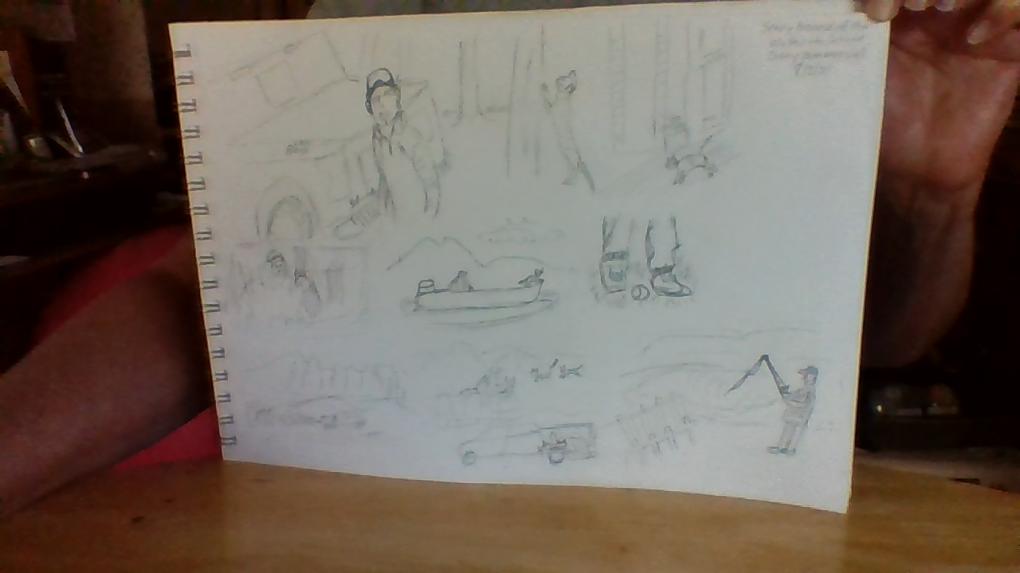
I am concentrating on working quickly, adding detail later during commercials on television. I viewed a Chevy truck commercial a number of times getting a little more detail in the quick sketch each time because it was a very amusing story.
-
I find the proportion tool useful as well as simply going back several times after stepping away a bit to add more detail. The more values (light, medium, and dark) shades I give the drawing, the more 3D it becomes.
-
-
It is tough to be in the field and trying for the full gesture drawing before the subject leaves. The Cedar Waxwing flew in a blink but in that moment, I could not see the flat shape of the top of its head. The feathers seemed tucked down as it flew. Does anyone know why this bird has a red spot on the tertial feathers? What adaptation could the red color be for and in only one small spot?
-
I continue to battle proportions in my viewpoints but feel better at observation details. Short strokes help a lot. Always willing to walk away from the drawing and then come back to refine again and again.
-
Still sometimes dealing with proportion of viewpoint. Sketchy lines approach has helped me over the course rather than just aiming for shapes. Still working on the details always...
-
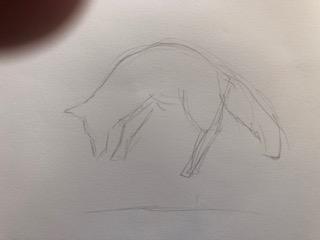
Gesture Drawing Exercise: Not much detail just a basic outline, I didn't really get in any shading and proportions of parts are all wrong.
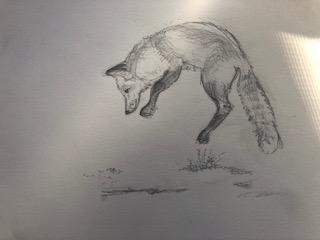
Refined Drawing: I was able to add a lot more details to this drawing. I had to do a lot of fixing of proportions and shading of light and darks. The proportions still need work I think, there are still more details that I overlooked when I took a step back at my drawing. It was fun though!
-
I have learned more about balancing proportion. Looking back at my sketches I can see where measuring makes a huge difference. Blank space has made a difference
-
I am pleased with my progress, knowing that I will never be an artist. All the skills have been useful to me. I taught biology and zoology and always told my students I flunked art. I think noticing the open spaces has been very helpful.
-
Took a quick sketch image and tried to make it better.
-
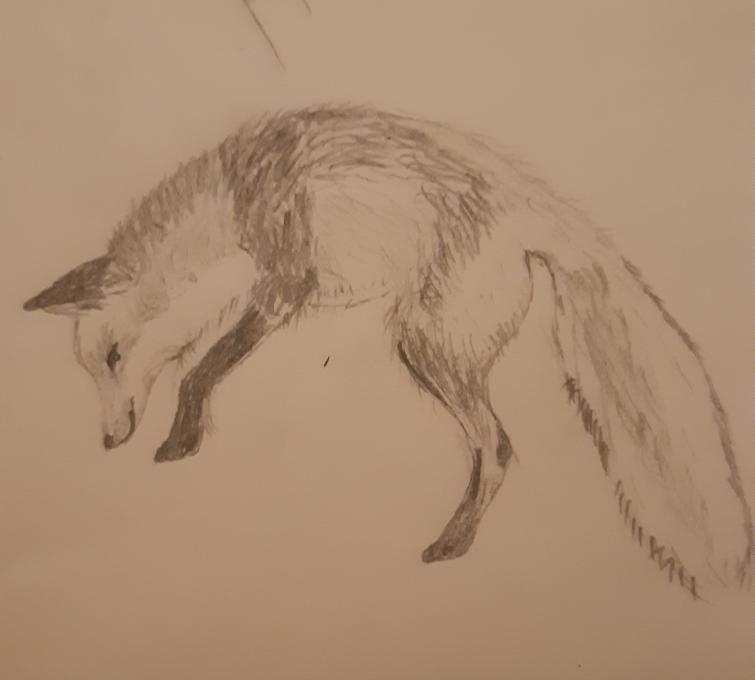
I’m happy with this. But there was a lot of rubbing out !! 🙄
-
The points I jotted down about drawing skills helped a lot to do this drawing. I felt more confident when I started drawing. Using sketchy lines made it easy to depict subjects on paper. Looking at negative space is more naturally now. The challenging aspect of the drawing was the proportion/ Yet. by measuring techniques it became more easy. Looking at negative space helped so much.
-
The proportions were so wrong on my gesture drawing that I ended up nearly redoing the entire drawing. Looking at negative space really helps.
-
-
I think looking at the negative space has been the most helpful. It's something I didn't think about before but it has really helped me get my proportions more accurate.
-
I feel like I still need to work on shading to create depth and contrast. I think putting in more hours would help! I found the squint test to be the most helpful. I'd never really thought about using a technique like that to see the lights and darks when drawing.
-
Looking at negative spaces has probably made the biggest impact in my drawing. I think switching to a harder lead may help (currently using 0.5 mm HB .. may switch to an "F" or an "H").
BEFORE:
AFTER:
-
Still too afraid to lean in on the picture. -
When creating depth I find that concentrating on negative space, and shapes is really important . However, shading with the side of my pencil the way that I would do in “chiaroscuro” exercise works best for me. So I always lean on that technique.
I find hatching and cross hatching very difficult even though I like the look in drawings . I guess it’s something I really need to practice to add variety.
I recently tried using a pencil or small ruler to judge proportion . I’ll carry a ruler along in my art tote now. I use to guess for my proportions. -
-
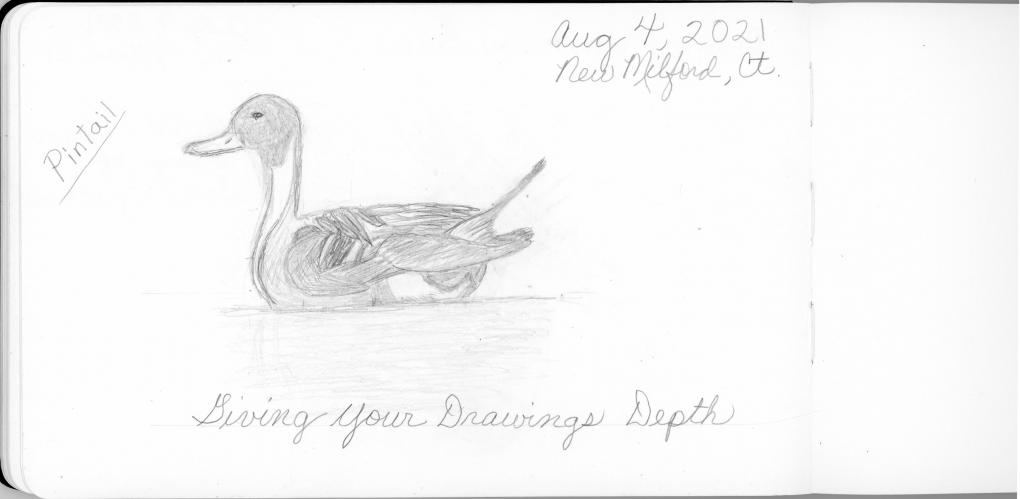
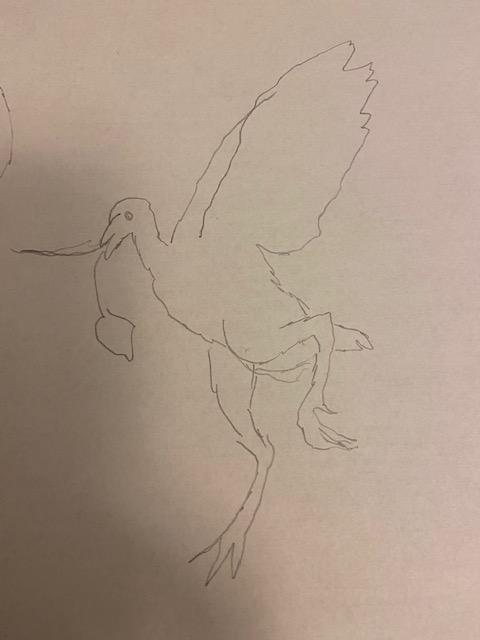
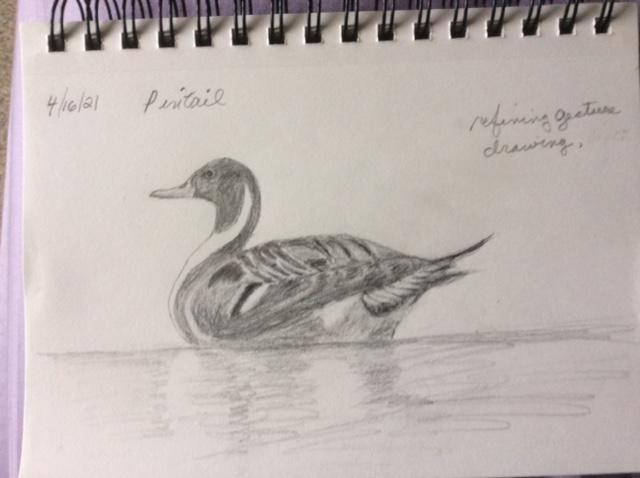
I found this difficult to draw . Honestly , I had to keep referring back to the video . I caught a fragment at a time in order to complete the drawing. The moving feather details were hard to follow. I tried to capture as much as I could . This duck is only shades of gray but the feathers are really awesome in action.
-
-
-
-
So much harder than it looks, but so fun to draw
-
-
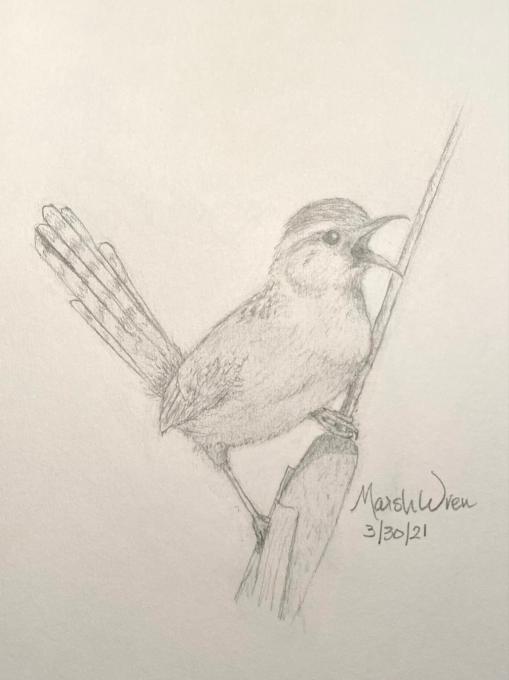
I enjoyed this! I found myself thinking about the similarities of this bird to the Carolina wren - a bird I see often in my bird feeding area. It's one of my favorite birds because of its overall delicacy, perky tail and rich rust coloring.-
Your drawing is really great! I like how you made the feather texture look so soft.
-
-
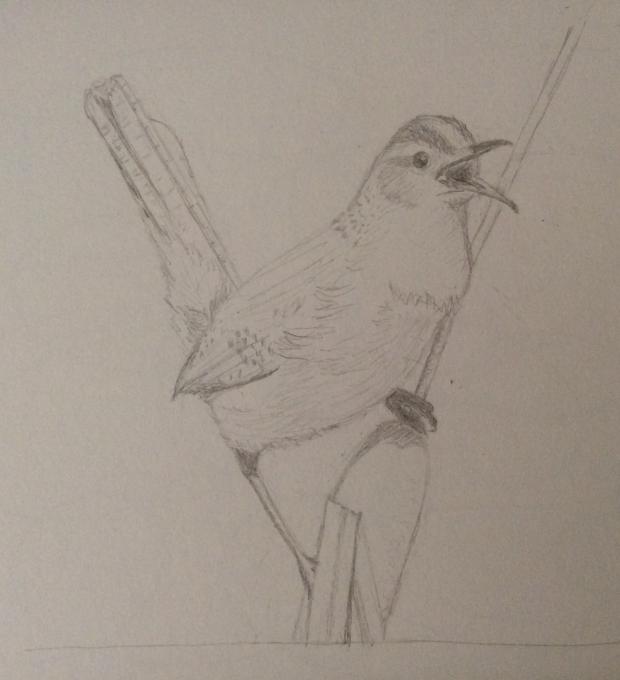
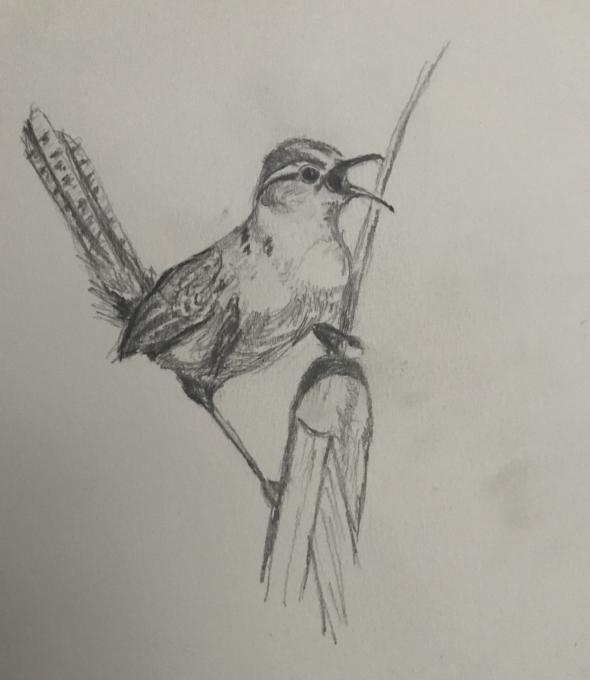
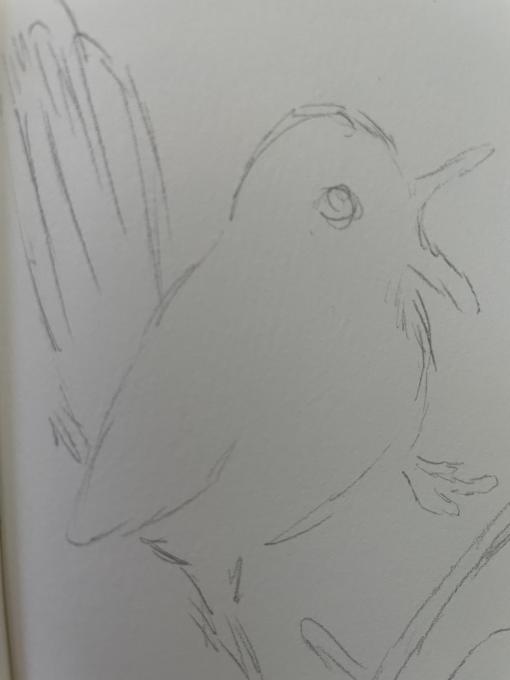
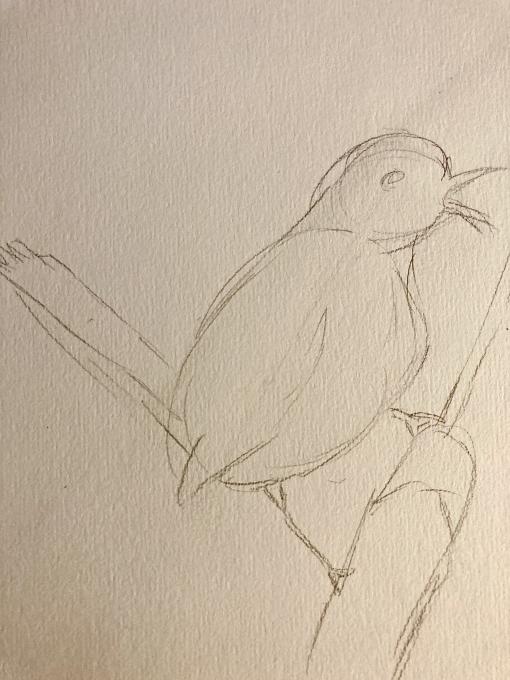
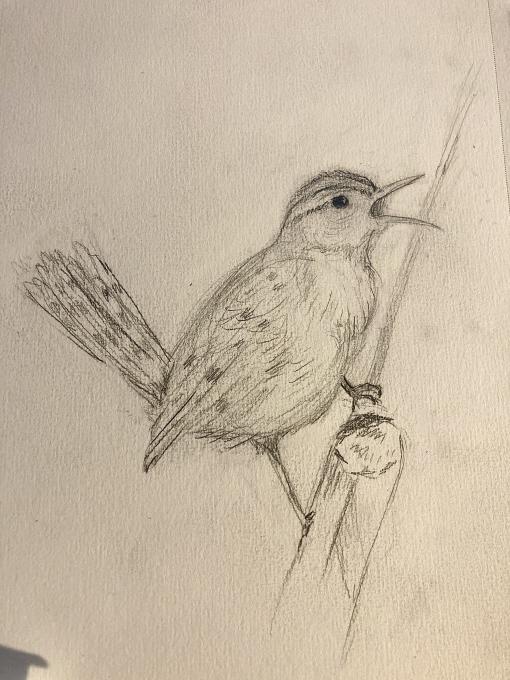
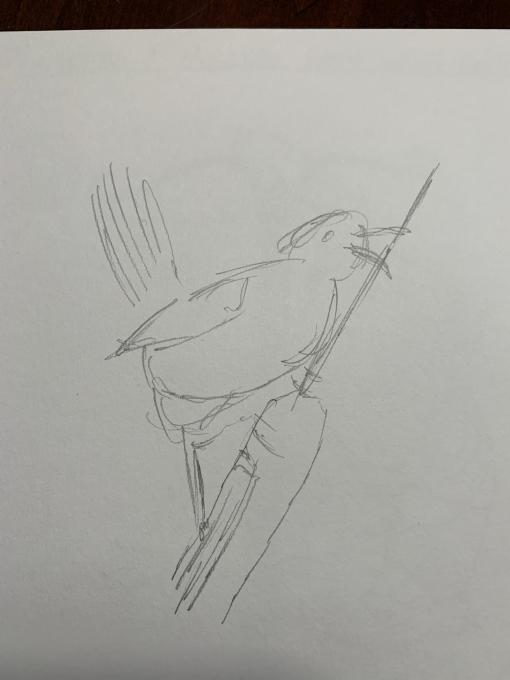
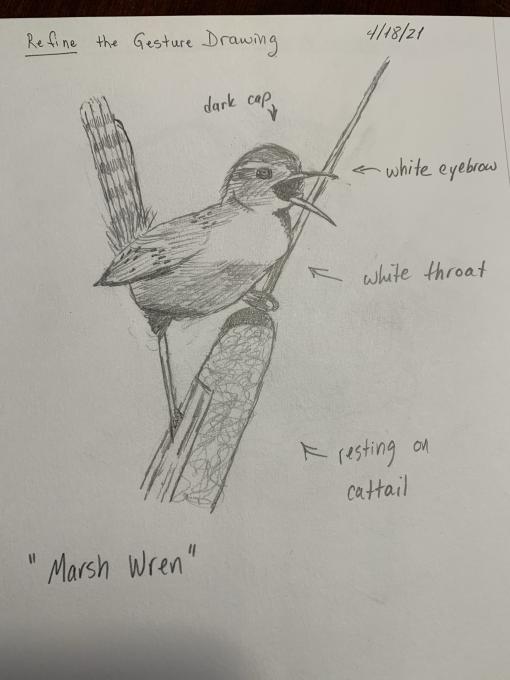
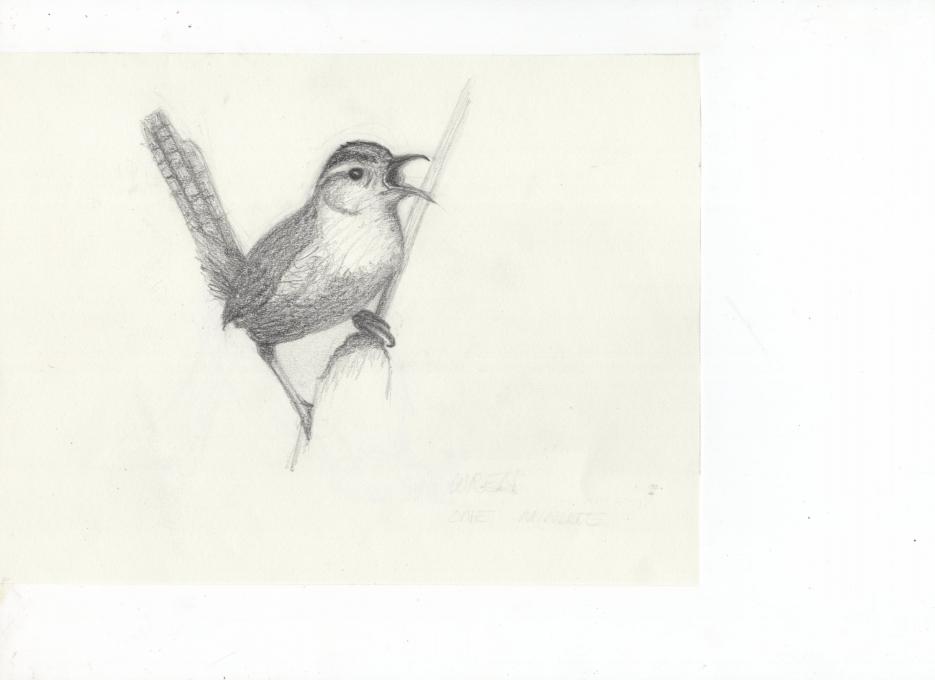
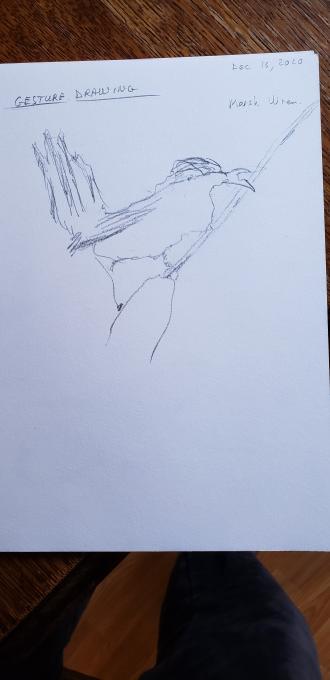
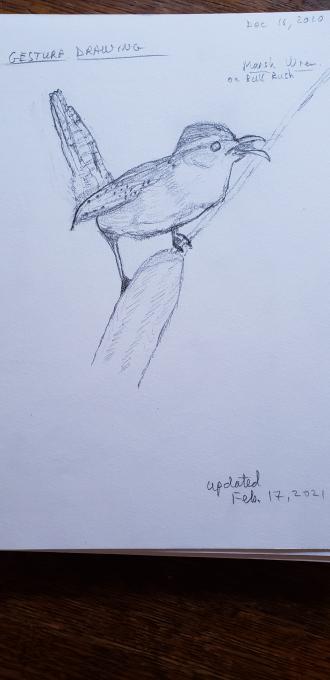
Feels like a complete make over... lots of erasing...and the bill...and I have gotten to know the marsh wren a lot better...fun!
b
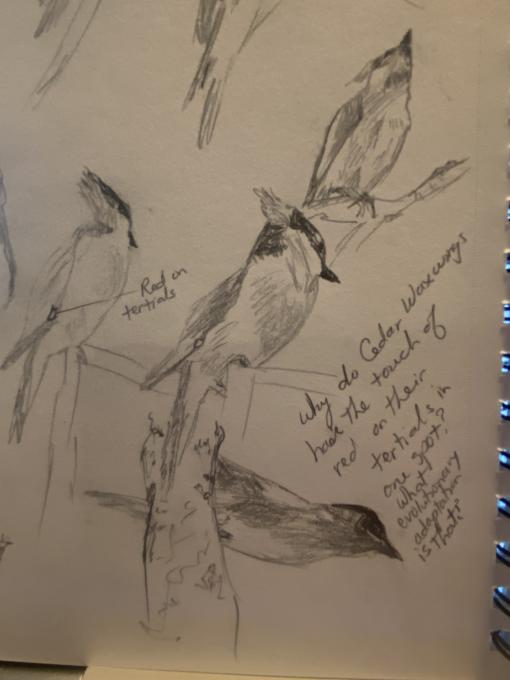 It is tough to be in the field and trying for the full gesture drawing before the subject leaves. The Cedar Waxwing flew in a blink but in that moment, I could not see the flat shape of the top of its head. The feathers seemed tucked down as it flew. Does anyone know why this bird has a red spot on the tertial feathers? What adaptation could the red color be for and in only one small spot?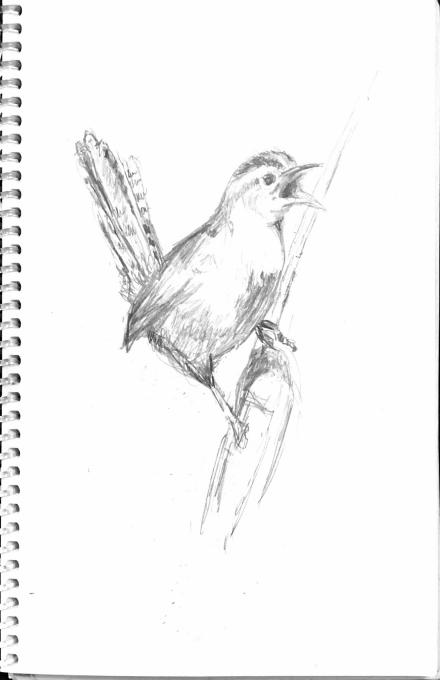
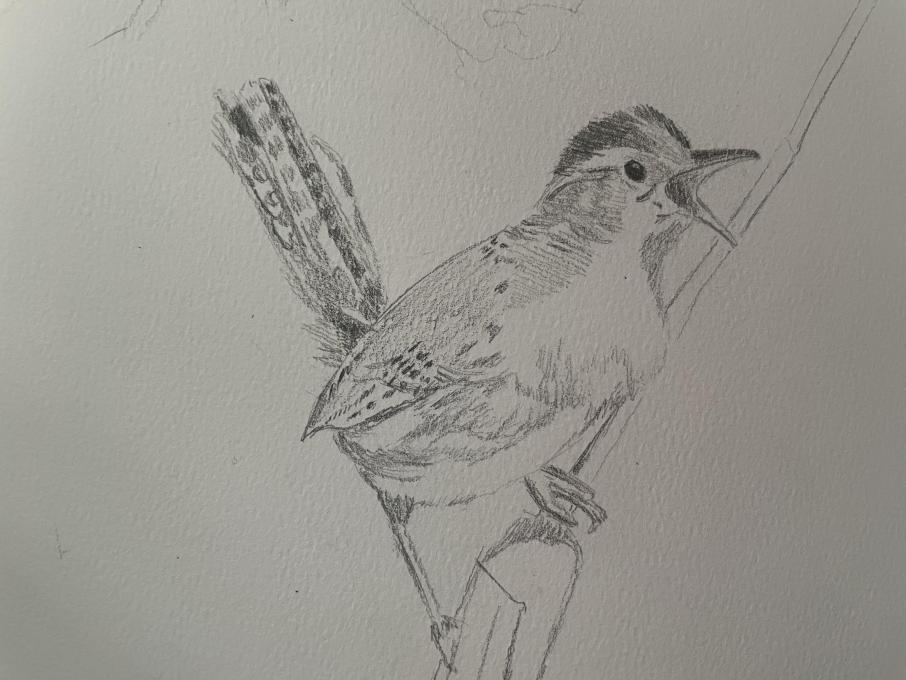
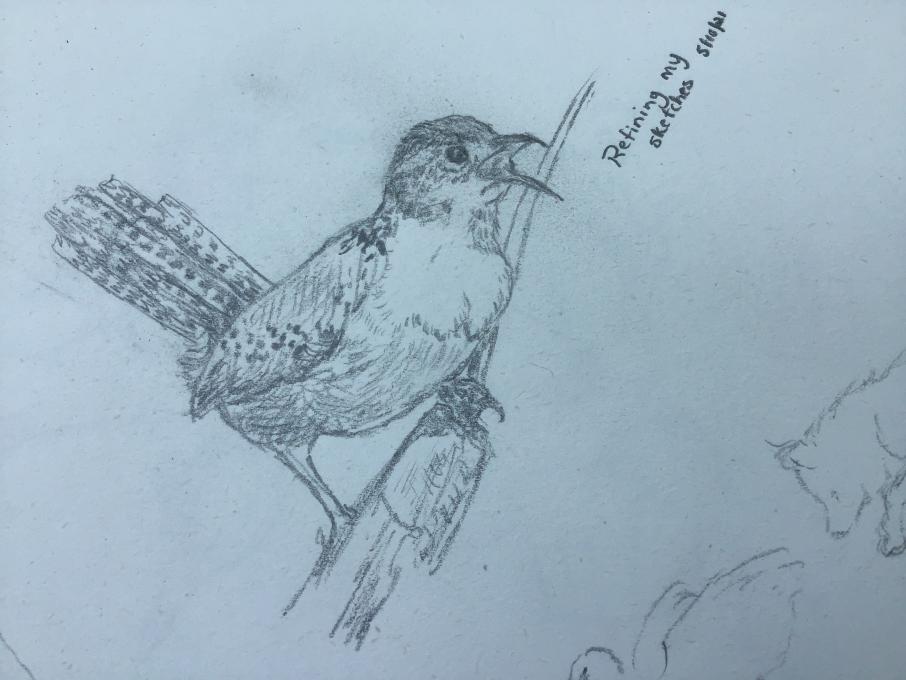
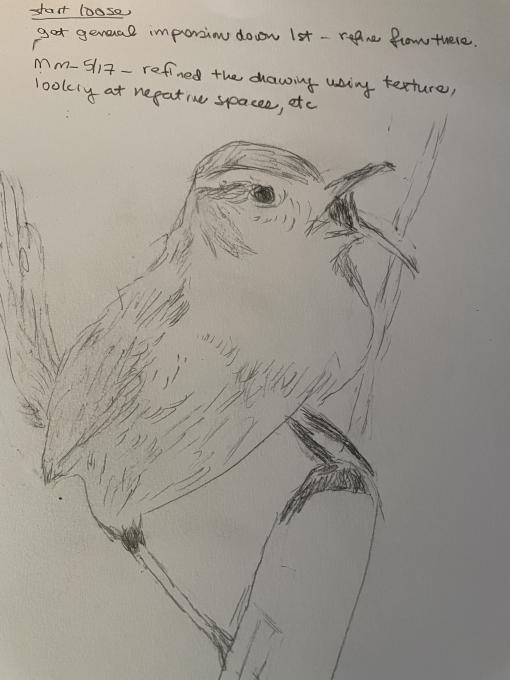
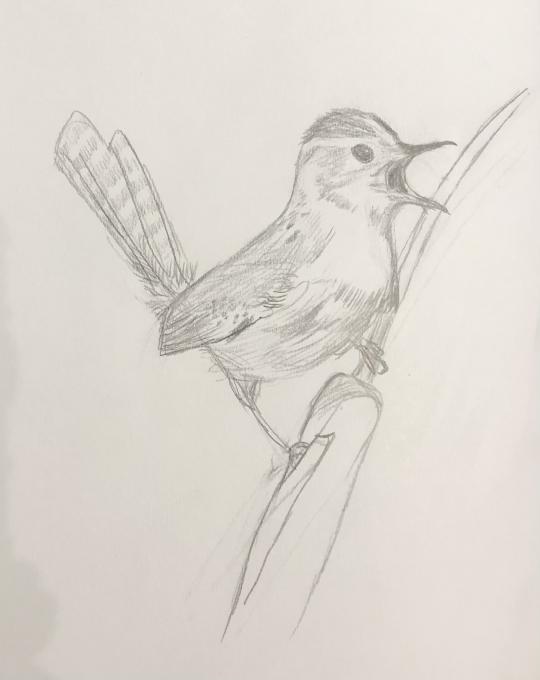 I’m happy with this. But there was a lot of rubbing out !! 🙄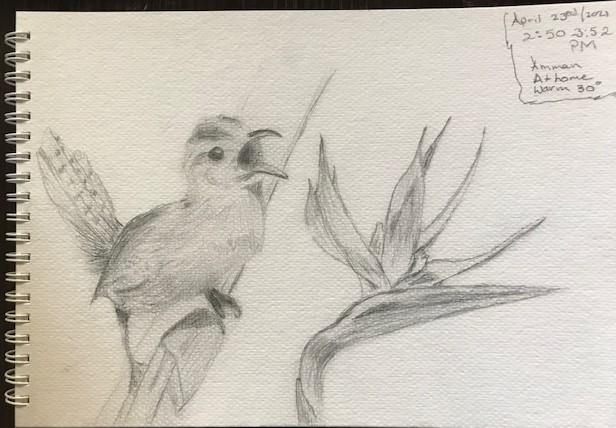
Read More: