The Cornell Lab Bird Academy › Discussion Groups › Bird Photography with Melissa Groo › Practice Crafting Great Bird Photos
-
 I do feel the space in front leaves more breathing room for the inflight image.
 -
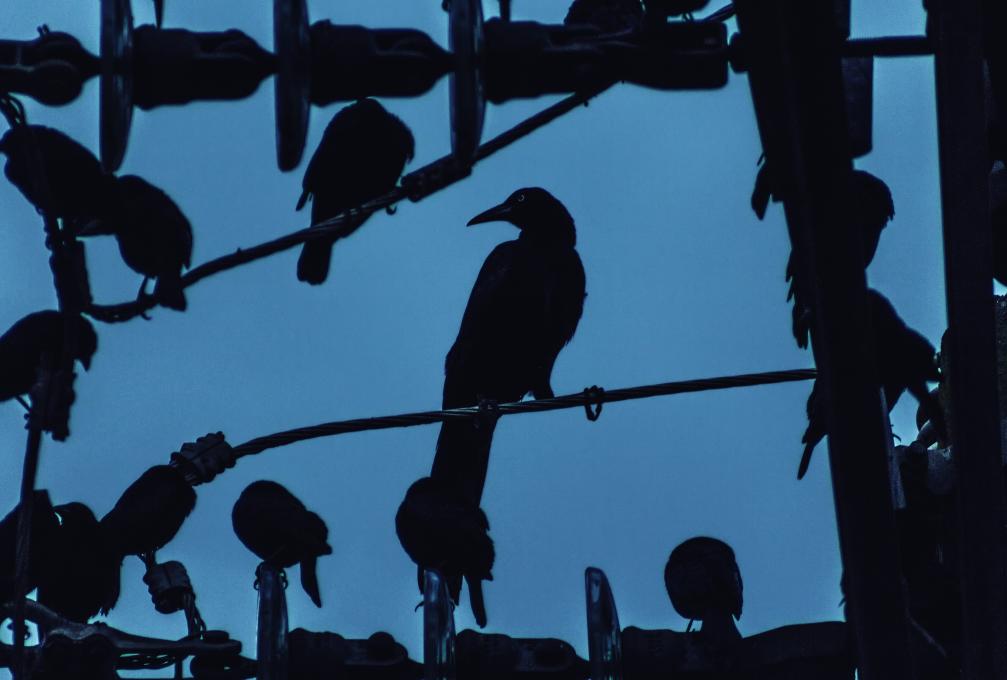
Perhaps this isn’t the most sharp image, but I tried to respect the rule of thirds on it. May be I should have given more space to the flycatcher to fly higher. Nevertheless, to me it’s better in that upper right corner than in the center. Then, I present a grackle located at the center of the frame. I intentionally placed the grackle there. My goal planning this image composition was, first, to show how packed grackles tend to be, and, second, to underline the individuality of this bird.
-
Love the silhouette effect in your grackle image!
-
Hi Monsi, Great Grackle shot. I find it very difficult to get separation and any type of composition when I encounter a flock of Grackles. In your shot we can distinctly make out your 'subject' while also perceiving a bigger flock.
-
-
-
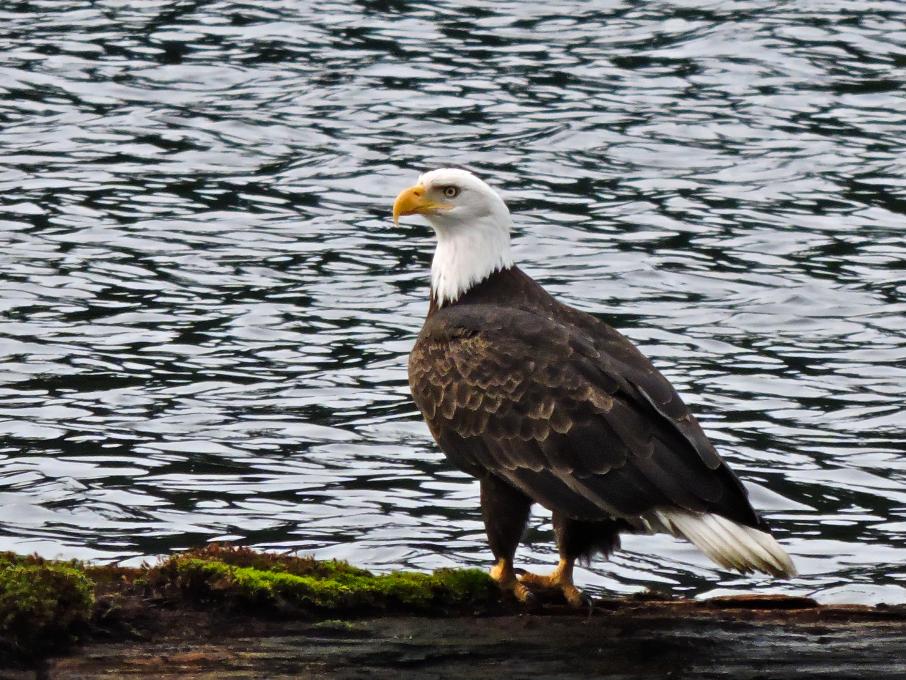
Great catch light in eagle's eye and the detail in the feathers! Perhaps cropping or turning your camera to portrait instead of landscape, would give even more attention to this awesome bird.
-
-
Got lucky when I had a wide aperture of F/5.6 mostly because of very weak light since there was a lot of fog passing by but created a very colorful background to my composition. I was trying to get a frontal shot of his colors on his crest.
-
Worked with the rule of thirds and created more breathing space to make more contrast with the colors of the bird and the dark background.
-
Beautiful shot! The bird commands the viewer's attention, which is the purpose of bird photography!
-
-
I favour the rule of thirds for photos because I like how these photos look generally, although occasionally I like to mess things up by putting the bird in a far corner and giving a lot of free space in the photo (tweaking while processing) like, here you go, roam free. Alternatively, sometimes it just feels "better" to put the bird in the middle of the frame. And, full disclosure, sometimes I see a new bird and just frantically shoot to ID. I almost always shoot wildlife with a mirrorless camera and 40-150mm lens with 1.4x teleconverter, at around F4-F5.6 if possible. I haven't been brave enough to open my wallet for a longer low Fstop lens but I like the effect that mine gives. I'm enjoying this course because I've been lazily resting on auto for awhile, a few years back I always shot in manual, IDK why I stopped.
-
Lovely shots with such clarity in the eyes!
-
-
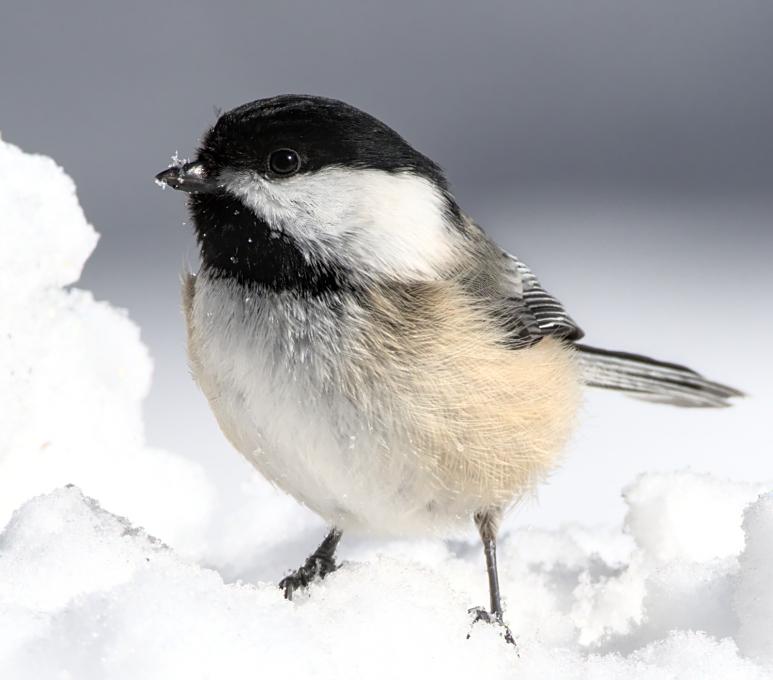
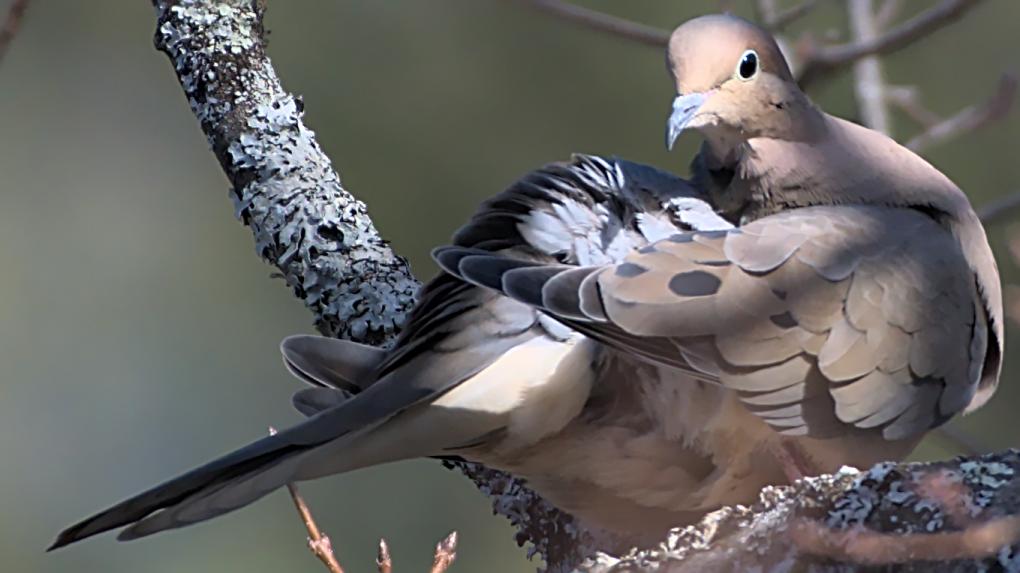
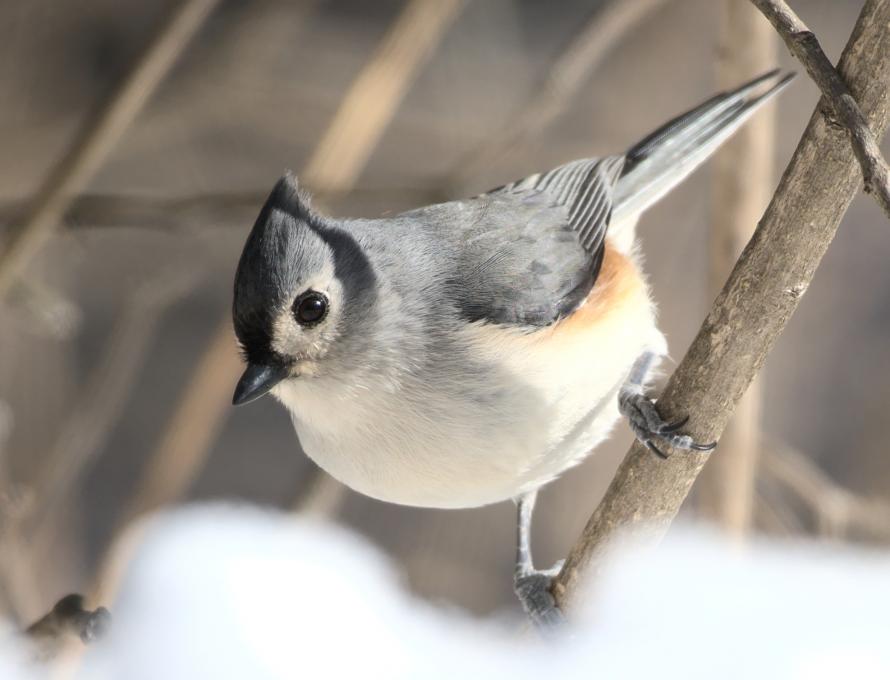
The chickadee on snow is shutter priority 1/1600, spot metering, focused on the eye. The charming mourning dove was caught in the act of making herself beautiful, and she succeeded! How many layers of feathers she has! This photo says phooey to the rules but has the highest light on the head and upper wing, and the more shadowed areas emphasize the layers of feathers. The tufted titmouse is has a shadow from a stick, but its alignment emphasizes her crest. Half her face is in shadow, but the combination of the two shadow regions goes to emphasize her beak and eye. And she is in a wonderful dynamic pose.
-
Love all 3 of your images, but the chickadee is probably my favourite-feather detail & bright eyed expression are top notch!
-
-
This white throated tree creeper didn't lend itself to the rule of thirds and I wanted to show it in its camouflaged best
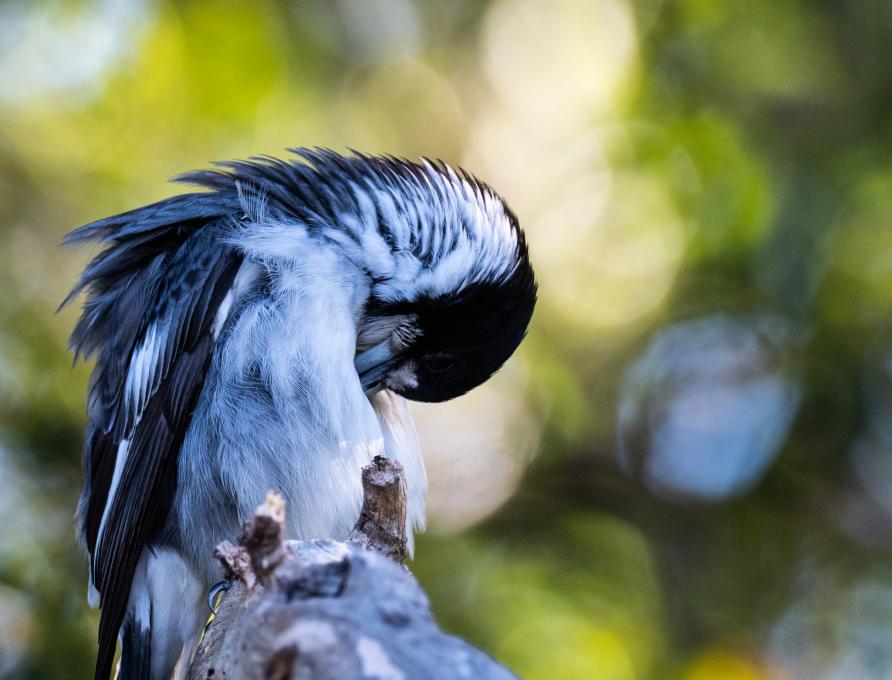
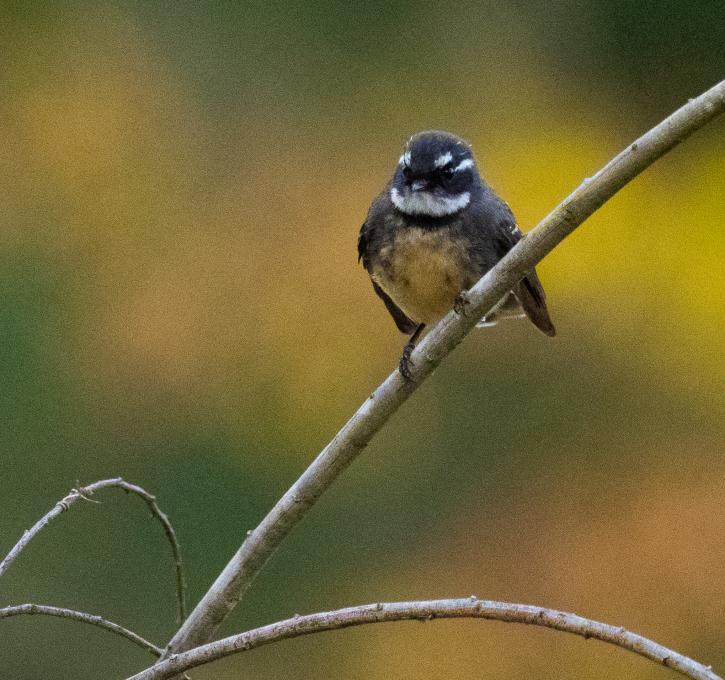
The previous two were practicing at the lowest f stop one just from the balcony at home, a grey butcherbird preening and the other a pretty grey fantail where I paid attention to the light and colour in the background
-
Female Pin Tailed Whydah taken with ISO priority mode; looking to switch to manual soon
Another note - the point regarding the different types of AF settings will I think make a big difference, I didn't know that aspect before
-
Amazing to see the difference that the aperture settings made. Tried it with wide and narrow apertures (f/4 versus f/16) and was able to get the nice fuzzy background at f/4) Since my camera has only a 220 zoom, I did trials with the composition rules in the processing stage. Was indeed revealing to notice that following the "rule of three" made for a more pleasing composition. I had not realized earlier that it helps to leave the extra space in front of the bird.
-
Black and White Warbler on spring foliage, low F stop, which created a satisfying blurred background. Image taken in Central Park, NY.
-
I was attracted to this scene of Canada Geese because of the unusually sparkly water and the dramatically silhouetted design: the geese were swimming in alignment with one another and framed by branches, leaves & berries. I decided to crop it in an elongated composition to enhance the way the geese were swimming - and so that the geese are in the lower third of the composition.
-
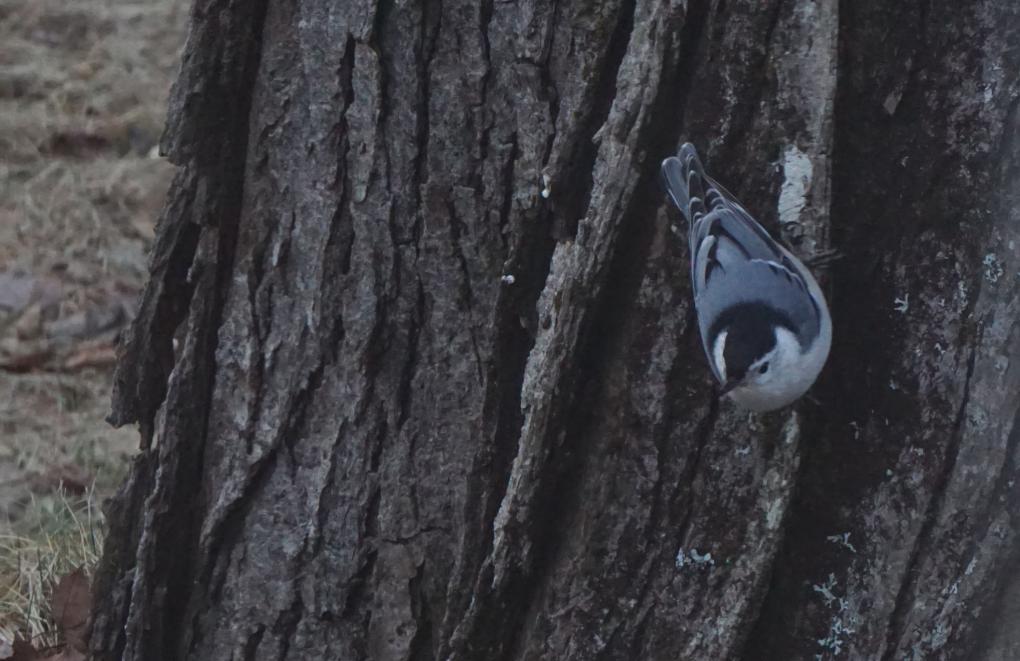
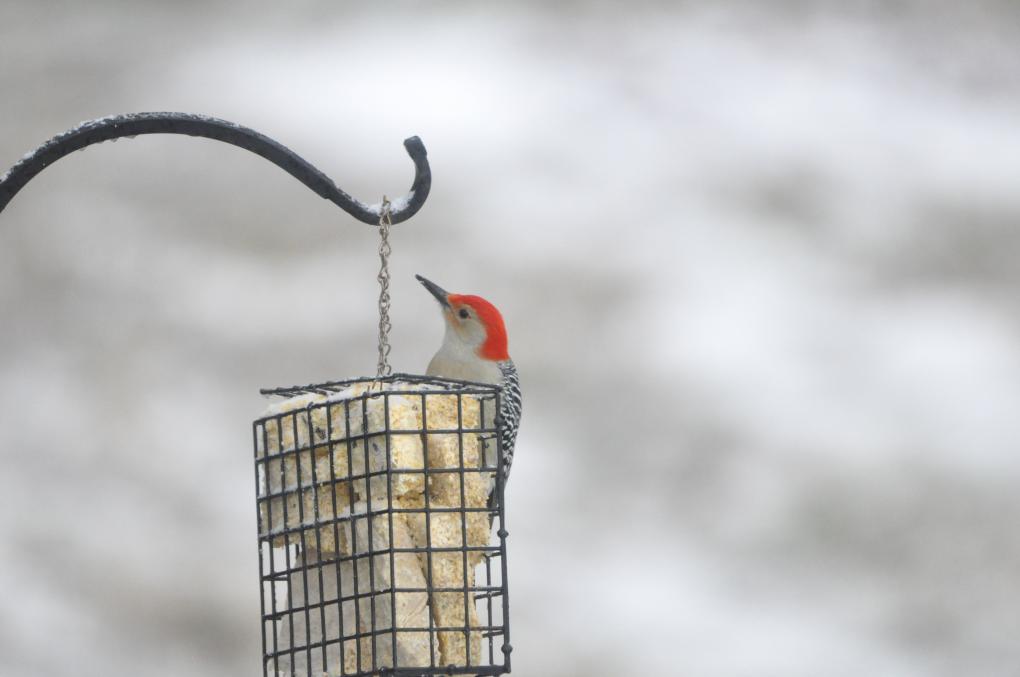
I learned shallow focus works better in some circumstances than others. The birds gathering for a turn near our feeders give me the luxury to set up a blurred background without blurring the bird!
-
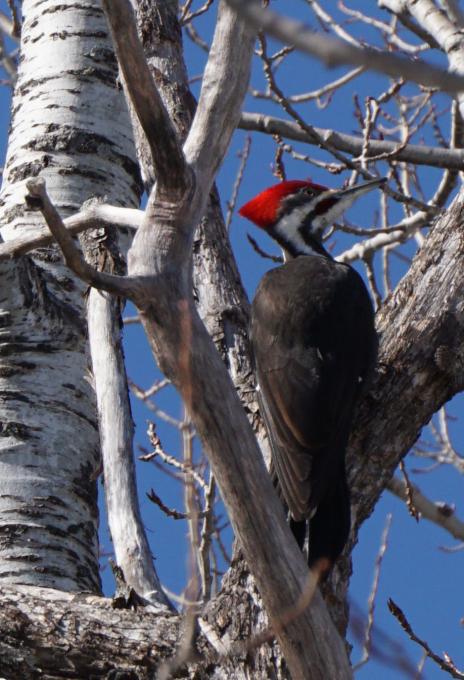
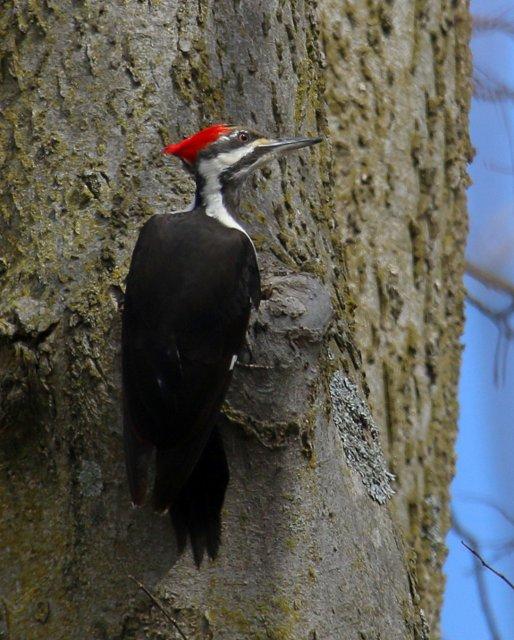
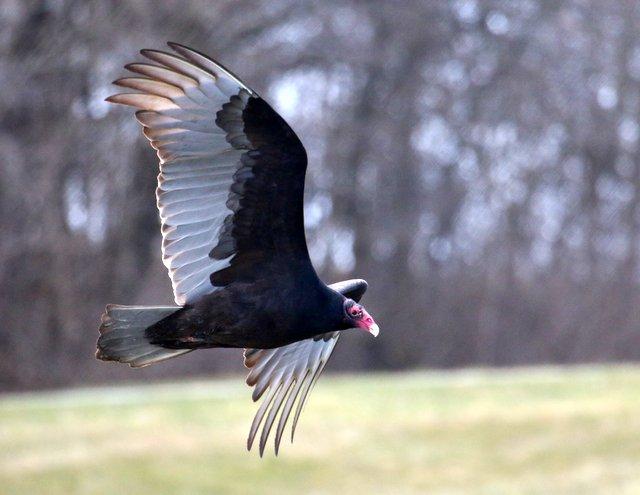
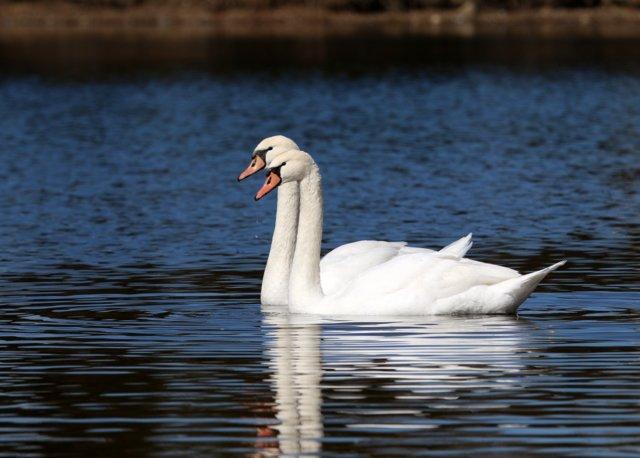
Rule following: the Pileated Woodpecker obeys the rule of thirds and is also in focus against a blurred background like the Turkey Vulture. Rule bending: for the Mute Swans, we used f/5 so the farther one is still barely in focus, but they are basically centered rather than at a cross points, which gives them space to travel.
-
-
-
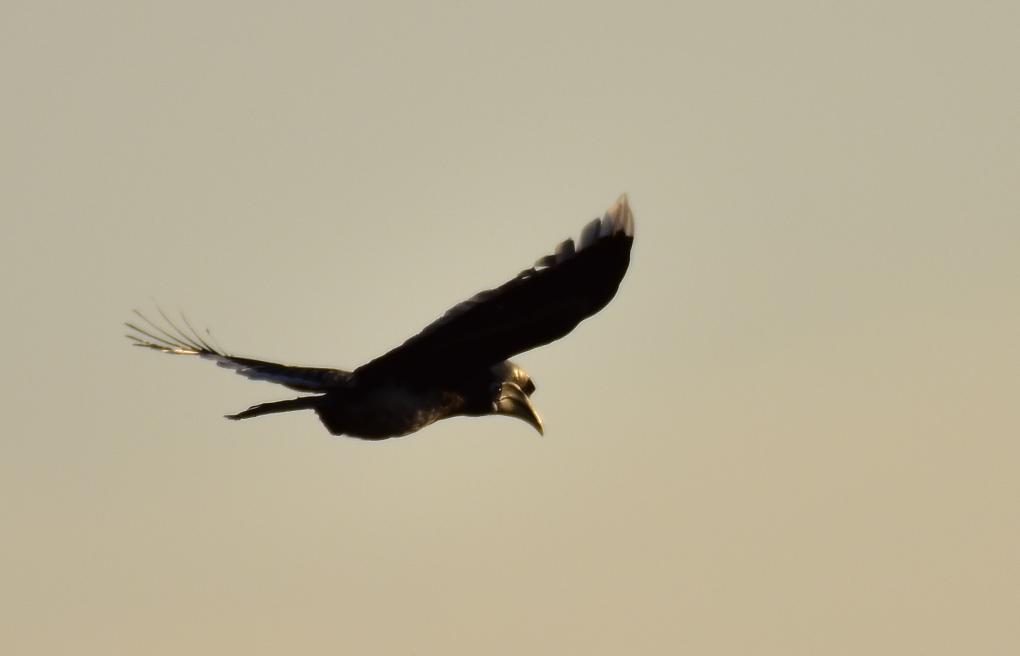
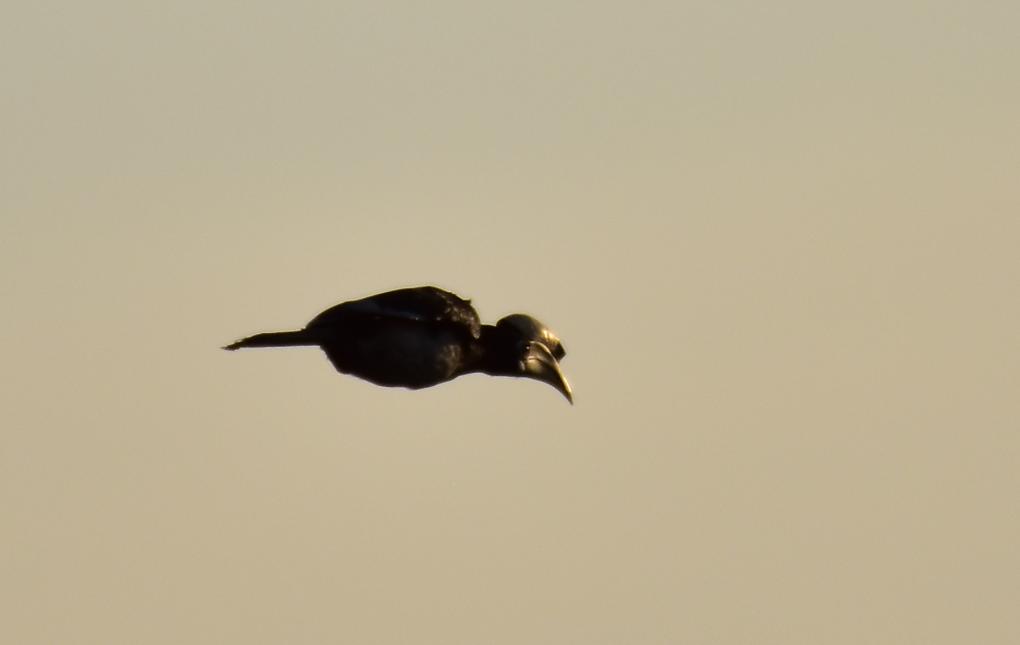
These are unique photos for me. Despite very bad in quality I found out that they have an illusion effect due to light. Can you tell which way they are headed?
-
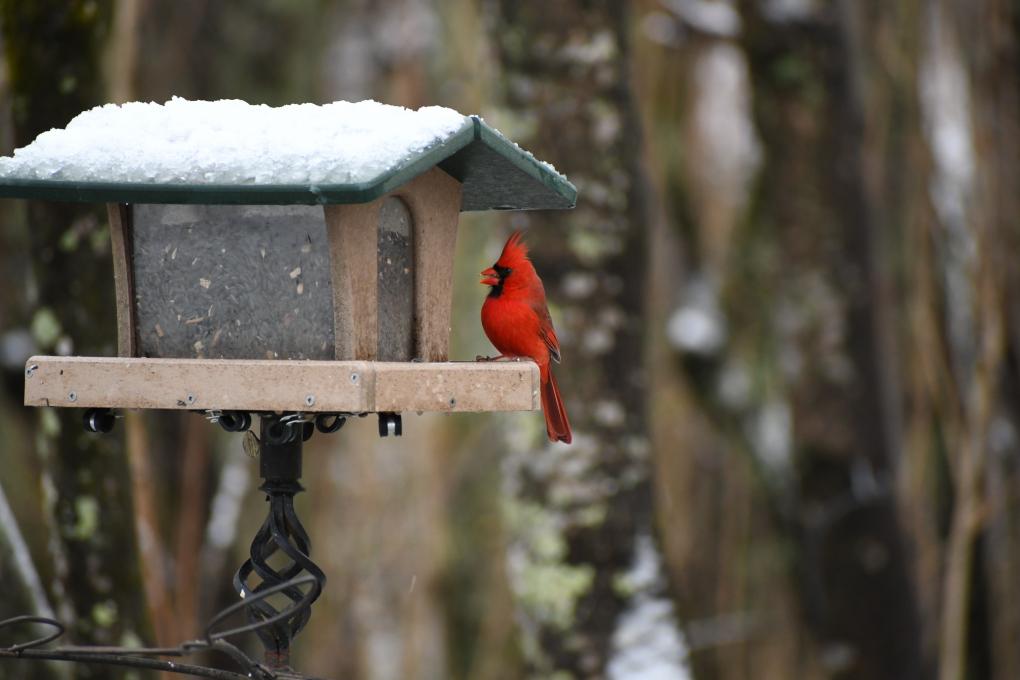
The first thing when I follow or break the rules of composition is that I consciously spend more time composing the shot and thinking about what I see - then make a decision - and take the shot. In the picture of the cardinal, I like the cardinal centered (breaking the rules) with the strong color statement and the algae covered tree behind surrounded by brown and white in each direction. It seems to draw the eye away from the feeder and to the bird. The heavy red seems to balance the color palatte. Had the cardinal been placed according to the rule of thirds the emphasis would have been on the feeder and the picture would seem to be off balance. I also see the eye sparkle and the bird eating - not just resting.
With the Merlin, I like the position of the Merlin facing out from the top of the only tree with the head turned slightly seeming to scan the area to locate a small bird for dinner. Perhaps a slightly higher position would be even better. I think there is certainly room for improvement in the shot but the eye twinkle is there slightly and I like the artistic appearance of the small limbs surrounding the bird making the setting almost show the violence this small bird is capable of bestowing. The background grey - while realistic - is lacking.
-
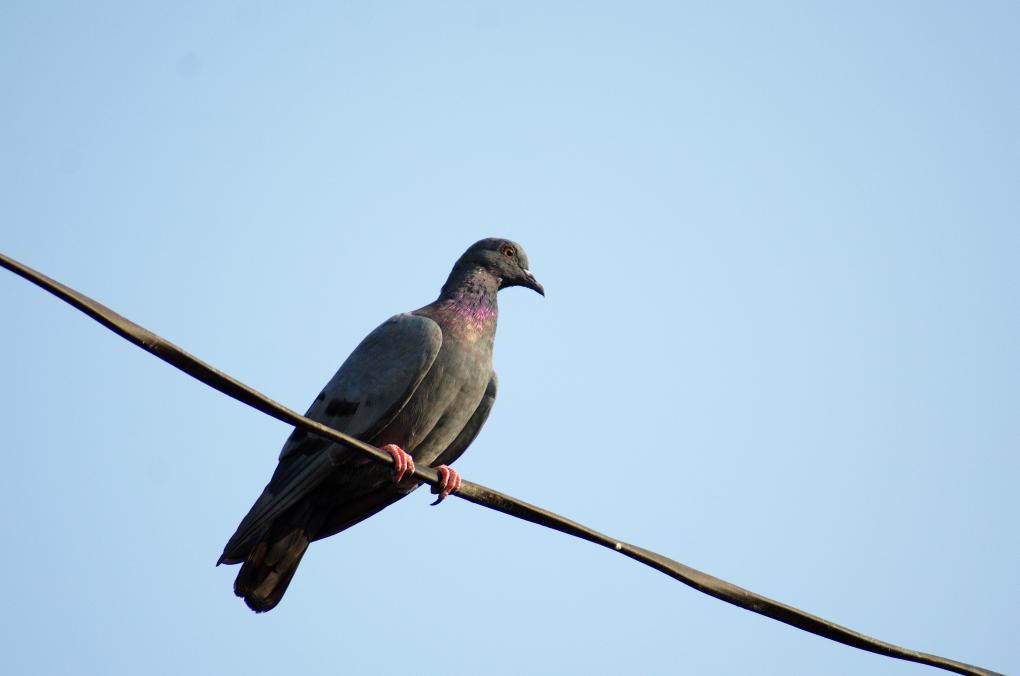
Here is a Rock Pigeon perched on wire with front light but at an angle.
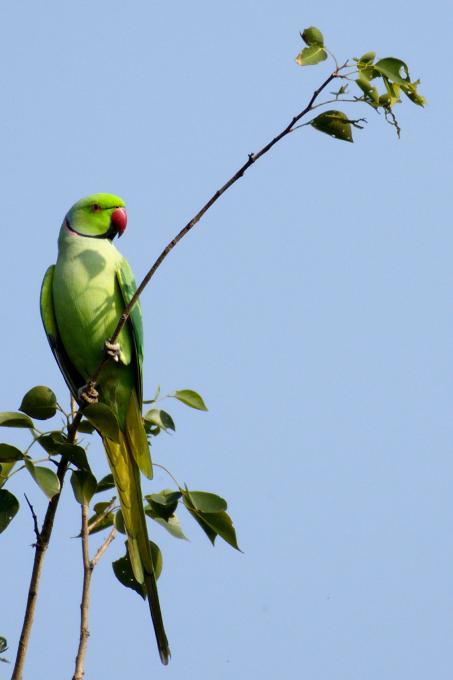
In the following photo the shadow cast by leaves on the breast part of Rose-ringed Parakeet makes it artistic as if a body art
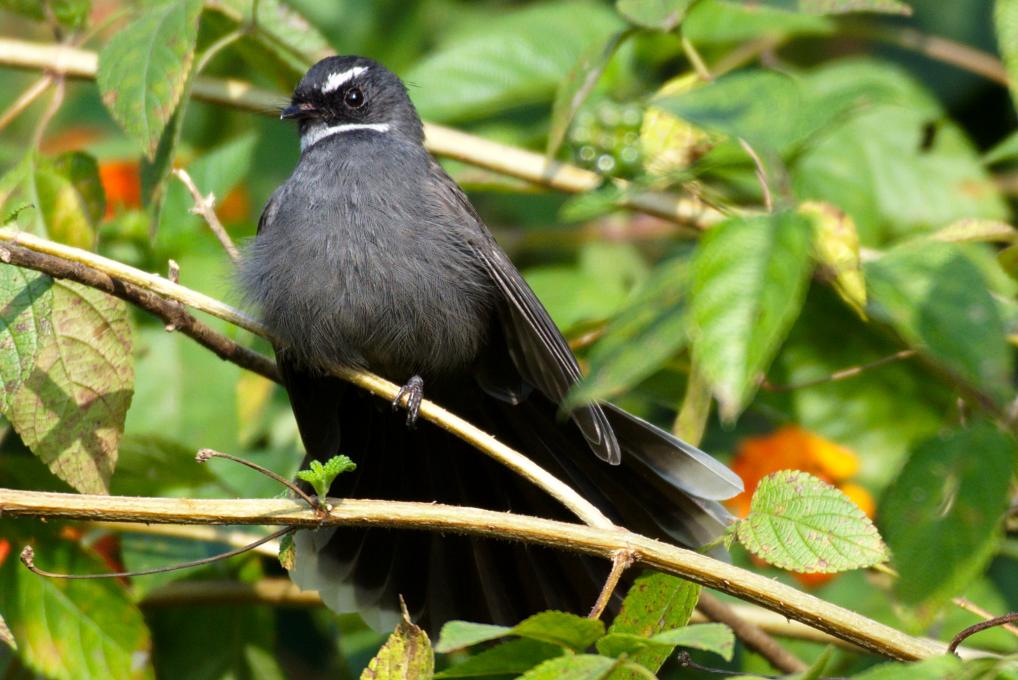
In the following photo the front-top light details the face and breast of this White-throated Fantail
-
This broke a few rules. The light was harsh and late morning, but the dramatic contrasted black and white of the snow geese is emphasized by the light. In some situations the rule of thirds is difficult to use. The blur is from trees branches in the foreground, which was unavoidable at the time from in the woods.
This one had top lighting of the wild turkey and no glint in the eye, but the expression seems to make up for some of the broken rules.
Getting close to the dark-eyed junk makes up for some of the top lighting and almost makes it look like back lighting. The breast of the bird seems to work as the contrasting background for the beak.
-
Because these two were looking in opposite directions, I chose to center them in the composition. This choice gives each bird some gazing distance within the frame.
-
I made a point of backlighting these photos since I usually do not think about this lighting option. I liked the effect.
-
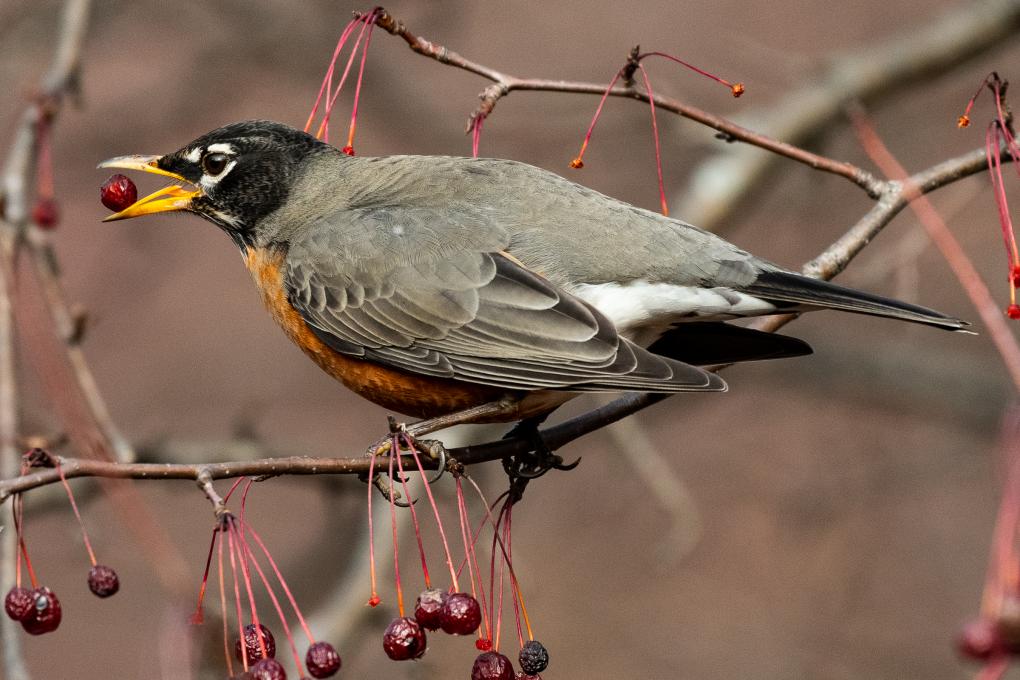
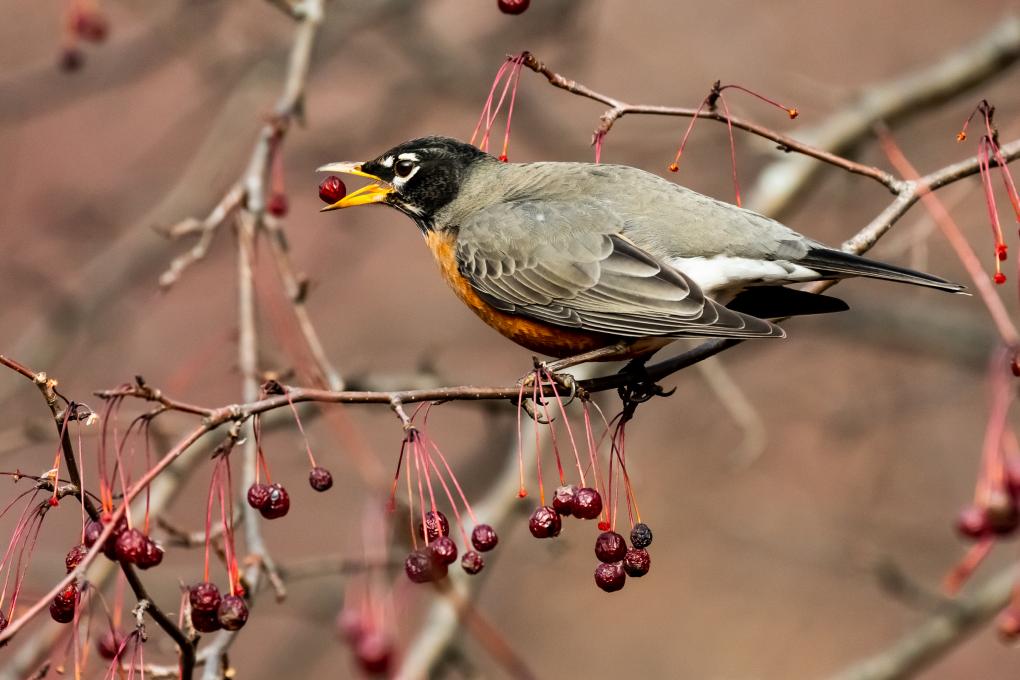
One last post on the topic same photo but cropped differently. In the first photo I filled the frame so broke some rules, no space in front of him, photo was taken directly in front of him so he appears as so..flattened and lacking some depth, doesn't adhere to rule of thirds.. second photo respects the classic bird photo a little more....he has space in front of him, adheres more to rule of thirds etc. It would have been better without the cluttered background still i got interested in this shot because it reveals something interesting .. the anatomy of his tongue.
-
I like seeing birds eating or doing more than simply sitting, so I like your photo number 2 the best.
-
-
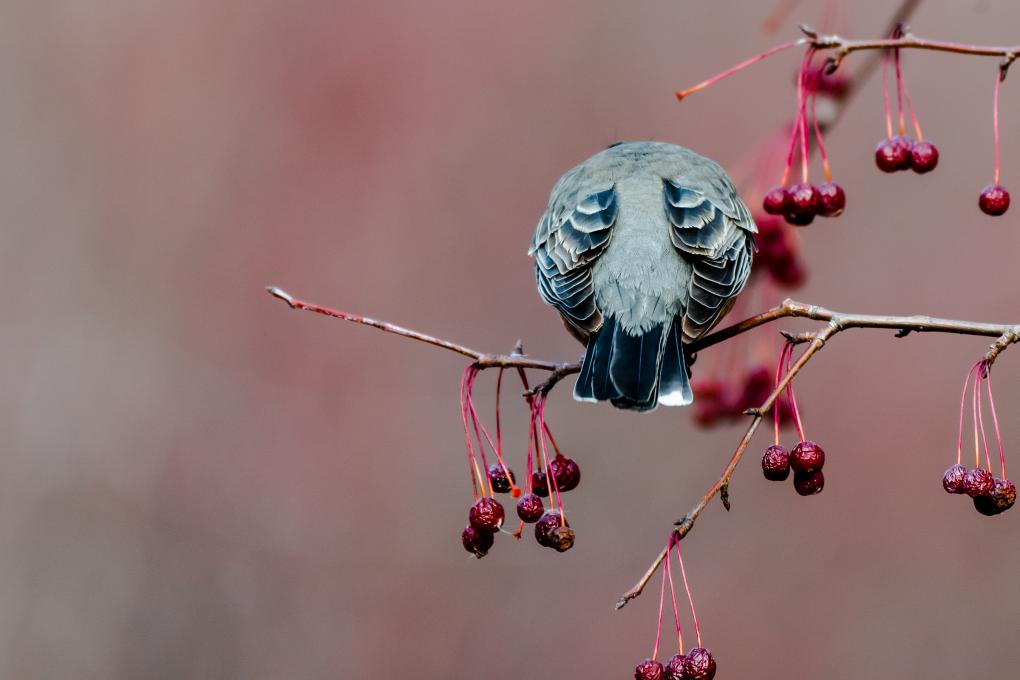
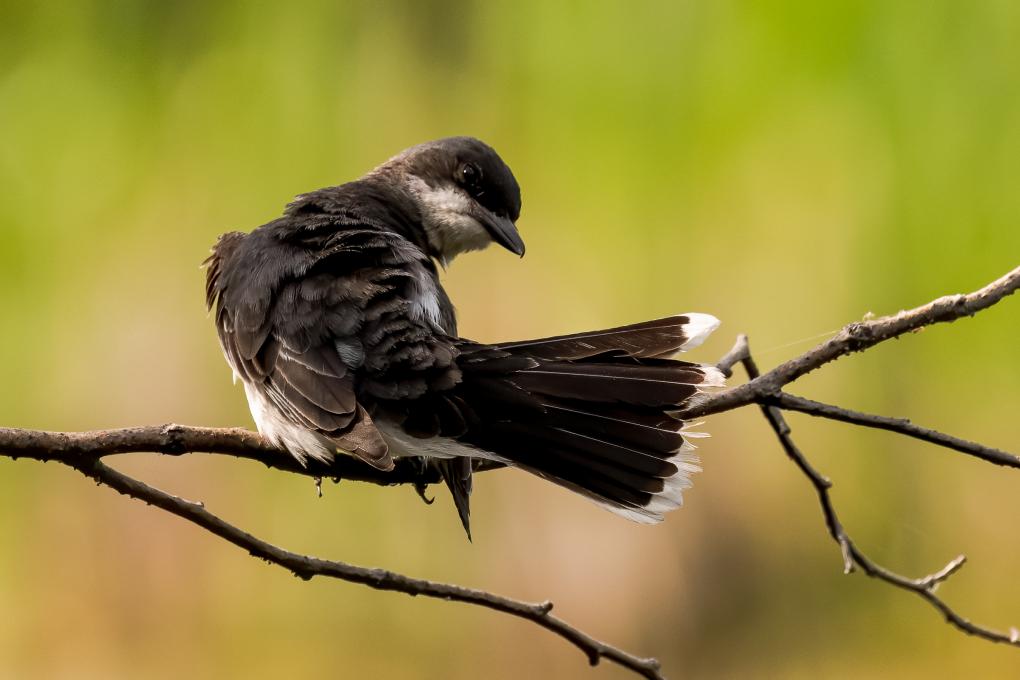
I tried doing something a little different on the first photo.... American Robin in a stand of Hawthorn trees December 7th, 2020 ..photo is in the rule of thirds but not a typical bird photo as he is not facing the camera. I wanted to see what would turn out with him facing away from me. I like the hues in the photo of the red Hawthorn berries in combination with the grey on his feathers and his layered feather structure all blurred as in classic bird photos....but as i said with a difference. The second photo of an Eastern Kingbird was taken somewhat as an afterthought. I was leaving a marsh and I noticed him preening in close proximity to me. I figured oh what the heck, "Take one more shot." It has turned into one of my favourite shots .. I like the quality of the catch light (a term I now know from taking this course) up in the corner of his eye, photos is sharp, nice blurred background and it is a portrayal of bird behaviour showing as well great detail of his feathers. There is a sense of vunerability about him as well .. not sure if i am describing it correctly but i just feel something special about this photo.
-
Nice photo of the kingbird in action preening.
-
-
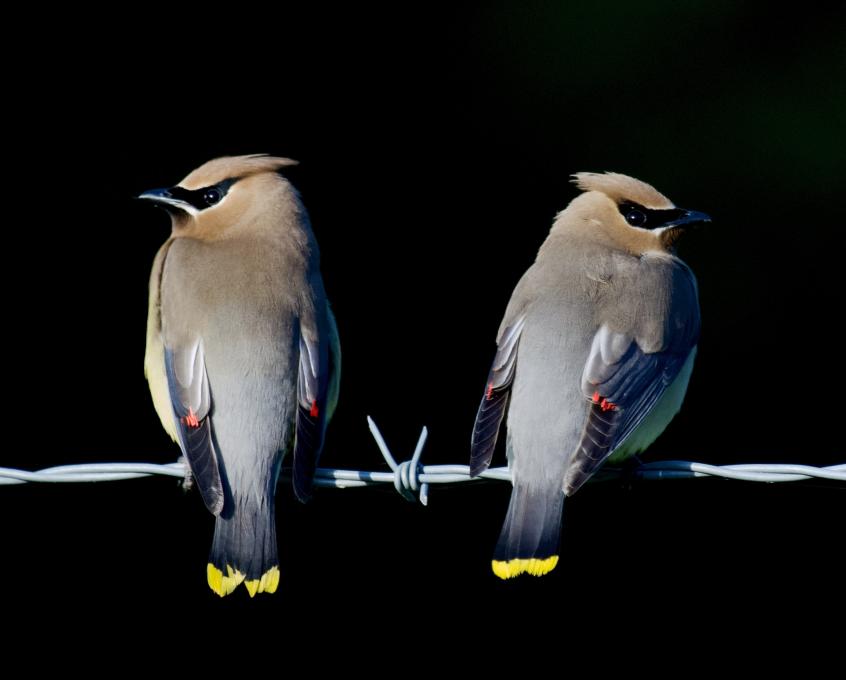
I got lucky with this image. I had the opportunity for a quick shot of this pair of Cedar Waxwings, but noticed that if I stepped just a little to the left there was a deep shadow in the background, which is what I was looking for. I took the quick shot to make sure I had a photo then stepped to the left and recomposed for the better shot. Nikon D500. f/5.6. 1/800. ISO 2500. I chose to center subjects to achieve symmetry and illusion of mirror image.
i
-
Very nice image, Dennis. What was the focal length ? Really clean background; no noise. Did you crop the image ?
-
Mirror look for these beautiful birds, nice idea.
-
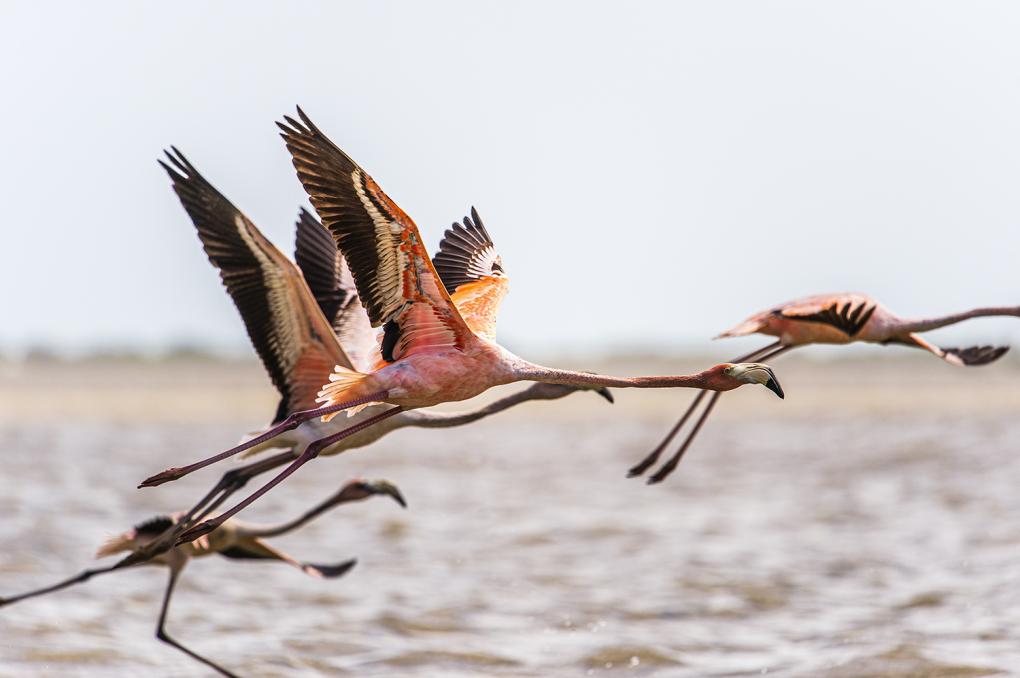 I do feel the space in front leaves more breathing room for the inflight image.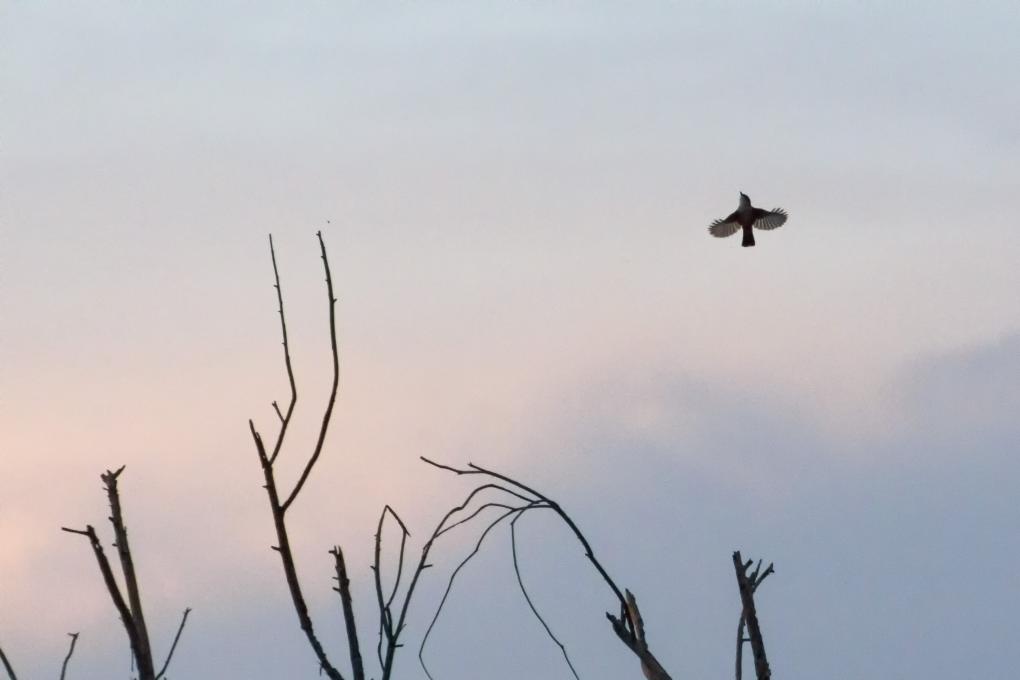
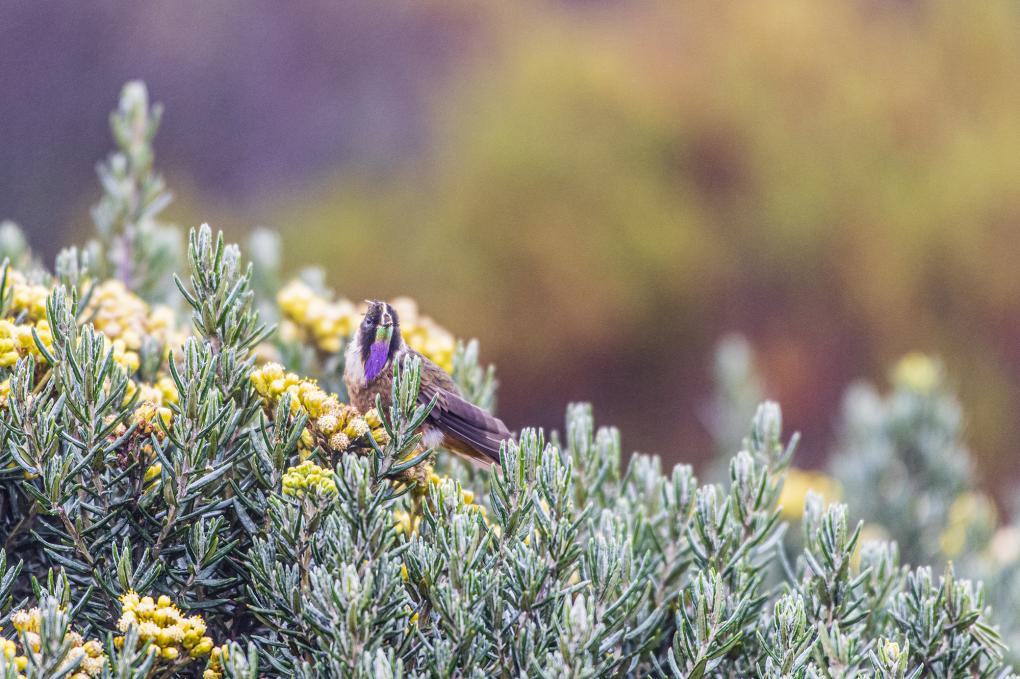 Got lucky when I had a wide aperture of F/5.6 mostly because of very weak light since there was a lot of fog passing by but created a very colorful background to my composition. I was trying to get a frontal shot of his colors on his crest.
 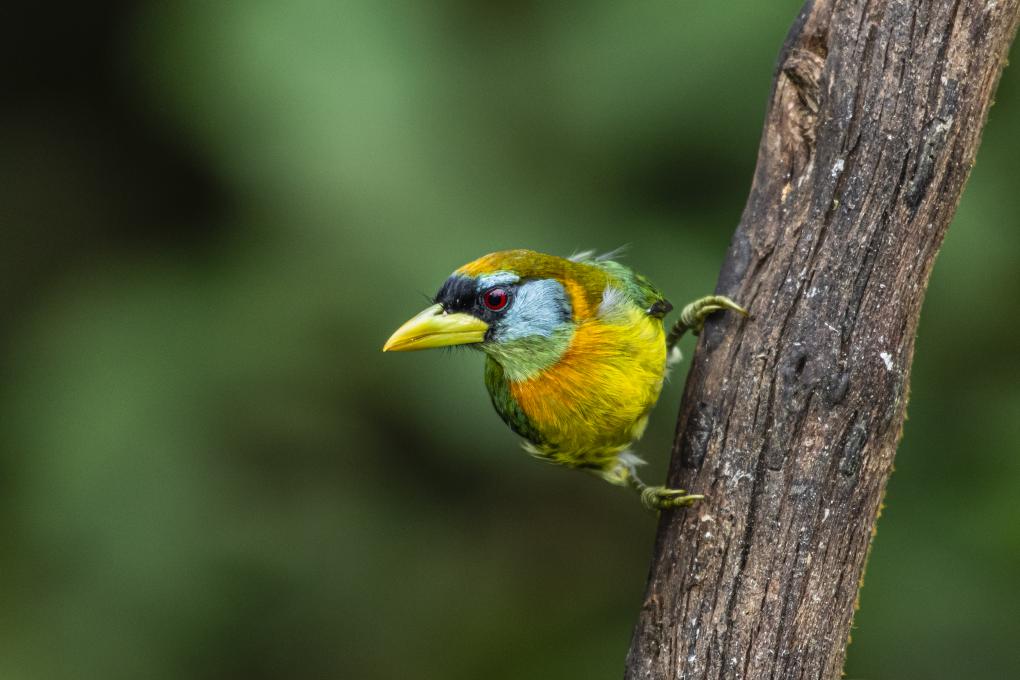 Worked with the rule of thirds and created more breathing space to make more contrast with the colors of the bird and the dark background.
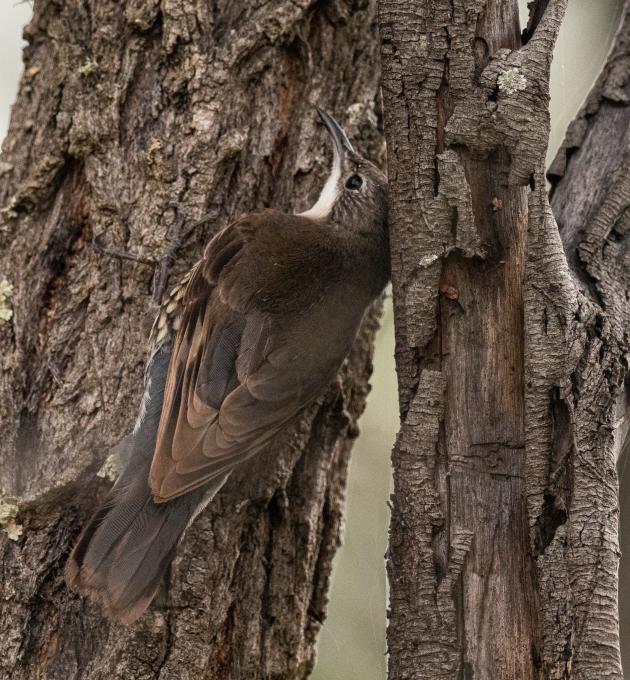 This white throated tree creeper didn't lend itself to the rule of thirds and I wanted to show it in its camouflaged best
The previous two were practicing at the lowest f stop one just from the balcony at home, a grey butcherbird preening and the other a pretty grey fantail where I paid attention to the light and colour in the background
This white throated tree creeper didn't lend itself to the rule of thirds and I wanted to show it in its camouflaged best
The previous two were practicing at the lowest f stop one just from the balcony at home, a grey butcherbird preening and the other a pretty grey fantail where I paid attention to the light and colour in the background 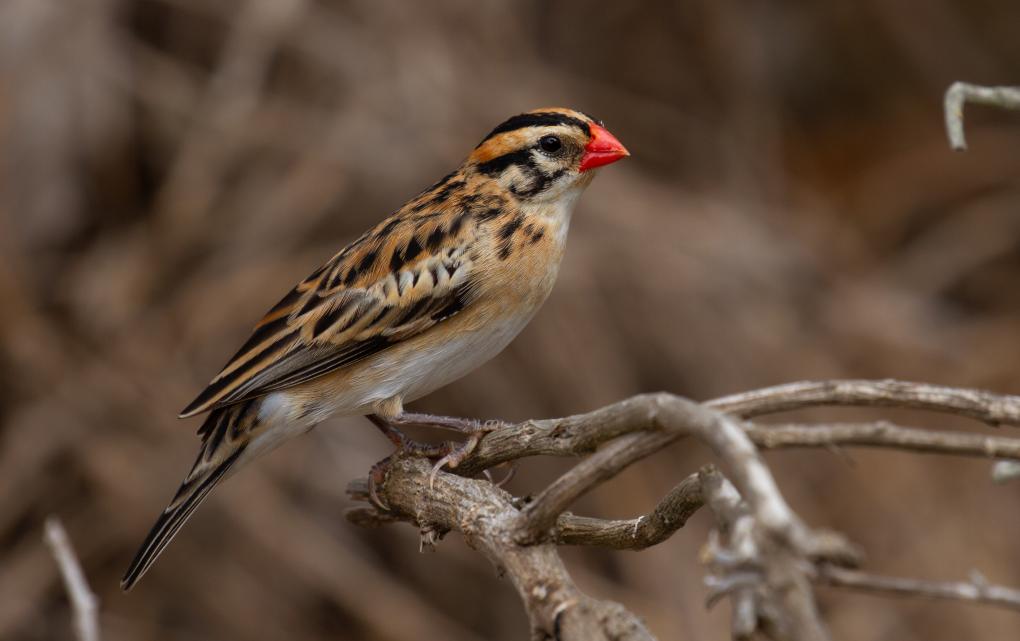 Female Pin Tailed Whydah taken with ISO priority mode; looking to switch to manual soon
Another note - the point regarding the different types of AF settings will I think make a big difference, I didn't know that aspect before
Female Pin Tailed Whydah taken with ISO priority mode; looking to switch to manual soon
Another note - the point regarding the different types of AF settings will I think make a big difference, I didn't know that aspect before 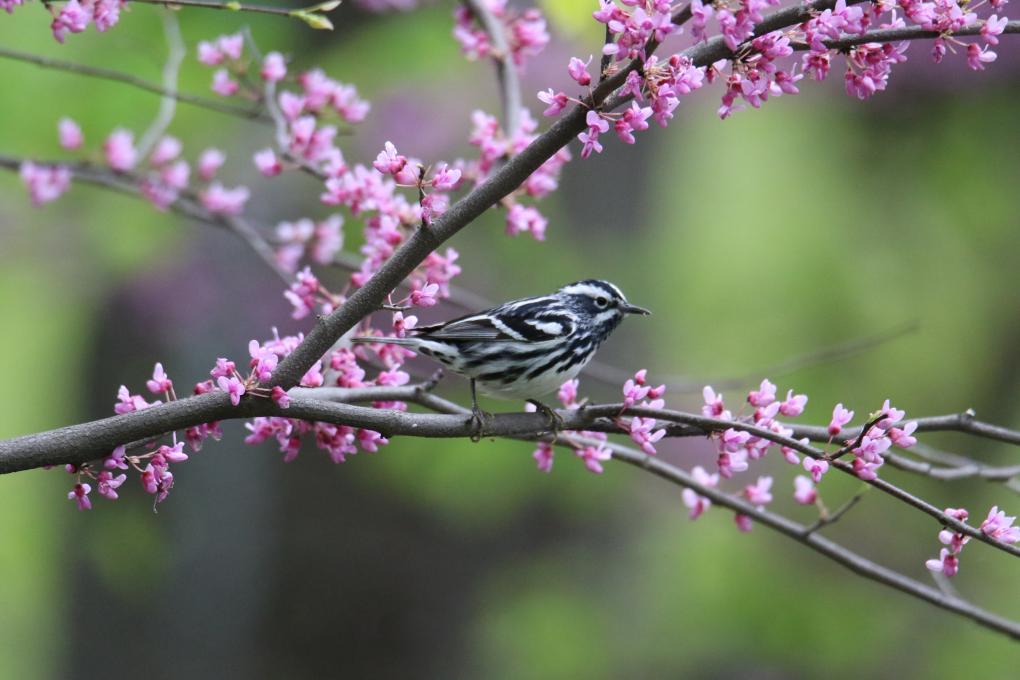 Black and White Warbler on spring foliage, low F stop, which created a satisfying blurred background. Image taken in Central Park, NY.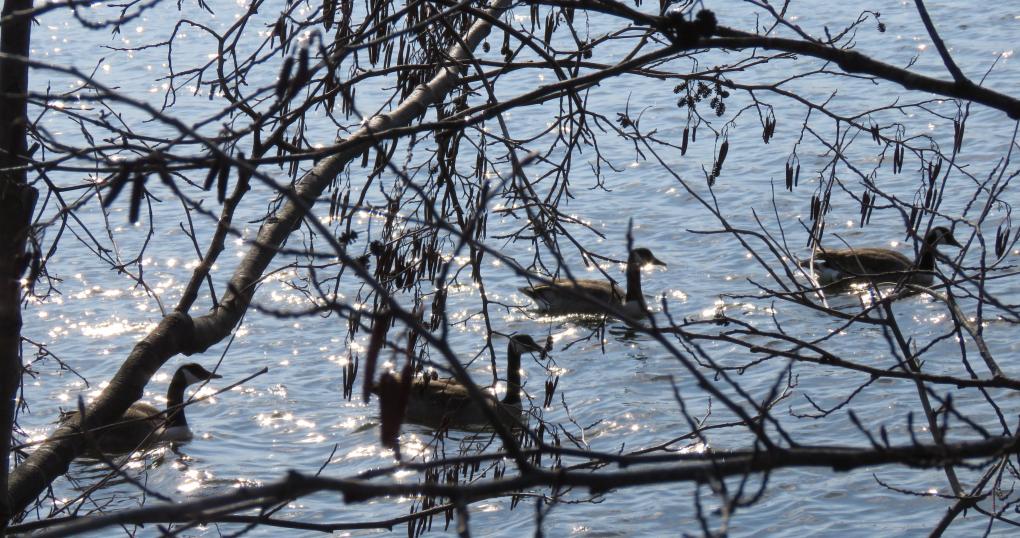
 I learned shallow focus works better in some circumstances than others. The birds gathering for a turn near our feeders give me the luxury to set up a blurred background without blurring the bird!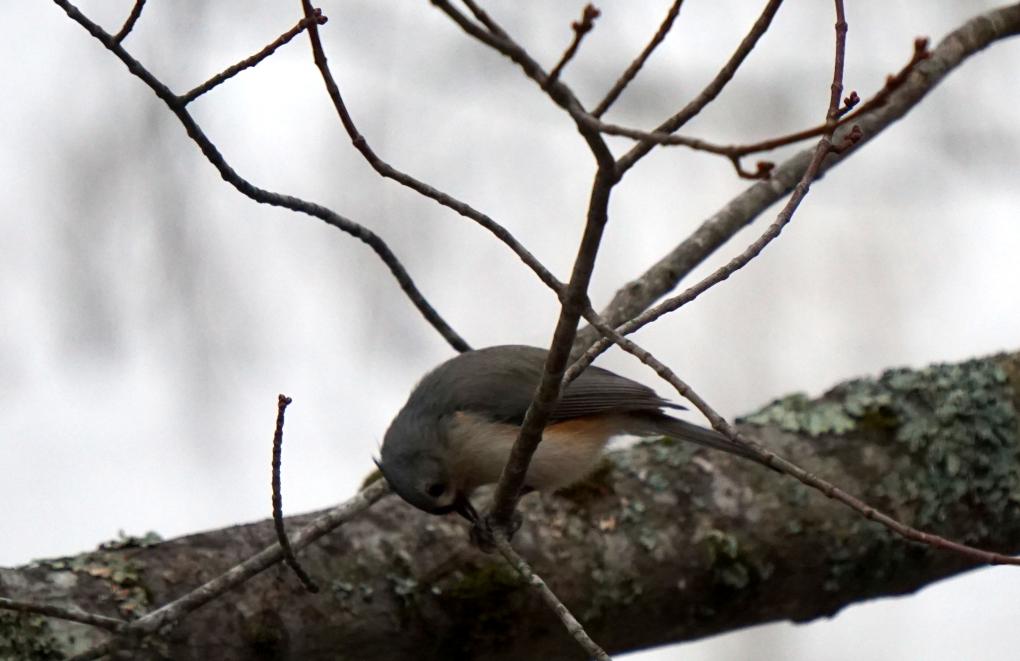
 With the Merlin, I like the position of the Merlin facing out from the top of the only
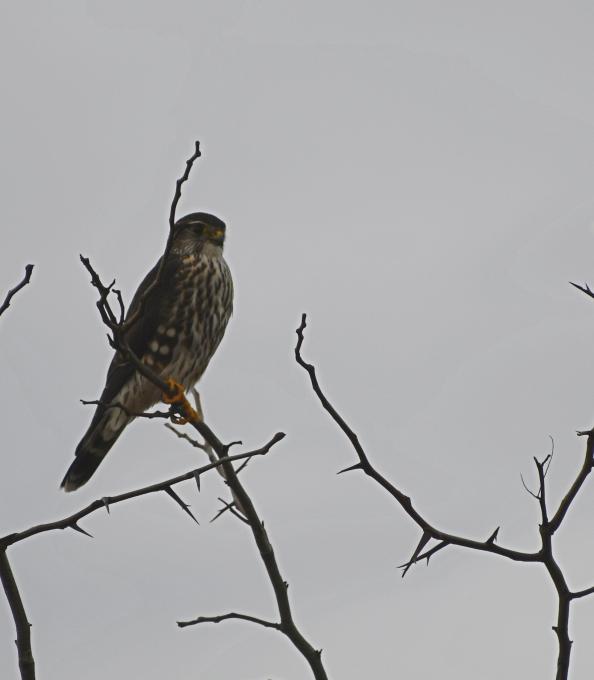 tree with the head turned slightly seeming to scan the area to locate a small bird for dinner. Perhaps a slightly higher position would be even better. I think there is certainly room for improvement in the shot but the eye twinkle is there slightly and I like the artistic appearance of the small limbs surrounding the bird making the setting almost show the violence this small bird is capable of bestowing. The background grey - while realistic - is lacking.
  In the following photo the shadow cast by leaves on the breast part of Rose-ringed Parakeet makes it artistic as if a body art
 In the following photo the front-top light details the face and breast of this White-throated Fantail
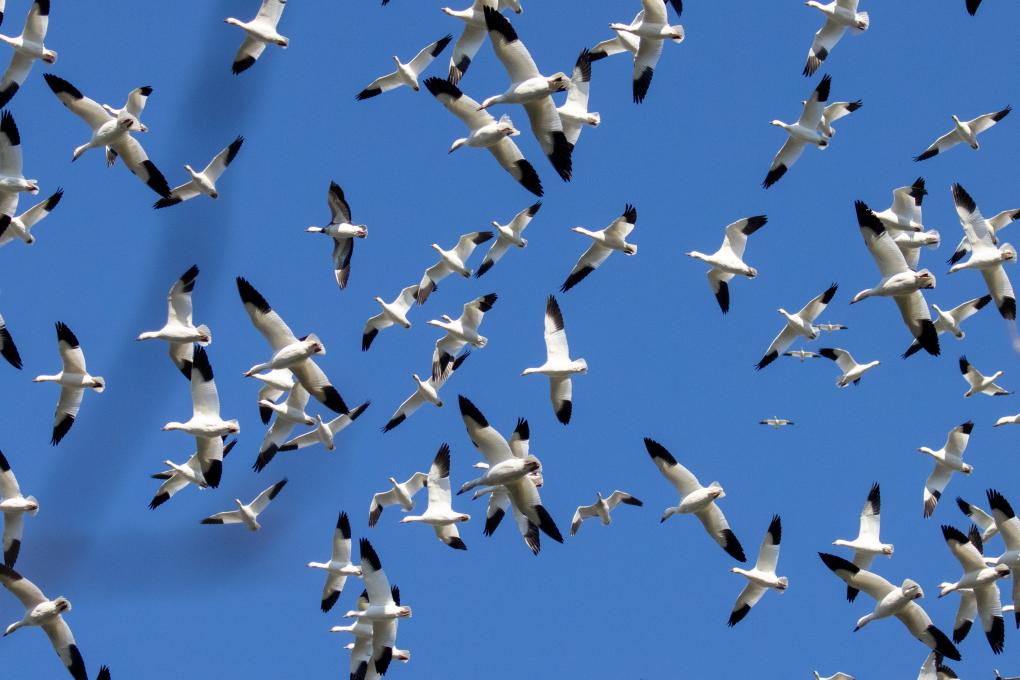 This broke a few rules. The light was harsh and late morning, but the dramatic contrasted black and white of the snow geese is emphasized by the light. In some situations the rule of thirds is difficult to use. The blur is from trees branches in the foreground, which was unavoidable at the time from in the woods.
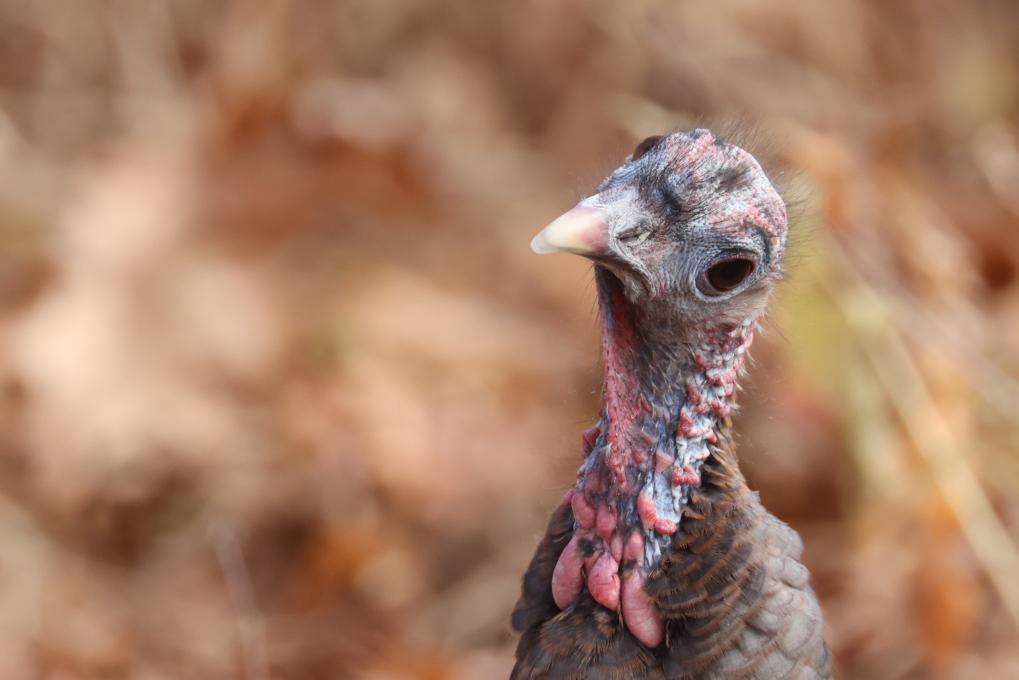 This one had top lighting of the wild turkey and no glint in the eye, but the expression seems to make up for some of the broken rules.
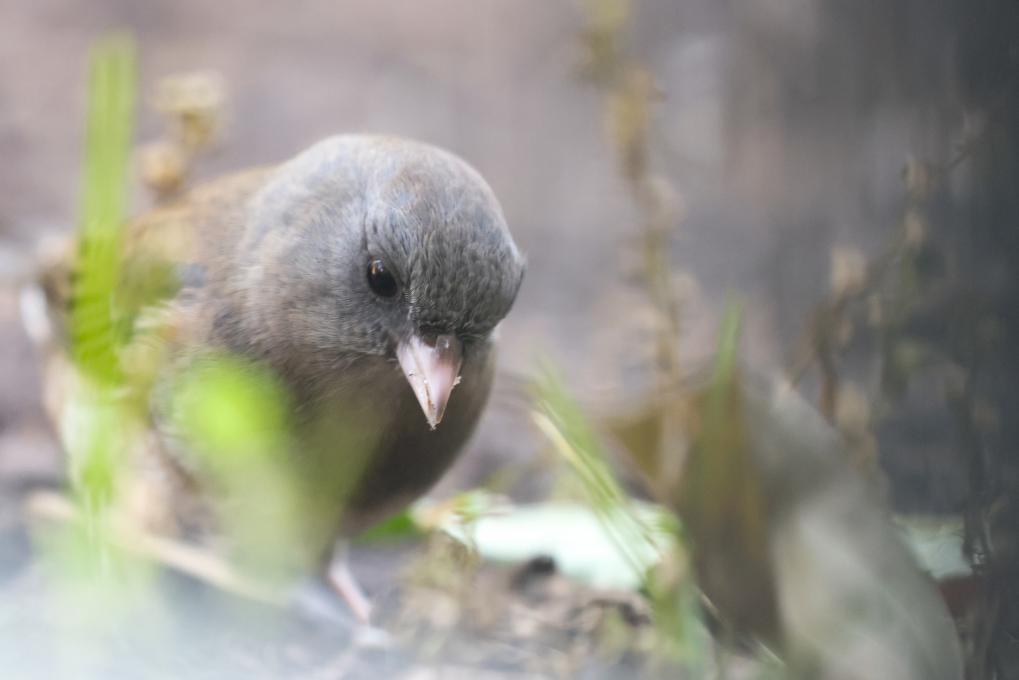 Getting close to the dark-eyed junk makes up for some of the top lighting and almost makes it look like back lighting. The breast of the bird seems to work as the contrasting background for the beak.
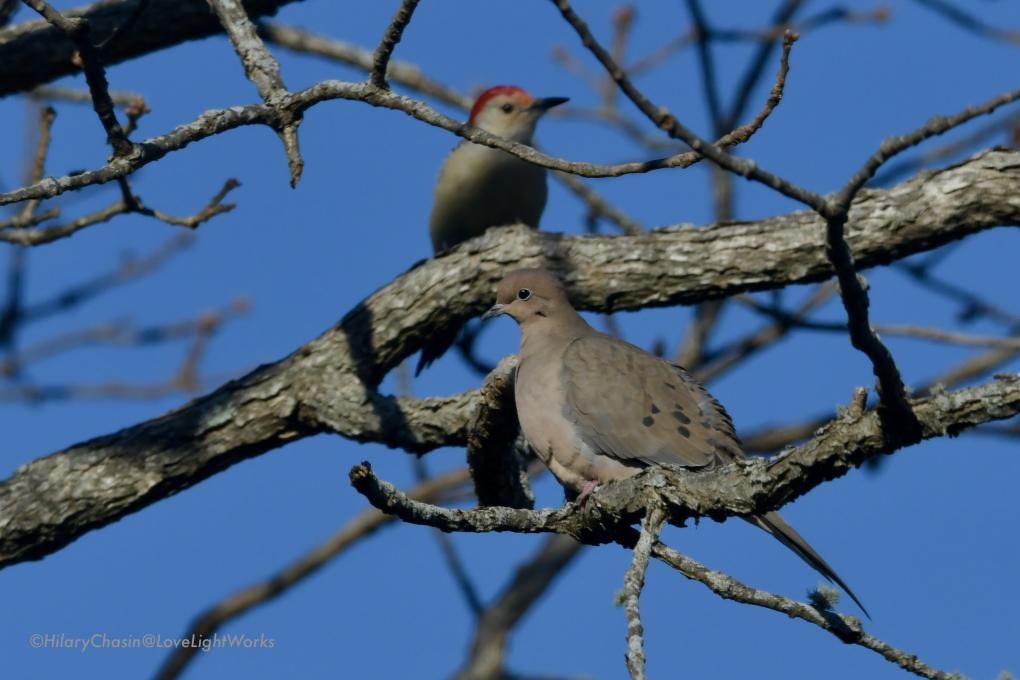 Because these two were looking in opposite directions, I chose to center them in the composition. This choice gives each bird some gazing distance within the frame.
 i
i Read More: