The Cornell Lab Bird Academy › Discussion Groups › Bird Photography with Melissa Groo › Practice Crafting Great Bird Photos
-
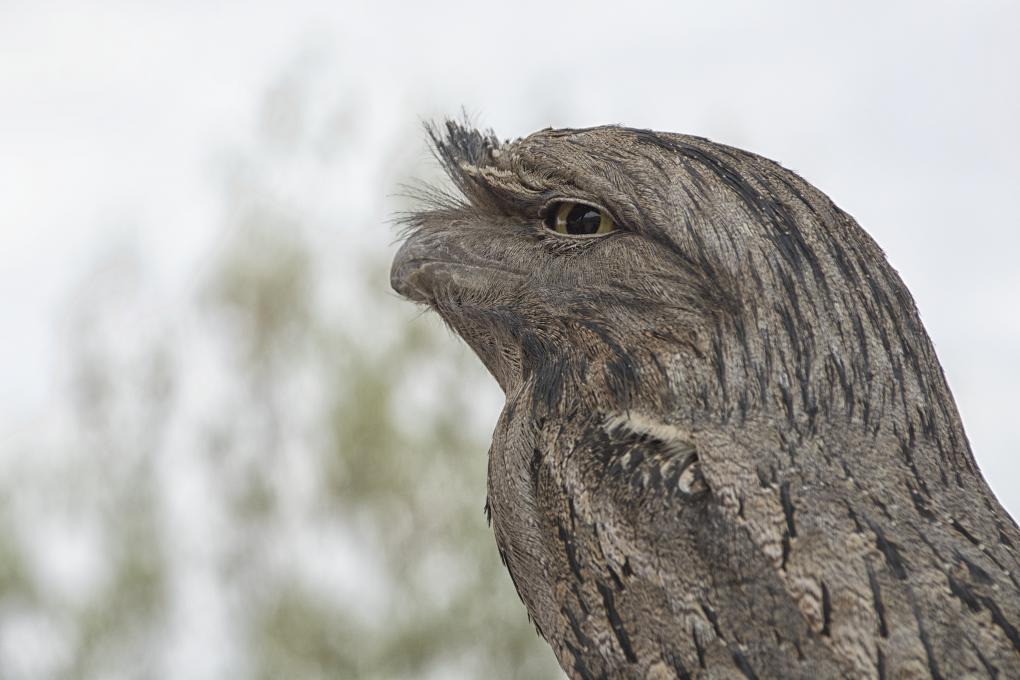
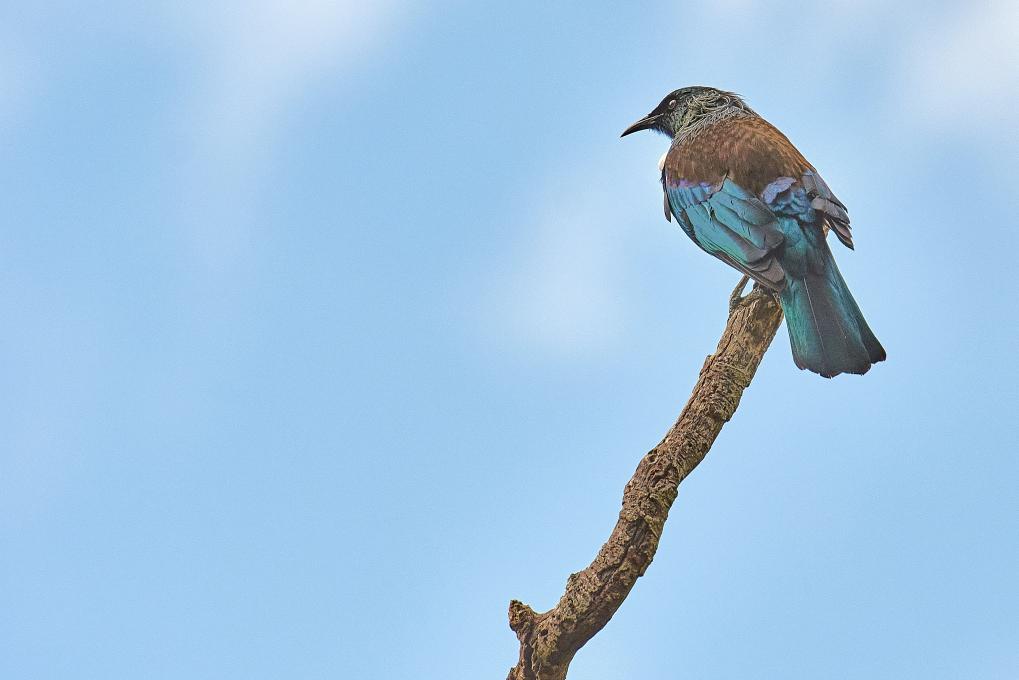
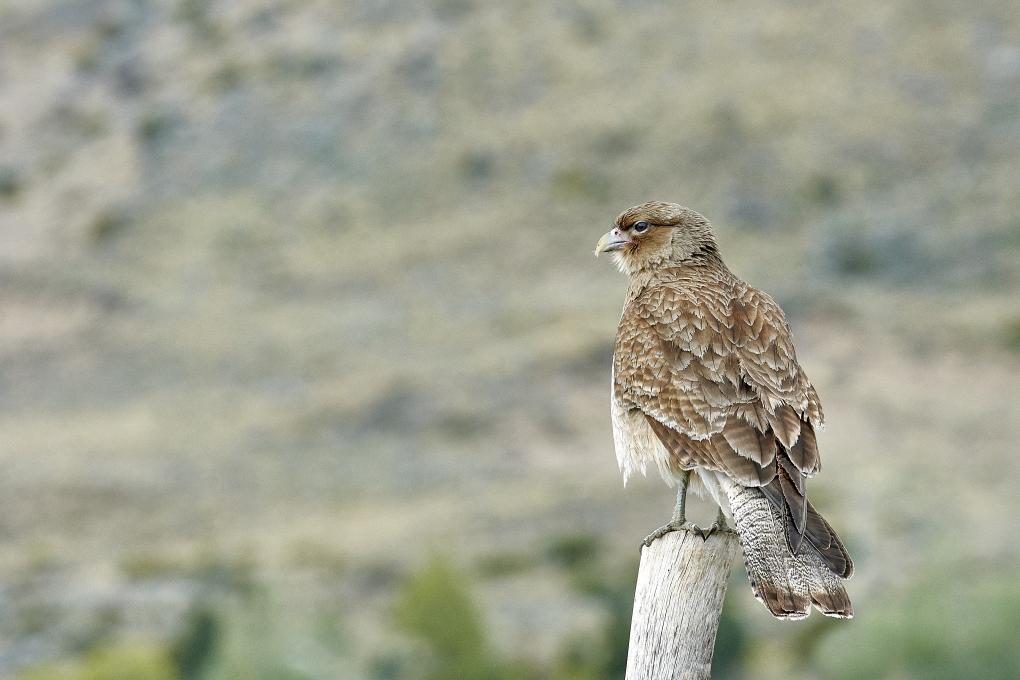
I try to follow the "rules" especially rule of thirds as I find it creates a more pleasing photo. But I am perfectly happy to break rules - sometimes it works for the particular image and sometimes, it is all one can achieve especially when shooting fast moving animals or birds. I also prefer to give my subjects more room in front to move into but if I don't have time to compose that way, I am comfortable so long as there is some room in front of the subject. My preference is to shoot at f/5.6 or larger apertures to create an out-of-focus background but again, for fast moving birds or animals I will use f/8 or f/11 to ensure the subject stays in focus. The photos, of the Frogmouth and Chimango Caracara, are all examples of nicely blurred backgrounds. The Tui illustrates a common background when shooting birds - featureless blue sky and also is an example of shooting upward in lieu of at eye level - fairly common as birds roost in high places.

-
Excellent photos! Your explanation is really interesting. I'd love to see a frogmouth, I found them fascinating as they can blend in the tree trunks. The two other birds are beautiful too.
-
@Isabelle Great photos, I like how you composed so that the Frogmouth and Chimango Caracara are looking back at the viewer. A nice style.
-
Thanks for sharing these beautiful birds and your shooting techniques.
-
I never knew of a frogmouth before today! Amazing! Great info about your photos, thanks.
-
-
Regarding crafting great bird photos in general. Making camera adjustments such as exposure compensation, ISO, aperture or shutter speed.
Please elaborate a little regarding the possibility of missing a shot while making a camera adjustment (one possibility would be to have two cameras available)and the possibility to make adjustments post production using editing software.-
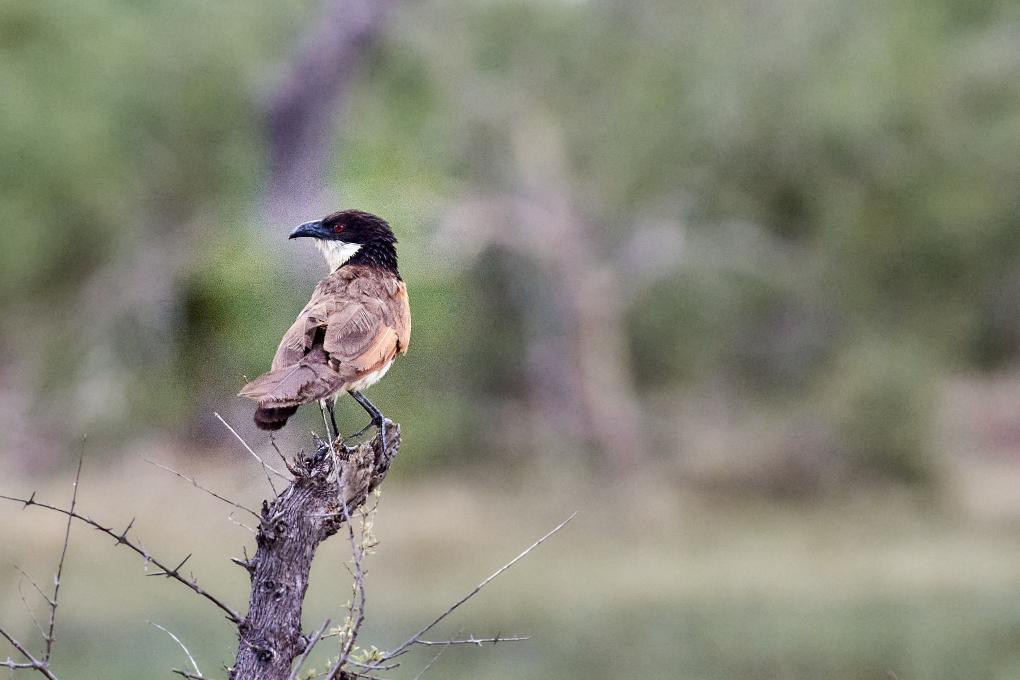
We will always miss shots. My suggestion is take the photo anyway even if you don't have your settings exactly as you would prefer. I find I learn more from what didn't work as I do from what does. Some of my favorite photos are the ones I have taken that if I overthought it I would never have pressed the shutter - shutter speed too slow, wrong zoom, ISO too high or low, etc. Here's an example of a Coppery Tailed Coucal where I pushed my camera and my ability to handhold; the background is too noisy for my liking, but overall, the image works. ISO 6400, f/5, 1/250 s, 280 mm. I also broke the "rule" which says to have more space in front of the bird than behind it. Sometimes, there is no time to compose.
-
@Fred Nice shot! I don't mind the background being a bit noisy — it sort of adds a certain arty texture. Yes I agree about the possibility of missing a shot while making exposure adjustments! I've got into a panic on numerous occasions trying to quickly change settings to accomodate a different bird or lighting situation. Those precious seconds. Microseconds!
-
Read More: