The Cornell Lab Bird Academy › Discussion Groups › Bird Photography with Melissa Groo › Practice Gaining an Audience with Birds
-
Bird AcademyBird AcademyDid you try a sit spot, approach birds in a respectful way, or simply observe birds from your home? Were you able to gain an audience with birds? Share what you discovered below.You must be enrolled in the course to reply to this topic.
-
It is summer in New England and the birds around the backyard are numerous. I often sit on my deck with a cup of coffee or ice tea and watch the shenanigans. 2 things I observed recently.
1.Recently I noticed a lone bird sitting on the crook of the bird feeder in early evening. The other birds (chickadees, gold finches and house finches) were flitting around but this bird stayed still. Then a male Baltimore Oriole flew down to the feeder and landed on the side closest to that crook. He then proceeded to take seeds out of the feeder and pass them to the bird that had been sitting on the crook. I did some research and found this is a common attribute of the raising of young Baltimore orioles. The fledgling is stationed somewhere and the male will bring it food. This has not reoccurred. Since the period for this to happen might be brief I might not see it agin this year.
2. Most of the birds scatter when I walk close to the feeder. The woodpeckers, cardinals and blue jays fly away but it seems that many of the finches hop over to a couple large bushes behind the feeder and the chickadees hop over to the trunk of a large oak. There they sit head down the trunk and wait for me to get far enough away for them to return to the feeder tray. -
This sit spot is in a public area where the birds are generally comfortable with people but still requires distance and time to let the birds settle in to get good shots. Manual mode, ISO 250, f/7.6, SS 1/640. Nikkor 100-400mm lens with 1.4 TC.

-
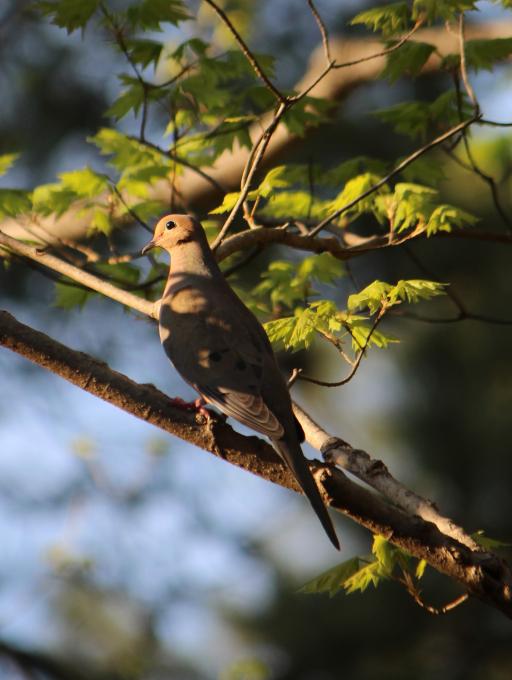
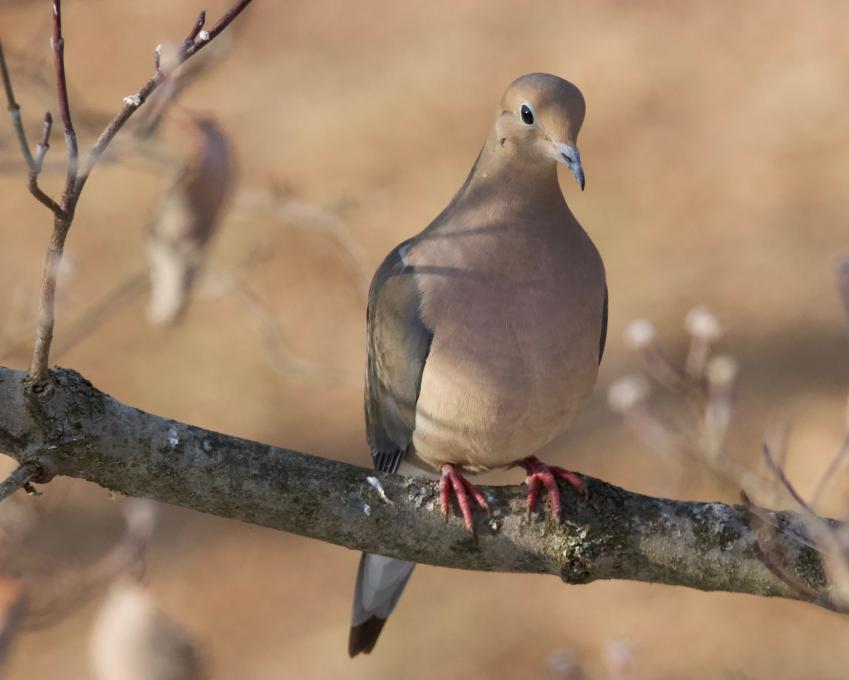
I observed birds in my backyard this evening. I stayed still on my porch, but the birds still did notice me. I may try some of the blind tips next time. This Mourning Dove was aware of me but stayed in place for awhile, long enough for me to experiment with settings. I appreciated the opportunity to test things out during the "photoshoot"! For instance, I used Manual mode and rotated my camera to portrait orientation for the first time. This was my favorite shot. -
Melissa, I followed your lead and threw my window open (the least necessary amount) in February - raised during the Energy Crisis of the 1970s, this did not come easily! Though, as it WAS 50 degrees outside, it was a LITTLE easier than if it’d been 30. And after the birds started returning, I didn’t think about it at all. :)
I did this to observe the birds and where they perch before and after heading to the feeder, however, this lesson choice seemed to also combine with the thirty minute Sit Spot lesson, because the birds decided that my sticking a telephoto camera lens out the second floor window was highly suspect. They all abruptly left and did not really return for..yep..the better part of 30 minutes.
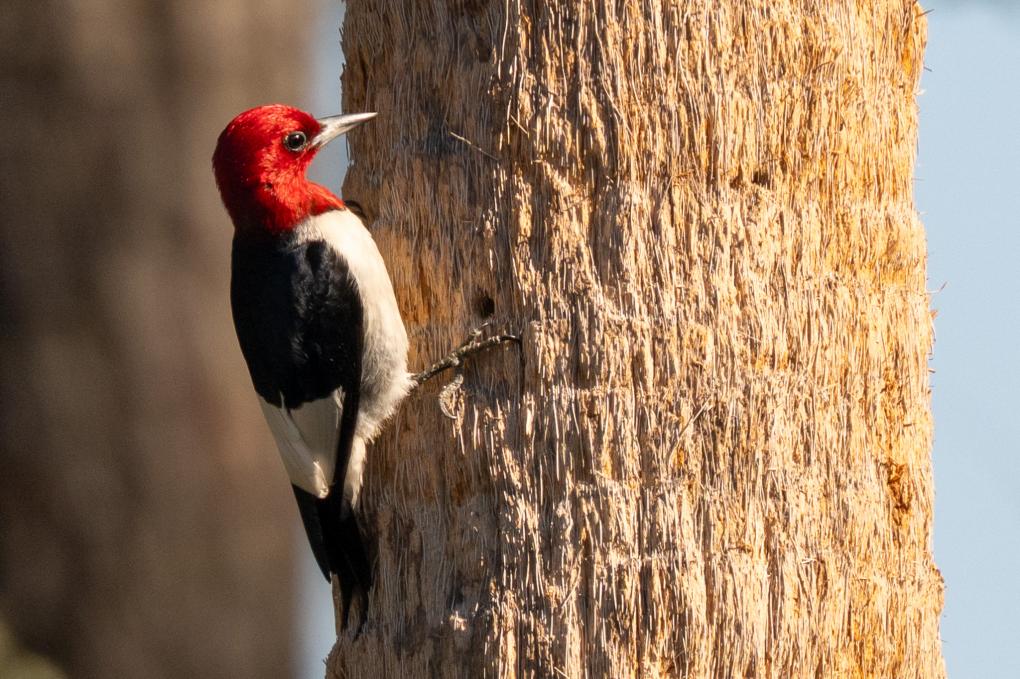
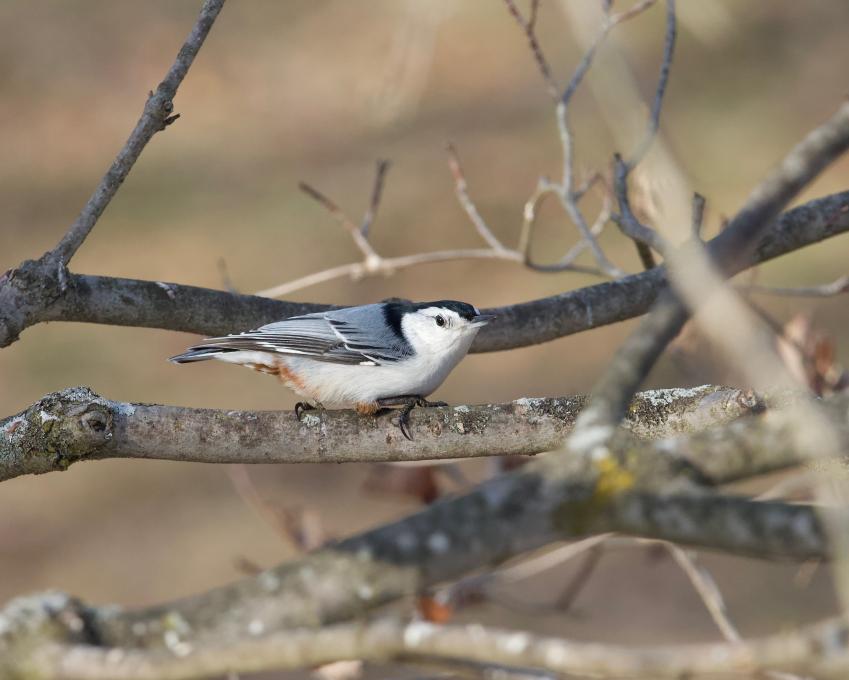
When they did start to trickle back, I noticed they kept a wary eye on me, but it was worth the wait. White and Red Breasted Nuthatches, Downy and Hairy Woodpeckers, Juncos, Goldfinches, Black Capped Chickadees, Tufted Titmouse, and a Red Breasted Woodpecker, all hungry and cautious, darted in and about. The only one who seemed to calmly observe me back with genuine curiosity was a beautiful Mourning Dove.
My patience was rewarded, as well as my planning where to set and point my lens. I lost many possible shots until I figured out each birds favorite ‘feeder area’ entry direction, favorite branches, and where they lingered (if at all) after getting some food. I’ll upload the wary nuthatch and woodpecker photos alongside the lovely dove photo—I really like how it seems to show her curiosity. -
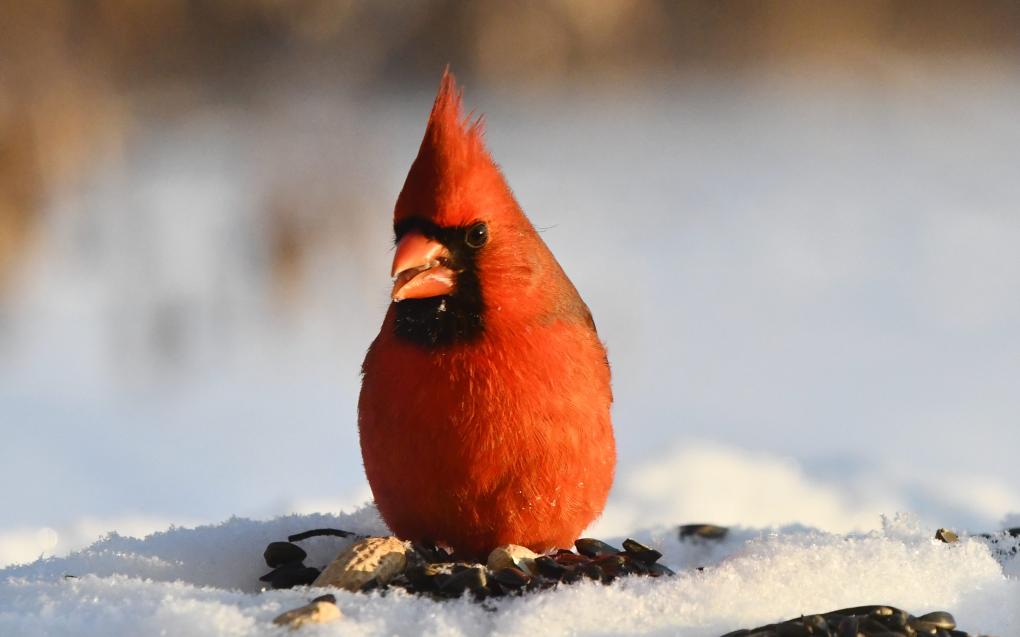
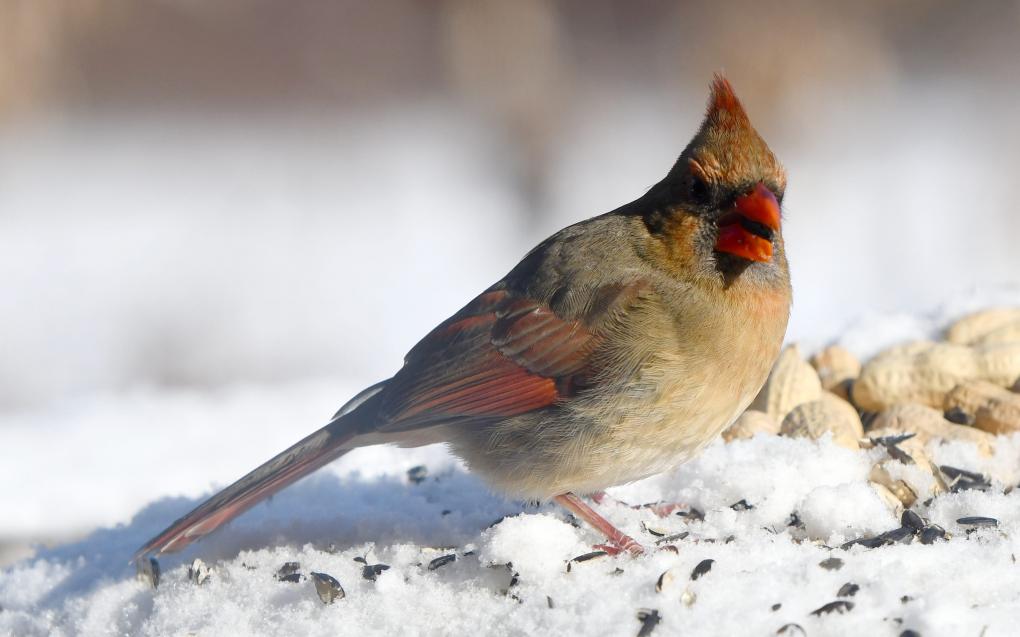
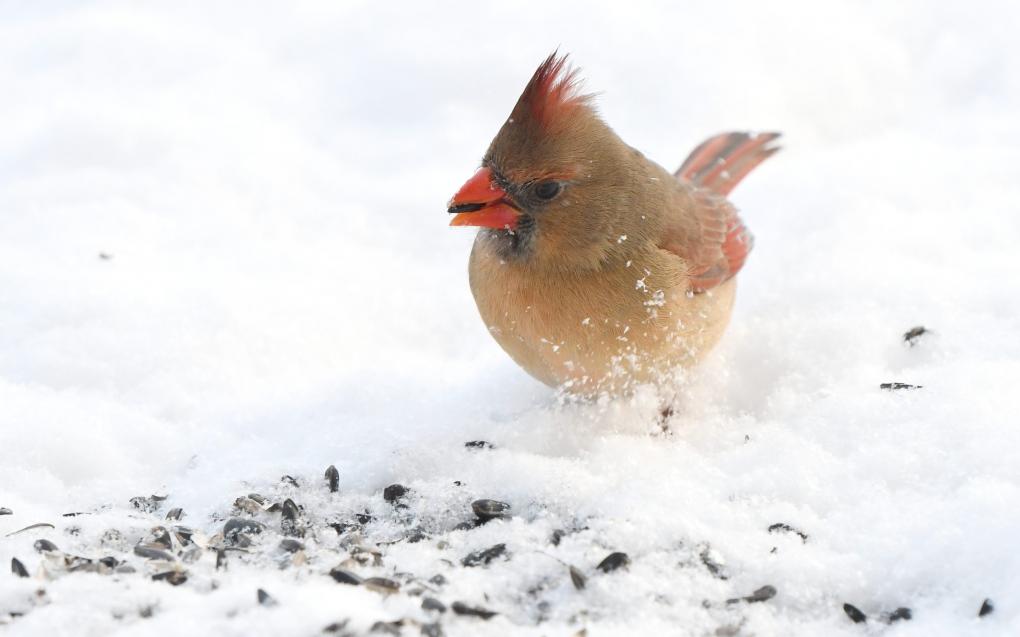
I am feeding the birds outside my kitchen door during this extra snowy, cold winter. I am leaving my camera pointed at one spot and set to video so I can see how they react and where they tend to land. Some birds will not land at the spot my camera is pointed. I am still shooting from behind the kitchen sliding door so they do not get scared. Many of those stills and video are good enough for my art and YouTube channel. Thank you for showing us that you shoot from your car! That is how I get some of my best photos and it helps to know how it works for you, too!
I took these photos from inside the kitchen. I am working on observing and capturing markings to identify individual birds (especially which cardinals are the ones that nest here.)
-
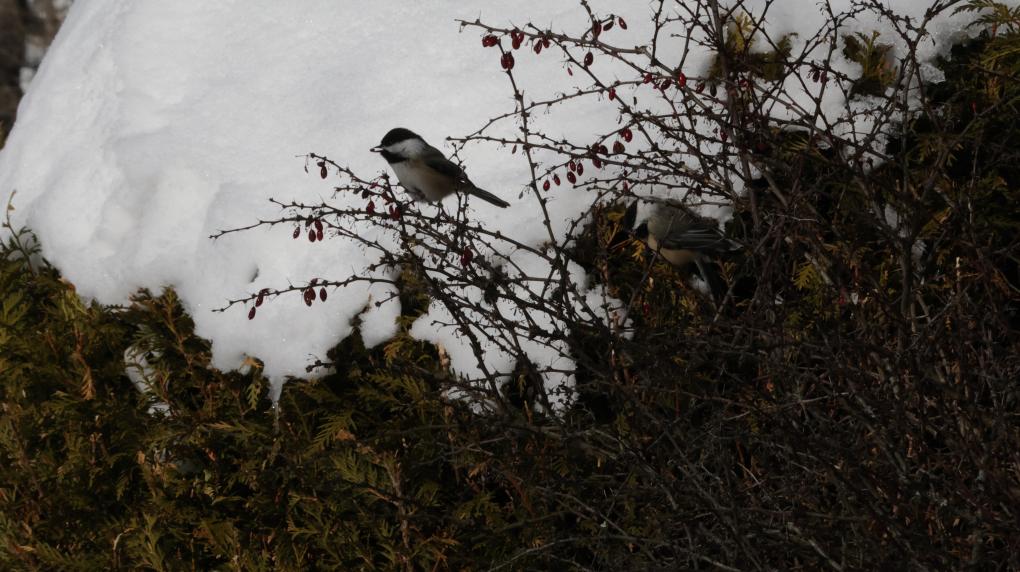
This winter in the Northeast has been brutally cold. Practicing exposure settings has been done often from my own yard where warmth and shelter are close. Sometimes even using the house as a blind and photographing out my windows. Recently I have been taking advantage of the social and caviler Chickadees. I have a burgundy barberry bush that they frequent and got some decent practice shots of them foraging. I have always enjoyed my 'yard-birds' but having my camera and paying attention to the birds, the backgrounds, and opportunity for a good shot I have 'seen' so much more. Any thoug
-
Very cute! Glad you are enjoying your birds even more than before! My chickadees are very shy. Congratulations on catching the cavalier chickadees! With the snow and/or to get detail in dark feathers, I have been push the exposure +1, sometimes even more. It depends what look you want. Enjoy experimenting, playing and thank you for sharing!
-
-
-
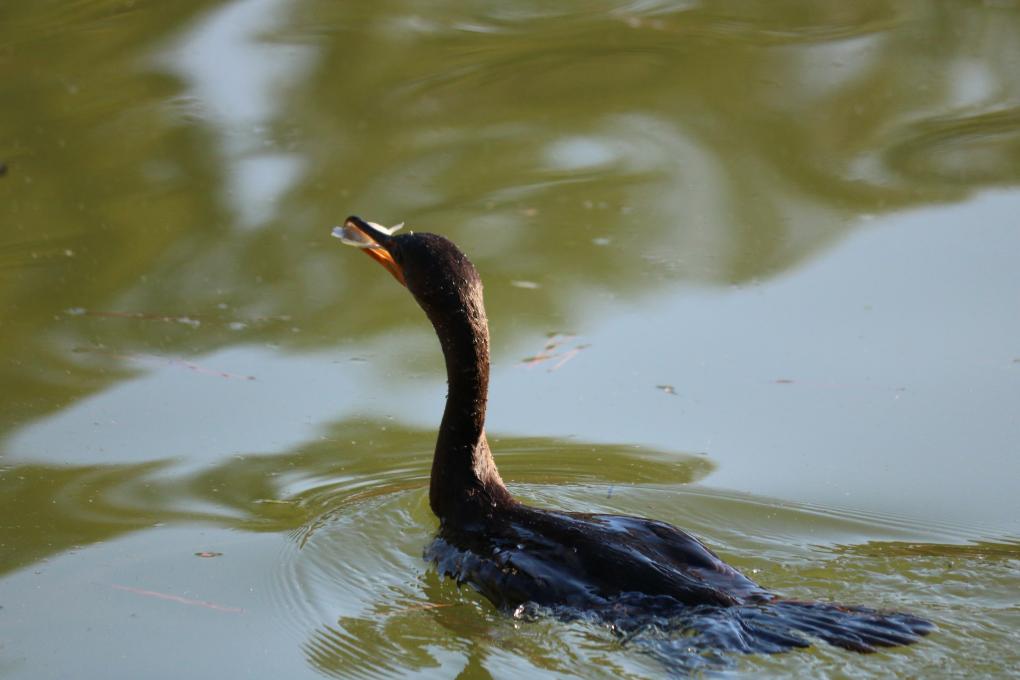
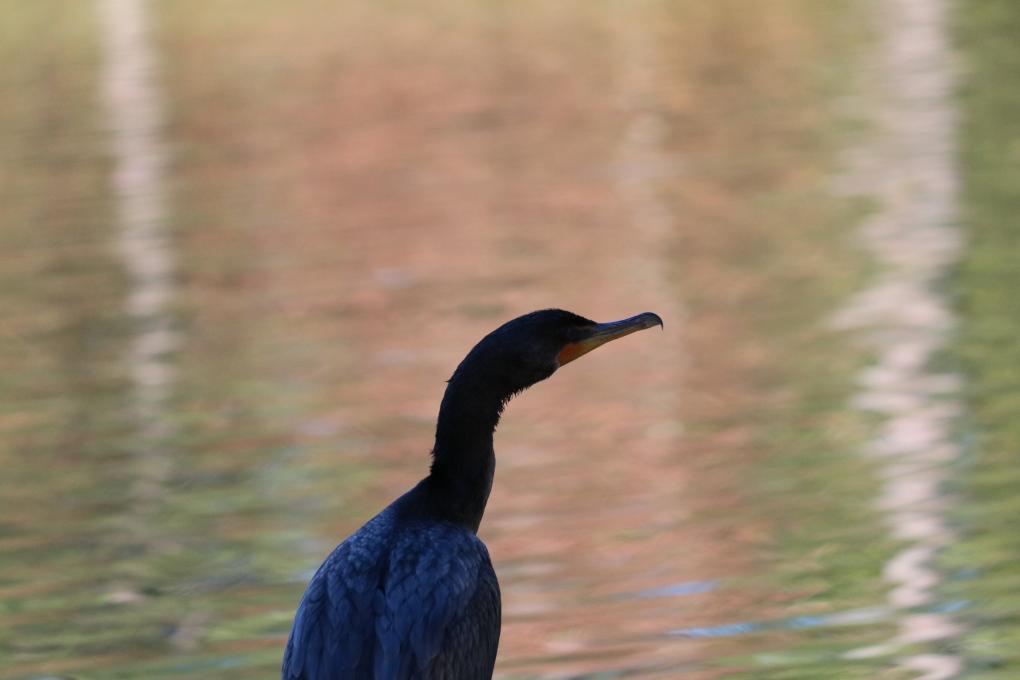
we were overjoyed when a niotropic cormorant showed up here in Cartersville Georgia at a local pond a pair actualy
-
@Claire Wow! I especially like the silhouette against the colors in the water.
-
-
-
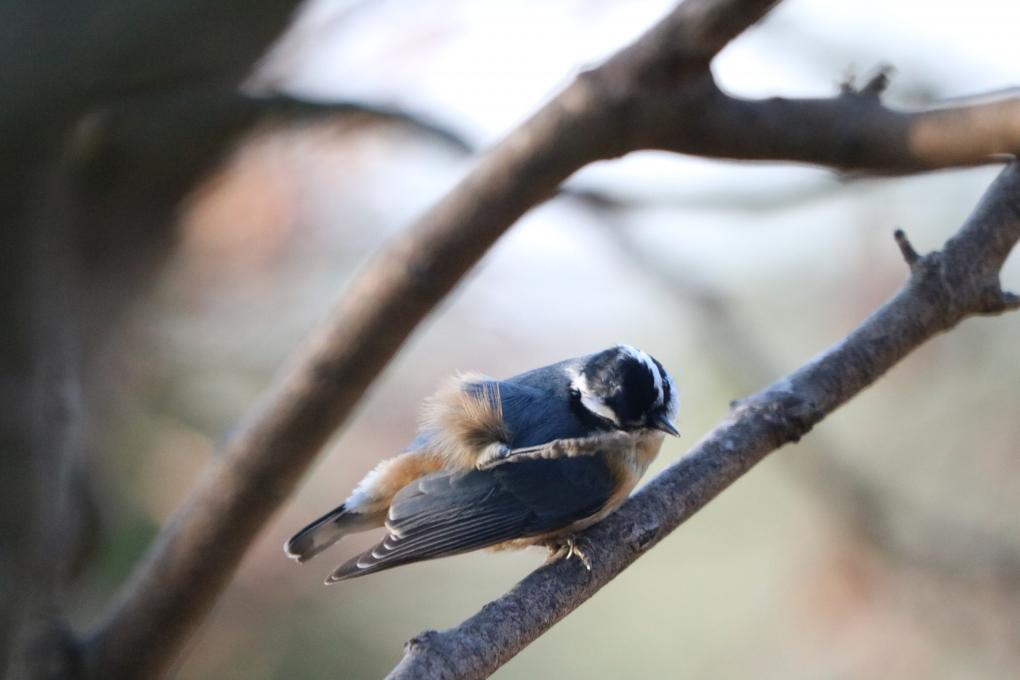
we live in Georgia and a little red breasted nuthatch started showing up at my feeder i was happy to catch him scratching his head these nuthatches are rarer around here so i was overjoyed of seeing and capturing him
-
@Claire soooooo cute!
-
-
I responded to Anthony with his photos of birds in Seattle. I thought I should add my comments to everyone. I have limited funds for long focal length lenses, but I just received a 300mm as a present. I am sure this will help me. I liked Melissa's comment in the video about taking bird photos in their natural habitat.
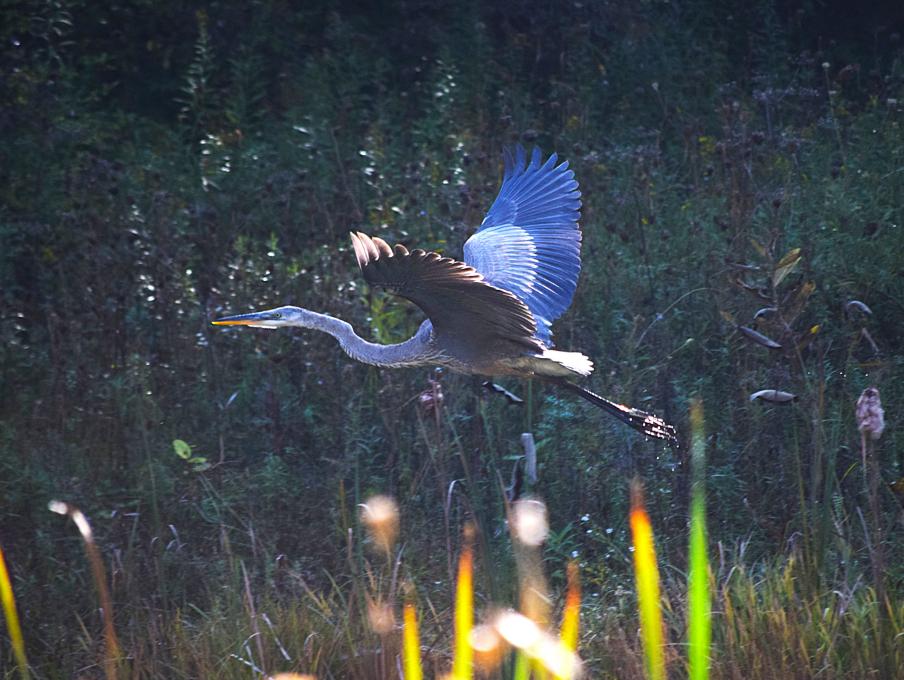
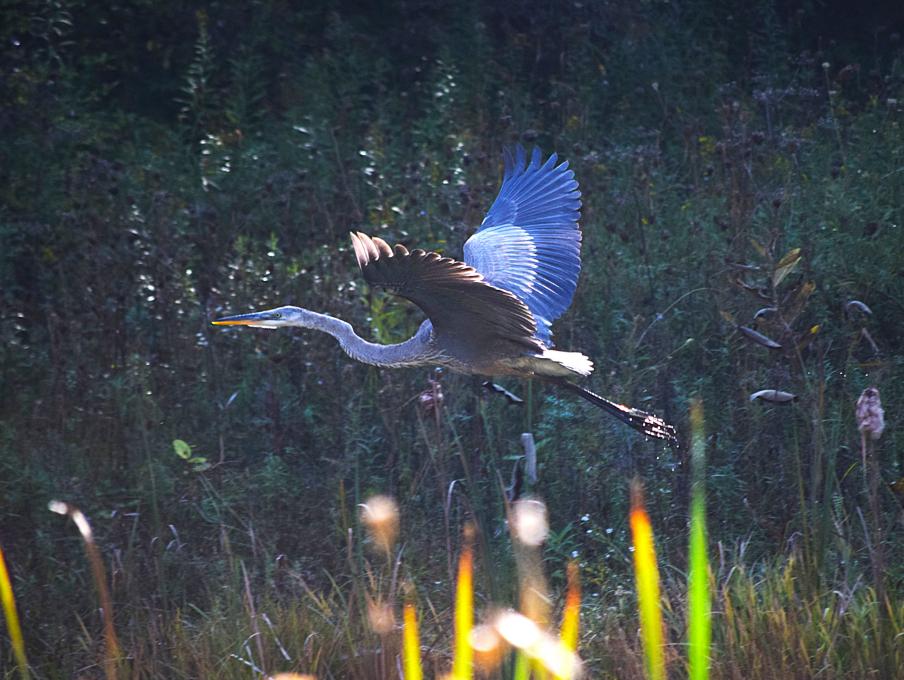
To Anthony I wrote...Magnificent photo of the heron! From the photo it looks like a great blue heron. I live on an old farm with a huge spring fed pond which has never gone dry in my 45+ years living here. Great Blues visit my pond to fish - stocked with gold fish that procreate by the thousands. Mine are elusive and skiddish and always seem to appear when I am least prepared. I do sneak up on them and wait. That is when I am ready to take photos in flight.
This is not so easy with only a 200mm zoom lens, but my patience, after 5 years, has treated me with this photo, where the heron is flying out of my pond with the water still dripping from its feet. I have several other shots of it flying into the trees, but this is the clearest.-
Congratulations! I love the lighting and your dripping description. Kudos on your great blue heron photo and well stocked feeding station!
-
-
As mentioned a week earlier, don't be afraid to talk to people. By pure chance, I came across a lovely lady who told me about a pair of Boobook Owls in 1 of her trees. That chance meeting and conversation has now given me access to these beautiful birds on a regular basis. The birds seem pretty chill, but I am always careful to avoid eye contact where possible. I get in, take a few shots and then slowly back away and leave. It's important to stay quiet too. The last thing I want to do is spook these beautiful owls. Here's 2 shots that I'm happy with:
-
Wow! I love the detail on that second shot, it looks like those eyes are looking right at me.
-
@Kiersten That was the idea! This image was shot at 1/500, f8 and ISO 4000. Why ISO 4000? The bird was deep in the shadows of the tree, with little available light. I couldn't open up the aperture any more (f8 was my limit due to the lens used). I didn't want to go slower than 1/500 as if the bird moves, that creates motion blur. Also, to avoid camera shake. I was using my RF200-800mm zoom lens, with it set to 600mm focal length. I wanted to try and get as close to the focal length used in my shutter speed to avoid camera shake.
I was using my R10, which is an APS-C camera (smaller sensor size; thus, smaller pixels). This means it was going to be noisier than my usual R3. Both cameras are 24mp, but the R3 is full frame (larger digital sensor dimensions of 36*24mm) and the R10 is a crop camera (aka APS-C) (smaller digital sensor dimensions of 22.3mm*14.9mm).
In post processing, I corrected the exposure (I got it wrong by around half a stop underexposed in the field). I then applied digital NR using DXO Pure RAW (v2 in my case, they're up to v5). I then proceeded to edit the image to make it look the best . In this case, I increased not only the exposure of the bird, but the shadow details too. I then selected the eyes and used an old trick - bump the Whites up and highlights. Gives a nice "glow" to the subjects eyes.
The image isn't perfect. You typically want the subject front lit, not in shade, or backlit (Sun behind the subject). Remember, light is the key - you want as much light hitting that digital sensor as possible. Shade and backlit (subject will be in shade) aren't the best shooting situations. Sometimes you can't avoid it, so as a wildlife photographer, you need to go with the flow and shoot accordingly to the conditions that nature presents you with.
Also remember that like with humans, the eyes are the focus point. Humans tend to look at another persons eyes in order to maintain contact. The same happens when we look at animals. So getting the eyes sharp, and well exposed is a good thing. -
@David So true, so true. Love your story and your owl photos. Those eyes...
-
@MyDailyNature Many thanks!
-
-
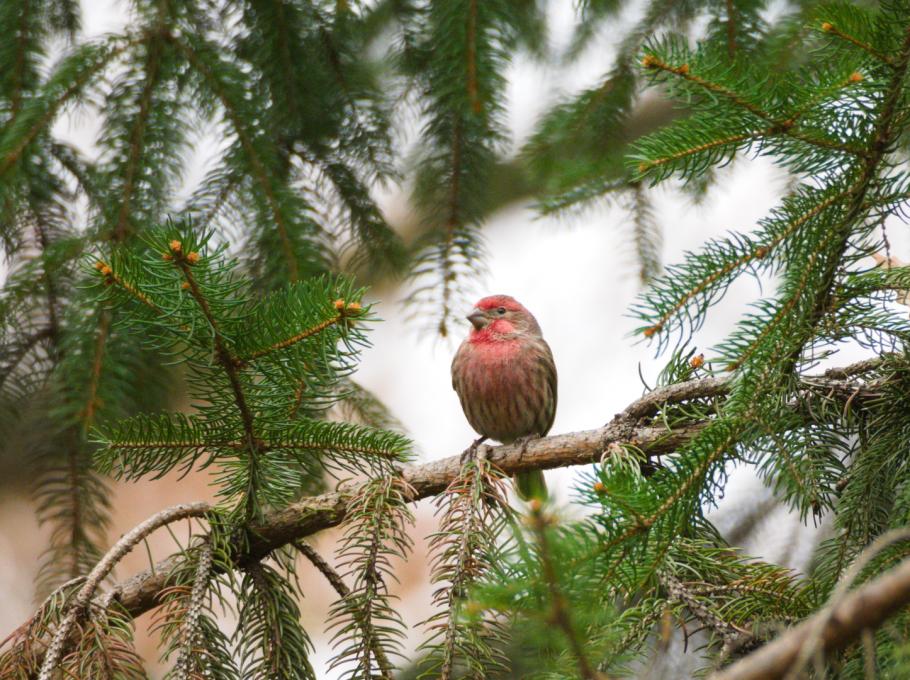
I've been watching my birdfeeder on my back porch for the last week, and finally got a shot that I liked. I focused on a perch behind my birdfeeder that the House Finches enjoyed!
-
Nice!
-
Congratulations! Nice composition.
-
-
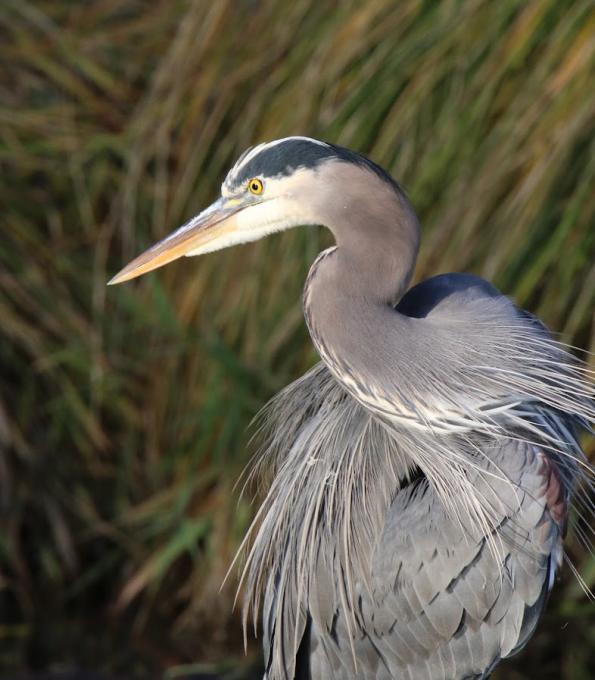
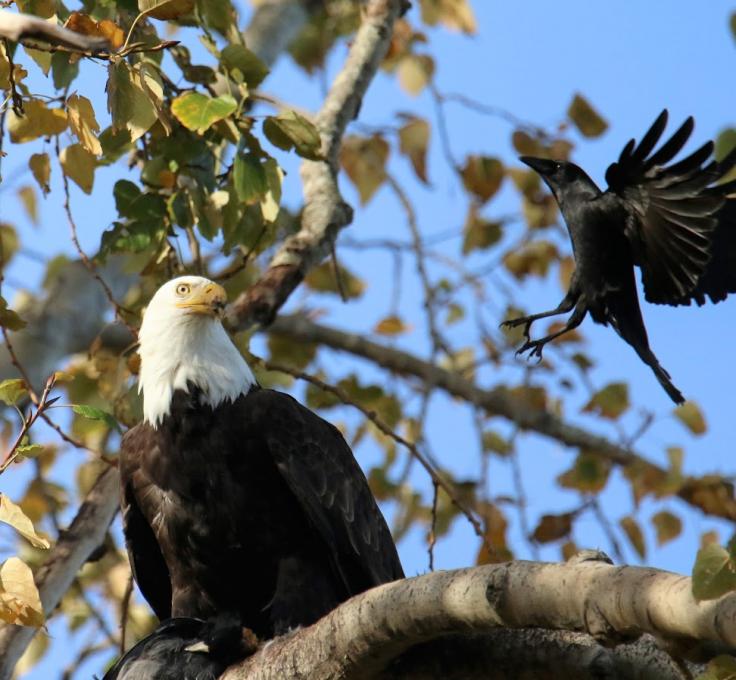
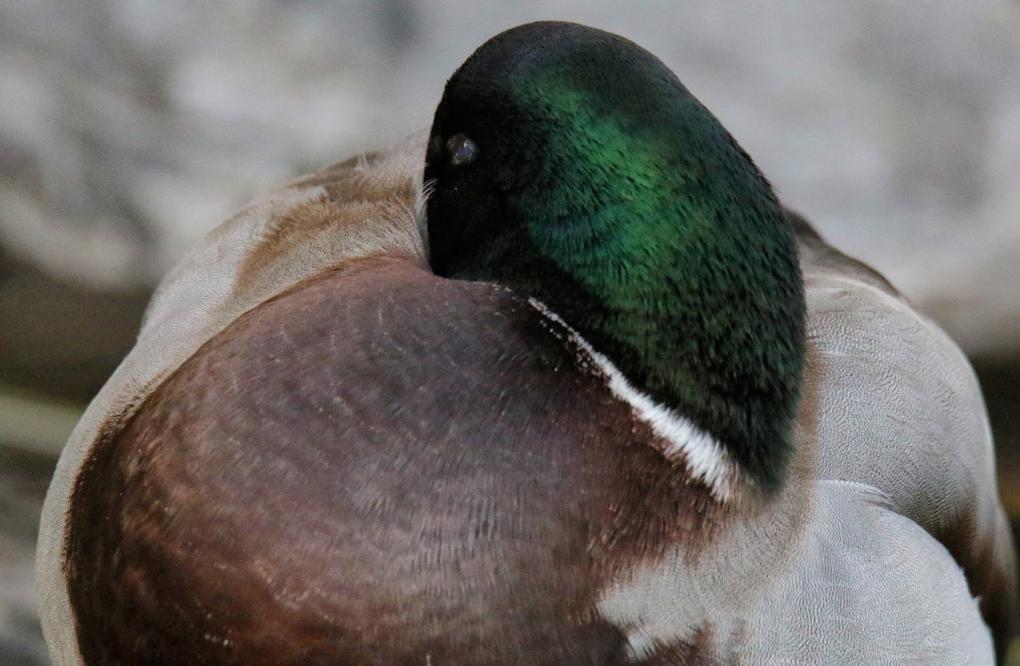
This course has me energized to get out into nature and get closer to the birds, but there were a lot of time conflicts this week. Instead of choosing a quiet place, I cheated a bit and picked one where the birds are used to people and easier to approach — a lakeshore near Husky Stadium here in Seattle. Not only are the mallard ducks incredibly oblivious to humans walking around on the docks, but herons and even the resident bald eagles are completely used to humans and just seem to go about their business with humans nearby. My timing was incredible, as an eagle flew into a cottonwood tree right in front of me with a coot in its talons and proceeded to remove all the feathers and eat it! Amazing! The great blue heron near the dock allowed me some great photos, as well--my best of this species. I will still work to do some quiet time this week if the weather and my schedule allow, but it was also great to remember that fine bird photos are available in less quiet places, too, as birds have adapted to the presence of humans in some wild spaces.
-
Well done Anthony! Finding a local place with wild birds that have adapted to humans is a great way to practice. You can work on your skills without being too afraid of spooking the birds and gain confidence in the field. Excellent work!
Cheers,
Dave -
@David Thanks so much, Dave! I would welcome a chance to see your other bird photos, regardless of perfection--I am fascinated by the species and behavior as much as the perfection of the photos, and your enthusiasm is infectious. If you feel like sharing directly, you can reach me at tony.joe@comcast.net, or WhatsApp, or by Cell at (US number) (206) 321-5627.
-
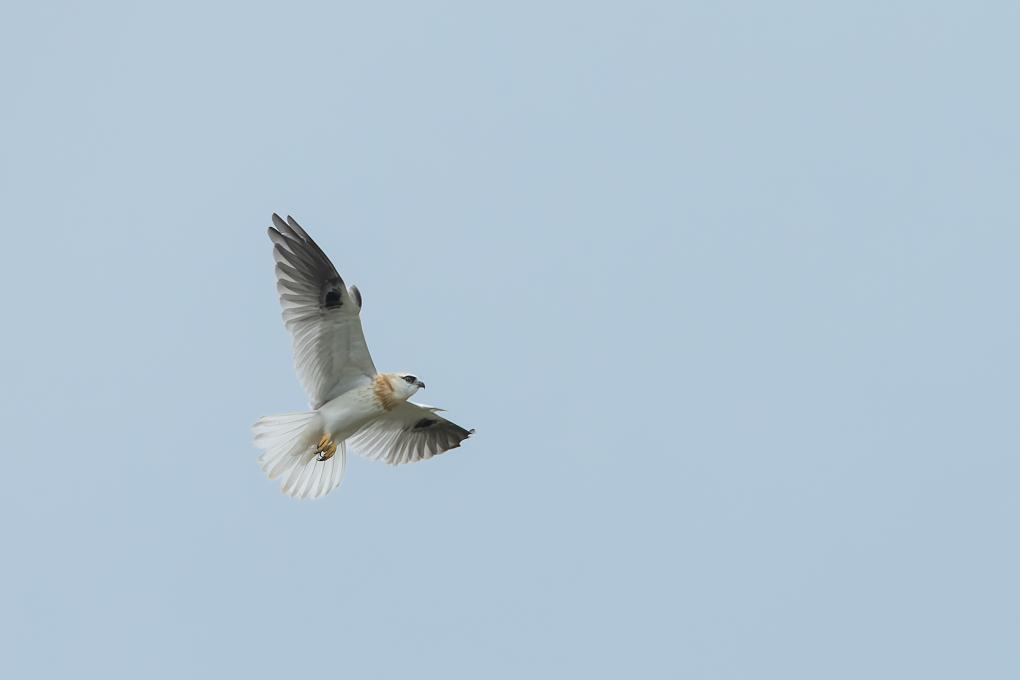
@Anthony A recent image from Sunday - Black Shouldered Kite (juvenile) in flight. I had just bought Jan Wegener's R3 configuration PDF setup guide and made some changes and was keen to get out into the field to test the changes. Pretty happy so far!
Birds in flight take a lot of practice. You can do it, you just have to practice a lot to get better. I'm still learning and not the best, but happy within myself at my improvements over the past near 4 years in the hobby.
I will pop you an email shortly.
Cheers,
Dave -
Magnificent photo of the heron! From the photo it looks like a great blue heron. I live on an old farm with a huge spring fed pond which has never gone dry in my 45+ years living here. Great Blues visit my pond to fish - stocked with gold fish that procreate by the thousands. Mine are elusive and skiddish and always seem to appear when I am least prepared. I do sneak up on them and wait. That is when I am ready to take photos in flight.
This is not so easy with only a 200mm zoom lens, but my patience, after 5 years, has treated me with this photo, where the heron is flying out of my pond with the water still dripping from its feet. I have several other shots of it flying into the trees, but this is the clearest. -
WOW! Beautiful composition on the great blue heron. Congratulations on and to the eagle!! Love the (crow?) mobbing the laid back eagle. And you aren't kidding about the indifferent mallard. Up close indeed. Thank you for sharing! Are these all hand held?
-
-
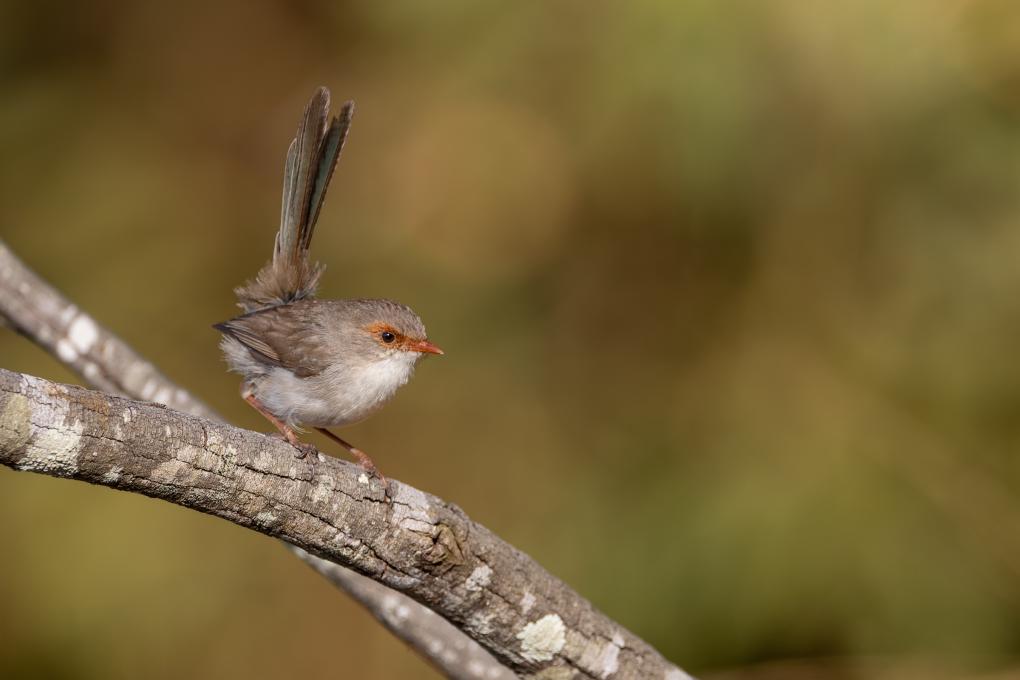
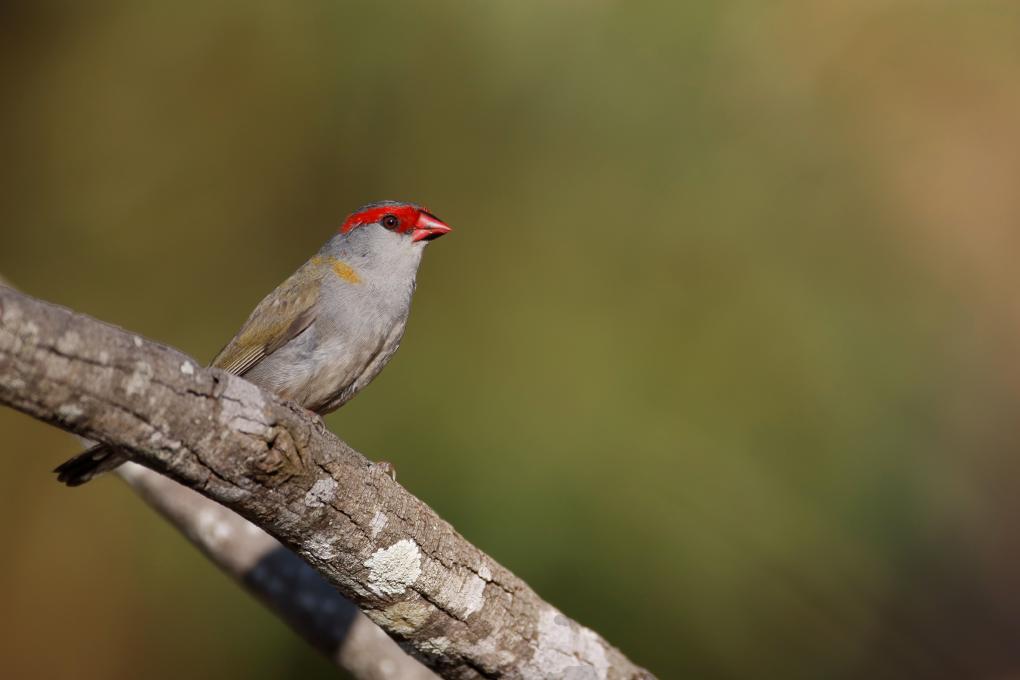
Here's the Red-browed Finch shot. And a female Superb Fairywren (not to be confused with American and European Wrens - our Fairywrens are not true Wrens, but rather grassbirds, and members of the Maluridae family). This was a bonus image and I was delighted. All of this due to spotting the birds, carefully approaching them, and then kneeling down and patiently waiting for them to return.
-
Spectacular captures! Birds we only read about here in the states--how amazing you have them right in front of you to sneak up on!
-
@Anthony Many thanks Anthony! I had a monster day yesterday - I spotted at a local location, no more than a 10-15 minute drive from my home:
5x Whistling Kites (medium sized raptors)
2x Brown Falcons (pair)
3x Black-Shouldered Kites (smaller raptors) - 2 juveniles and an adult at slightly different locations in the area
2x (pair) Boobook Owls (our smallest Owl, very cute!)
1x Brown Goshawk, slinking away in a tree. Sadly, not super close to me and not a great image, but it's always nice to see One of them as they are 1 of our more uncommon raptors.
All of these are wild birds, and not used to humans though, so getting close is a lot harder. I didn't grab any great shots that I'm 100% happy with. But that's nature photography for you. At the end of the day, I had a smile on my face bigger than the Sydney Harbour Bridge LOL!
Cheers,
Dave -
@Anthony Oh, and a local farmer has claimed that there are Wedge-Tailed Eagles in the area too (and kindly gave me directions). Never pass on an opportunity to chat to others, especially rural folk - they are typically much friendly and helpful than their city counterparts. I didn't see any Wedge-Tailed Eagles, but they have apparently been in the area for 40 odd years. These are as large as your American Bald Eagle btw, although their hunting skills are more broad, including taking down fully grown adult male Red Kangaroos (these guys can stand between 6' and just under 7' tall, weighing between 55kg and 90kg [120-200lbs]). There is a reason why they are our Apex raptor species.
Whilst walking back from the pair of Brown Falcons, I befriended a local and after 5 minutes of talking to her she tells me she has a pair of Boobook Owls in 1 of her trees and they are there nearly every day! She was kind enough to show me and let me take a few images and I am welcome to return whenever I like. Nice!
Cheers,
Dave
-
-
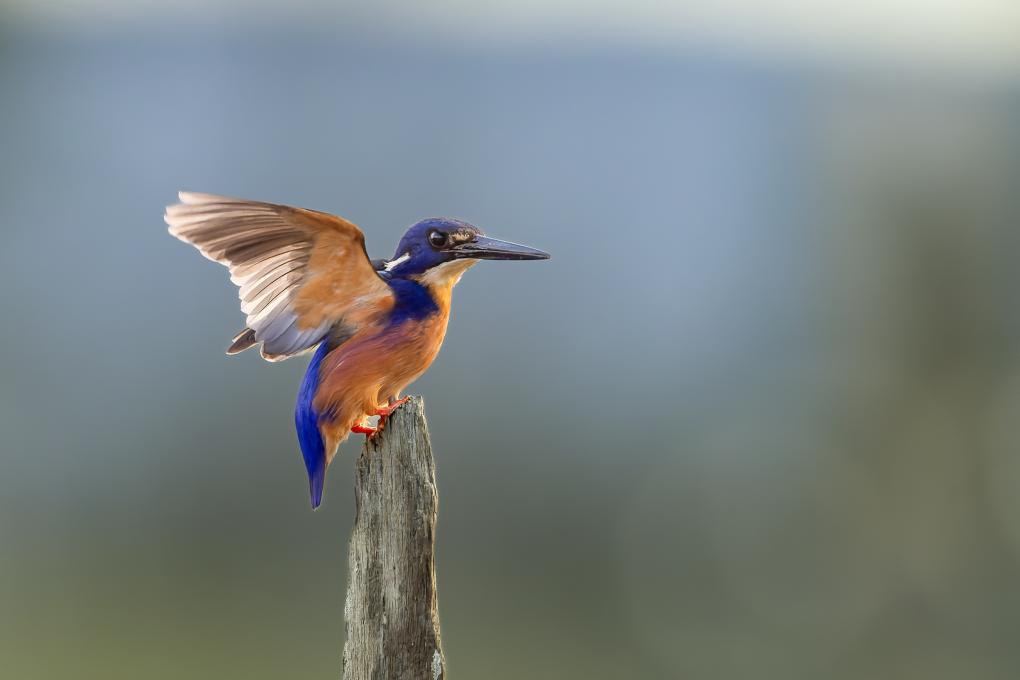
I chose a sit spot at a new location that I was scouting and by luck, saw my bogey bird at the time, an Azure Kingfisher land on a perch stump in the water. It was near dusk and backlit, but I managed this shot and was pretty happy with it. I was handholding, which wasn't ideal, and whilst sitting, I had no camouflage etc. I did return to the same location a few weeks later early morning, so that if the bird returned it would be front lit, with a foldable seat, monopod and camouflage, but alas it did not return. I have not had a chance to return to this location again at this point of time.
Sometimes, I just like to sit and observe birds and their behaviour. You can learn an awful lot just by watching birds. Birds will quite often return to the same perch too. I remember seeing some Red-browed finches and approached slowly and low to the ground. They were coming and going, landing and taken off from a fallen small tree that was lying on the ground. As I got to close enough, they flew off. So, I waited a few minutes and they returned and I was able to get a very nice image, One that I was very happy with and is a personal favourite.
-
I did a short hike at Arden Point, overlooking the Hudson River. My wife and I didn't do a 30-minute sit, but we did practice slowing down and being still, letting birds resume their normal activities despite our presence. We saw a number of birds, including downy woodpeckers, cardinals, white-breasted nuthatches, a Carolina wren, a tufted titmouse, and more. We ended up seeing the most activity in a tree right near the parking lot when we got to the end of our hike - we could have just stayed there in the first place!
-
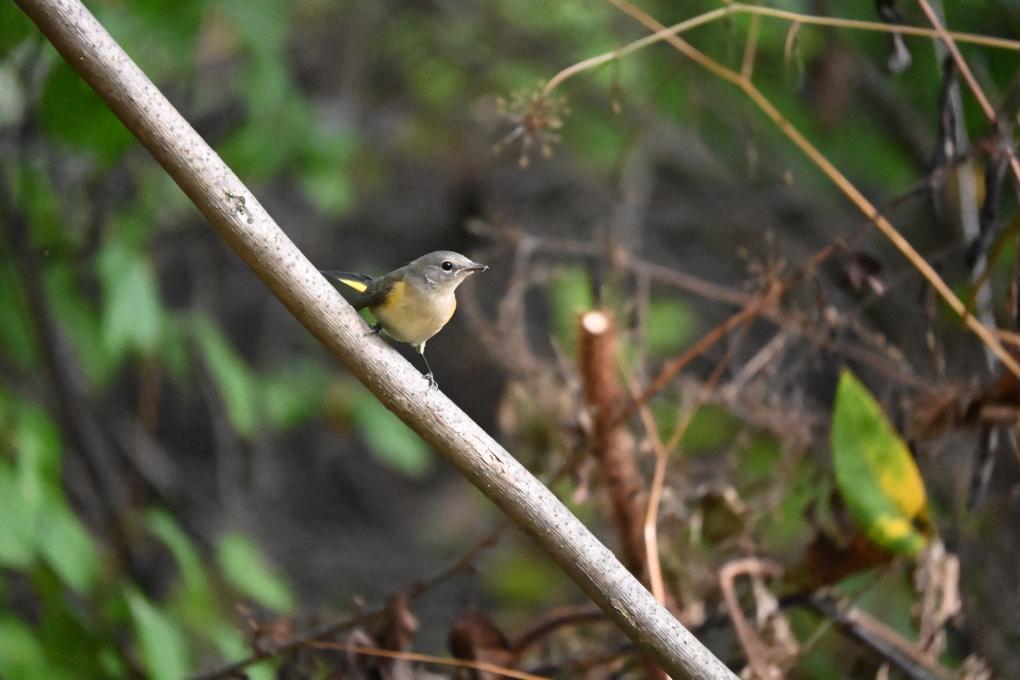
I saw a female American redstart at the bird bath on my deck, so I went in search of her and hopefully a male. I have a small wooded area on my property -- about 1/4 acre -- and I discovered in that small area, particularly in one tree, several species of migrating warblers. They seemed unafraid of me and not at all bothered by the traffic on the adjacent road. I stood quietly, sometimes moving parallel to the trees, and snapped a few shots of black-and-white warblers, black-throated green warblers, and black-throated blue warblers. Just as I was about to go back into the house, this female redstart popped out for a moment on a branch. While I never saw the male, I'm delighted that this one posed for me.
-
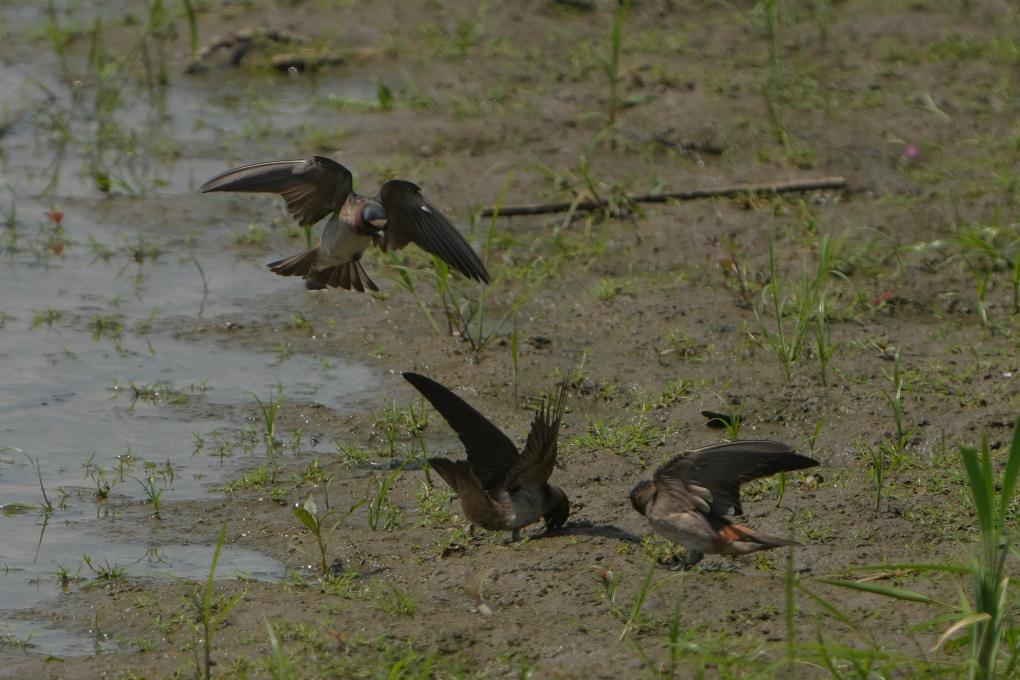
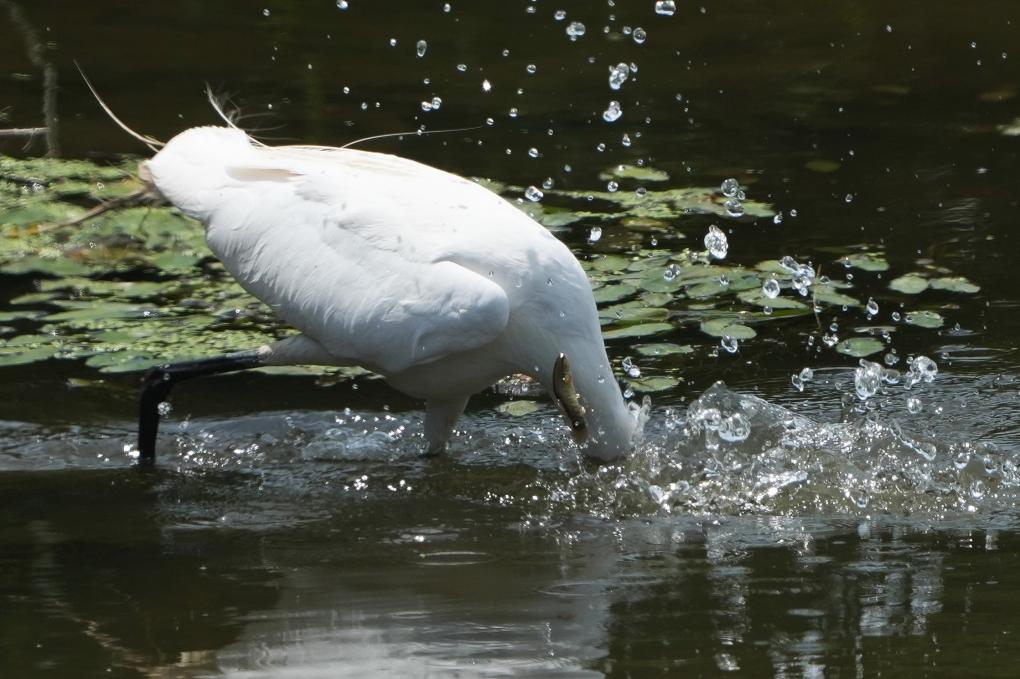
I chose a sit spot on the river near a bridge where cliff swallows were flying under and emerging from the bridge. After some time, they seemed oblivious to me and would occasionally land on a nearby mudflat. A great egret was fishing down river and worked it's way closer. It looked like it had something in it's sites, so I got my camera ready just as it plunged it's head under the water. Upon reviewing the picture, I saw that the fish was quicker than the egret.
-
I chose a sit spot at a nearby national wildlife refuge. I used my car as a blind and waited until a Great Egret started feeding. I am learning to be more patient and to wait for action to occur.
-
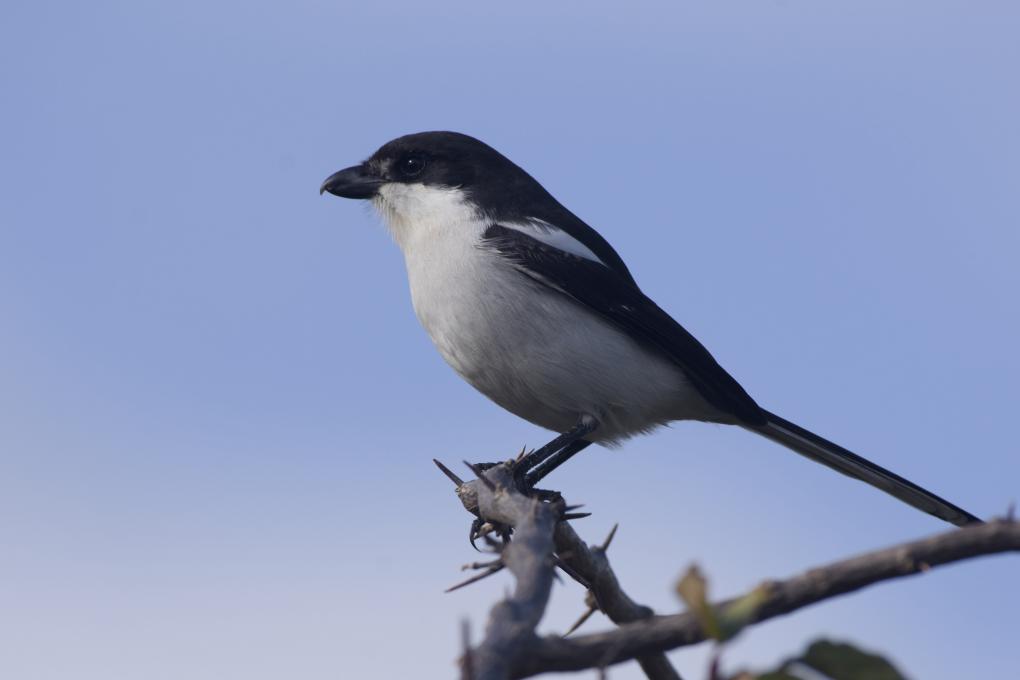
I have a sit spot in the garden area of the complex where we live. There is a perch frequently being used by sparrows, sunbirds, mousebirds, flycatchers and shrikes.
This morning I stood there just with binoculars. After a while a beautiful Southern Double-collared Sunbird came and showed off his striking yellow breeding tufts.
I promptly returned with my camera and waited. It didn't return, but I was rewarded with this male Southern Fiscal using the perch after a while.
-
I spent time today watching a White-rumped Munia gather materials for a its nest. I stepped out of our office for my daily bird walk on campus. This time I parked myself in one spot near our river. After only a few minutes, the munia arrived and I watched him hop between reeds until he found a small piece he could tear off. It took off across the river to a junk pile near the corner of a building where I've seen munia gather these past couple of weeks. Then the munia came back and hopped around the reeds again before finding more nest materials. I watched this process go on four times before it was time to head back inside and get back to work. I keep a pair of 8x25s in my desk for my daily walk, but I don't bring my camera to work. Maybe I will think about changing that in the future, especially if I start focusing more on what the birds are doing around here.
-
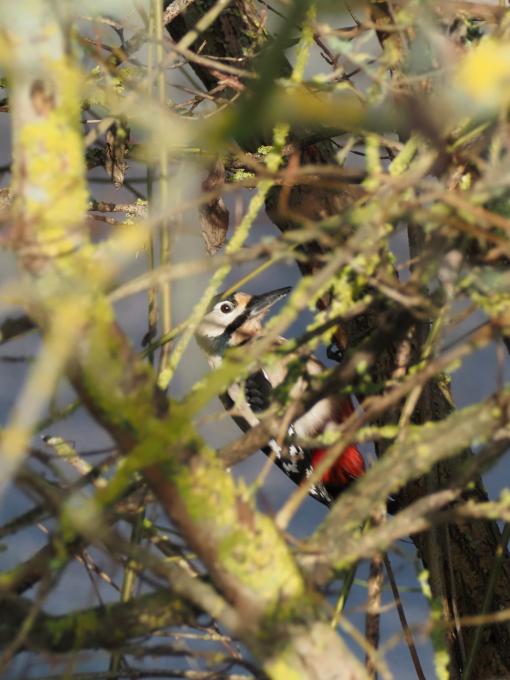
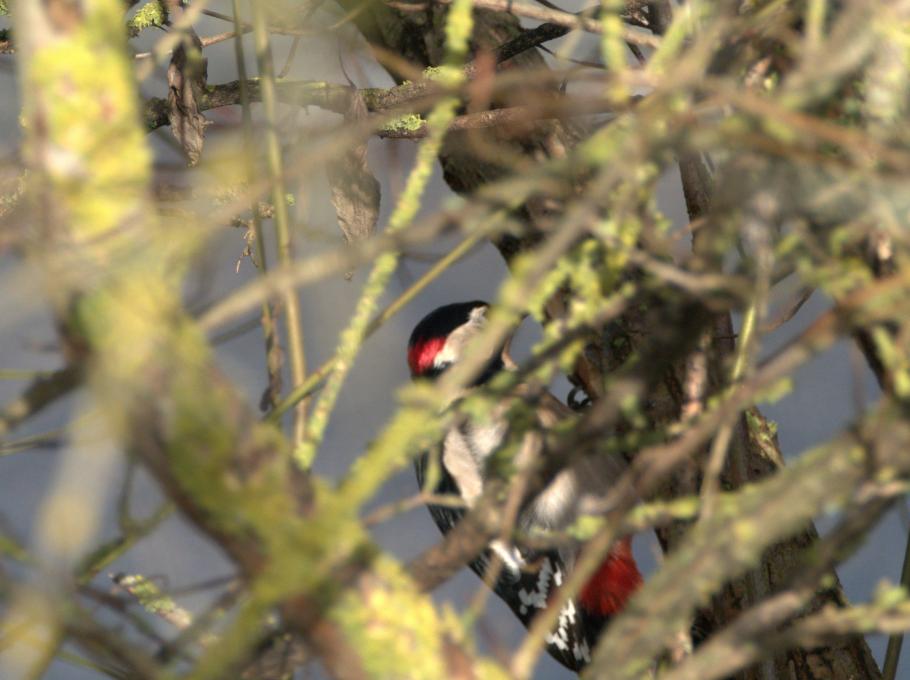
I went out to a local park this morning and sat on a bench for an hour. It is a place I always walk past with my dog every morning and it is easy to get to from my home. I didn´t take too many photos although I had a lot of birds interested in what I was doing. A robin came and sat a few meters away from me but I choose to enjoy its presence over getting a shot. As I sat on the bench my ears were drawn to a hammering noise and I knew that I had a Woodpecker near me somewhere. I carried on listening and eventually slowly moved in the direction of the banging. I am surprised I even spotted him as he was very low and amongst dense twigs. A beautiful Great Spotted Woodpecker. Although the photos are not so clear the second one shows his red head which means it is a male so that shot was great for more information. I really enjoyed the time sat in the park and am going to continue the practice all week.
-
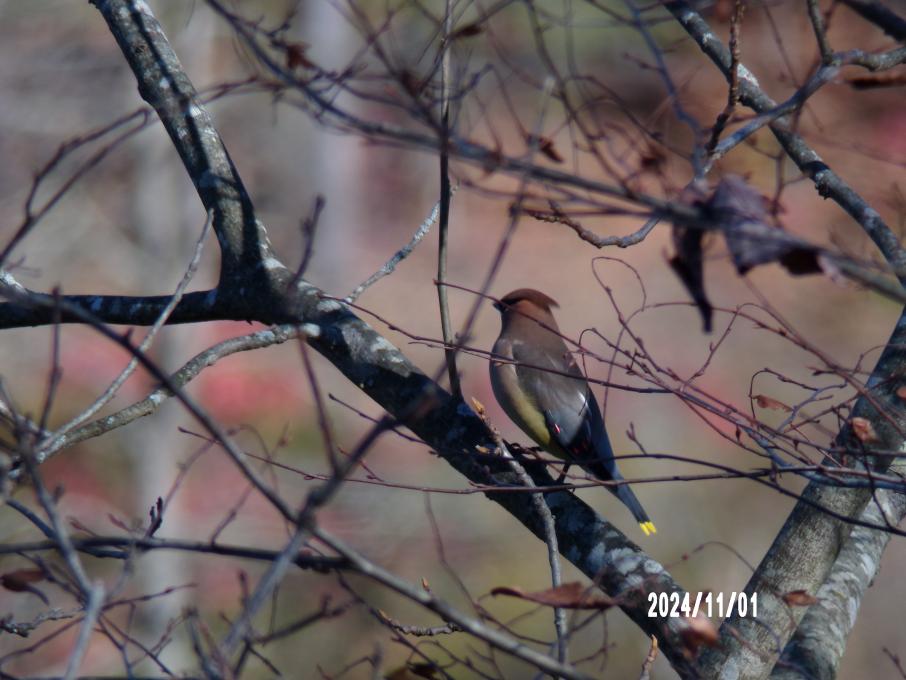
Picture Taken fromom Car Blind at "Cedar Waxwing Knob"
-
I have three basic "Sit Spots" that I have been using. The First is one I call the "Cedar Waxwing Knob". It is a knob of a hill overlooking a State Lake that has Oak Trees and various shrubs and bushes that have copius amounts of red berries. I have to do more research to discover what type of bushes these are a the Cedar Waxwings love the berries. While using my car as my blind, I pulled off the roadway onto the side parking area, turned off the car and sat for about 20 minutes and sure enough two of the Cedar Waxwings I had spotted there came into view. They perched right in front of my car. I took pictures of them through the windshield and out the side of the car. Within 20 minutes we were surrounded by a flock of no less than 15 Cedar Waxwings as counted by my wife in the passenger seat.
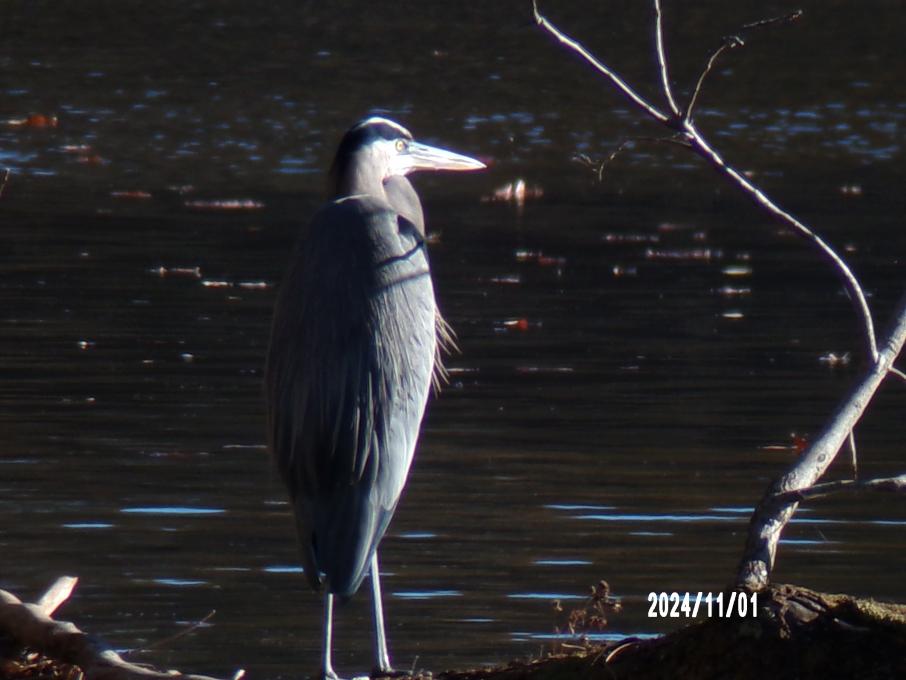
The second "Sit Spot" I use is in the same State Park and used with my car as a blind and using my telephoto lens to capture photos of Great Blue Herons and other waterfowl along the edges of the Lake. I used to hunt in my younger years but as my wife and I are both retired now I have found using the techniques and skills I used as a hunter I now use to photograph birds. I have reused camoflage clothing, and used the habits learned of walking quietly, slowing moving from tree to tree, and freezing when I see a subject to photograph Patience is a skill that can be rewarded.
My Third "Sit Spot" is from inside our kitchen photographing the birds as well as deer from our window -
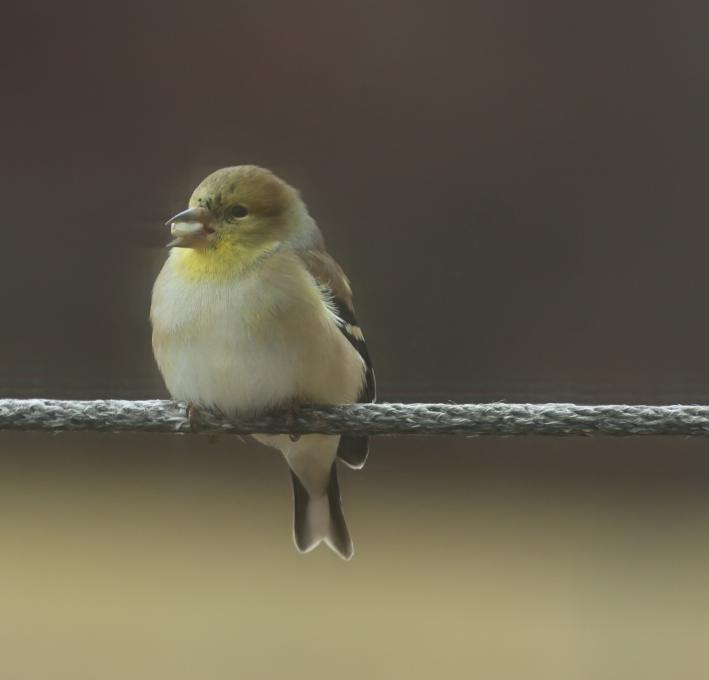
I love this picture that was taken right outside my kitchen window of a fluffy American Goldfinch



 Magnificent photo of the heron! From the photo it looks like a great blue heron. I live on an old farm with a huge spring fed pond which has never gone dry in my 45+ years living here. Great Blues visit my pond to fish - stocked with gold fish that procreate by the thousands. Mine are elusive and skiddish and always seem to appear when I am least prepared. I do sneak up on them and wait. That is when I am ready to take photos in flight.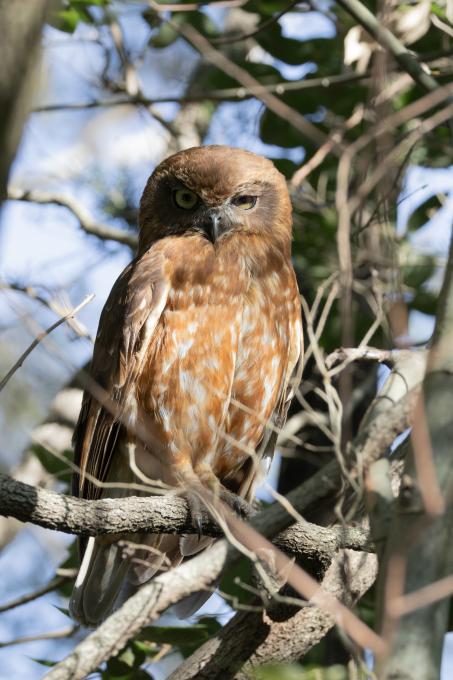



 om Car Blind at "Cedar Waxwing Knob"