The Cornell Lab Bird Academy › Discussion Groups › Nature Journaling and Field Sketching › Filling Your Sketches with Color
-
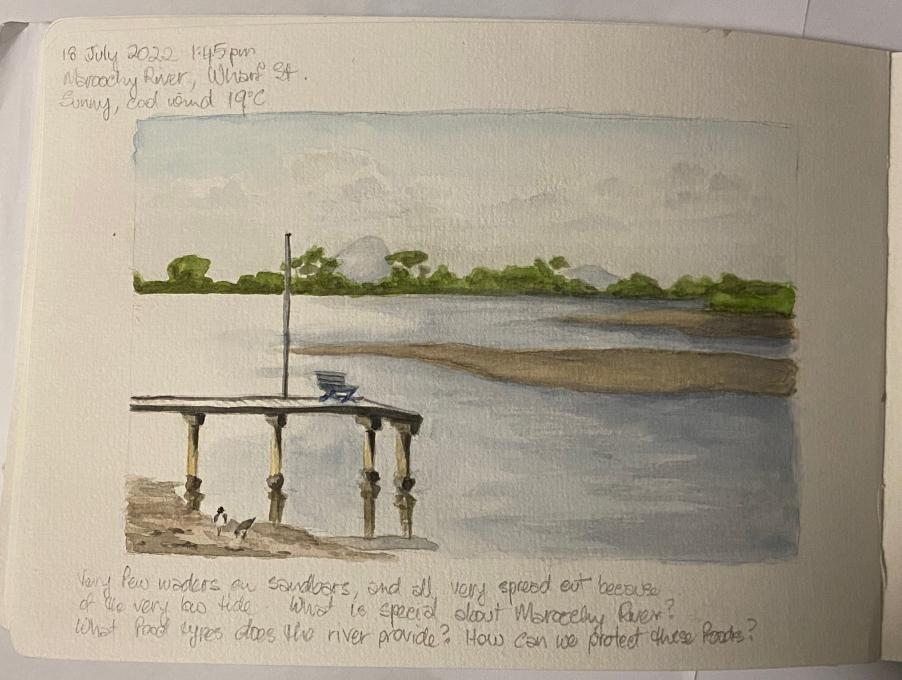
1. I quite like working in the field. It takes me 15 minutes or so to settle then I am oblivious to everything other than what I am focussing on. I am only taking my journal, pencil, paper towel, a small scrap of bond paper, paint box and paint brush. Today I forgot to fill my paintbrush - good lesson there. I can manage them okay and find I enjoy the change from drawing to colour when I can start mixing and applying. I am holding the paper towel and bond paper in the same hand as my journal which seems to work okay and stops them blowing away. 2. The questions and purpose side of the work comes after I capture (to the best of my ability) what it is I am working on. That's when I start to wonder. Before that I am very focussed. Once I start wondering it is from a higher level because I have much more understanding of the subject than if I had just taken a photograph. Plus there might be notes I wrote that remind me of more than what would be in a photograph. 3. This is my first water colour landscape, in fact probably my first landscape! Scary!! I had trouble with the sandbar especially but otherwise I am pretty chuffed. Any comments to improve it would be terrific (other than binning it because I won't do that!)

-
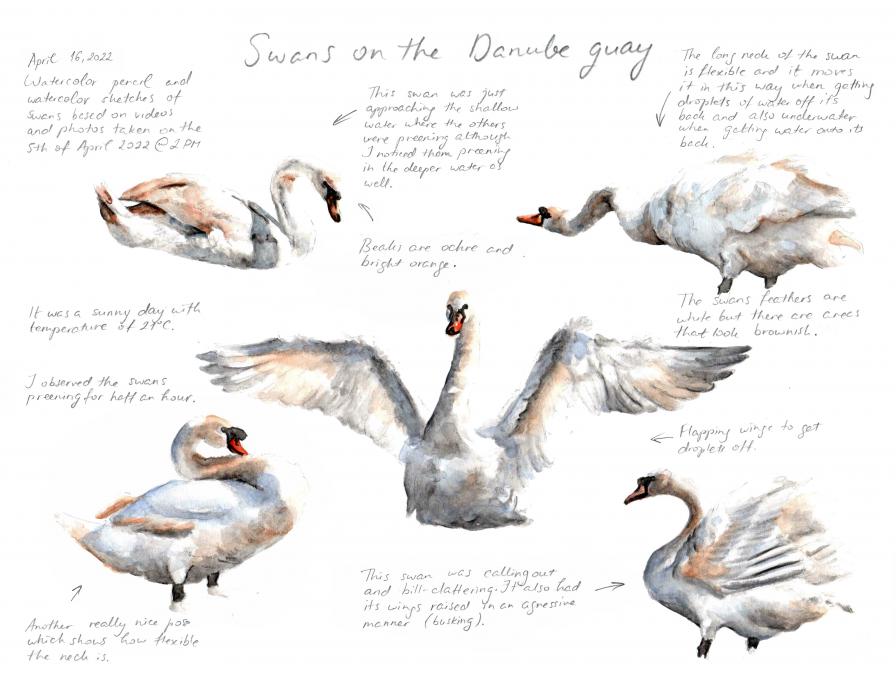
1. My tip would be to try out watercolor pencils which I used for the page below as they don't require a palette or even water in the field. They can be used as colored pencils and activated later in the studio. 2. For this exercise I used photos and videos I took a few days back. I think that writing notes while I was observing, photographing and filming the swans helped me to later pick the right photos and video frames which showed the behavior I found interesting. I also noted questions which a little bit of googling later answered (e.g. their aggressive behavior is called busking) 3. As for the technique I started with with warm and cool grey watercolor pencils and added burnt sienna for the brownish feathers which appear on the head and neck and ultramarine for the coolest shadows. I mostly used wet on dry, a little bit of wet on wet, some blending and a lot of glazing.
-
Your drawings are wonderful! I am interested in the watercolor pencils. I use watercolors then do details and texture with colored pencils. I don't have a steady hand so when I use a brush my lines are not thin or straight and edging gets out of control. Do you think watercolor pencils would be a better choice for me? Can you bring them to a very fine point? I like the idea of activating later when you are in a more controlled environment.
-
Wow! That looks amazing! Great job!!!
-
-
Watercolor is so much fun!! I didn’t know we could get such accurate colors just by mixing what we have. I was wondering how I could get the shadows on my birds, as I didn’t have any grey or black in my palette. But just by mixing, I achieved this shadow color which I am very happy with! The lessons are very helpful! I never did watercolor before and it gave me the confidence and knowledge to achieve something good. I think watercolor is also a good tool to become a better observer of the colors in nature. Can’t wait to try it out in the field!
-
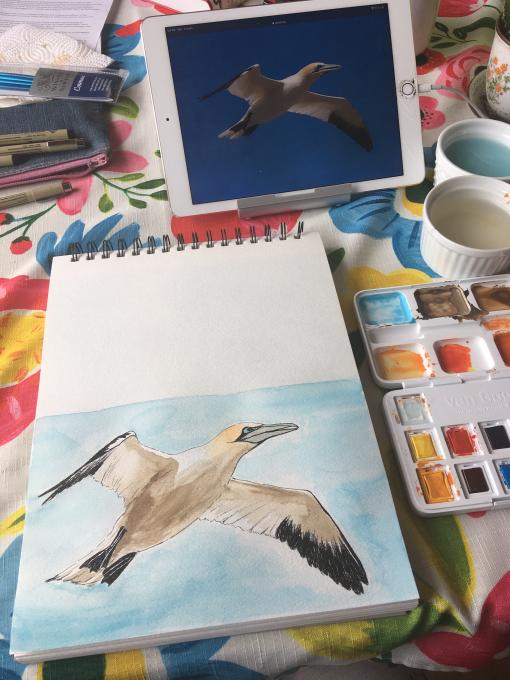
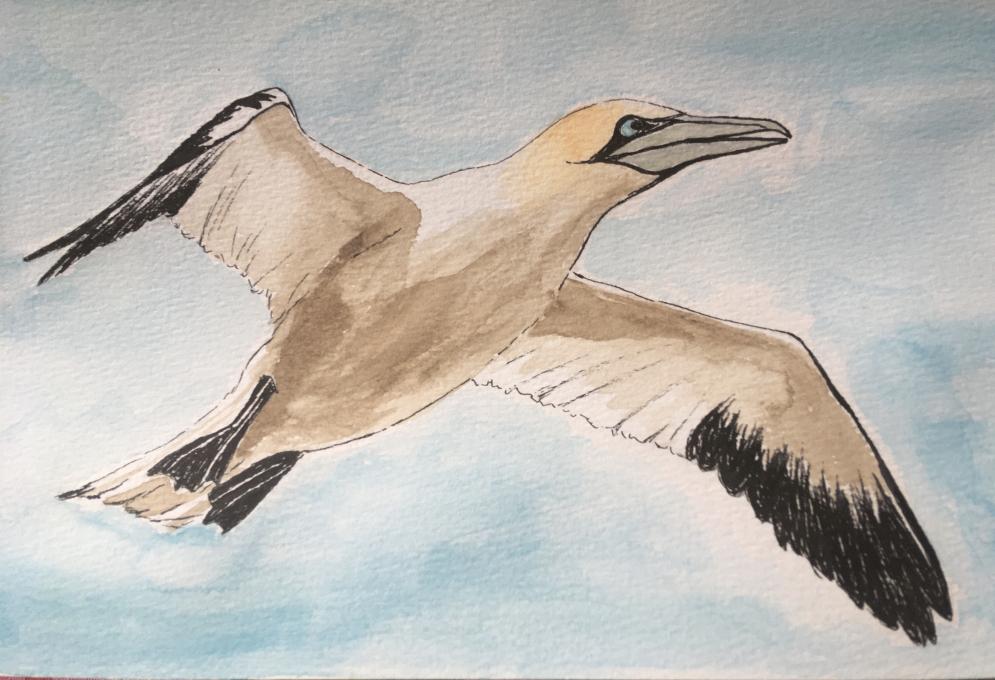
Hi Marjolaine, What sort of Gannet is this please? I really like it!
-
-
I find a flat and comfortable spot to sit and either from my phone's photos or from all around me take a pencil and sketch. I always wait to watercolor until I get home because it causes less trouble. This is an older journal page, but more recently I have used gesture drawing a lot more.
-
Your house sparrows are so perfectly in detail! They are my favorite bird.
-
-
I´m really satisfied with the composition that I got for this exercise, because I think is balanced in terms of shapes and colors, obviously according to the season and their different landscapes and natural motifs, otherwise, sometimes its difficult but step by step, I´m achieving to capture the contrasts, reliefs and tones that nature expresses us and I hope, surprised again for how easy watercolors make it. Usually I investigate to identify with scientific names to know more about what I´m drawing and can share it, and to finish specially in details and with all this information, gather each technique learned in the same picture. I love to see how every natural journalist develop these techniques and personalize it, creating and contributing with really differents points of view or interpretations in their blocks, and that's what makes it interesting.
-
Hi Olivia, I like how you have suggested the sky colour. It's an effective quick way to apply it in the field. I will give it a try I think. Thanks for the idea!
-
-
It’s been pretty cold here since I started this course so I haven’t taken my materials out in the field yet. I’m thinking I’ll take a little knapsack with everything when it warms a little. I do take walks and take time to notice nature, snap photos, question etc. I completed my first attempt at a journal page using photos of things I saw in January. I really enjoyed creating the page and trying out all the techniques I learned in the course. I need much more practice adding value and highlights to achieve dimension as well mixing the right color. I’ve already made notes on design changes to make for my February page.
-
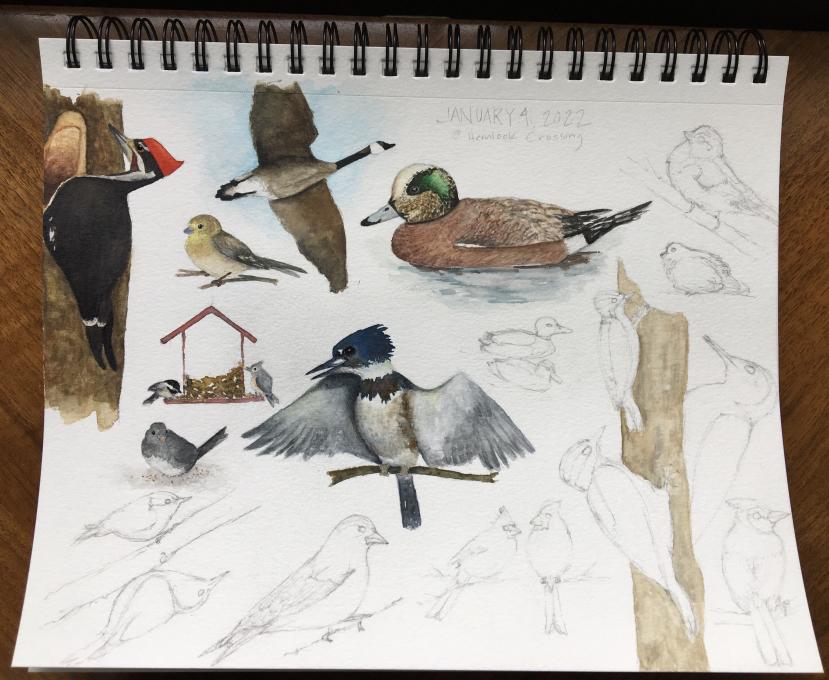
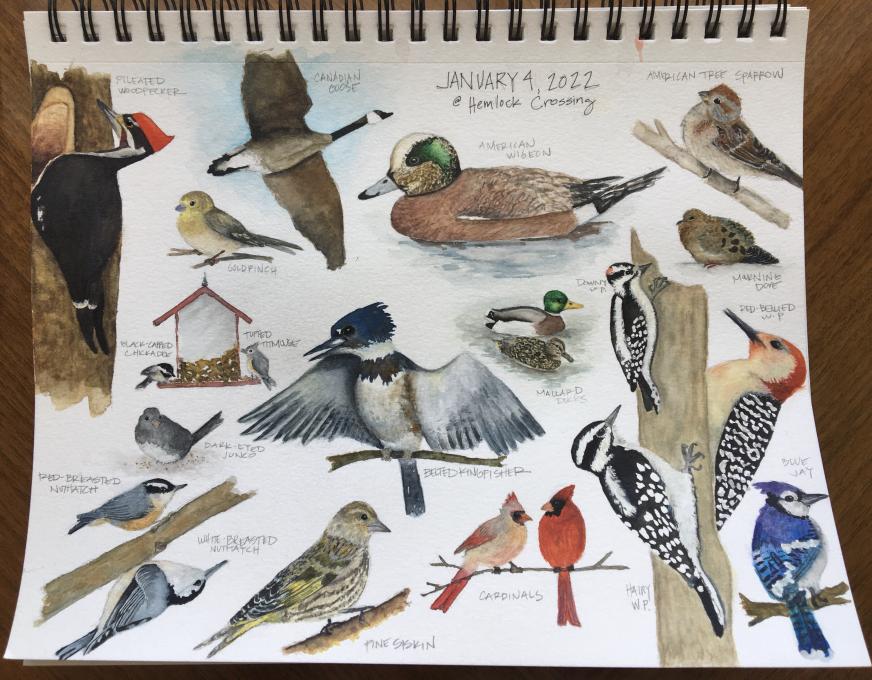
I'm finding that when watching birds, doing quick sketches in my field journal while in the field works well but I can't really get something "finished" until I come home and work at my desk. Details are really hard to get on paper with a moving being! This journal page started as a few pages of quick sketches then moved to more detailed sketches and finally on to color.
-
Finally finished the full page! Adding color is so much fun :)
-
@Ria That’s fantastic! Excellent work!
-
@Ria Wow! Your colors are so accurate! The head of the duck looks very realistic. Congrats!
-
-
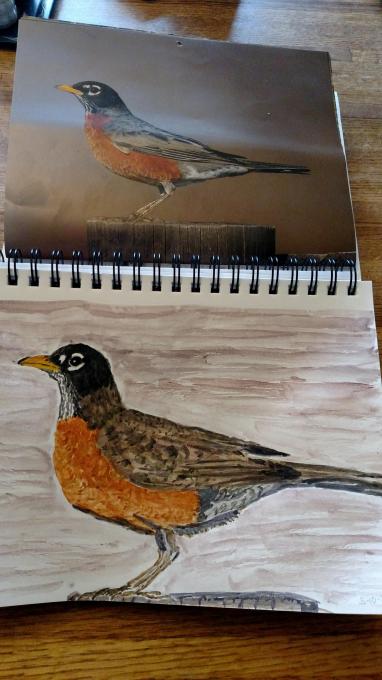
I am thrilled with the knowledge this course has imparted in both drawing and painting. It has been so rewarding. I have not completed this lesson’s exercise of getting out in the field yet. This is my practice at making a painting from start to finish, using a photo from an old copy of Birds and Blooms.
-
This is great!
-
I know this may sound weird, but I had too. The antenae on your butterfly look very nice. Mine always turn out like standard alien antenae, straight lines with balls on the end, no matter how careful Iam. Pretty butterfly, too.
-
Absolutely beautiful. I love what you left out too!
-
-
Capturing stumps me. The wildlife do not hold a pose, the clouds interrupt the sun and shift shadows and tones, and as a beginner, I'm very slow in drawing. I'm discovering that I should take a photo to continue the rendering later, go back to observe at the same place multiple times if possible, and be patient with myself. If all I get is the temperature, wind, scents and sunlight, the day wins. I trust that I will improve in speed and skill the more I try, and meanwhile I'm enjoying God's good creation. Liz's instruction helps me appreciate it all the more.
-
Hi Suzanne, I love how you have painted those tall dark green trees. I am going to try that style myself! Hope that's ok.
-
-
1. I have a small zippered pouch to keep my drawing implements in at the field. Taking fewer items and making good notes to fill in later seems to work the best for me. 2. My goal was to improve at field sketching, drawing and watercolor painting. I make sure to always include at least a little background metadata on every page. I really want to try to capture the moments and memories spent outside. I really prefer to create from photos that I take though. Temperatures are in the 30's now and it is very difficult to draw for more than 10 minutes at a time. I also have a pandemic puppy that requires my full attention - so I am lucky to be able to snap a few photos while outside and then draw from the computer images later while she is napping!
-
Using a 24 color Koi water color travel kit with water brush. Fantastic!
-
-
I made my first attempt at creating a watercolor from a reference photo combined with observations from my breakfast room window. I have observed a single Ruby-throated Hummingbird (Archilochus colubris) visiting my Turk's caps in the front yard. This small gem has visited my yard several times a day during the the last three weeks. I was not successful in obtaining my own photo, so I used a reference photo from someone else. I admire this little bird who visits daily and I know soon, he will be leaving for his migration. Perhaps I will get another chance to capture his brilliance. I have trouble with control using the water brush.
-
My sit spot is in my back yard watching the birds that come to my feeders. Right now Ruby-throated hummingbirds are really tanking up preparing to migrate across the Gulf of Mexico. It is fascinating to watch them protect territory and fend off "invaders". Also, we were affected by Hurricane Nicholas so I wondered how much that had affected their migration. I really enjoyed the process of painting one of them at a feeder, but I have to admit, I wasn't too far out in the field so I had a table and everything I needed at hand. I try to be sure I include my observations and questions - even if its about my painting/drawing technique. I have really learned a lot about using water color, although I tend to default back to colored pencils.
-
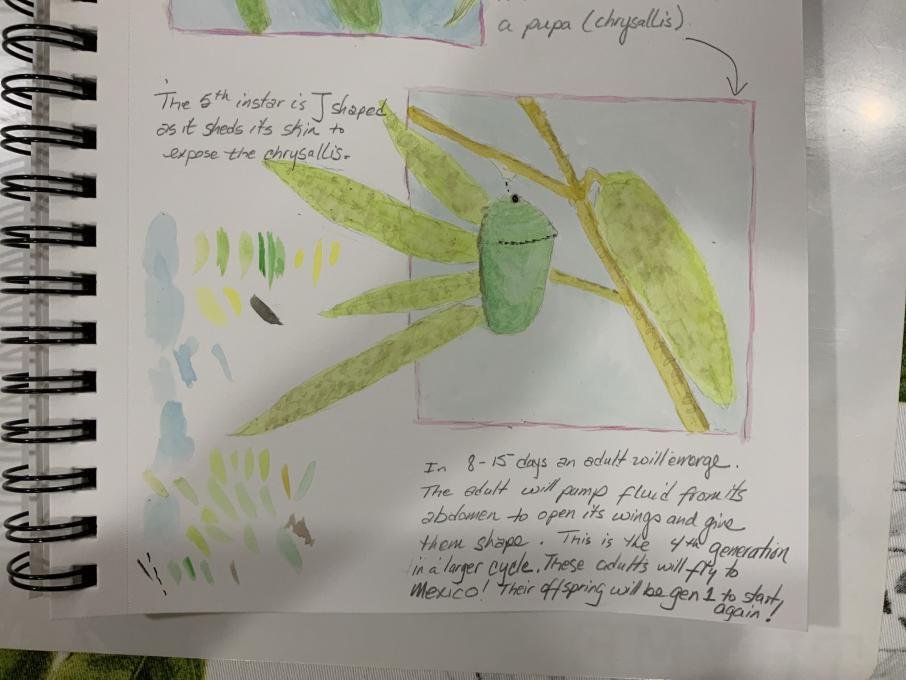
By trying to match the shade for the chrysalis, I realized the importance of using tint. I also muted the leaves with a bit of red because the original chartreuse popped out too much. In trying to add some mottling, I used too much water and that caused some hard edges. Most importantly, this exercise brought me right back to the beginning because what drove this for me was trying to document the fascinating process of the monarch butterfly. During the week I had been observing the caterpillars and thought they were dying. I was very dismayed. Yet, when I started researching I learned about their 5 molting phases. What a blessing to observe this so closely! I also worried that the metamorphic process was coming too late in the year. Now I know there are 4 generations of monarchs that complete the entire journey to Mexico. By seeing them this late in Virginia, this means that what I am observing is the 4th generation that will fly down to Mexico and start the 1st generation all over again!
-
Practice painting as realistically as possible (for me) based on photo of Olive Backed Sunbird from eBird. This is a bird I often see around home, but they are very active. After spending a fair bit of time on the “realistic” version, just for fun I decided to do quick gesture sketches and add some of the left-over paint.
-
Incredible! Hipeeeer-realistic!
-
-
-
-
-
How beautiful!
-
-
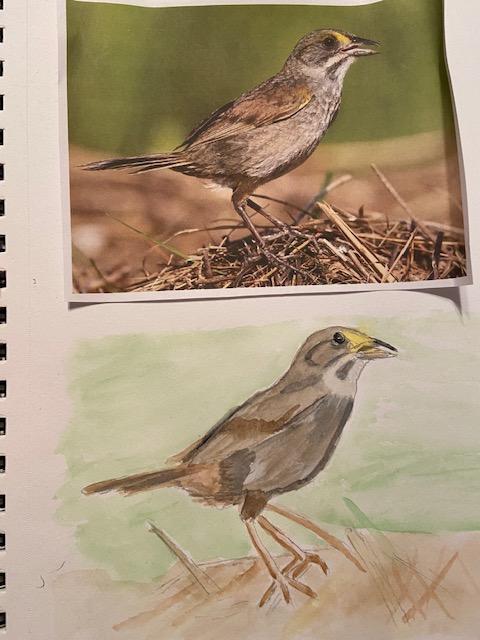
I love how the watercolor kits are so easy to carry but I once forgot to bring a paper towel for drying/wiping my brush. It made things a lot harder. So now I carry a little pencil box with scratch paper and paper towels to throw in with my personal kit. I find I have the hardest time waiting for the paint to dry and when I don't, sometimes the colors run together, like the yellow in this Seaside Sparrow's face. Also, eyes are hard to get right!
-
-
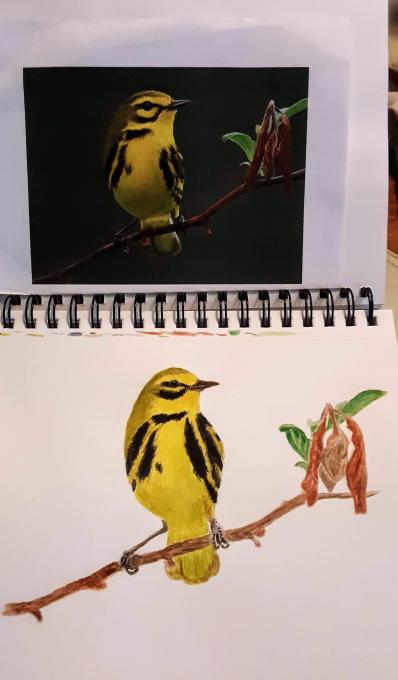
I painted from a photo this prairie warbler. I practiced using negative space, mixing colors, and attempting to keep my brush dry enough for some of the detail. I came out much better than my first attempt at a bird in watercolors! But I still need lots of practice.
-
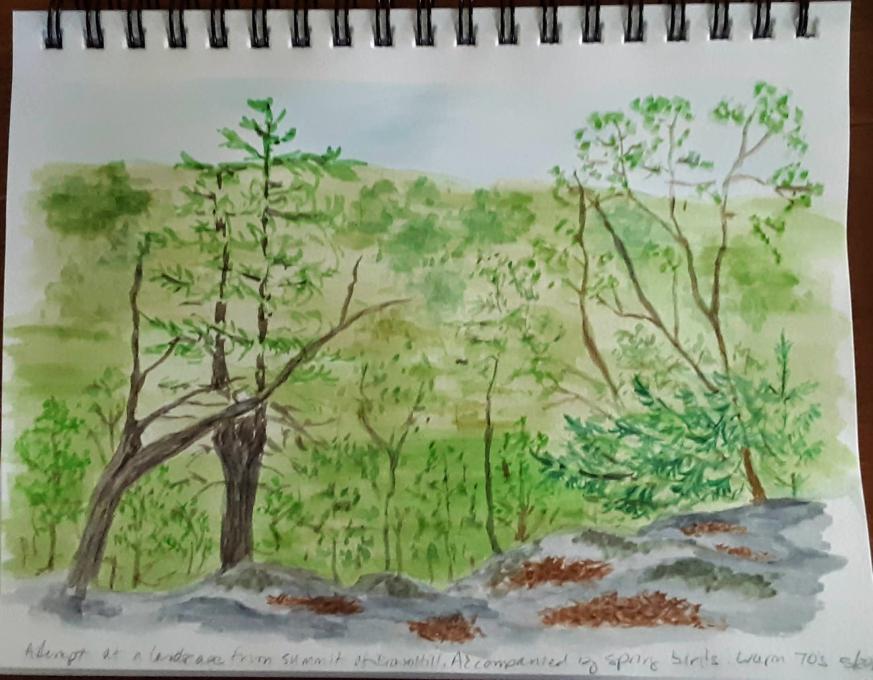
I bring my binoculars along with my art materials. Spring is such an amazing time to see returning songbirds and the woods are full of warblers. Even if they don't sit still enough to draw or paint, I will try and commit them to memory for later. Bug repellent is a must have! I also bring water for myself in addition to refilling pens if need be. I try to note anything interesting, or things I want to look up when I get home. Lugging too many guide books can be a hassle. This was my best attempt at a landscape; a view off an escarpment atop Browns Hill.
-
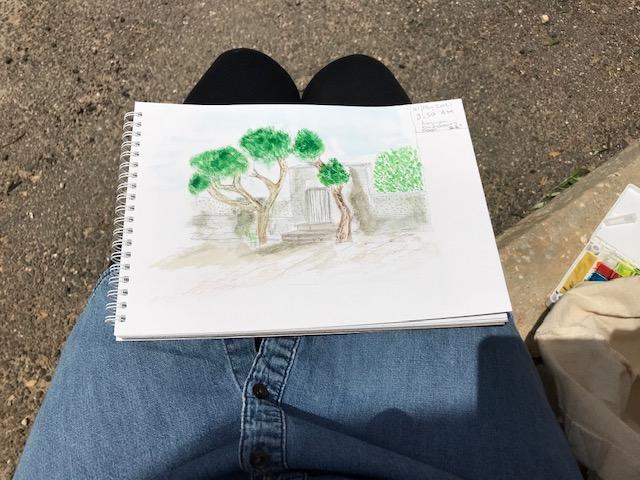
Organizing material: Preparing my tools in a special bag helped so much. I had everything I needed and I was ready to go. While outdoors, I needed an extra empty bottle to discard used water. I will include it for next time. Responding to observation with drawing and water color is challenging and fun. It is exciting to mix colors to match with nature. I became more curious and tried to find answers to the questions I had during my observations. Below is my trial of capturing very nice trees. It is amazing how you see things differently when you draw and paint. Water color is a wonderful medium, because it is transparent and works well while painting outdoors. Negative space helped so much. I managed to correct proportions and draw more accurately.
-
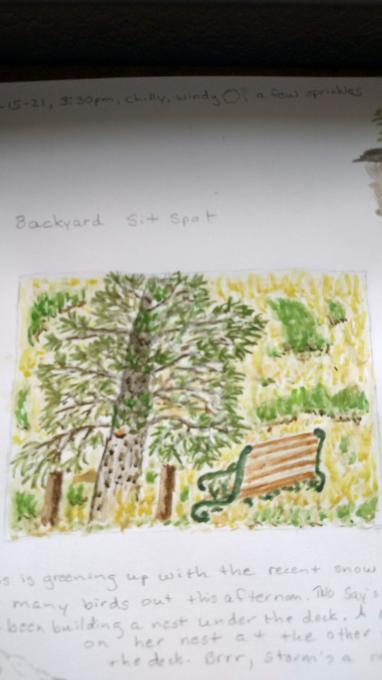
The weather has been marginal to terrible this week. I haven't seen the mountain I want to use for my landscape in days...feels like Denali! As a result, I'm not getting out in the field much and end up painting a view from my window. I'm not real happy with my landscape, but I feel like I learned a lot doing it. I really have focused on my observational skills everywhere that I go, and think about how I would paint various scenes, how I might apply the techniques we've learned, what I need to work on and do differently. I do think I will take an extra paintbrush with me to use for dry on dry, the water brush is not working for me.
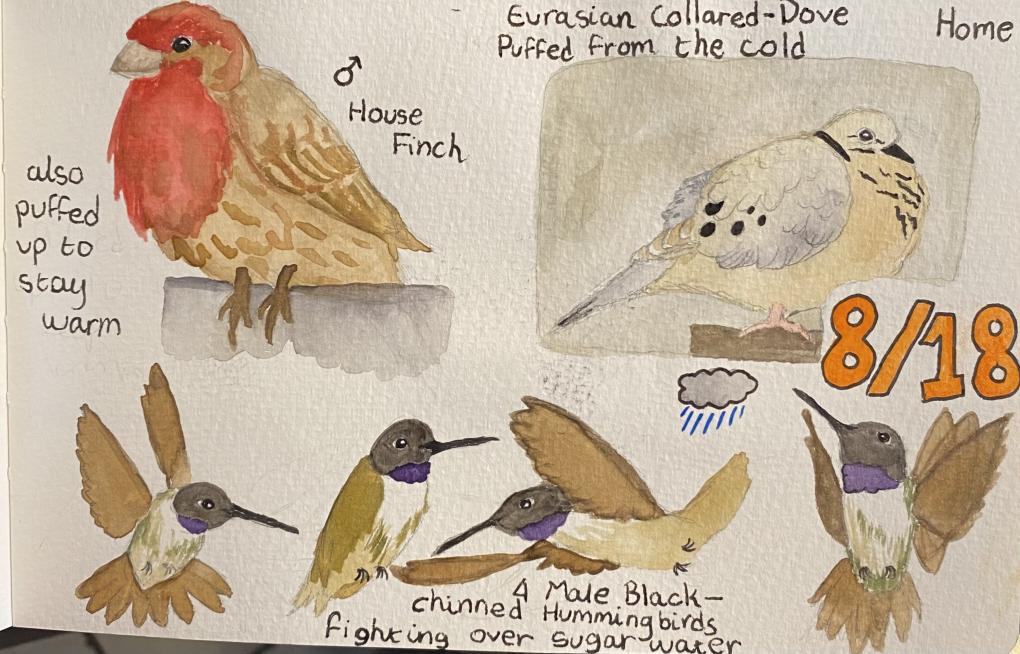
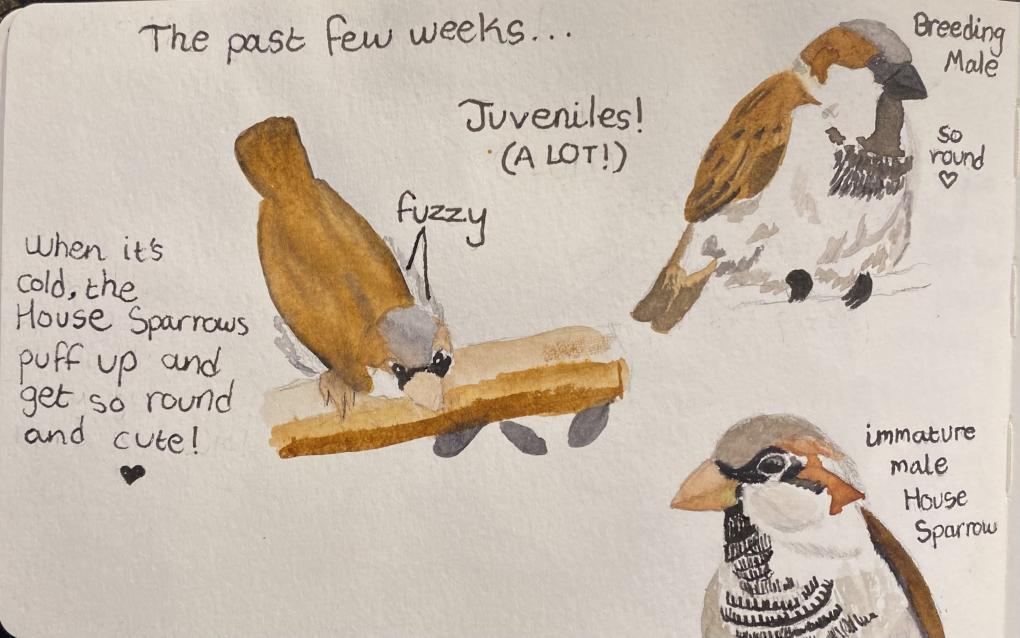 I find a flat and comfortable spot to sit and either from my phone's photos or from all around me take a pencil and sketch. I always wait to watercolor until I get home because it causes less trouble. This is an older journal page, but more recently I have used gesture drawing a lot more.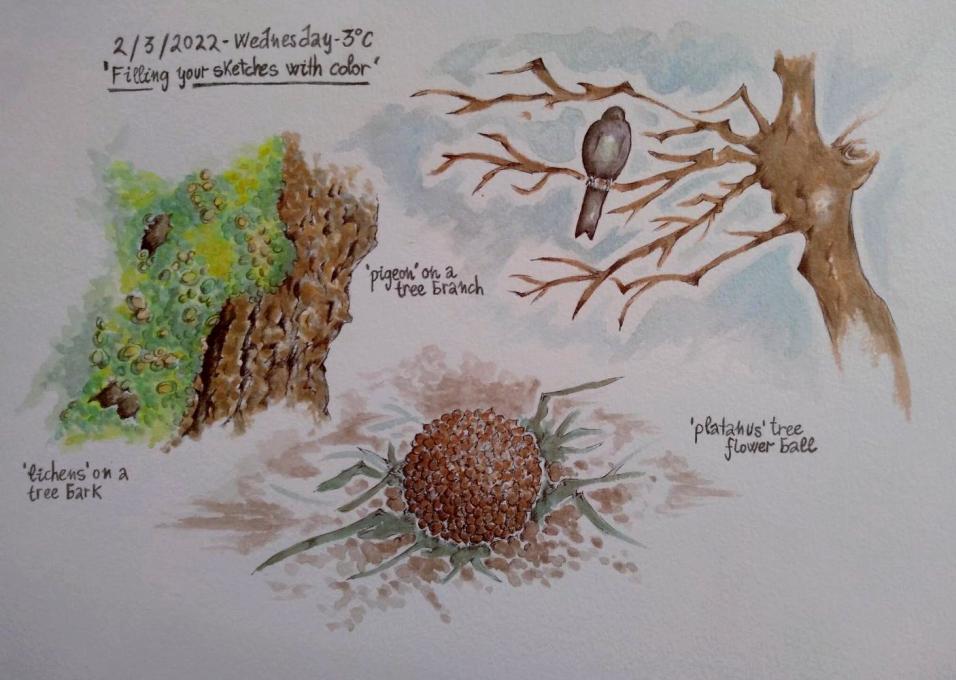
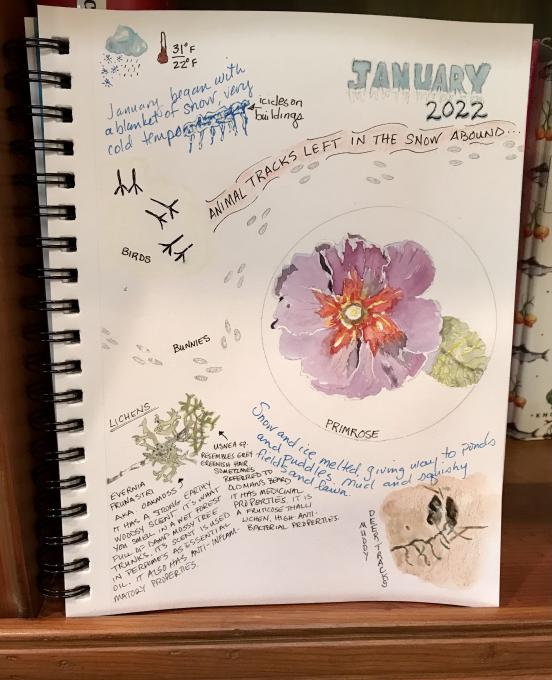
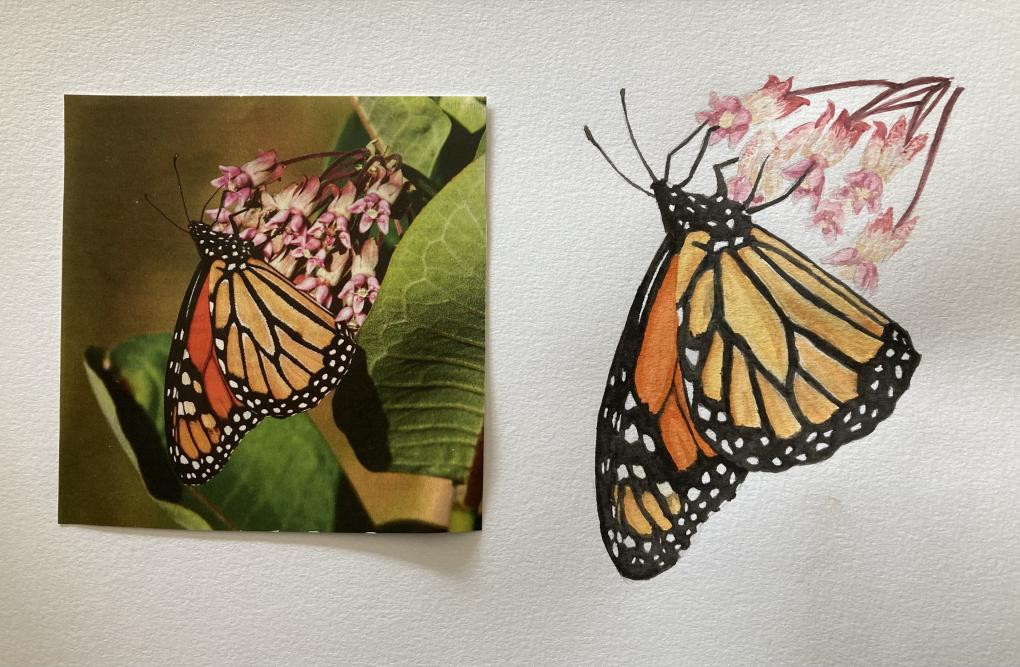 I am thrilled with the knowledge this course has imparted in both drawing and painting. It has been so rewarding. I have not completed this lesson’s exercise of getting out in the field yet. This is my practice at making a painting from start to finish, using a photo from an old copy of Birds and Blooms.
 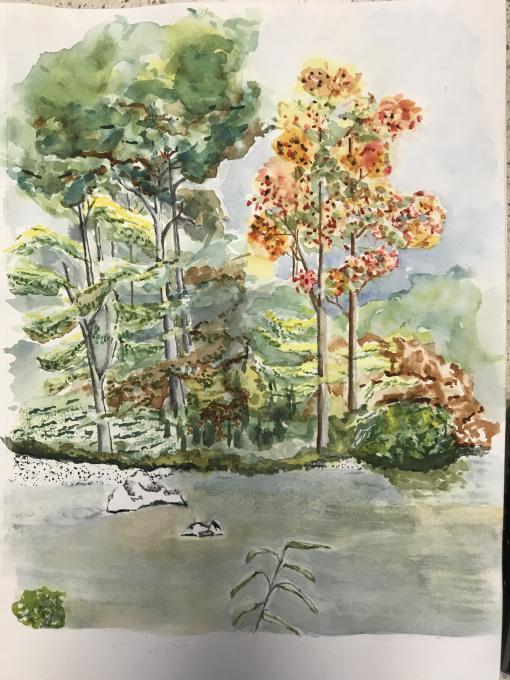 Capturing stumps me. The wildlife do not hold a pose, the clouds interrupt the sun and shift shadows and tones, and as a beginner, I'm very slow in drawing. I'm discovering that I should take a photo to continue the rendering later, go back to observe at the same place multiple times if possible, and be patient with myself. If all I get is the temperature, wind, scents and sunlight, the day wins. I trust that I will improve in speed and skill the more I try, and meanwhile I'm enjoying God's good creation. Liz's instruction helps me appreciate it all the more.
 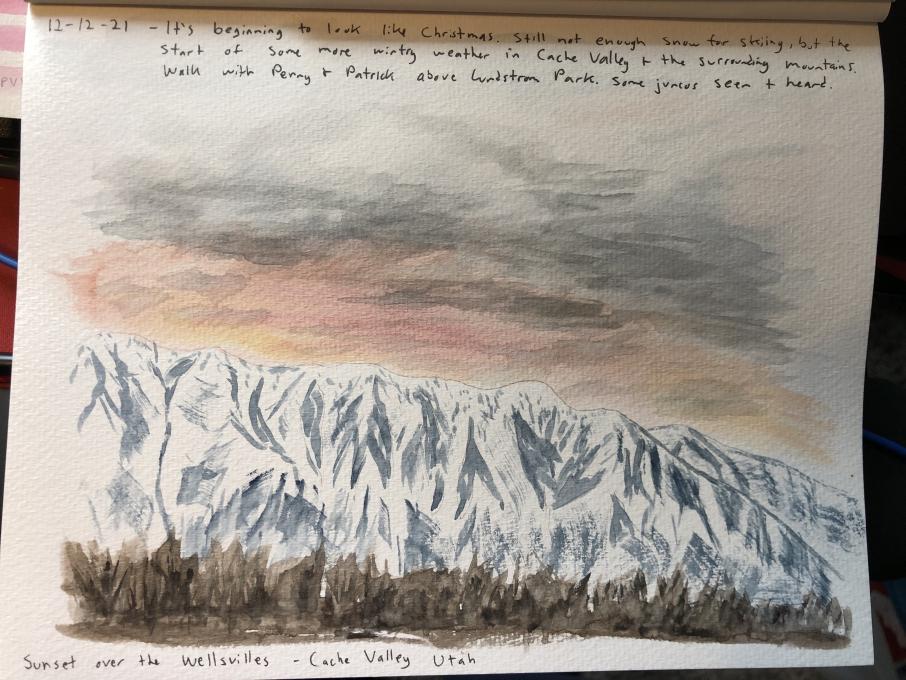 1. I have a small zippered pouch to keep my drawing implements in at the field. Taking fewer items and making good notes to fill in later seems to work the best for me. 2. My goal was to improve at field sketching, drawing and watercolor painting. I make sure to always include at least a little background metadata on every page. I really want to try to capture the moments and memories spent outside. I really prefer to create from photos that I take though. Temperatures are in the 30's now and it is very difficult to draw for more than 10 minutes at a time. I also have a pandemic puppy that requires my full attention - so I am lucky to be able to snap a few photos while outside and then draw from the computer images later while she is napping!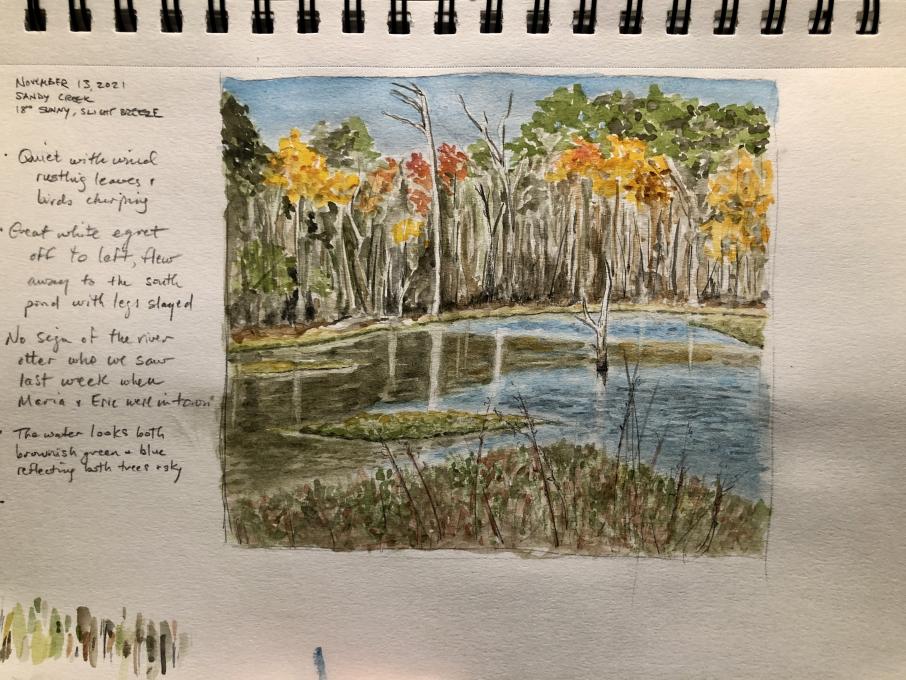
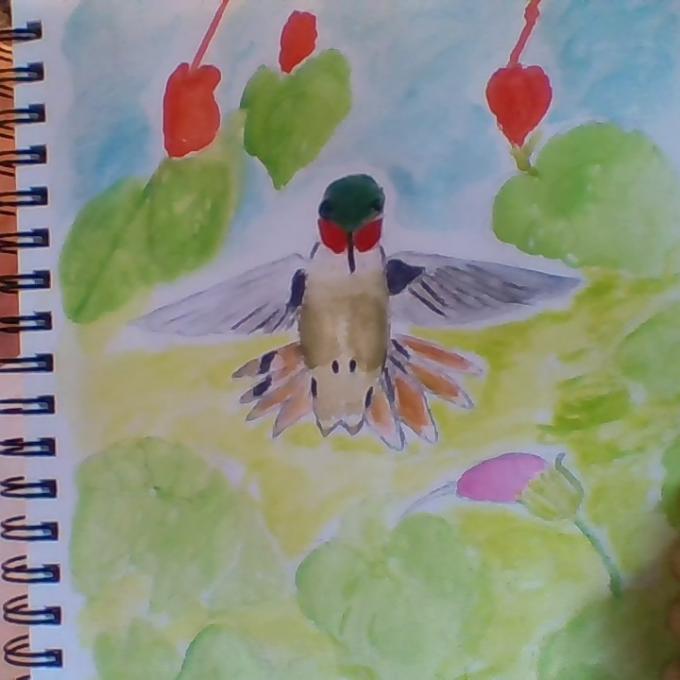
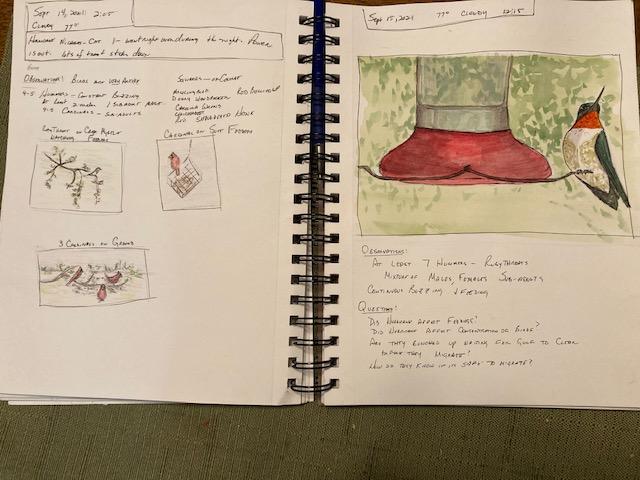 My sit spot is in my back yard watching the birds that come to my feeders. Right now Ruby-throated hummingbirds are really tanking up preparing to migrate across the Gulf of Mexico. It is fascinating to watch them protect territory and fend off "invaders". Also, we were affected by Hurricane Nicholas so I wondered how much that had affected their migration. I really enjoyed the process of painting one of them at a feeder, but I have to admit, I wasn't too far out in the field so I had a table and everything I needed at hand. I try to be sure I include my observations and questions - even if its about my painting/drawing technique. I have really learned a lot about using water color, although I tend to default back to colored pencils.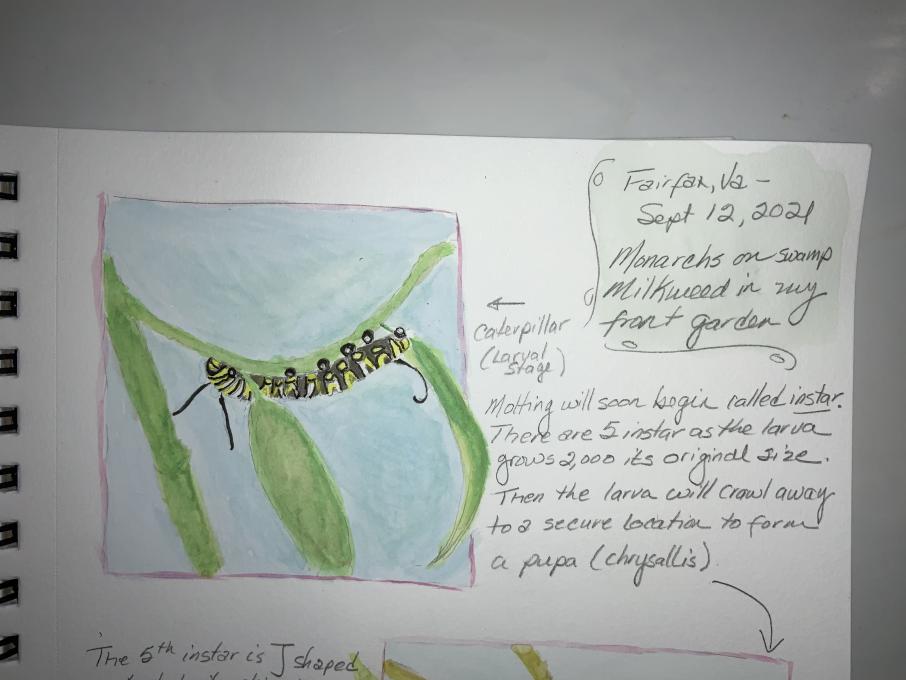
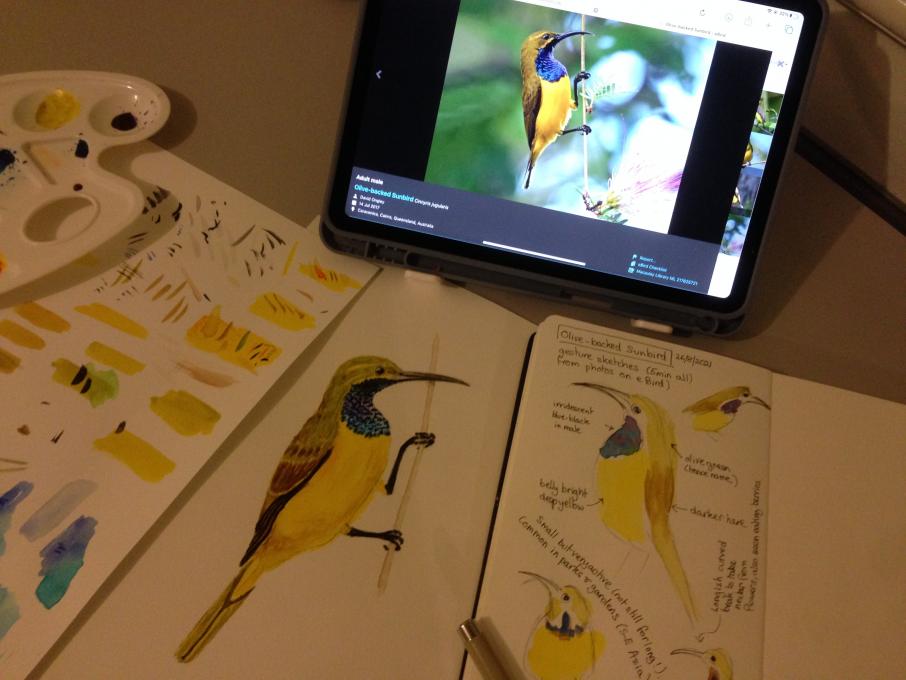
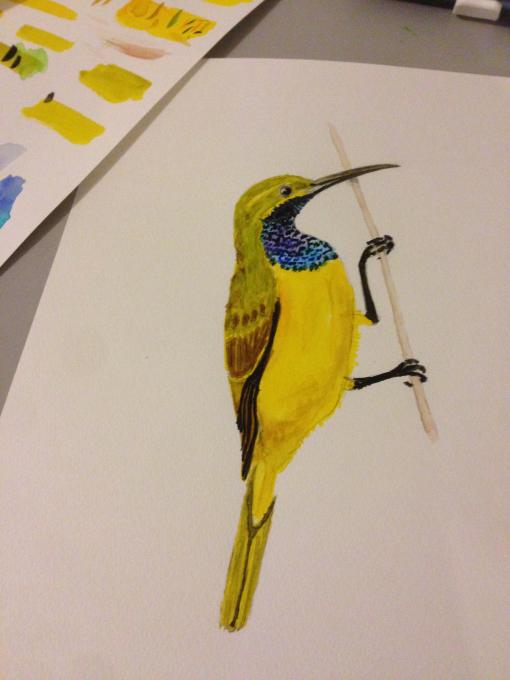 Practice painting as realistically as possible (for me) based on photo of Olive Backed Sunbird from eBird. This is a bird I often see around home, but they are very active. After spending a fair bit of time on the “realistic” version, just for fun I decided to do quick gesture sketches and add some of the left-over paint.
 want to use for my landscape in days...feels like Denali! As a result, I'm not getting out in the field much and end up painting a view from my window. I'm not real happy with my landscape, but I feel like I learned a lot doing it. I really have focused on my observational skills everywhere that I go, and think about how I would paint various scenes, how I might apply the techniques we've learned, what I need to work on and do differently. I do think I will take an extra paintbrush with me to use for dry on dry, the water brush is not working for me.
 Read More: