The Cornell Lab Bird Academy › Discussion Groups › Nature Journaling and Field Sketching › Jump Right in!
-

-
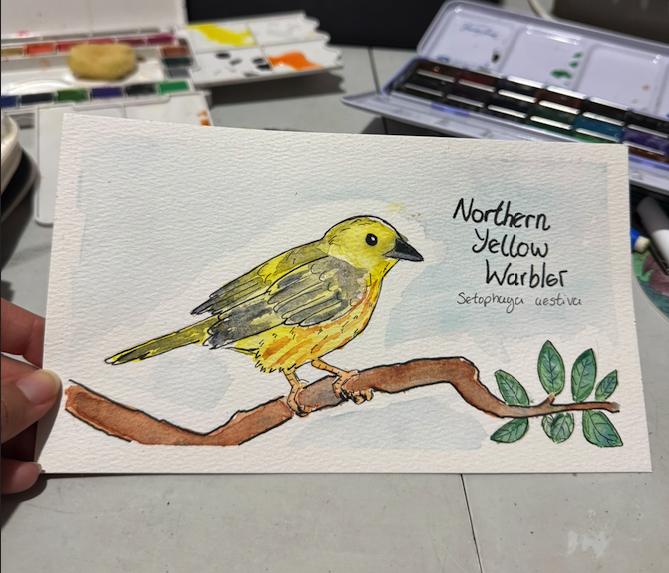
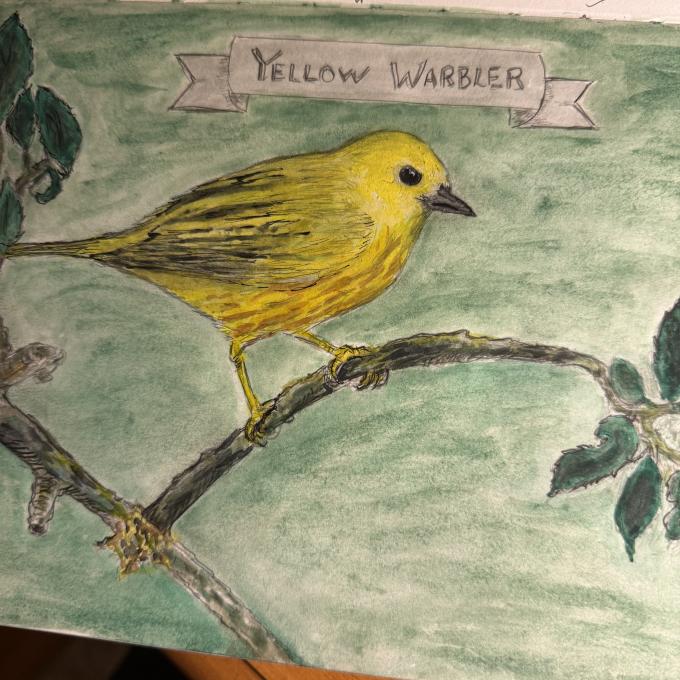
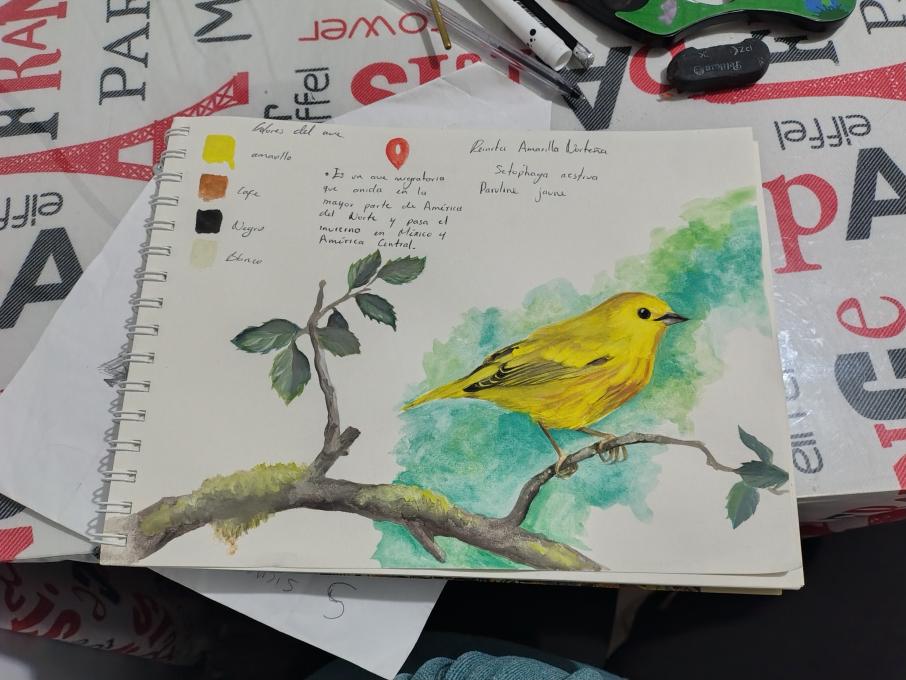
1. I enjoyed the challenge! It was super difficult to get the "blacks" right with watercolors. I'm excited to learn more.
2. I wouldn't have noticed the subtle black/dark tones on the head and parts of the wings.
-
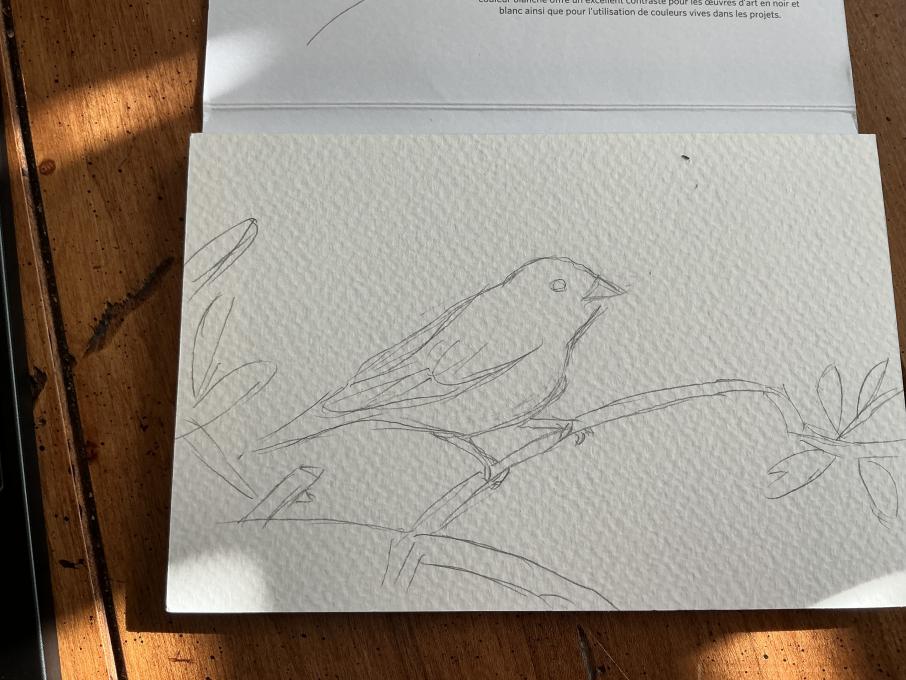
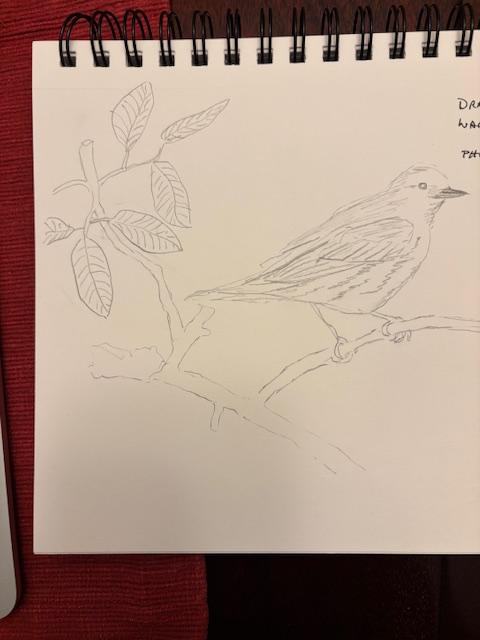
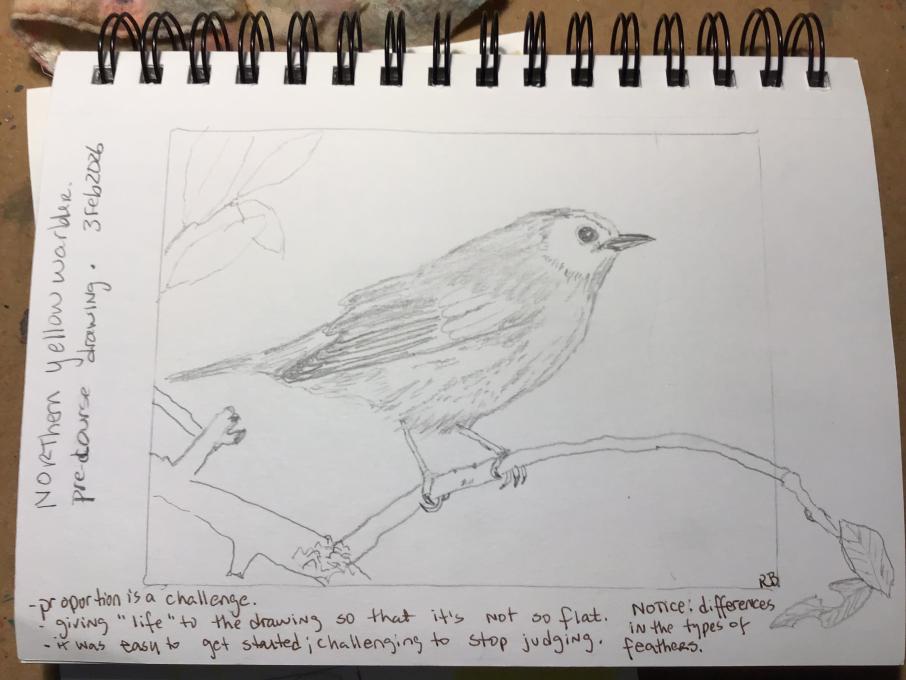
1. Drawing the photo was both hard but also a little relaxing. I thought the rough sketch came somewhat easily, but the rest of the drawing part was a challenging. Getting the body shape and details right was hard. The rest of the scene (the branch and leaves) were very hard and ended up being more very rough sketches.
2. I liked that drawing the photo felt like I got to know the bird better than I would have just looking at it. I feel like I can imagine what it would feel like to hold it, and where it's body parts are more intimately than I would through just photography, which I liked a lot.
-
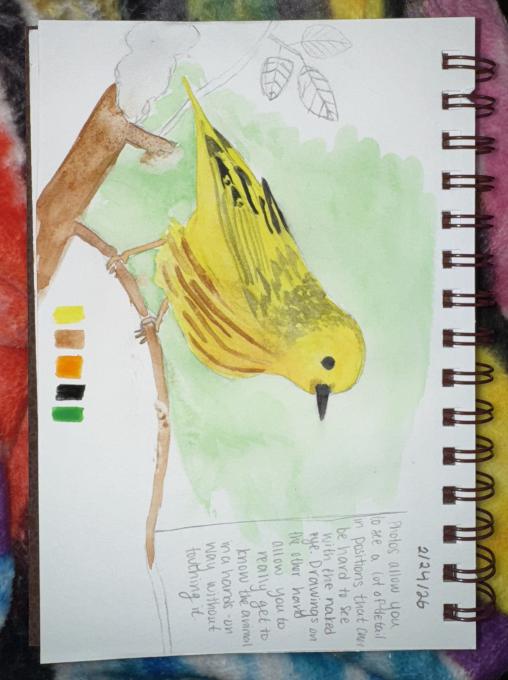
1 saw colors in much more detail. The black eyes & beak really stood out
-
-
-
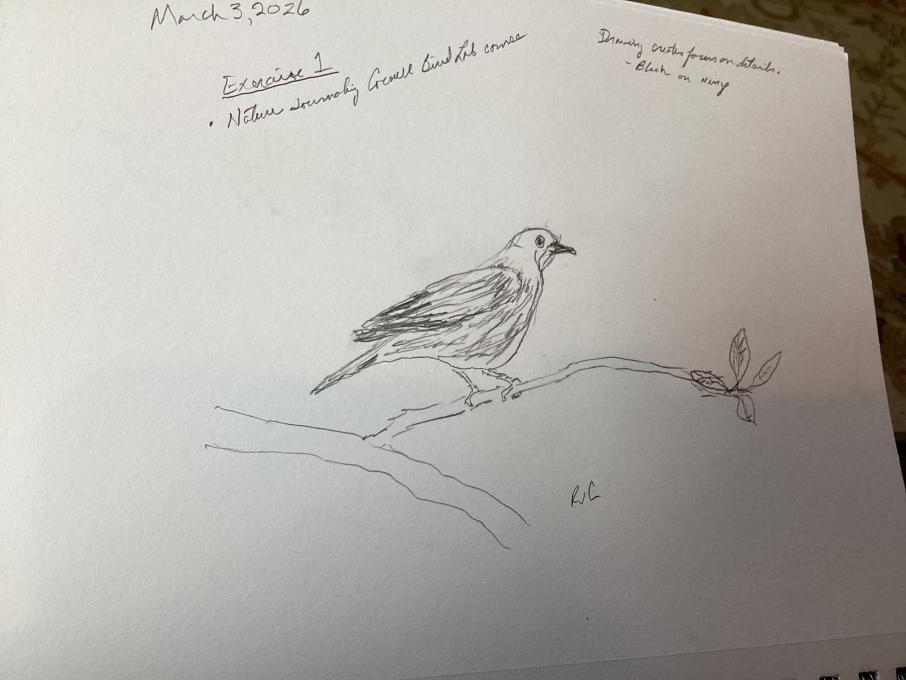
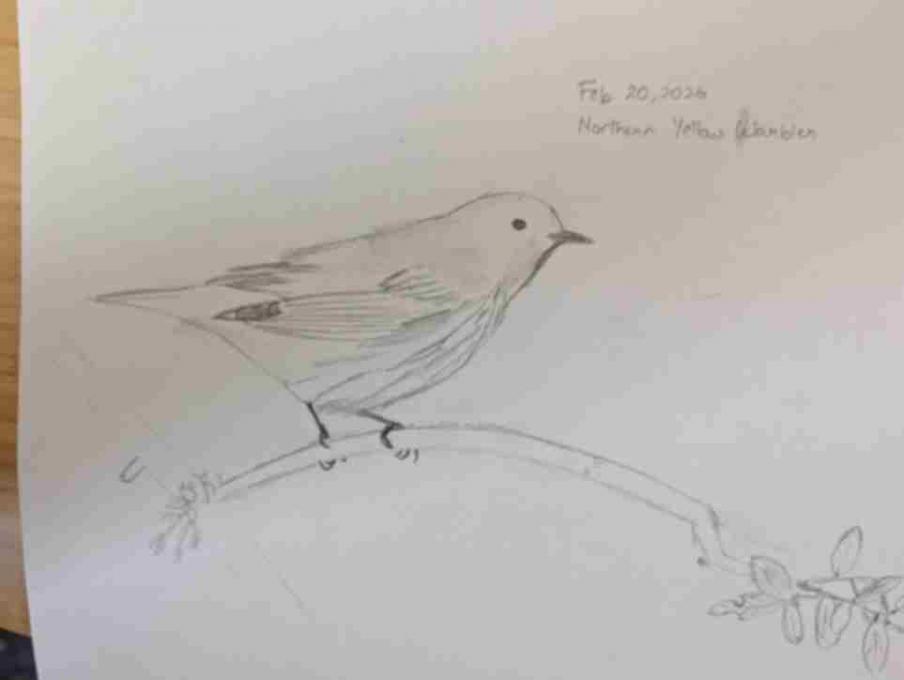
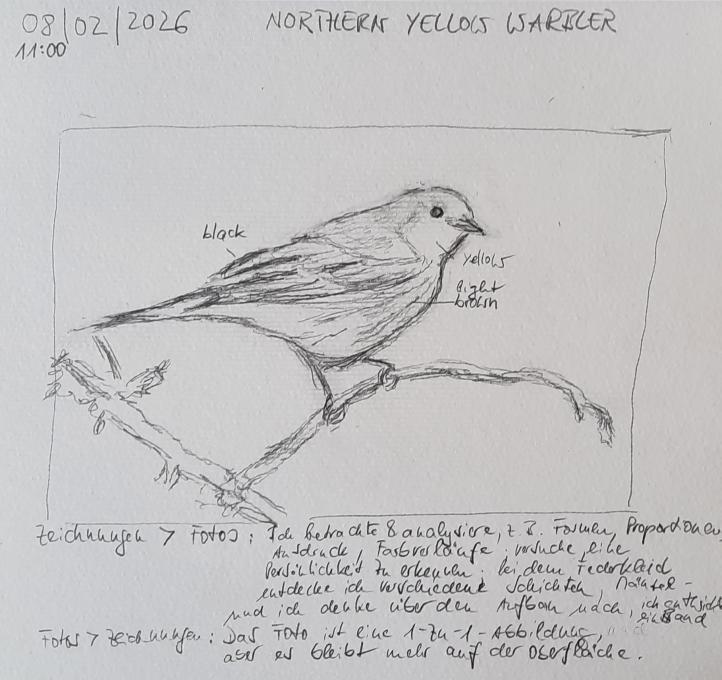
1. I enjoyed drawing from the photo. The static image allowed me to take my time and try to get the drawing as close to the photo as possible. However, it was challenging to get the shading and to somehow render an impression of the colors using a pencil alone.
2. If not asked to draw the image, I might not have noticed the subtle stripes on the breast, or the shading around the bird's face and neck. The photo pretty much captures the bird as it is, whereas the drawing renders the artist's emotional response to the bird. For a nature journal, I think the latter is more personal. -
-
I felt a little scared, my first attempt resulted in a bird with a little head.
I hadn't notices how the wing reathers ordered themselves while the bird is perching. -
-
-
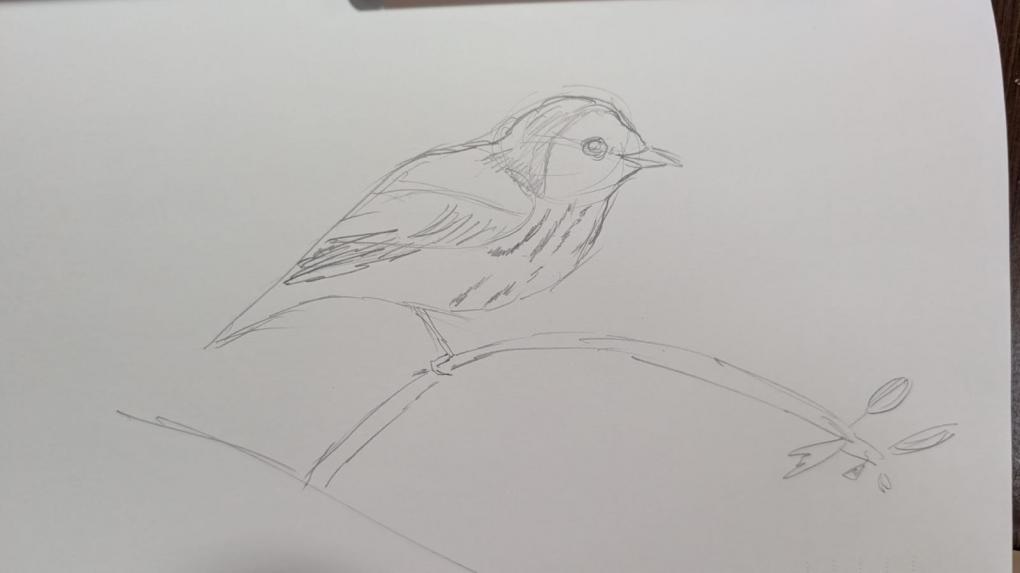
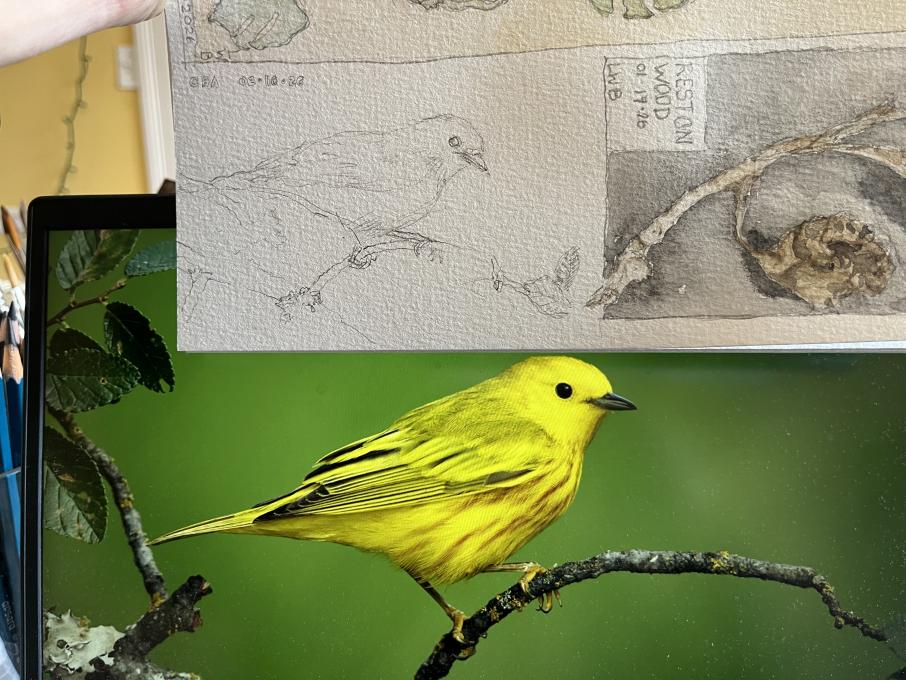
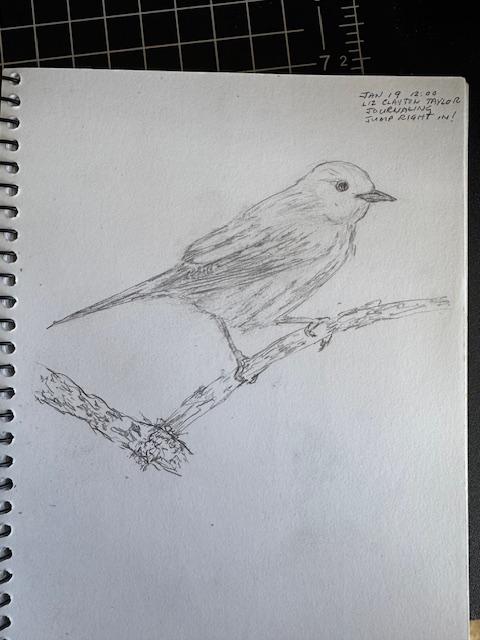
1. Glad it was a relatively simple subject (not compound). Feet felt easiest. Head angle the hardest.
2. If I had tried to draw it in the field, I would probably have missed the moss/ lichen on the branch, the number of toes and manner of gripping the branch, the feather pattern. Below is an image of my stab at it. -
-
-
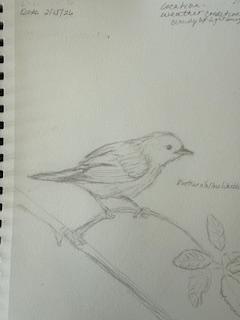
1. My drawing is decent. It’s always difficult to get the size of the head relative to the body and tail similar to the picture. I liked not having to draw a moving subject, but with a photo, you are only getting information from the perspective included in the picture. You cannot see the other side. What came easy for me is finding the shapes that are present in the bird’s form and the tree branch. What’s challenging is getting proportions and shading correct (or at least similar to the photograph.
2. If I wasn’t asked to draw the photo, I don’t think I would have looked so closely at how the bird’s feathers have subtle color gradients. I also paid attention to the way the bird was clinging onto the branch. I think that it would make a difference when nature journaling because to spend time really observing your subject closely and taking in the bird’s markings and unique appearance. -
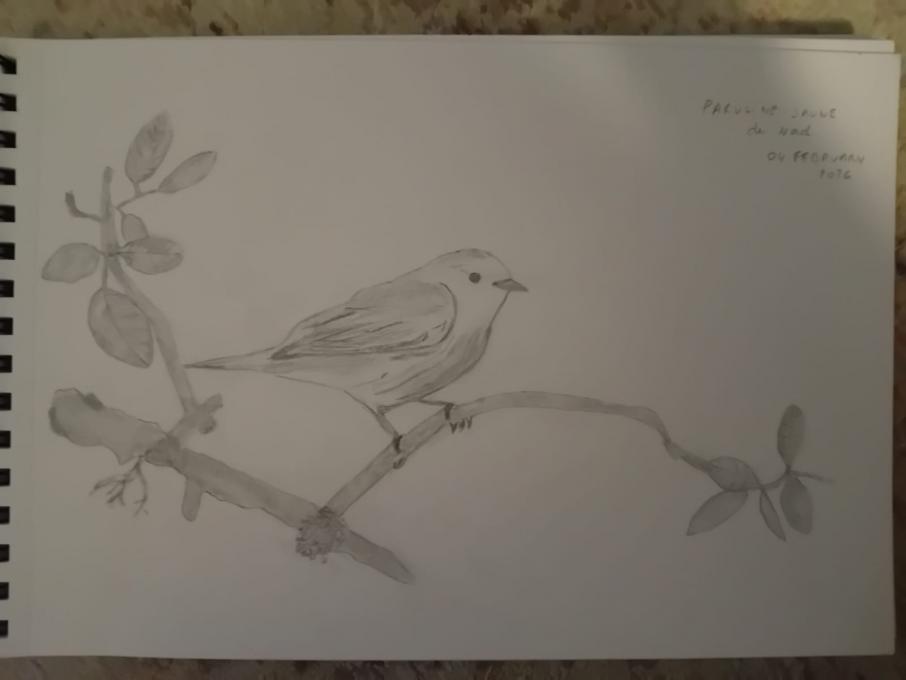
1) I didn't have high hopes, but think my sketch was pretty good! My watercolouring needs some work
2) I think the angles of the legs were a lot different than I would've drawn from memory. The different textures and colours of the feathers were more defined than i am sure i would've noticed with my naked eye -
-
Dessiner d'après une photo permet de mieux observer et cerner les détails.
Mes principales difficultés de réaliser ces détails, par exemple, dessiner les motifs des rémiges, des plumes de l'oiseau de manière vraiment réaliste ainsi que gérer ombres et lumières... -
-
1. I enjoy drawing from the photo because I have more time and ca look at the little details. However, that's also the thing that makes it more challenging; getting hung up on the details and trying to make them just right. I'm not sure how I'm going to manage drawing directly from nature. I just don't feel like I'll have enough time to get the drawing down and I'll forget what the bird looks like. That already happens to me when I'm trying to identify a bird after having seen it earlier in the day. I forget so much.
2. I might have missed the striations and the claw positioning and how the colours worked on the feathers. I don't suppose that it would make a huge difference when nature journaling, especially if I've learnt to go a bit faster and get down impressions first. I feel like I'd often have to return to my journal later with a photo and add a drawing. -
1. It was not easy. I'm a perfectionist and my drawing is far from perfect. The outline was fairly accurate but it was really hard to draw the
feathering. Drawing the branch was easier than drawing the warbler.
2. I would have overlooked the feather arrangement and shading if I hadn't tried to draw it. Also the environment of the warbler would have escaped my notice. These details would be important to my nature journaling. -
1. It is much easier to draw a bird from a photo than from real life outdoors. The bird stays still rather than flying around.
2. I noticed the branch that the bird was sitting on and it made me curious to know what kind of environment the bird prefers and what kind of tree it was. -
I noticed (but couldn't quite capture!) the shape of the bird's head, the size of the beak in relation to the head, and how the wing doesn't really do a rounded swoop downward (as I always assumed), but instead is almost a straight horizontal line to meet the tail. Noticing things like the shape, proportions, patterns, etc. help to identify what type of bird/plant/item you are observing.
-
-
I focused on the bird rather than the whole scene.



Read More: