The Cornell Lab Bird Academy › Discussion Groups › Nature Journaling and Field Sketching › The Power of Comparison
-
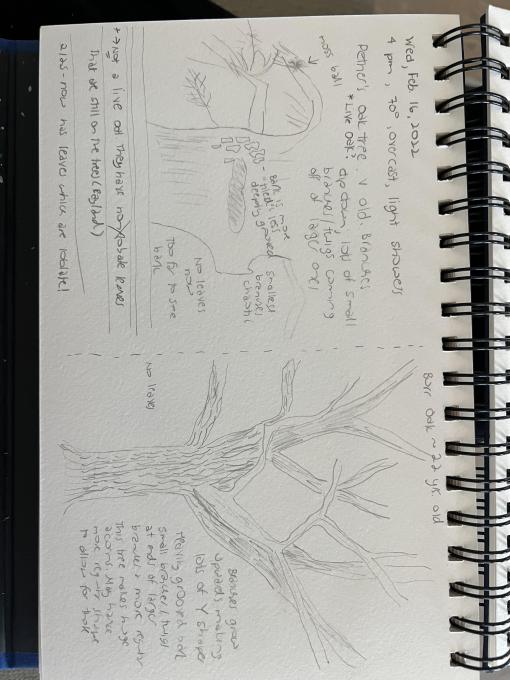
This was hard! I've lived next to the same oak tree for over 30 years and couldn't remember the shape of its leaves or identify it. Leaves have now come out and hoping to identify the species in the coming weeks.

-
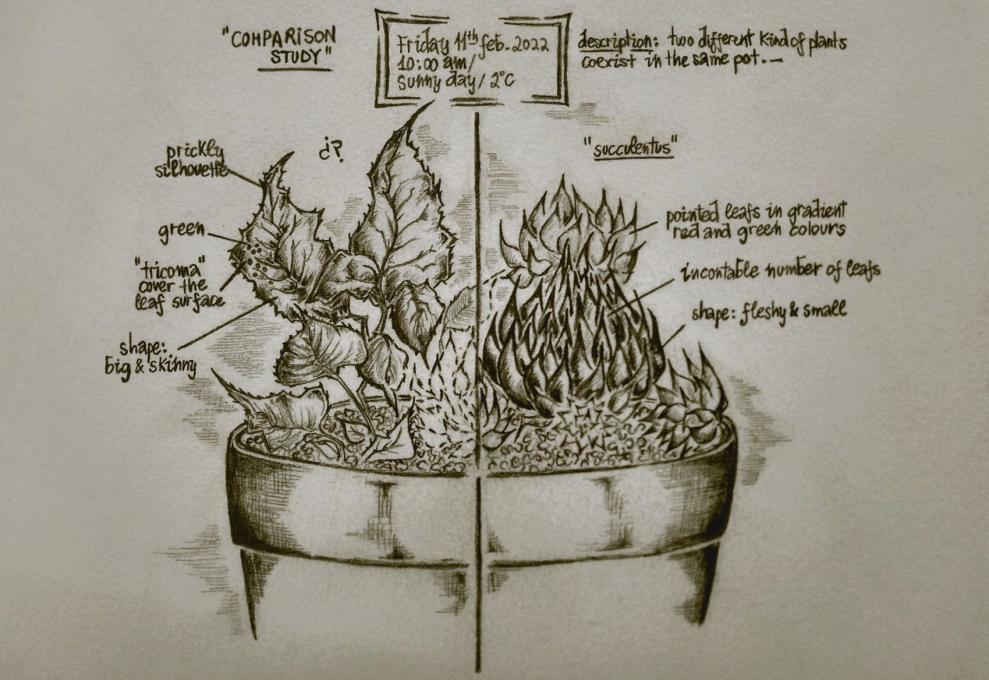
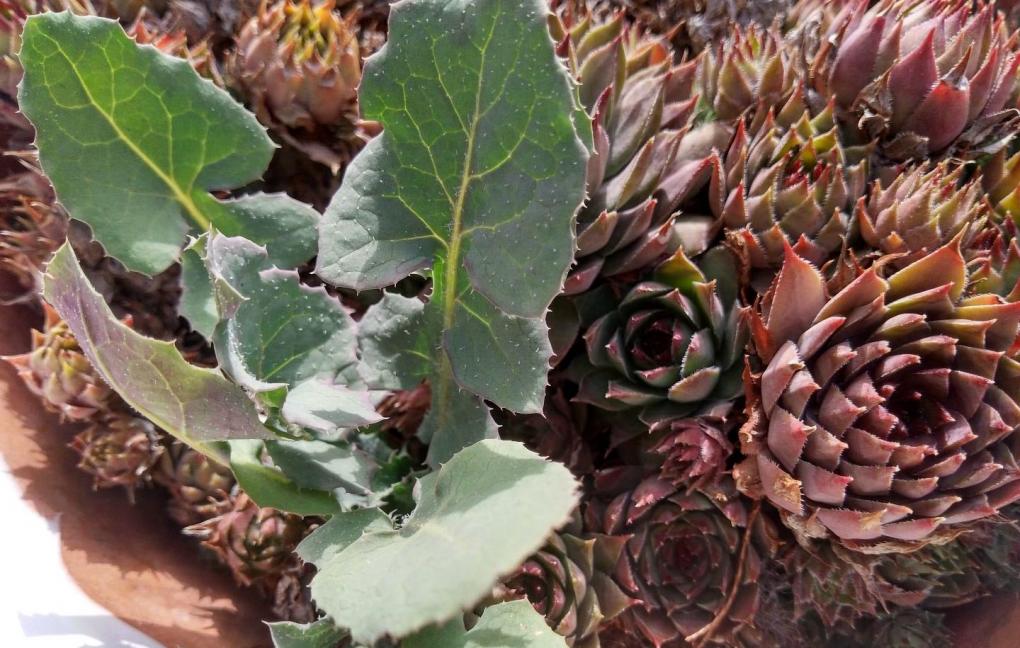
I was lucky again, and I found a good example of comparison for my study, I think, anyway, to complete it, I tried to found (with the detail description) the scientific name of the plant in the left side, with unsuccessful results, so it´s the reason that appears with an `interrogation´.
-
-
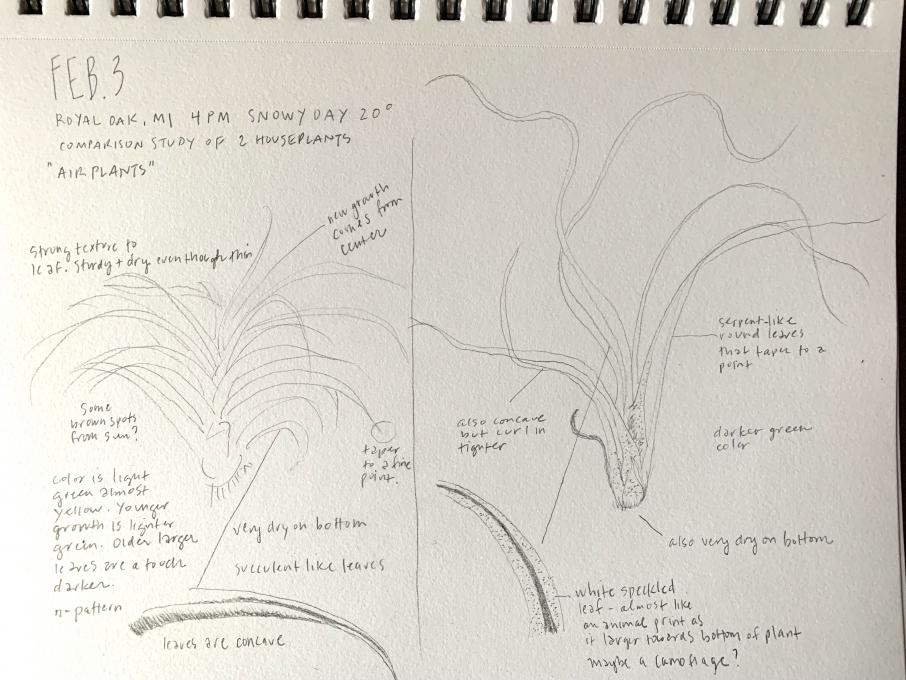
It's too cold to do a field study outside so I picked two of my air plants to compare. They sit in little wood bases usually but I took them out and held them to sketch and noticed things I never noticed before!
-
-
-
-
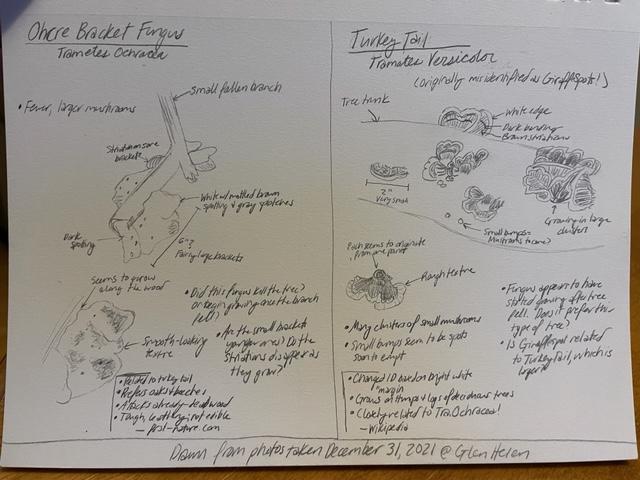
I chose two different mushroom varieties spotted on a hike yesterday for my comparison study. I completed drawing and making observations and decided to google each one to try and learn more about it. It turns out that iNaturalist had misidentified one of the mushrooms, and it was actually a close relative of the other! I drew ochre bracket fungus (trametes ochracea) and turkey tail (trametes versicolor). Both grow on dead deciduous trees and have a bracket structure with no stem, but I believe the ochres I saw were more mature than the turkey tails because they were much larger. Taking the time to do the comparison study first made me much more confident about changing the ID and choosing the turkey tail--the white band around the outside was evident in the specimens that I saw and drew, and is one of the distinguishing characteristics. I will definitely try drawing unknown plants and fungi again before seeking out identifications.
-
1. I remembered how to look really closely and record in images and words characteristic botanical features in order to be able to correctly identify plants to species. Simple outline drawings and notes are enough to do this usually. I don't have to use complicated drawing techniques to do this.
2. I like the table format that someone else used below to organize the verbal information better. While my page gets the job done it seems too busy and disorganized. -
-
-
Lovely! Great subject and nicely shown. Simple, but effective.
-
-
-
I chose to look at the various kelp that I found on the Tofino BC beaches when I visited there early October 2021. I was astounded at how many types there were that were coming on shore due to the high storm season as I hadn’t seen nearly as many on previous visits in the summer. I have pictures of about 15 types both red and brown and then went into BC Coastal resource site on line to read more about them. Fascinating to look at the ecosystems they are part of and how many are edible as is as well as being used in other food types (salad dressing). Looked also at impact of sea urchin decimating kelp areas and the sea otters with the harvesting restrictions.
Really enjoyed this exercise. -
Carefully observing and comparing two species of Brown Eyed Susans allowed me to notice subtle differences and similarities. Along with my drawings I tried to incorporate written observations and numerical data as well. The longer I observed the more I noticed and felt a great connection with both plants. As an Outdoor Educator I will use this activity with students to help them heighten their awareness and make connections with the natural world on a micro and macro scale.
-
-
I enjoyed this process, but got stuck being a little too detailed too early. Might try drawing more loosely and concentrating on more major differences at first.
-
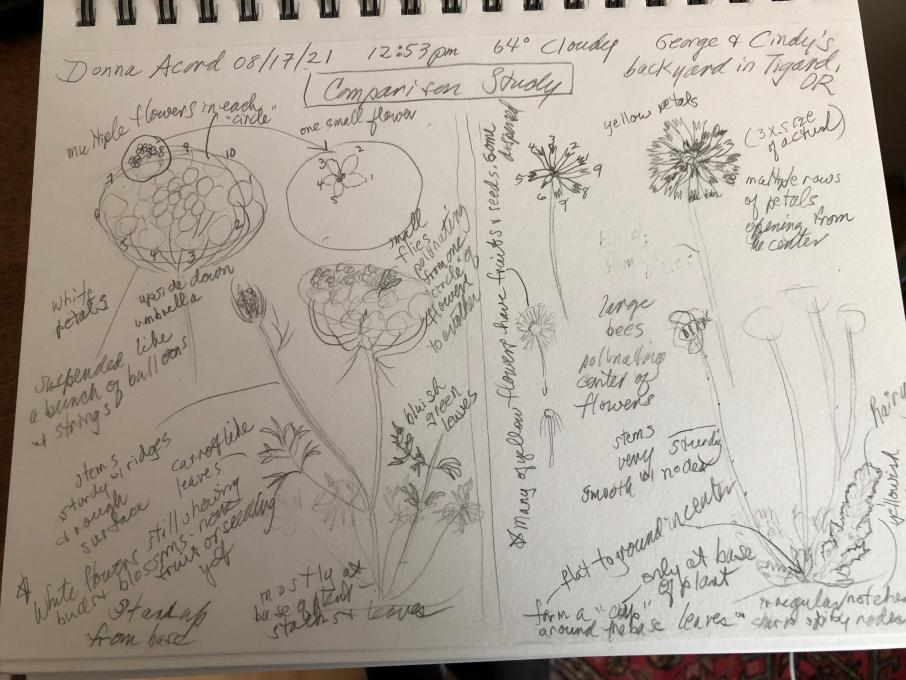
I noticed that both plants in my comparison study were blooming alongside each other. Each had a very different flower structure. I watched pollinators landing on each of them. but the pollinators were different on each one. The plant with "umbels" had such tiny "sub blossoms," that only little flies could alight on them. The the dandelion light composite flower blossom, it provided a much wider landing pad, so I saw large bees on these. I wonder if this is part of what allows them to be reproducing side by side? They would not have to compete for pollinators, as they each attract different kinds. I wonder what else about them allows them to not be competing? Perhaps they take different nutrients from the soil? A commonality is that they both need full sunlight and seem to do dwell in drought conditions. There was also plenty of space for them. One of the flowers seemed to be much farther along in its phenology cycle. The white "umbel" plant was only just starting its blossoming, had both buds and blossoms. The yellow dandelion like plant was exhibiting mulitple stages, flowers, fruits and seeds, some of which were already dispersing. So the yellow one was farther along it is reproductive cycle than the white one. I wonder if that is another reason that they can co-exist? They need different levels of nutrients at different times?
-
-
I have a lot to learn, including how to manipulate this program and insert my thoughts and drawings. Taking the time to really observe, count, see the various shapes and colors, all very important and a real challenge.
-
-
-
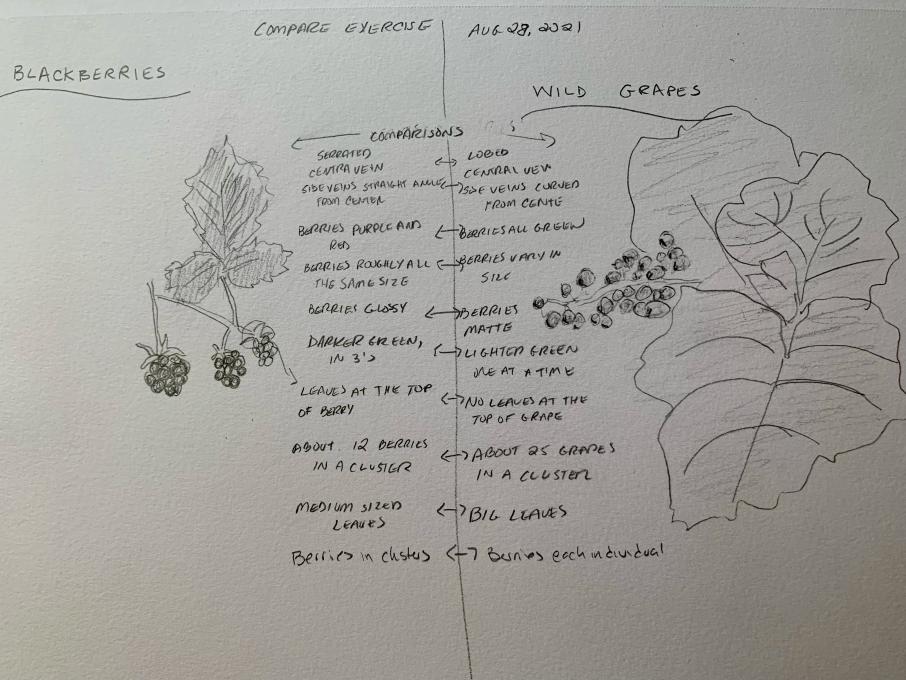
I was doing a Sit Spot at my local lake when I noticed that the wild grapes were dangling right next to the ripe blackberries and I thought that would be a fun pair of things to compare. I enjoyed this exercise and found that the more things I found to compare, the more things I found to compare.
-
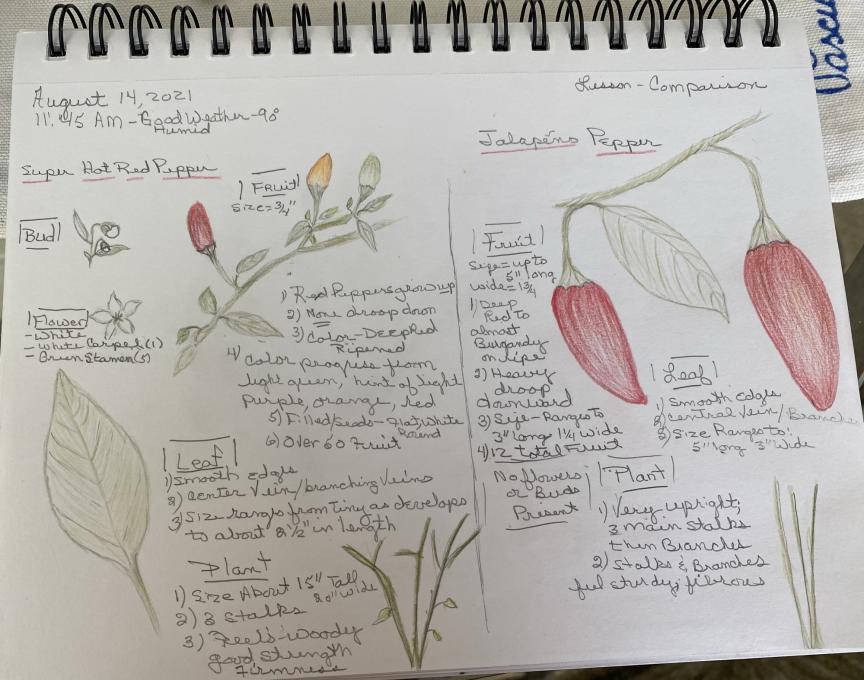
This comparison lesson was helpful in focusing and noticing details. I compared two different pepper plants. The obvious differences were how they grew (one up, one down), size (one very small, one much larger). Some similarities were leaves (both smooth), shape (both elongated oval; however different sizes). Some less obvious details were the flower on the red pepper plant. At first I didn’t even see the tiny flower as it was covered by a leaf. With a closer look at the flower, I noticed one taller white carpel in the center surrounded by 5 green stamen. Also how the leaves, although same shape, attached differently to the plant.
-
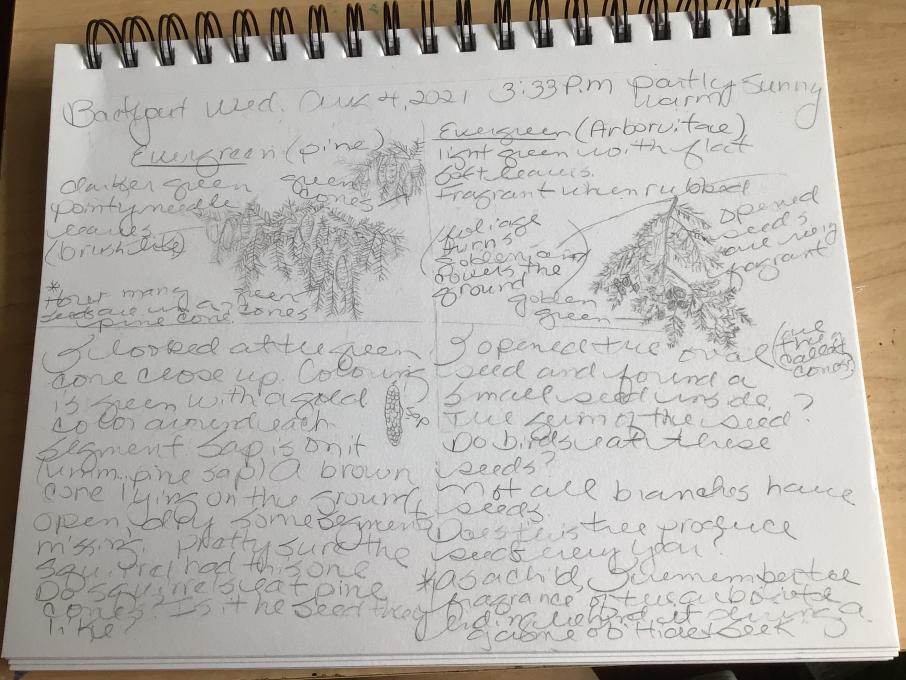
I compared the pine tree and the arborvitae tree in my backyard. These evergreens are similar having seed pods/cones, drop their leaves and have scented leaves when rubbed. They supply food for animals and parts of the trees are used to benefit people. Differences are their leaves one pokey and pointy and the other rounded and flat. The bark on the pine tree is rough and bumpy and the arborvitae is smoother with vertical lines. I learned a lot about each tree just my making a comparison.
-
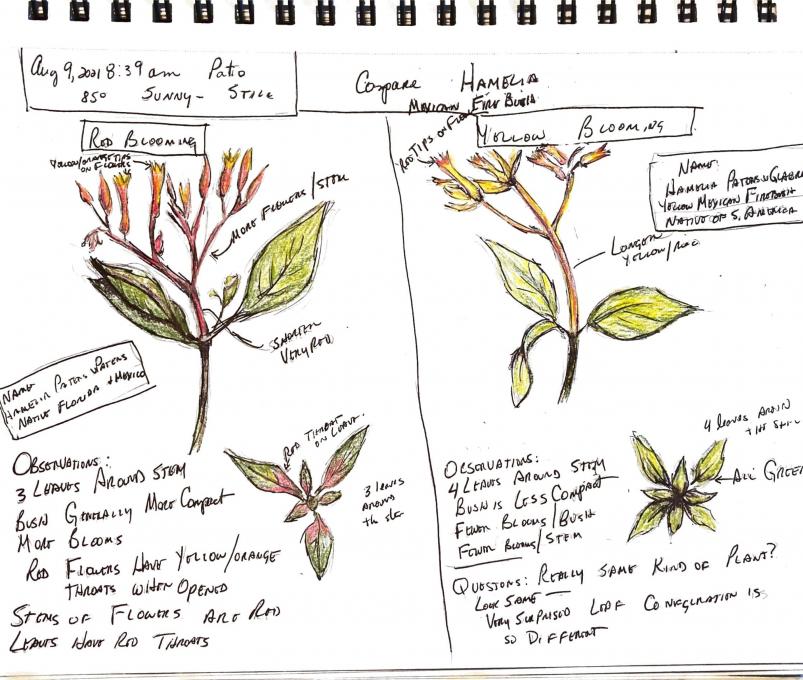
1. I did a comparison study on 2 different firebushes I have in my yard. One had yellow flowers and one had red flowers, but I've noticed before there are differences in the 2 bushes. I was very surprised to observe that the red blooming firebush had 3 leaves around the stem and the yellow blooming one had 4 leaves. Then I had to do more research to be sure they actually were the same kind of plant.
2. I am still better at writing than drawing, but enjoyed the drawing experience. Adding numbers made a big difference in my observations. -
II compared I compared two tropical houseplants the both have exaggerated forms - the anthurium (extremely long, pointed leaves, waxy flowers with prominent spathes) and the pelargonium (tough, ruffled leaves, hairy stems). In my house they share a site and growing conditions. But their origins differ widely (South Africa and South America).
I wondered what purpose these characteristics may have had in their native habitats, and whether they still serve any purpose in their new habitats. -
My comparison study was done between two plants that have very different overall structure but similar looking flowers. I found myself noticing several distinct features of each species through drawing. Representing the smaller detailed parts of the plant was easier for me but I struggled with representing the overall shape of the plants. I'm going to find a small ruler and tape it to the inside of my nature journal so I have it in the future. For this study the measurements were approximations. The overall balance of drawing, writing, and data I was happy with but I'd like to find a way to better separate out the parts of the comparison.
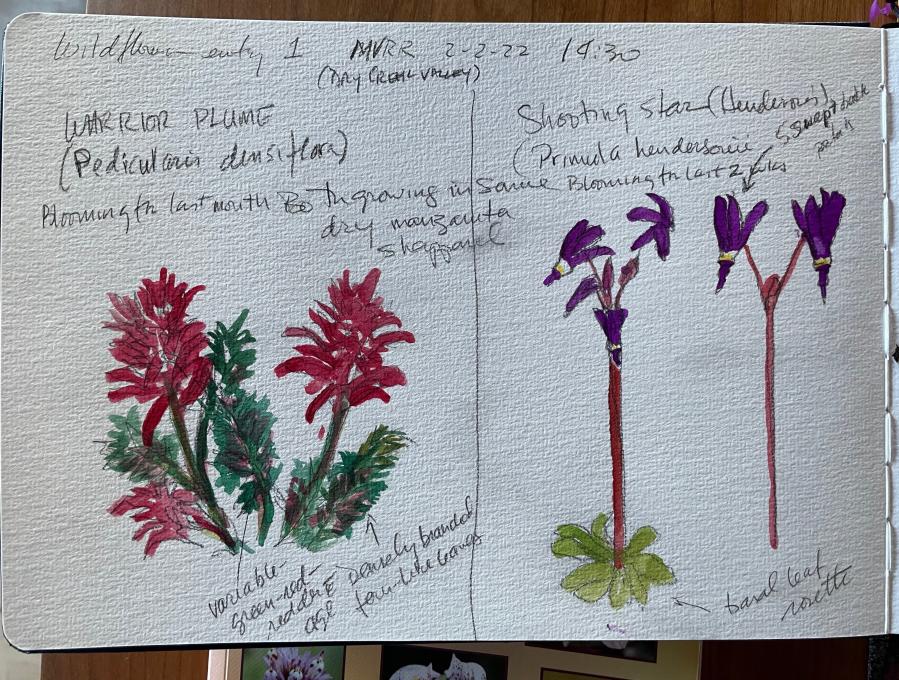
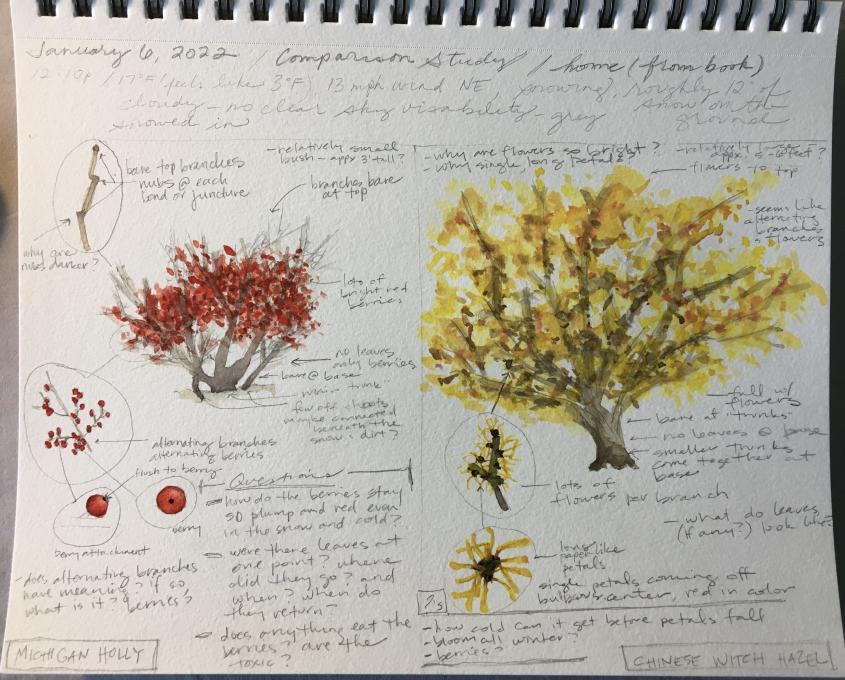
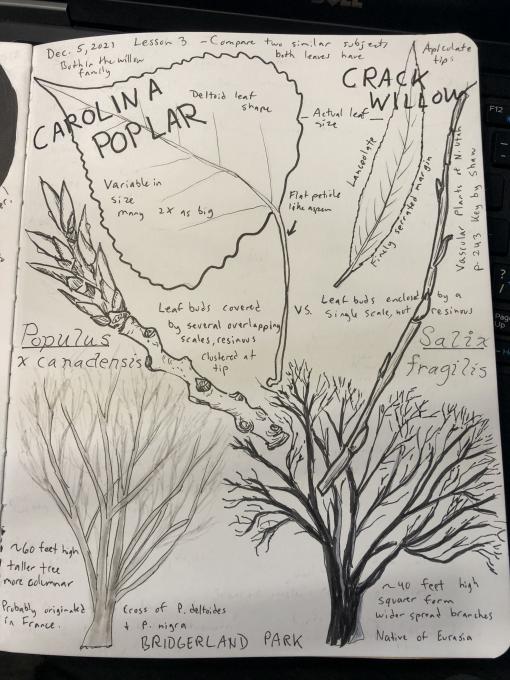 1. I remembered how to look really closely and record in images and words characteristic botanical features in order to be able to correctly identify plants to species. Simple outline drawings and notes are enough to do this usually. I don't have to use complicated drawing techniques to do this.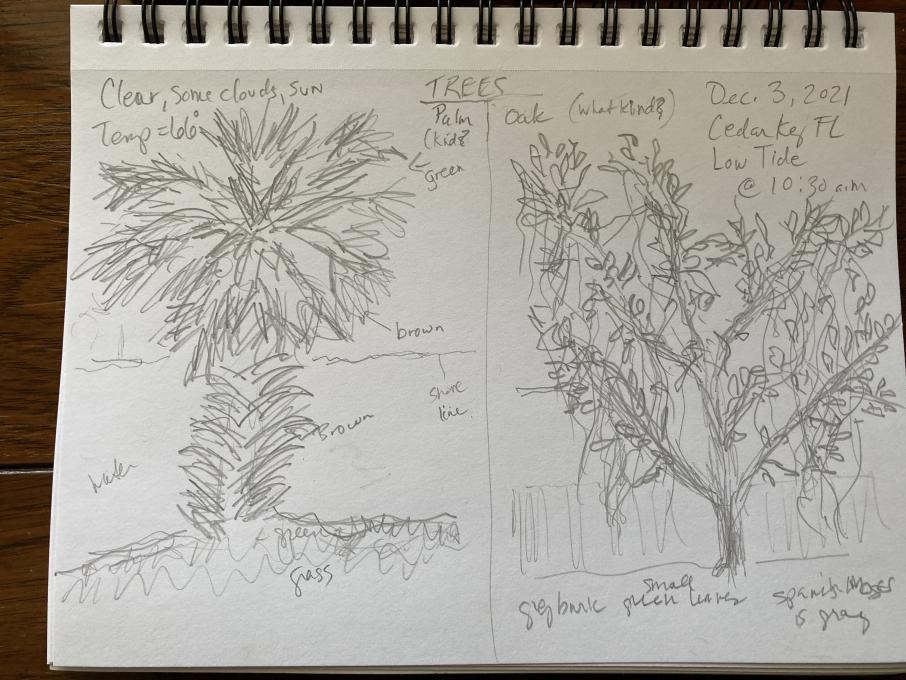
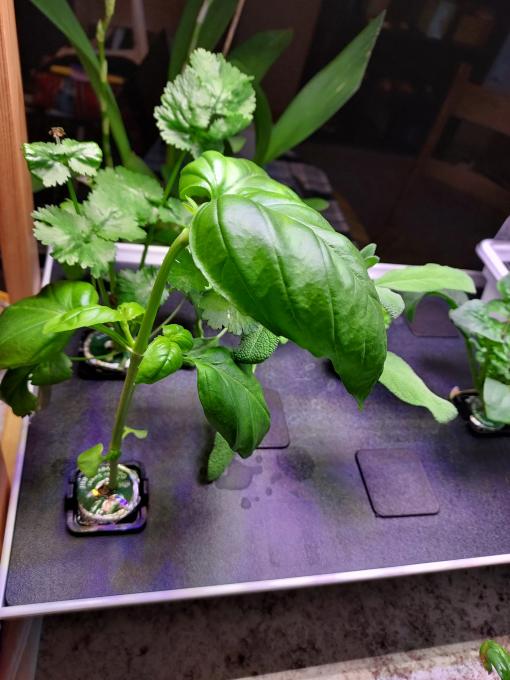
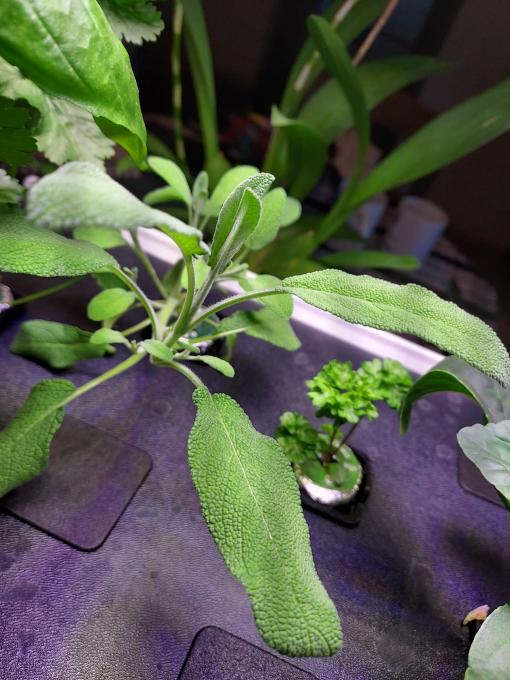
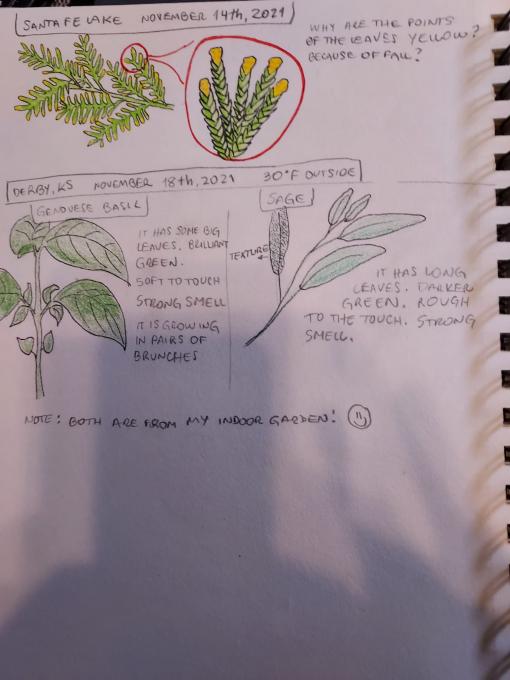
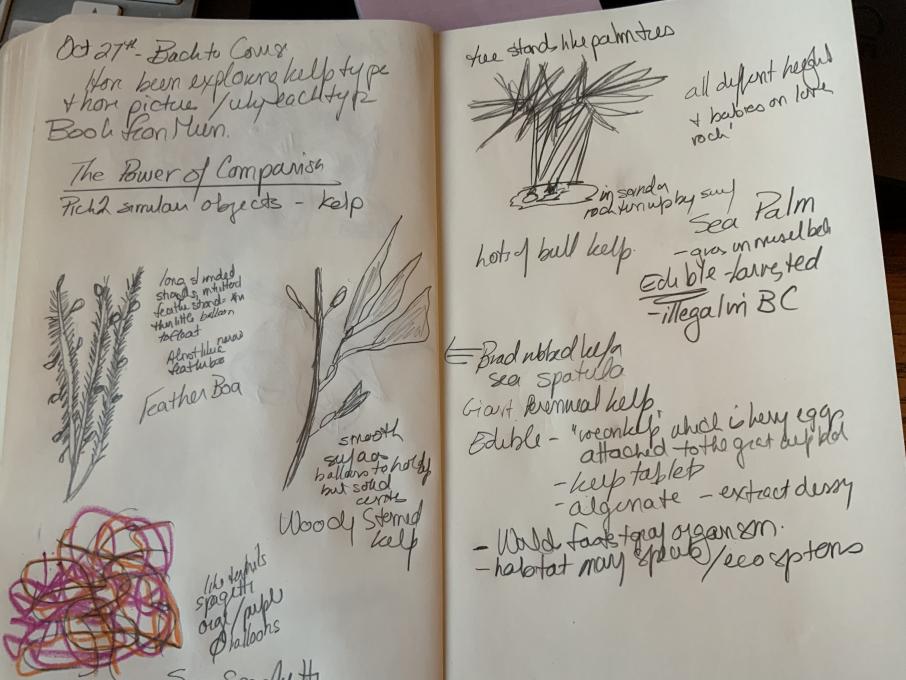 I chose to look at the various kelp that I found on the Tofino BC beaches when I visited there early October 2021. I was astounded at how many types there were that were coming on shore due to the high storm season as I hadn’t seen nearly as many on previous visits in the summer. I have pictures of about 15 types both red and brown and then went into BC Coastal resource site on line to read more about them. Fascinating to look at the ecosystems they are part of and how many are edible as is as well as being used in other food types (salad dressing). Looked also at impact of sea urchin decimating kelp areas and the sea otters with the harvesting restrictions.
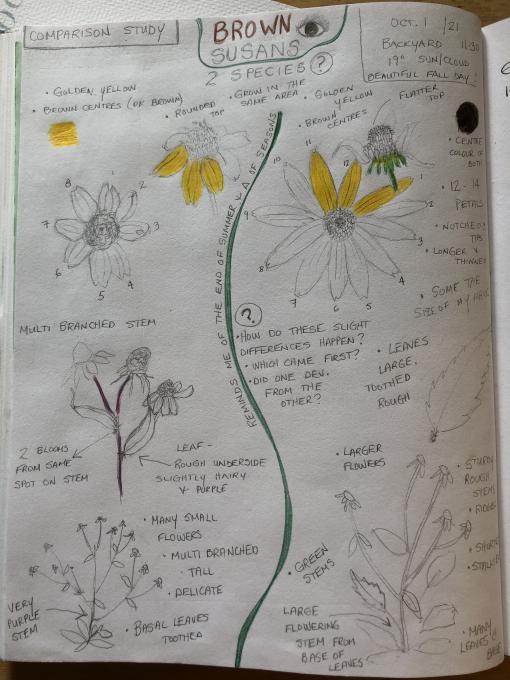 Carefully observing and comparing two species of Brown Eyed Susans allowed me to notice subtle differences and similarities. Along with my drawings I tried to incorporate written observations and numerical data as well. The longer I observed the more I noticed and felt a great connection with both plants. As an Outdoor Educator I will use this activity with students to help them heighten their awareness and make connections with the natural world on a micro and macro scale.
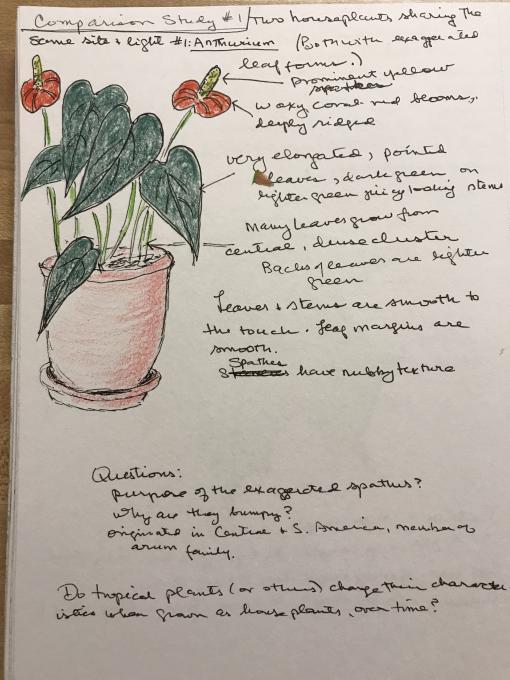 I compared
 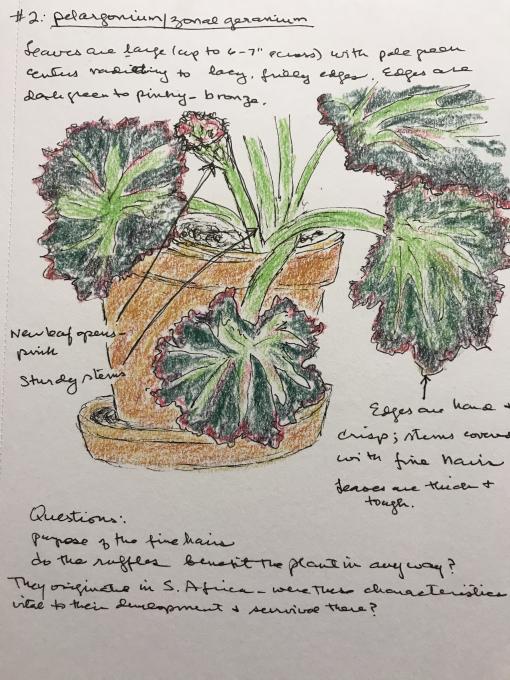 I compared two tropical houseplants the both have exaggerated forms - the anthurium (extremely long, pointed leaves, waxy flowers with prominent spathes) and the pelargonium (tough, ruffled leaves, hairy stems). In my house they share a site and growing conditions. But their origins differ widely (South Africa and South America).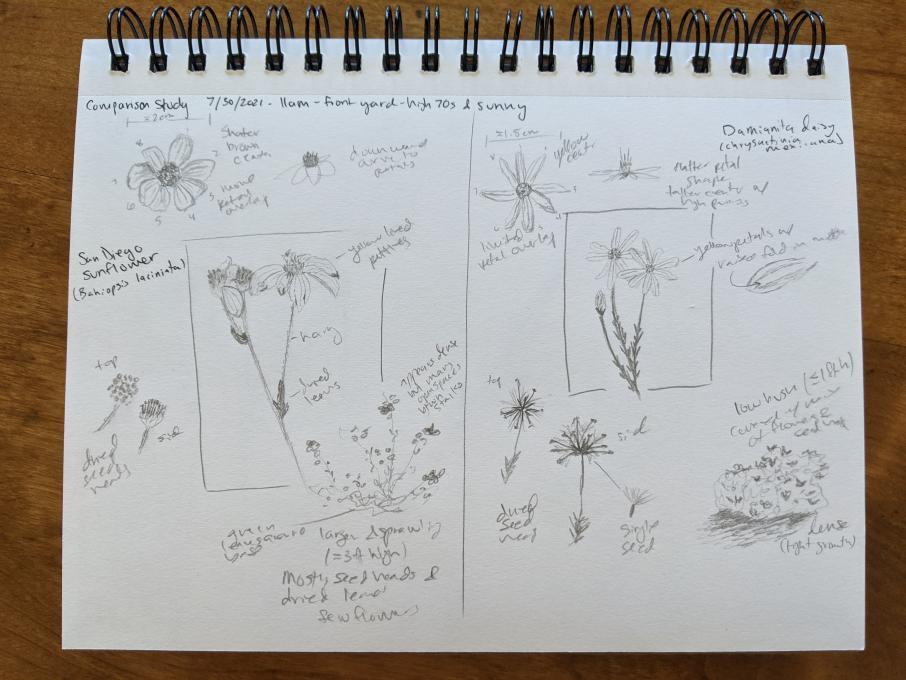
Read More: